REVIEW · PEARL HARBOR TOURS
Battleships of WWII at Pearl Harbor from Maui
Book on Viator →Operated by Aloha Sunshine Tours · Bookable on Viator
Pearl Harbor hits different when you go guided. I like the tight focus on the Arizona Memorial and the Battleship Missouri, plus the way the day links WWII sacrifice to Honolulu’s stories. One thing to consider: it’s not a laid-back sightseeing loop, and the schedule can feel full, especially if timing slips.
From Maui, you’re also getting a lot bundled in: flights, Pearl Harbor entry, and transportation. I’d plan for early start at 7:00 am and plenty of walking, because you’ll cover multiple stops in one long day—without meals included.
In This Review
- Key highlights worth planning for
- Pearl Harbor at dawn: why this routing matters from Maui
- Value and what’s included: airfare, tickets, and guided stops
- Stop 1: Pearl Harbor Visitor Center and the 23-minute documentary
- Riding to USS Arizona Memorial: calm water, heavy silence
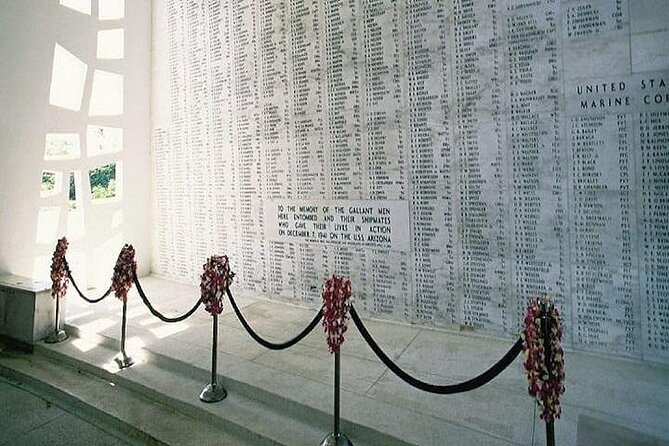
- USS Arizona Memorial: wreckage views, the wall of names, and the “tears”
- Battleship Missouri: MacArthur and Nimitz footprints plus the WWII surrender story
- USS Oklahoma Memorial: the land-based counterpoint on Ford Island
- Downtown Honolulu, Punchbowl, and Iolani Palace in one long day
- Kamehameha statue, Aliʻiōlani Hale, and Kawaiahaʻo Church
- Price and logistics: when $459.99 feels fair
- Who this tour suits best
- Who’s driving and why the guide matters
- Should you book this tour or not?
- FAQ
- FAQ
- What’s the duration of the tour?
- Is round-trip airfare from Maui included?
- What time does the tour start?
- Where is pickup at Honolulu Airport?
- Does the tour include admission to the USS Arizona Memorial?
- Are museums included in this experience?
- Are meals included?
- Are bags allowed inside Pearl Harbor?
- Is this tour okay if I can’t walk much?
Key highlights worth planning for
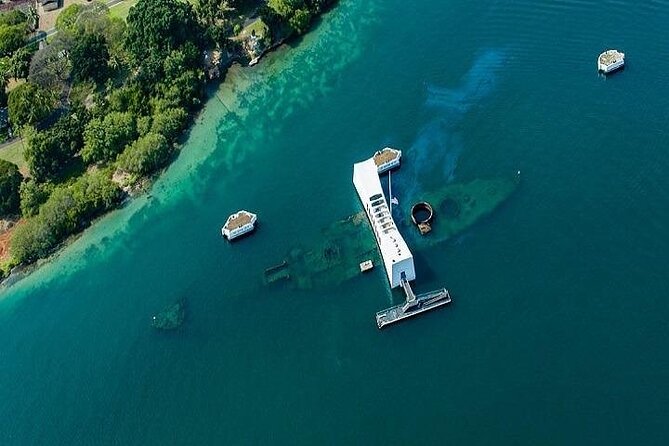
- Arizona’s “Tears of the Arizona”: oil droplets rising above the wreckage make the moment feel immediate
- USS Missouri deck tour: you walk where the WWII surrender was signed in 1945
- Solemn, not performative: respectful silence is encouraged at the Arizona Memorial
- Smaller group size: capped at 24 travelers, which helps the day feel controlled
- Royal Hawaii + WWII in one itinerary: Iolani Palace and Punchbowl add meaning beyond the waterfront memorials
- Guide narration includes Hawaii context: not just ships and dates, but how Hawaii’s story fits the bigger picture
Pearl Harbor at dawn: why this routing matters from Maui
If you care about WWII history, this kind of morning visit is exactly when it lands hardest. The day starts early (7:00 am), which means you’re not trudging through the memorials in the afternoon glare. You’ll also have time to pair the solemnity of Pearl Harbor with the Honolulu stops afterward—so it’s not just a “see the sites” outing.
From Maui, the biggest advantage is that you’re not doing the trip-building yourself. Round-trip airfare from Kahului to Honolulu International is included, and you’re picked up from the right airport terminal depending on whether you flew Southwest or Hawaiian. That takes a lot of stress out of a day that already runs long (about 7 to 9 hours).
The only real watch-out is how packed it feels. Even with guided pacing, you’re moving through several major memorials plus downtown and royal sites, so this works best when you’re okay with a brisk schedule and quick transitions.
You can also read our reviews of more tours and experiences in Honolulu.


Value and what’s included: airfare, tickets, and guided stops
At $459.99 per person, the value comes from the bundle. You’re not only paying for narration and transportation—you’re also getting:
- Round-trip airfare from Maui to Honolulu
- Arizona Memorial boat admission (included)
- Admission tickets for the attractions provided by your guide on the day of the tour
- USS Missouri Memorial admission included
- A shuttle service from the Pearl Harbor Visitor Center to the Missouri site area
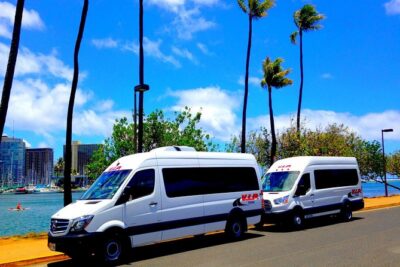
- An air-conditioned vehicle
- English-speaking guiding
You also get a real structure to the day. The tour isn’t “here’s a parking lot, good luck.” It’s paced with scheduled stops: Visitor Center film and boat ride, then memorial time, then the Missouri deck tour, then the Oklahoma memorial, and later Honolulu and royal-era sites.
One practical drawback: meals are at your own expense. There are a few places to grab food near the Visitor Center and around the Missouri area (like snack stands and cafes), but you’ll want to plan ahead so you’re not hunting for lunch while the day keeps moving.
Stop 1: Pearl Harbor Visitor Center and the 23-minute documentary
This start point sets the tone fast. You’ll go to the Pearl Harbor Historic Sites Visitor Center where you can explore exhibits that explain what led up to December 7, 1941. Then you’ll watch a 23-minute documentary that frames the attack and the role of the USS Arizona Memorial.
What I like about starting here: it gives you a timeline before you step onto Ford Island memorial ground. Without that context, you can end up looking at ships and names like a museum map. With the film and exhibits first, the rest of the day makes more emotional and historical sense.
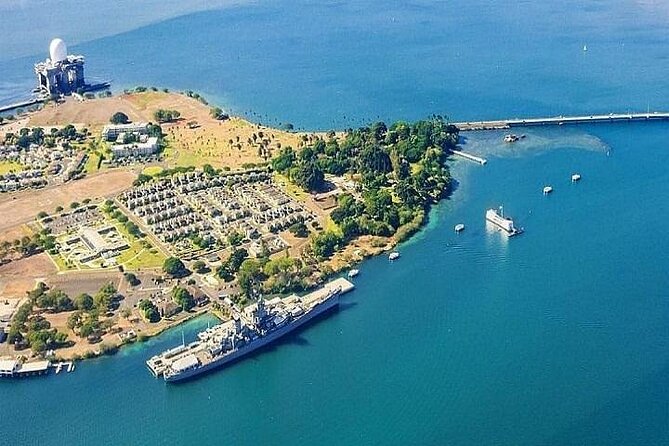
The tour time at this stop is about 2 hours, including the boat transfer portion. After the exhibits and documentary, you board a U.S. Navy-operated boat for a short ride across the harbor to the Arizona Memorial. It’s described as calm, with views of surrounding military installations—so it’s not just transit; it’s part of the experience.
Tip that matters: Pearl Harbor has security rules. No purses and bags are allowed inside, and any bags must be stored for $7.00 each. Clear plastic bags are allowed if the contents are visible, and medical equipment that doesn’t fit lightweight clear bags may be handled separately. Pack light so your morning doesn’t get eaten by airport-style friction.
Riding to USS Arizona Memorial: calm water, heavy silence
The short harbor ride is one of those moments that sounds simple, but it changes how the rest of the day feels. You’re crossing water under the same kind of military geography that shaped the attack. Even with a calm ride, you’ll sense that the memorial experience is meant to be quiet and reflective.
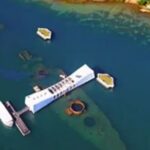
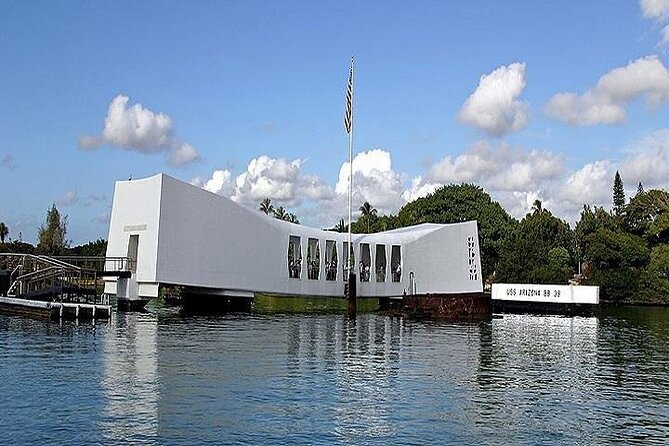
Once you arrive, the Arizona Memorial is a white, open-air structure spanning the remains of the sunken battleship. It’s designed for reflection. You’ll get time inside to look down at the wreckage—then you’ll move to the remembrance areas.
This is the point where the “this isn’t a fun trip” vibe actually becomes useful. The tour asks for respectful silence during your time at the USS Arizona Memorial. That might sound strict, but it’s what makes the memorial powerful instead of gawky.
USS Arizona Memorial: wreckage views, the wall of names, and the “tears”
If you only care about one stop from the day, make it the USS Arizona Memorial. This is where the experience becomes personal, even if you’re seeing it for the first time.
Here’s what you’ll encounter:
- Viewing the wreckage: you can look down into the water where parts of the sunken battleship are visible below the surface
- The tears: oil droplets known as The Tears of the Arizona can still rise to the surface
- A remembrance wall: names of 1,177 crew members who died aboard the USS Arizona
I think that “tears” detail is what sticks with people. It turns a wartime event into something you can still see, not just read about. The rising oil droplets are subtle, but they’re also unmistakably present—like the site refuses to stay in the past.
Also note the emotional setup. The memorial atmosphere is quiet and reverent by design. If you’re the type who likes a loud, joke-filled tour, this stop will feel serious. But if you want your history to mean something, this is the heart of the day.

Battleship Missouri: MacArthur and Nimitz footprints plus the WWII surrender story
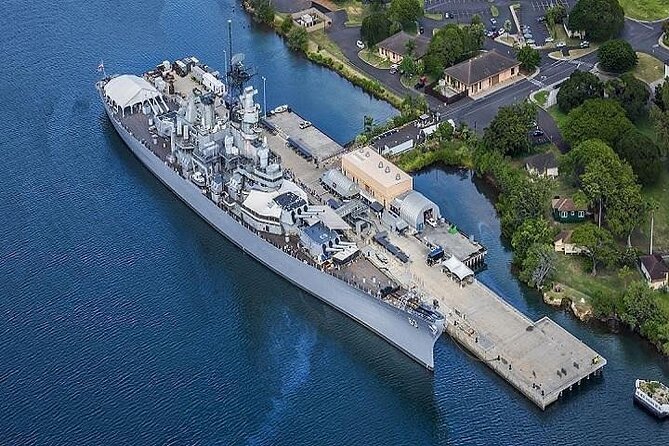
After Arizona’s weight, USS Missouri gives you a different kind of clarity: the final chapter machinery. This is the last battleship the U.S. ever built, and it’s loaded with symbolic significance.
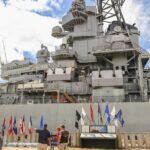
You’ll walk the deck of the USS Missouri Memorial, including areas connected to General MacArthur and Admiral Chester Nimitz. You’ll also learn that it was on Missouri in 1945 that the Instrument of Surrender was signed, ending WWII.
The deck tour includes specific viewing stops, so it’s not just a general walk-through. You can expect to see:
- Officer and crew quarters
- Artillery
- A kamikaze aircraft crash site feature
- A Surrender ceremony
What makes Missouri compelling for me is that it’s both human and mechanical. Arizona tells you about loss at sea. Missouri shows you the scale and structure of the final push and the end of the war.
This stop runs about 2 hours. That’s long enough to slow down and take in the details, but also short enough that you won’t feel stuck. Wear comfortable shoes—your feet will notice every deck plank and stair decision.
USS Oklahoma Memorial: the land-based counterpoint on Ford Island
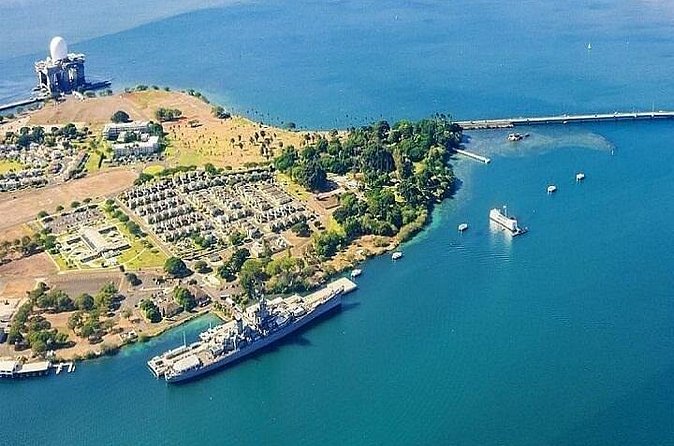
Right after Missouri, you’ll visit the USS Oklahoma Memorial, described as the only land-based memorial at Pearl Harbor. It honors more than 400 servicemen who died aboard the ship during the attacks on Dec. 7, 1941.
If Arizona is the high-profile image most people recognize, Oklahoma is the reminder that Pearl Harbor’s story wasn’t only one ship. It’s “second only” in casualties to Arizona, and the memorial setting helps you understand how widespread the impact was across Ford Island.
The memorial portion runs about 2 hours, which gives you time to read the dedication and sit with the meaning rather than just snap photos and move on.
One practical note: if you’re someone who tries to power through memorials like a checklist, Oklahoma can feel less familiar at first. Give it a few minutes. It’s easier to connect when you let the place teach you what you don’t already know.
Downtown Honolulu, Punchbowl, and Iolani Palace in one long day
After the Pearl Harbor sites, the tour pivots to Honolulu—so you’re not just bouncing from one “war location” to another. You’ll get narrated time in historic downtown Honolulu for about 45 minutes, with your guide explaining Hawaii’s cultural heritage and modern city life.
Then the itinerary moves to the National Memorial Cemetery of the Pacific on Punchbowl, built atop an extinct volcanic crater. This is the kind of stop that quietly shifts your perspective. The cemetery’s rows of white headstones sit against lush greenery, and the viewpoint from Punchbowl gives wide views of the city, including downtown Honolulu, Diamond Head, and the coastline.
Why this matters: it links the themes of sacrifice and remembrance across different eras and settings. You go from ship losses to a resting place for thousands of U.S. military members.
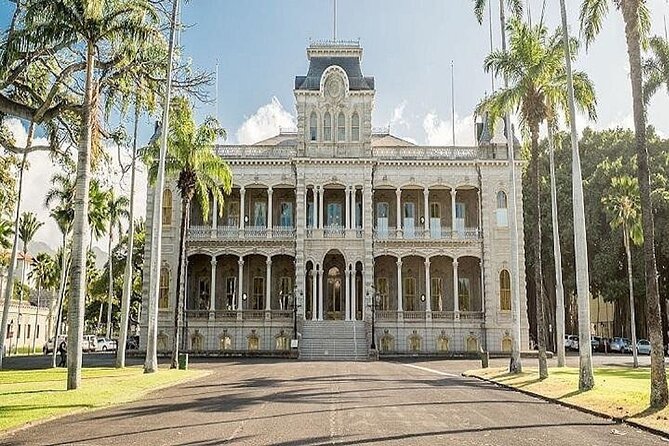
Finally, you’ll head to Iolani Palace, the only royal palace in the United States. This portion is short (about 15 minutes), but it’s designed to hit the essentials—Hawaii’s monarchy and stories about King Kalākaua and Queen Liliʻuokalani.
If your mind is still processing WWII, Iolani Palace may feel like a palate reset. But it also adds depth. You’re seeing how Hawaii’s political identity and cultural story were shaped long before the attack—and how it continued afterward.
Kamehameha statue, Aliʻiōlani Hale, and Kawaiahaʻo Church
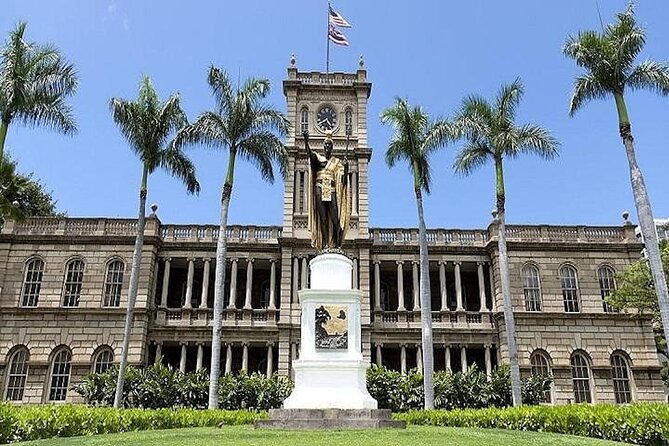
Even though some of these moments are shorter viewing stops, they’re thoughtful additions. From Iolani Palace, you’ll view the King Kamehameha Statue, placed in front of Aliʻiōlani Hale—the historic building that now houses the Hawaii State Supreme Court.
Your guide will also tell “talk story” about the original government building of the Hawaiian Kingdom. That matters because it’s not just sightseeing. You’re hearing the site explained in a way that connects place to meaning.
Next up is Kawaiahaʻo Church, often compared to the Westminster Abbey of the Pacific. Your guide will share the church’s significance and its role in Hawaii’s religious history.
Time is limited here, so keep your eyes open. These are the spots that look simple on a map but feel much more grounded once you learn what they’re tied to.
A useful mindset: if you want a pure history tour of Hawaii, you might want more time in these royal-era sites than this itinerary allows. But if you want WWII plus meaningful context in one day, these additions do real work.
Price and logistics: when $459.99 feels fair
For $459.99, I see the strongest value in what you avoid:
- planning airline timing on your own
- separately buying Pearl Harbor boat admission
- separately booking Pearl Harbor and Missouri entry
- arranging transportation across multiple stops
Because airfare is included from Kahului Airport, the cost feels more reasonable than if you were only paying for sightseeing on Oʻahu. Also, the group size is capped at 24 travelers, and you get an air-conditioned vehicle and guided narration in English.
Still, there are trade-offs. The tour is long, and meals aren’t included. That’s when the day can feel tight. The other real consideration is timing accuracy. In at least one account, coordination delays pushed the group later than expected, and there wasn’t enough time to adequately see everything available. That’s not something you can fully control, but it’s a reminder to keep expectations flexible.
Weather is another practical factor. Sites are subject to closure due to stormy weather. If you’re planning this as a strict “only day on Oʻahu” choice, I’d treat Pearl Harbor as your priority and accept that Mother Nature can change the script.
Finally, packing rules at Pearl Harbor are strict. If you arrive with a big bag, you’ll pay for storage ($7.00 each) and lose time.
Who this tour suits best
This is a great fit if:
- you want WWII memorials without assembling details yourself
- you like guided storytelling with real context
- you’re okay with a solemn pace (especially at Arizona)
- you want to add Honolulu highlights like Punchbowl and Iolani Palace in the same day
It’s less ideal if:
- you don’t walk well (it’s not recommended for visitors who can’t walk 4 city blocks)
- you expect lots of free time at each stop
- you want a “fun” sightseeing vibe rather than reflection
For groups that love history, this works because the itinerary is built around specific memorial meanings: Arizona for sacrifice and ongoing remembrance; Missouri for the endgame and surrender; Oklahoma as the broader loss picture.
Who’s driving and why the guide matters
Your experience depends a lot on the guide’s tone and pacing. One guide name you might hear is Jorge, who shared history while helping the day feel coherent. When the narration connects Hawaii’s royal story to the WWII story, the tour stops become more than separate attractions.
Also, a practical note: tipping your guide in cash is appreciated if you enjoyed the day. That’s not mandatory, but it’s a nice way to reward solid narration, especially on a long route.
Should you book this tour or not?
I’d book it if you want a guided, tightly structured WWII day that also respects Hawaii context. The combination of USS Arizona Memorial, USS Missouri, and USS Oklahoma is the core, and the Honolulu additions (Punchbowl and Iolani Palace) add meaning without turning the day into a random scavenger hunt.
Skip it if you:
- need a relaxed pace with lots of independent museum time (this tour is clear that museums are not part of it)
- have mobility limits that make 4 city blocks hard
- hate solemn memorial settings and quiet moments
If you’re doing this from Maui and you don’t want to coordinate flights plus tickets plus transportation, this is one of the cleaner ways to do Pearl Harbor day right.
FAQ
FAQ
What’s the duration of the tour?
It runs about 7 to 9 hours.
Is round-trip airfare from Maui included?
Yes. Round-trip airfare to Honolulu International Airport from Kahului Airport is included.
What time does the tour start?
The tour starts at 7:00 am.
Where is pickup at Honolulu Airport?
Pickup depends on your airline. If you flew Southwest Airlines into Honolulu Airport, pickup is at Terminal 2, baggage claim 31, area 5. If you flew Hawaiian Airlines, pickup is at terminal 1, area 1.
Does the tour include admission to the USS Arizona Memorial?
Yes. Arizona Memorial boat admission is included, and admission tickets for attractions are provided by your guide on the day of the tour.
Are museums included in this experience?
No. Visiting the museums is not part of this tour. If you want museums, you’d need a different option such as the Complete Pearl Harbor Experience tour.
Are meals included?
No. Meals are at your own expense.
Are bags allowed inside Pearl Harbor?
No. Purses and bags are not allowed inside Pearl Harbor, but bags can be stored for $7.00 each. Clear plastic bags with visible contents are allowed.
Is this tour okay if I can’t walk much?
It’s not recommended for visitors who can’t walk 4 city blocks. You’ll be walking much of the tour, so plan for that.