REVIEW · SURF LESSONS
Oahu: Waikiki Beginner Private Surf Lesson- Female Guide
Book on GetYourGuide →Operated by Hawaii Adventours · Bookable on GetYourGuide
Ready for your first wave at Waikiki? What makes this lesson special is the private, one-on-one coaching and the beginner-first teaching pace. You’ll start with a short land session on the sand, then paddle out together so you’re not left guessing in the water.
I especially like that it’s built around confidence: you learn basics at your own speed, and safety gets treated like part of the curriculum, not an afterthought. I also like the convenience of a female instructor in a private setting, which tends to make people ask questions sooner and relax faster.
One consideration: this isn’t for non-swimmers. You must know how to swim, and there’s no mention of life-jacket support—so if water confidence is shaky, take that seriously before you go.
In This Review
- Key highlights to know before you go
- Waikiki surf lesson: why this setup works for beginners
- Starting at the Duke Kahanamoku statue and getting geared up fast
- The land session on Waikiki sand: where technique clicks
- Paddle out together: the safety-minded part beginners need
- The 75-minute surf time: what you’re actually doing in the water
- Why a female, private guide is more than a marketing detail
- Drone photos and video: paying for a keepsake
- What’s included, and what you’ll want to bring yourself
- Price and value: is $125 worth it?
- Who this Waikiki beginner lesson suits best
- Should you book this Waikiki beginner private surf lesson?
- FAQ
- Do I need prior surfing experience?
- Do I need to know how to swim?
- Where do we meet for the lesson?
- What is included in the price?
- What should I bring?
- Is there an option to buy drone footage?
- Is this lesson suitable for children or wheelchair users?
Key highlights to know before you go
- Private, one-on-one guidance tailored to your comfort level, not a one-size-fits-all group pace
- 20–30 minutes of land instruction on Waikiki sands to learn how to stand up and read waves
- Meet at the Duke Kahanamoku statue for a clear, easy starting point right on Waikiki Beach
- Swim first, surf second: you paddle out together to catch your first waves
- Beginner-friendly Waikiki waves with a 75-minute surf portion in the water
- Optional drone photos/videos if you coordinate with the instructor beforehand
Waikiki surf lesson: why this setup works for beginners
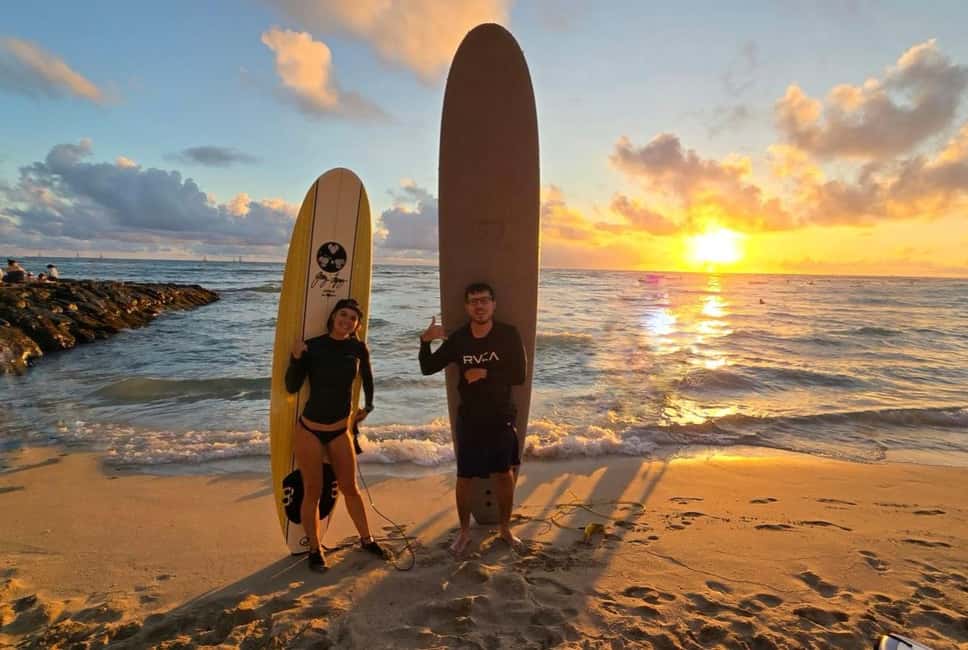
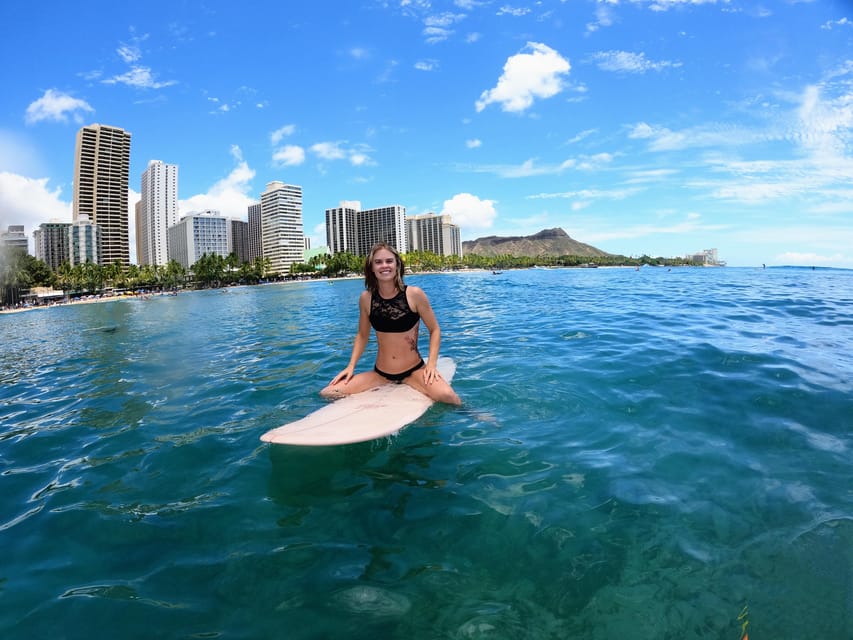
Waikiki is famous for a reason. The waves here are the kind many first-timers can learn on—wide-open access, a familiar break, and plenty of visual cues onshore. This lesson leans into that. It’s designed so you don’t waste your energy on random thrashing; you learn the sequence, then you get repetition.
The biggest value is the teaching structure: land basics first, then you move to the water with a safety-focused partner. That matters because surfing is not just athletic—it’s timing. If you only get instructions once you’re already in the surf, your brain is overloaded. Doing the fundamentals on sand makes the water session feel more like practice than survival.
And the private format is a quiet advantage. With only you (or your small private group), your guide can adjust stance, pacing, and technique based on what you’re actually doing, not what someone else is doing.
You can also read our reviews of more guided tours in Honolulu



Starting at the Duke Kahanamoku statue and getting geared up fast
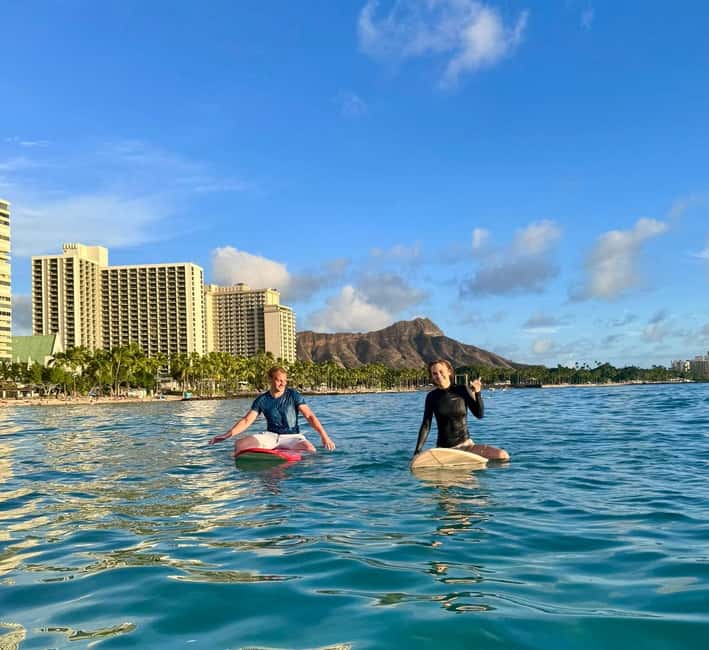
You meet at the Duke Kahanamoku statue on Waikiki Beach. That’s helpful because it’s a real landmark right where you need to be, instead of a scavenger hunt across Waikiki. The lesson starts with you showing up wearing what you’ll swim with.
Gear is included: you get a surfboard rental and a leash. The leash is one of those unglamorous items that really matters. It helps keep the board with you so you can focus on balance and wave timing rather than chasing gear.
The practical tip here is to think about what your torso feels like against the board. Even if the water isn’t cold, board contact can be rough. The guidance recommends bringing a t-shirt or rashguard to protect your stomach from the board. That one small clothing choice can make the difference between a lesson you enjoy and one you rush through.
The land session on Waikiki sand: where technique clicks
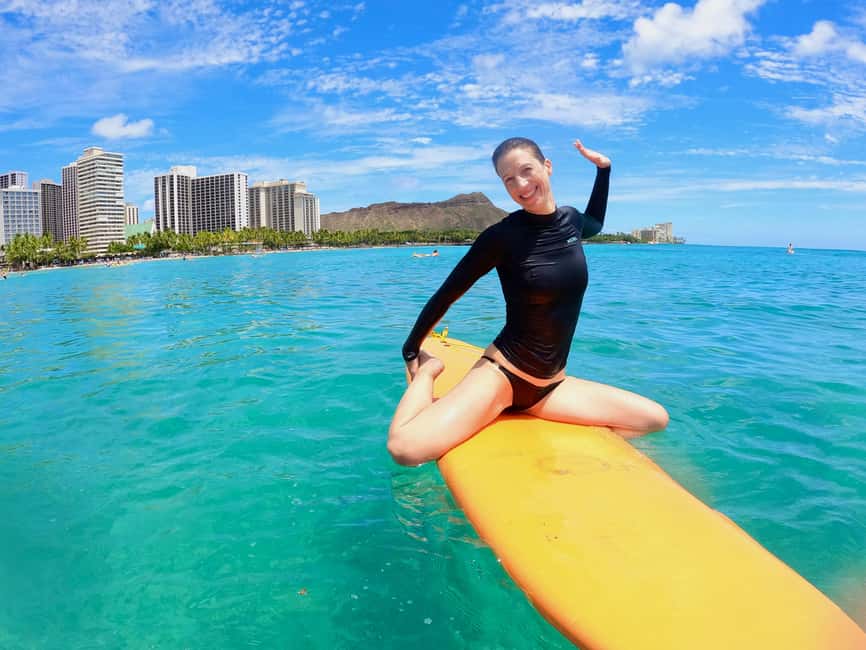
Before you paddle out, you’ll get a shore-based lesson on the sand. Plan on about 20–30 minutes focused on the foundation: standing up, reading the waves, and safety precautions.
This is where good surf coaching earns its keep. Surfing is full of body mechanics, but the basics are learnable fast when someone breaks it down clearly. On land, you can practice the sequence without spray and fatigue. You learn what your hands do, where your feet go, and what posture you’re aiming for when the wave is coming.
You’ll also get a safety rundown, which you should treat as part of the lesson—not an administrative step. Safety talk helps you understand how to manage your position, how to avoid risky moments, and how to behave around the surf zone. In a private setting, your guide can tailor that to you, especially if you’re nervous.
Paddle out together: the safety-minded part beginners need
After the sand coaching, the lesson moves into the water. Here’s the key condition: you must know how to swim. The format is supportive—your instructor paddles out with you, so you’re not sent into the lineup alone.
This matters because beginners often feel two fears at once: fear of falling and fear of not being able to recover. When you paddle out together, your guide can pace you and watch how you’re managing buoyancy and comfort. The goal isn’t to test you. It’s to get you onto waves in a controlled way.
Also, keep in mind that Waikiki’s surf is iconic, but it’s still real ocean conditions. If you’re a confident swimmer, you’ll be able to focus on technique. If you’re not, you’ll spend the whole session anxious. Take your swim skills seriously before you book.
The 75-minute surf time: what you’re actually doing in the water
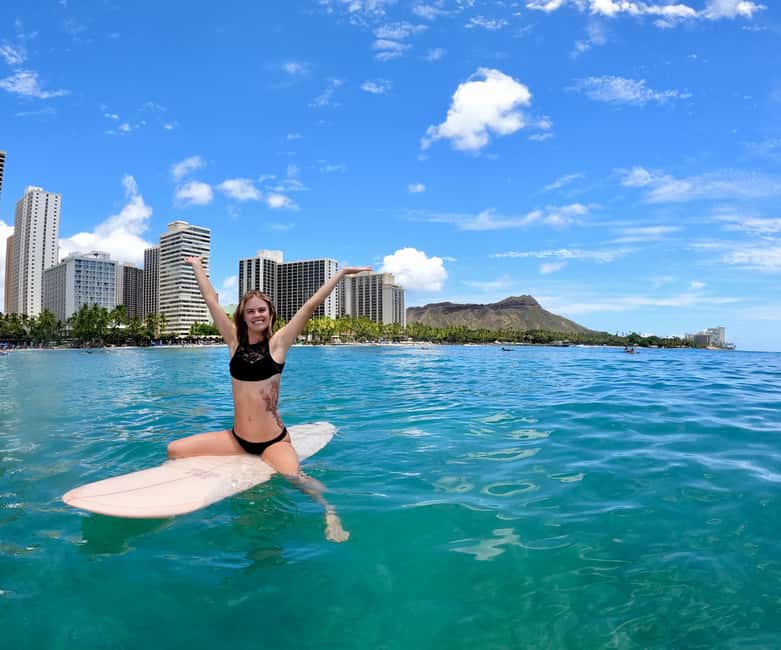
The surf portion is about 75 minutes, and that’s a solid chunk for a first lesson. For beginners, time like this is valuable because it gives you enough tries to start noticing patterns: where you position your board, how the wave approaches, and what your body does right before you stand.
With a private class, you don’t just get one attempt and then wait. Your instructor can guide you between tries, coaching what to adjust on the next run. That’s how you go from standing up one time to standing up more consistently.
The course also emphasizes reading the waves. That skill is underrated on beginner lessons. The more you understand when a wave is worth going for (and when it’s not), the more your practice feels like progress. You stop feeling random and start feeling prepared.
You can also read our reviews of more private tours in Honolulu






Why a female, private guide is more than a marketing detail
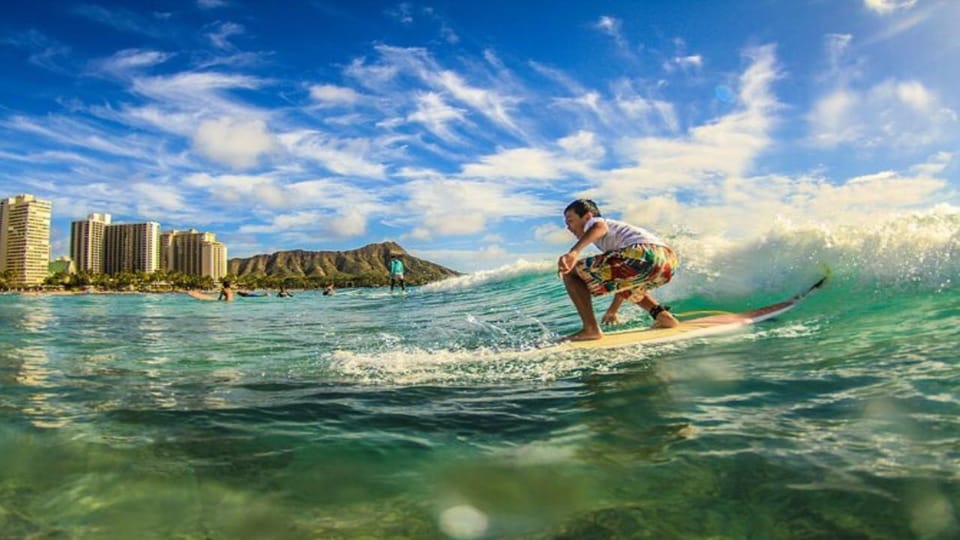
This isn’t just a gender checkbox. A private, one-on-one lesson tends to reduce embarrassment and speed up learning because you can ask the simplest question without worry. If you freeze when you’re unsure where to place your feet, you’ll want a guide who can notice that instantly and correct it.
The standout themes you can expect from an instructor-led lesson like this: patience, clear step-by-step explanations, and comfort-building when you’re hesitant. That’s especially important for first-timers. The ocean can feel intimidating quickly, and confidence helps you recover faster after a wipeout.
If you’re learning with a child who’s a bit cautious, this kind of coaching style can help them feel safe enough to try again. That’s how surf lessons turn into memories instead of stress.
Drone photos and video: paying for a keepsake
There’s an option to purchase drone footage, including photos and videos of your surfing session. It’s not automatic; you need to speak with your instructor in advance to confirm the photographer’s availability.
Should you do it? If you want a tangible reminder of your first surf day, drone footage can be great because it captures your lines and timing from above. It’s also an easy way to get more than just a few shaky phone shots. If you’d rather keep the lesson focused on technique and you don’t care about filming, you can skip it with no penalty.
What’s included, and what you’ll want to bring yourself
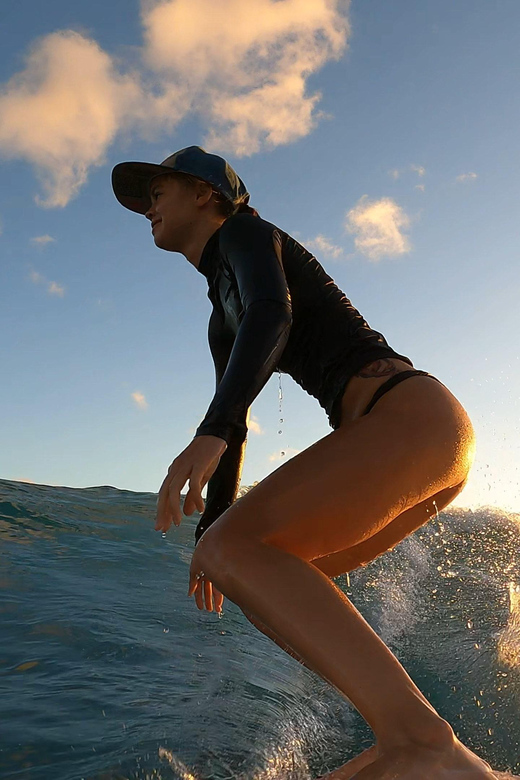
Included in the lesson:
- Instructor coaching
- Lesson
- Surfboard
- Leash
Not included:
- Swimwear
- Rashguard
- Change of clothes
- Towel
- Sunscreen
- Water
That list is a reminder to pack like you’re going to the beach for real, because you are. Bring swimwear you’re comfortable getting soaked in. Sunscreen is essential—Waikiki sun is bright, and you’ll be outside the whole time.
I also suggest planning for the after part. You’ll want a change of clothes and something to dry off with. Even if the lesson is short, feeling cold and uncomfortable right after your session can sour the whole experience.
Price and value: is $125 worth it?
At $125 per person for about 1.5 hours, you’re paying for two things: private instruction and surf-specific equipment support (board + leash). In plain terms, this price is about buying back time and reducing frustration. You’re not learning by trial and error in a crowd; you’re getting targeted coaching.
Here’s when it feels especially good value:
- You’re a true beginner and want the quickest path to standing and catching a wave
- You want a calm, personal pace instead of a group lesson
- You like the idea of a dedicated instructor in the water and on the sand
Here’s when you might think twice:
- If you’re already an experienced swimmer who can self-teach from videos, you may not need private coaching
- If you’re on a tight budget and you just want a casual try, a cheaper group option could work better
If your goal is confidence—and a lesson that makes first-wave success more likely—this price often makes sense.
Who this Waikiki beginner lesson suits best
This lesson is a strong fit if you:
- Can swim and want a beginner-friendly first surf experience
- Prefer private coaching instead of learning in a group
- Want clear, patient instruction focused on fundamentals
- Are willing to do a short sand lesson before you hit the water
It’s not suitable for:
- Children under 9 years
- Wheelchair users
And don’t ignore the swim requirement. If your swimming comfort is questionable, look for options that explicitly address that need. Otherwise, you’ll risk turning what should be a confidence-building day into an endurance test.
Should you book this Waikiki beginner private surf lesson?
If you want your first surf day to feel guided, safe, and structured, this is an easy yes. The format—land fundamentals, then a guided paddle out, then focused time on waves—targets the exact things beginners struggle with: knowing what to do, when to do it, and how to recover when it doesn’t work on the first try.
Book it if you’re ready to bring swimwear, sunscreen, and a rashguard or t-shirt for board contact. Also book it if you love the idea of a private lesson where your instructor can slow down, explain clearly, and help you feel comfortable enough to keep trying.
Skip it (or choose a different style) if you can’t swim confidently, if you want a “just try it once” experience, or if you need an accessibility setup not covered by this activity.
FAQ
Do I need prior surfing experience?
No. This is described as beginner-friendly and designed for all skill levels, including people who are trying surfing for the first time.
Do I need to know how to swim?
Yes. You must know how to swim, and the instructor paddles out together with you to catch your first waves.
Where do we meet for the lesson?
You meet at the Duke Kahanamoku statue on Waikiki Beach.
What is included in the price?
The price includes the instructor, the lesson, a surfboard, and a leash.
What should I bring?
Bring swimwear and sunscreen. It’s also recommended to wear a t-shirt or rashguard to protect your stomach from board contact.
Is there an option to buy drone footage?
Yes. You can purchase drone photos and videos of your surf session, but you need to speak with your instructor in advance to confirm photographer availability.
Is this lesson suitable for children or wheelchair users?
It is not suitable for children under 9 years, and it is not suitable for wheelchair users.