REVIEW · CITY TOURS
Arizona Memorial & Historic Honolulu City Tour from Waikiki Area
Book on Viator →Operated by Pearl Harbor Oahu · Bookable on Viator
One boat ride shifts the tone of the whole day. This tour strings together Pearl Harbor’s most moving stop with guided time in downtown Honolulu, Punchbowl, and royal-era landmarks. You get round-trip comfort from Waikiki and a pace that keeps things from feeling rushed.
What I like most is the built-in structure at Pearl Harbor: a 23-minute orientation film and exhibits before you board a U.S. Navy boat. I also like that the USS Arizona Memorial admission is included, so you can focus on the experience instead of ticket logistics.
The main thing to watch: the day starts early, and your pickup can move earlier than the stated time (up to 1.5 hours) depending on how USS Arizona passes are available.
In This Review
- Key highlights to notice
- The smart way to package Pearl Harbor and Honolulu in one day
- Pearl Harbor Visitor Center: the briefing that makes the memorial land harder
- The calm Navy boat ride to the USS Arizona Memorial
- Inside the USS Arizona Memorial: wreckage details and the names on the wall
- Downtown Honolulu in 45 minutes: narration plus orientation for later exploring
- Punchbowl Crater (National Memorial Cemetery): the view you remember
- Iolani Palace and Aliʻiōlani Hale area: one of America’s only royal palaces
- Kawaiahaʻo Church: the Westminster Abbey-style stop
- Price and value: is $75.99 actually fair for this day?
- Practical day-of tips: bags, shoes, and the silence rule
- What the guide style adds to the itinerary
- Who this tour fits best
- Should you book this USS Arizona Memorial and Honolulu highlights tour?
- FAQ
- How long is the Arizona Memorial and Historic Honolulu City Tour?
- Is pickup from Waikiki included?
- Do I need to buy a separate ticket for the USS Arizona Memorial?
- Are meals included in the tour price?
- Are bags allowed inside Pearl Harbor?
- Is the tour offered in English?
- What group size should I expect?
Key highlights to notice
- USS Arizona Memorial ticket included: you’re not scrambling for entry.
- 23-minute documentary first: context before you step onto the memorial.
- Small group cap of 15: easier for a guide to keep the day organized.
- Punchbowl cemetery views: the extinct-volcano setting gives big sightlines.
- Iolani Palace + monarchy talk story: a rare, on-island royal chapter.
- Pearl Harbor bag rules: plan for storage cost and what you can bring.
The smart way to package Pearl Harbor and Honolulu in one day

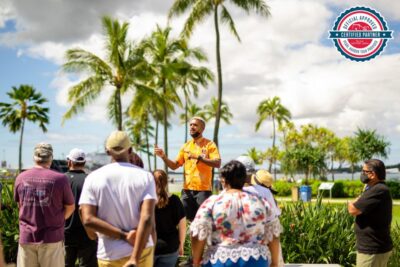
This is a six-hour, small-group day designed to hit the big emotional anchor of Oʻahu—Pearl Harbor—then switch gears to Honolulu’s landmarks. With a maximum group size of 15, you usually get more hands-on guidance than you’d get from a giant bus-and-go setup.
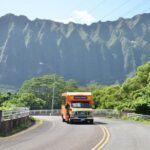
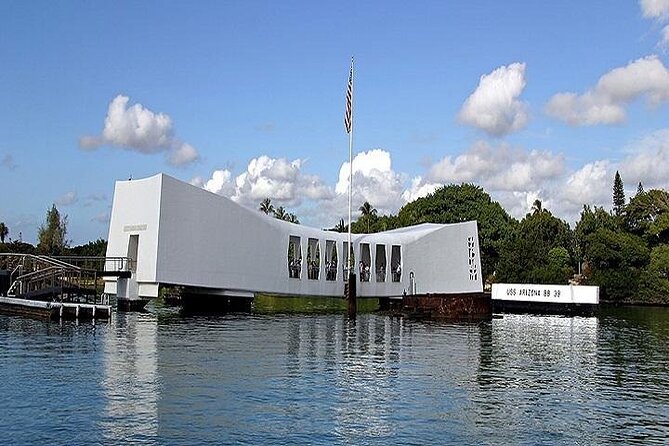
The Waikiki pickup is one of the most practical perks. You’re in an air-conditioned vehicle, and you don’t have to stitch together your own transport to get from hotel to harbor to downtown. Start time is listed at 7:00am, but here’s the catch: pickup can extend as much as 1.5 hours earlier because the USS Arizona passes depend on National Park Service availability. So if you hate early mornings, this is the trade.
Also, the tour is offered in English, and it’s described as a more personal experience. If you like historical context (not just facts read off a screen), you’re in the right place.
You can also read our reviews of more city tours in Honolulu


Pearl Harbor Visitor Center: the briefing that makes the memorial land harder
Before you ever reach the water, you get the orientation that helps the day click. At the Pearl Harbor Historic Sites Visitor Center, you’ll explore exhibits that set up the events leading to the December 7, 1941 attack. Then you watch a 23-minute documentary film that explains what happened, why it mattered, and how the USS Arizona Memorial fits into the story.
This matters because the memorial is not a checklist stop. It’s a place built for reflection. Seeing the documentary and exhibits first gives you something to hold onto while you’re there—so your visit feels less like tourism and more like understanding.
A good point from the experience descriptions: after the exhibits and film, you move directly into the next step rather than leaving you to figure out what comes next. That flow saves time and keeps momentum.
The calm Navy boat ride to the USS Arizona Memorial
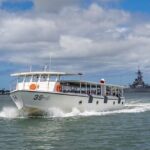
Next comes a U.S. Navy-operated boat ride across the harbor. The ride is short—about 10 minutes—and it’s described as calm, with views of surrounding military installations.
This is one of those small moments that changes how the day feels. Even if you’ve seen photos of the memorial, the water approach creates a physical shift: you’re no longer in the visitor center. You’re closing distance to the site, and the harbor views act like a visual transition from exhibits to remembrance.
In practical terms, it also helps that this segment is scheduled. You’re not guessing timing, lining up, or wondering where to stand.
Inside the USS Arizona Memorial: wreckage details and the names on the wall
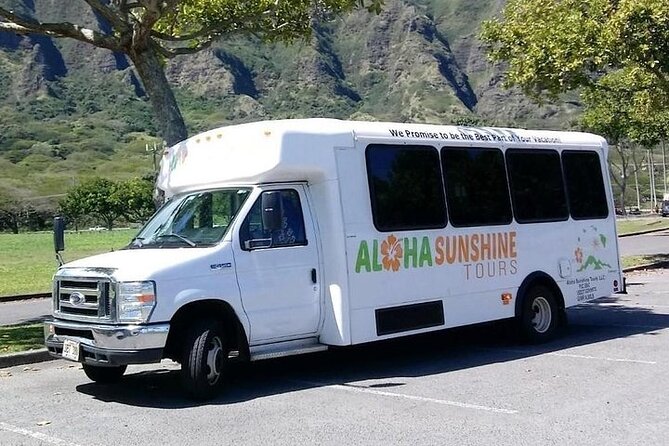
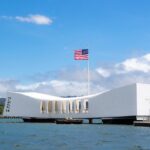
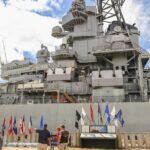
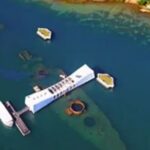
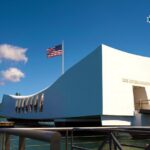
The USS Arizona Memorial itself is an open-air, white structure spanning the sunken battleship remains. Inside, you can look down into the water to see parts of the wreckage. The outline of the ship is visible just below the surface, and you may notice oil droplets rising—often referred to as The Tears of the Arizona.
That wording shows up often because it captures what this place does emotionally. It’s not dramatic in a Hollywood way. It’s quietly unsettling. The memorial is designed to support that mood: a space for respect, with a strong expectation of reflective behavior.
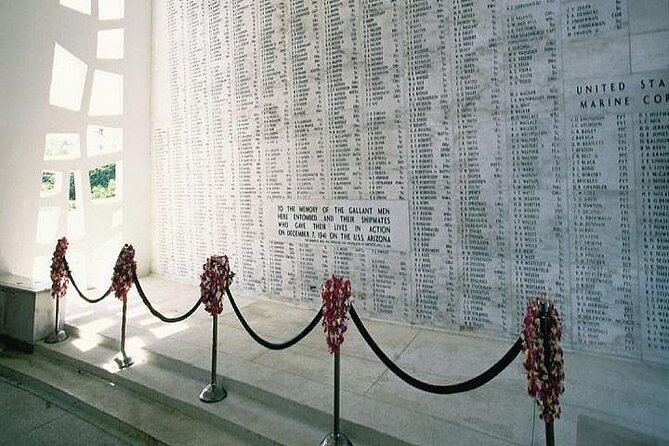
At the far end, there’s the Remembrance Wall with the names of 1,177 crew members who were lost aboard the USS Arizona. For many people, this is the moment that turns the visit from learning into remembering. You can read names at your own pace, and the quiet setup encourages you to slow down rather than snap photos and move on.
One more respectful detail that’s clearly emphasized in the experience guidelines: visitors are encouraged to maintain respectful silence while on the USS Arizona Memorial. In other words, this is not the stop to treat like a casual sightseeing photo break.
Downtown Honolulu in 45 minutes: narration plus orientation for later exploring
After Pearl Harbor, the tour shifts to downtown Honolulu for about 45 minutes. The key here is the narration. You’ll get a guided run through a blend of Hawaii’s cultural heritage, historic notes, and modern city life, all delivered by the guide.
This section is shorter than the memorial block, but it’s useful. It helps you understand where things are and why they matter, so if you want to add extra exploring later, you’ll have a mental map that’s more than just street names.
This kind of guided orientation can be especially handy when your day is already heavy. It gives you breathing room without dropping the educational thread.
You can also read our reviews of more historical tours in Honolulu




Punchbowl Crater (National Memorial Cemetery): the view you remember

Next is the National Memorial Cemetery of the Pacific, located on Punchbowl, an extinct volcano. The cemetery is the final resting place for thousands of U.S. military members, and the grounds are described as beautifully maintained, with rows of white headstones set against lush greenery.
What you get beyond the cemetery itself is the setting. Because it sits in the Punchbowl crater, you can also take in wide views of Honolulu—downtown, Diamond Head, and the coastline. Even if you’re not someone who seeks out memorials, the geography makes this one easier to appreciate as both a sacred place and a viewpoint.
Plan for this: it’s a stop where photos are okay, but the mood should stay respectful. It’s not a “turn it into a selfie spot” type of place.
Iolani Palace and Aliʻiōlani Hale area: one of America’s only royal palaces
Then you move to Iolani Palace for a 15-minute stop. Iolani Palace is noted as the only royal palace in the United States. If you’ve mostly seen Hawaiian culture through beaches and luaus, this is the shift that surprises people—in a good way. You learn about Hawaii’s monarchy and hear stories about King Kalākaua and Queen Liliʻuokalani, the last reigning monarchs.
From here, the tour includes a look at the King Kamehameha Statue, positioned in front of Aliʻiōlani Hale, which is now the Hawaii State Supreme Court building. The guide also offers “talk story” style explanation about the historic government building of the Hawaiian Kingdom.
Even with only 15 minutes, the goal seems to be orientation: get you close enough to understand what you’re looking at, then let the guide’s stories connect it to the rest of the day.
Kawaiahaʻo Church: the Westminster Abbey-style stop
After Iolani Palace, the tour also includes Kawaiahaʻo Church, described as one of the oldest Christian places of worship in Hawaii, and nicknamed the Westminster Abbey of the Pacific. Your guide explains its significance and its role in Hawaii’s religious history.
This stop works well after Iolani Palace because it adds another lens on the islands—how outside influences intersected with local history. It’s also a nice change of pace after the solemn Punchbowl and memorial sites. The church gives you architecture and story without the same level of emotional weight.
Price and value: is $75.99 actually fair for this day?
At $75.99 per person for about 6 hours, this tour is competing in a category where some options are cheaper but often do not include the key access item. Here, the USS Arizona Memorial ticket is included, and you also get round-trip Waikiki pickup by air-conditioned vehicle. You’re basically paying for convenience plus access plus guided timing.
You’re also paying for structure: a set sequence that bundles the Visitor Center exhibits and documentary, the Navy boat ride, then several Honolulu landmarks. For a lot of people, that’s what makes the day worth the money. You don’t have to coordinate entry windows, transportation timing, and stop-to-stop navigation while also trying to stay respectful in a memorial setting.
Is there any cost frustration possible? Yes—Pearl Harbor has restrictions on purses and bags, which means you may have to store items for $7.00 each. Meals are also at your own expense. So if you plan to pack a lot, budget for storage and plan lunch separately.
But if you travel light and you want a guided day that keeps you moving (without feeling like a sprint), the value looks solid for this itinerary.
Practical day-of tips: bags, shoes, and the silence rule
This is one of those tours where small preparation makes the day smoother.
Pearl Harbor bag rules matter. Purses and bags are not allowed inside Pearl Harbor. You can store bags for $7.00 each. Clear plastic bags are allowed if the contents are visible (similar to what you might use for sports events). Bags that contain medical equipment that is unsuitable for lightweight clear bags are allowed. Food and water that is not concealed in a package is allowed.
Also, wear comfortable shoes. You’ll be walking much of the tour. There’s a stated walking limitation: it’s not recommended for travelers who cannot walk 4 city blocks. So if walking long stretches is hard for you, plan another style of sightseeing day.
A couple behavior rules also come up:
- No smoking on the visitor center grounds or at the memorial.
- Respectful silence is encouraged while on the USS Arizona Memorial.
- No swimwear is allowed.
Finally, the tour notes that some sites are subject to closure due to stormy weather. So it’s smart to keep a little flexibility in your vacation schedule.
What the guide style adds to the itinerary
The itinerary is more than stops on a map. The guidance seems to be where a lot of the payoff lives.
The guide names that show up in prior experience include Leena Bush, Jeremiah, and Jorge. The common thread is that the guides add history during the driving segments—not just at the stops. That matters because long transfers can feel like wasted time on other tours. Here, the narration turns the ride between sites into part of the learning.
If you like a guide who can connect monarchy stories, city context, and Pearl Harbor meaning into one coherent day, this is the structure you want.
Who this tour fits best
You’ll likely love this tour if:
- You want USS Arizona Memorial access without extra ticket planning.
- You appreciate a small-group format and guided narration.
- You want one organized day that covers both Pearl Harbor and Honolulu landmarks.
It may be a tougher fit if:
- You dislike early starts (pickup can run up to 1.5 hours earlier).
- You’re not comfortable with walking around a lot of sights (the guideline is 4 city blocks).
- You prefer fully independent touring where you can roam at your own pace without a schedule.
Should you book this USS Arizona Memorial and Honolulu highlights tour?
If your priority is to see the USS Arizona Memorial and you also want a guided sampler of Honolulu without juggling transportation, I’d book it. The combination of Waikiki pickup, air-conditioned comfort, and an included USS Arizona Memorial ticket is the backbone of the value. Add in the small group size, and the day feels more manageable than the big-bus alternatives.
If you’re the type who plans to bring a lot of bags or you need lots of breaks, consider packing light and planning your meals. Also, because Pearl Harbor and USS Arizona access can affect timing, give yourself the buffer for that earlier pickup window.
If you’re flexible on timing and you want the day to feel organized, this is a strong, practical way to spend your time in Oʻahu.
FAQ
How long is the Arizona Memorial and Historic Honolulu City Tour?
The tour duration is listed at about 6 hours.
Is pickup from Waikiki included?
Yes. Pickup and drop-off service from most major Waikiki hotels is included. Pickup times can change and may start up to 1.5 hours earlier than the listed tour time.
Do I need to buy a separate ticket for the USS Arizona Memorial?
No. The USS Arizona Memorial admission ticket is included.
Are meals included in the tour price?
No. Meals are at your own expense.
Are bags allowed inside Pearl Harbor?
Purses and bags are not allowed inside Pearl Harbor. Bags can be stored for $7.00 each. Clear plastic bags are allowed if contents are visible, and medical equipment bags that don’t fit lightweight clear bag rules are allowed.
Is the tour offered in English?
Yes, the tour is offered in English.
What group size should I expect?
The tour has a maximum of 15 people.