REVIEW · HISTORICAL TOURS
History & Culture Tour in Honolulu via Segway
Book on Viator →Operated by Segway of Hawaii - Kakaako · Bookable on Viator
Big-name landmarks, zero leg burn. This Honolulu History & Culture Segway Tour strings together key government and royal sites fast, with a guide who keeps you oriented using two-way radios. I love that the plan is built for speed without losing context, so you cover more than you could on foot in the same morning.
Second, I really like the human touch: small group size (max 8) means you get personal attention, and first-time riders can get comfortable quickly. Guides like Jeanne and Zach are repeatedly praised for making the ride feel smooth and the stories easy to follow, even if you are new to Segways.
One possible drawback: it depends on good weather, and you are moving at a steady pace outdoors, so plan to dress for sun, wind, or quick changes.
In This Review
- Key highlights at a glance
- Why a Segway History Loop Works So Well in Honolulu
- Getting Set Up at Segway of Hawaii in Kaka’ako
- Mission Houses, Kawaiahao Church, and Honolulu Hale in One Glide
- The King Kamehameha Statue and Supreme Court Era Power
- Iolani Palace and Royal Barracks: Where the Stories Get Personal
- Capitol Architecture, Hotel Street, and Chinatown’s Built-In Variety
- Bishop Street, Merchant Street, and a Harbor Moment at Aloha Tower
- Kaka’ako Waterfront Promenade, Point Panic Surfers, and the Ehime Maru Memorial
- Price, Timing, and What You Actually Get for $254.14
- Safety, Comfort, and Who This Tour Fits Best
- Should You Book This Honolulu History and Culture Segway Tour?
- FAQ
- How long is the Honolulu History & Culture tour by Segway?
- Where does the tour start and end?
- What’s included in the price?
- Is transportation from Waikiki included?
- What group size should I expect?
- What’s the start time?
- What’s the cancellation policy?
Key highlights at a glance
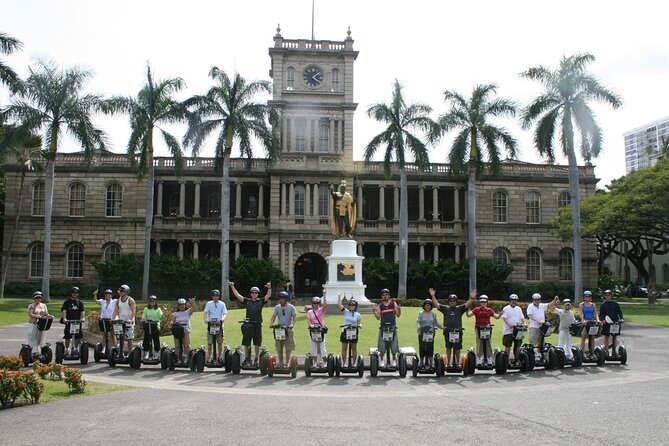
- Small group (up to 8) keeps the tour from feeling like a production line
- Two-way headset radios help you hear the guide clearly and ask questions on the go
- Mission-era to monarchy landmarks in one loop, including Kawaiahao Church and Iolani Palace
- Government buildings by Segway speed, including the King Kamehameha Statue area and Honolulu Hale
- Aloha Tower plus harbor feeds add a fun, visual history-meets-modern moment
- Kaka’ako Waterfront Park closes the day with ocean views and the Ehime Maru Memorial
Why a Segway History Loop Works So Well in Honolulu
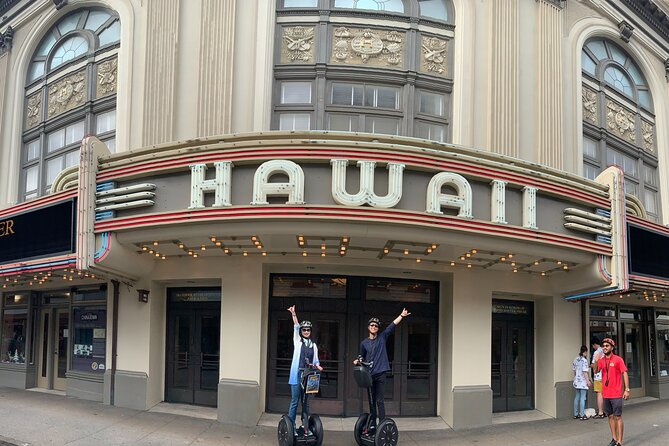
Honolulu can be spread out, and walking a full “history day” often turns into tired feet before the best stops. This Segway tour is built for getting your bearings fast and turning a short window into a smart overview. In about 2 hours 30 minutes, you see a chain of places that help explain how Honolulu became what it is today.
Two-way radio headsets change the experience. Instead of straining to hear over street noise, you stay connected to the guide, and the conversation stays practical. I also like that the ride isn’t just sightseeing for photos; it is framed as a timeline of power, place, and culture.
The other big win is that the tour covers big-feeling sites without requiring you to “earn” them with hours of walking. If you want history but you also want your afternoon free, this is a strong match.
You can also read our reviews of more historical tours in Honolulu



Getting Set Up at Segway of Hawaii in Kaka’ako
Your tour starts at Segway of Hawaii – Kaka’ako, at 1687 Kalauokalani Way. The timing given is 9:00 am, and the activity ends back at the same meeting point, so your morning stays simple.
You’ll get a helmet, bottled water, and a two-way radio headset for communication. That setup matters because you are learning a new way to get around while moving through real streets. The good news: reviews highlight that even first-timers pick up the Segway quickly when the guide coaches you on comfort and safe control.
If you are staying in Waikiki, there is an optional round-trip transfer for $20 per person. That extra cost can be worth it if you do not want to deal with parking or public transport on a tight schedule. If you are already near public transit, you may find the meeting point easier to reach than you expect.
Mission Houses, Kawaiahao Church, and Honolulu Hale in One Glide
The tour opens in the area of the Mission Houses, built in 1820 by Hawaii’s first missionaries. This is one of those moments where the buildings do not scream for attention, but they carry weight. When you see the site in motion—without rushing past it—you get a feel for the early period of Christian mission influence in the islands.
Right next door, you also see the historic Kawaiahao Church and graveyard, also built in 1820. The stop is paired with the idea that many of Hawaii’s former Ali’i (royalty) are buried here, which adds emotional context to what could otherwise be just old architecture.
From there, you glance across King Street at Honolulu Hale, Honolulu’s City Hall. This works because it links past and present governance in a way that makes sense: you are seeing how authority shows up in stone, site placement, and civic symbolism, all within a short ride.
Practical note: this part of the tour is more “listening” than “wandering.” If you love reading plaques and slow pacing, you may want to use the photo stops to ask the guide for specific details.
The King Kamehameha Statue and Supreme Court Era Power
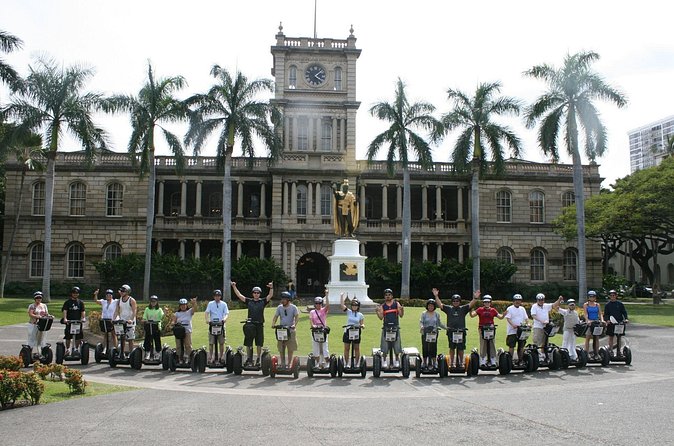
Next, you glide to the gold-encrusted King Kamehameha Statue, one of three in the world. It sits in front of the Hawaii State Supreme Court building, which was once the seat of Hawaii’s government when the islands were a nation. That pairing is clever, because it puts nationhood and modern courts in the same frame.
This is one of the places where the Segway really earns its keep. You are not just seeing a statue from afar—you are understanding why that statue is positioned where it is. It helps you connect royal identity to political space.
The tour also keeps you moving along major roads (King Street), so you get a better mental map of downtown Honolulu. If you are the type who likes to return later and explore, this is an efficient way to learn where to stand.
Iolani Palace and Royal Barracks: Where the Stories Get Personal
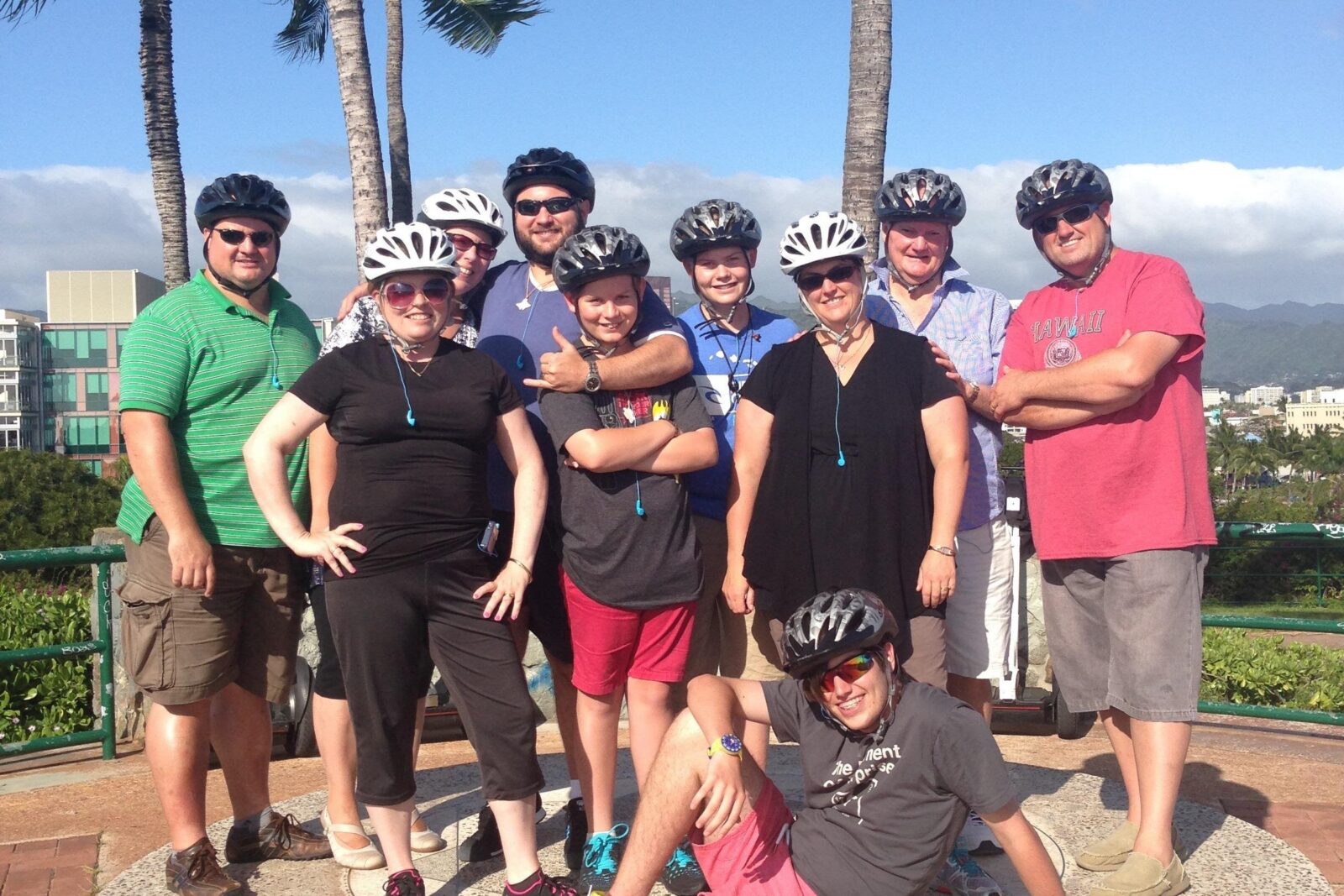
One of the biggest reasons people book this tour is the stop at Iolani Palace and Royal Barracks. The tour goes inside the palace grounds and glides around the area, including key features like the banyan trees and time to stop at the Queen Lili’uokalani Statue.
Iolani Palace is described as the only palace on American soil built by King Kalakaua, and today it functions as a museum. Even without a long museum session, the Segway loop gives you a meaningful first look: the setting, the layout, and the way this place sits as a symbol of Hawaiian monarchy.
The inclusion of Queen Lili’uokalani matters. She is identified as Hawaii’s last ruling monarch until the Americans overthrew her government and the Hawaiian Nation. Having that framing while you are physically at the palace grounds makes the history feel less like facts on a page.
A practical downside: this portion can feel like a “guided loop,” not a slow walk with time to read every exhibit. If your ideal palace visit means lingering in galleries, consider pairing this with a separate palace museum ticket later.




Capitol Architecture, Hotel Street, and Chinatown’s Built-In Variety
After the palace area, the route moves toward Hawaii’s State Capitol Building, noted for its unique architecture. This is a nice contrast after the royal sites. You are shifting from monarchy symbols to state structures, and the tour uses the change to help you understand the islands’ transitions in government and identity.
Passing the State Art Museum and along Hotel Street adds another layer: street-level history. Hotel Street has a colorful past, and the tour uses it as a bridge to the next stop—Chinatown.
Then you hit Chinatown’s Shopping Mall, a concentrated area with noodle factories, open markets, and a mix of people from across the world. Even if you do not plan to buy anything, the atmosphere alone makes the tour feel less like only “official history.” It is also where you get a sense of Honolulu as a living city, not a museum district.
If you are hungry, this is one of the best moments to decide on a snack—because the tour is already set up for quick stops, and Chinatown naturally pulls you into food browsing.
Bishop Street, Merchant Street, and a Harbor Moment at Aloha Tower
Next comes Honolulu’s version of finance streets: Bishop Street, called Honolulu’s Wall Street, followed by Merchant Street with its artistic buildings. The route also notes historic transportation buildings that are more than 150 years old, which helps you see how movement and trade shaped the city long before modern highways.
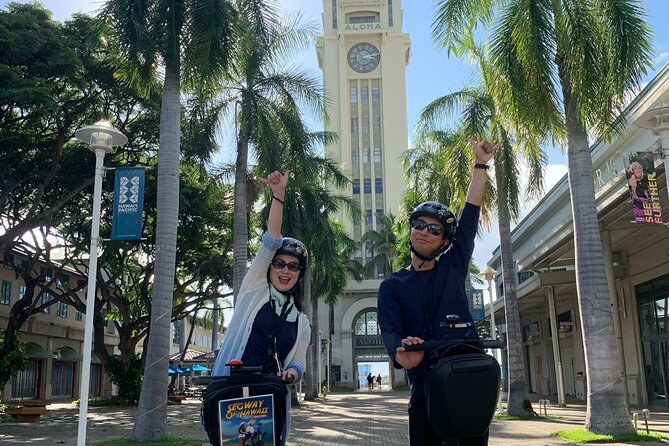
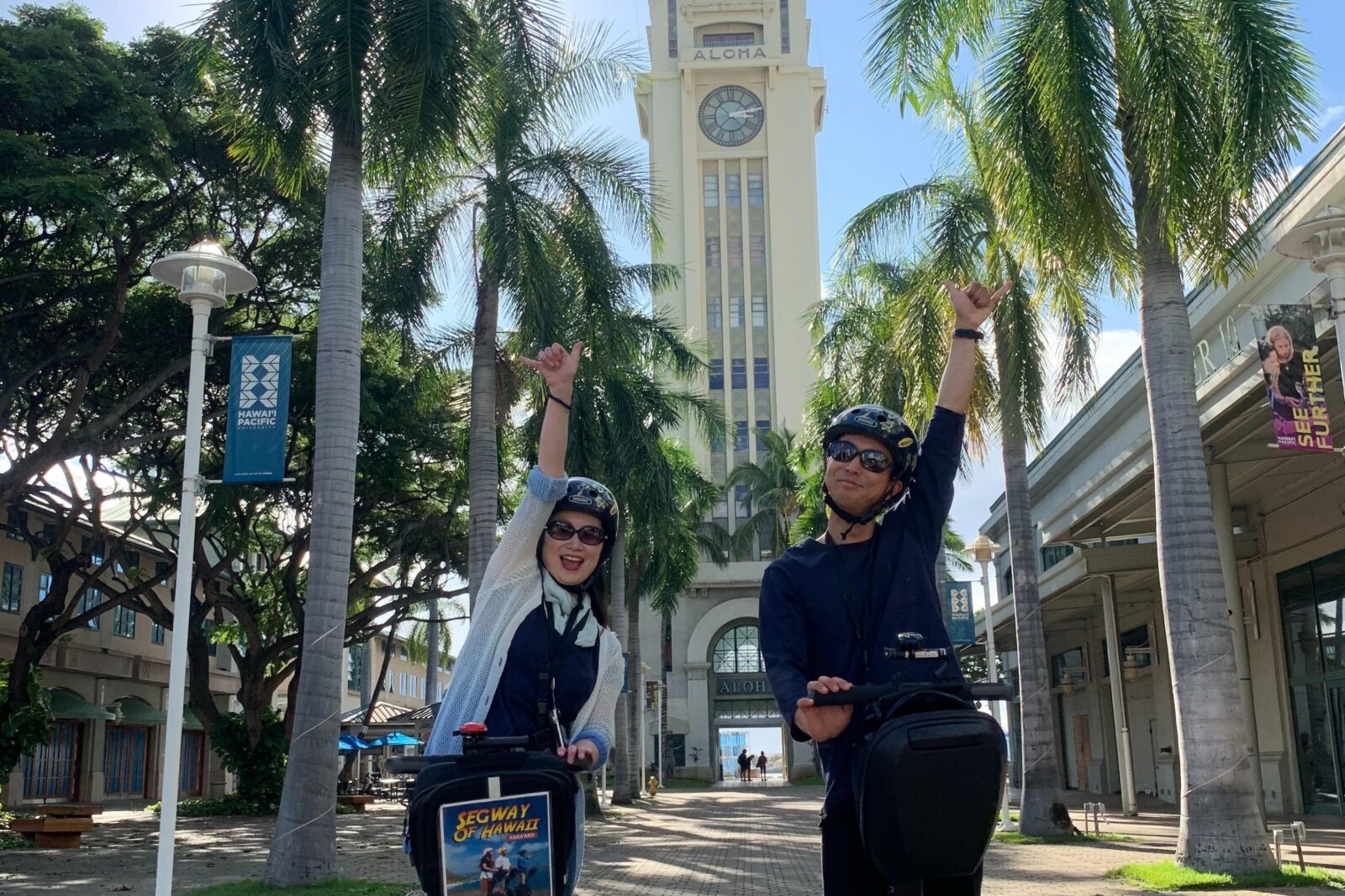
You then transition toward Honolulu Harbor and the Aloha Tower. The tower was built in 1926 and was the tallest building in Hawaii at the time. That is a great fact to remember because it makes the tower feel like a real milestone, not just a pretty landmark.
The tour adds a modern twist right here: you check out the restored coral reef and fish feeding nearby. That portion is memorable because it connects nature, harbor history, and today’s conservation-style viewing in one place.
This harbor segment is also where the ride feels most cinematic. You glide along the waterfront and get those big-city-and-islands views without having to plan multiple separate stops.
Kaka’ako Waterfront Promenade, Point Panic Surfers, and the Ehime Maru Memorial
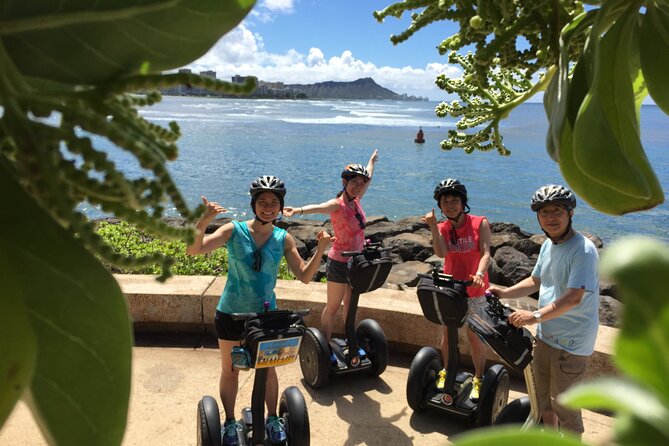
To close, you move to Kaka’ako Waterfront Park and its Promenade. You get a look at Point Panic, where you can check out the surfers, plus the feel of ocean action just steps from city streets.
Then the route includes the Ehime Maru Memorial and the Echo Stone. This is a solemn beat in the middle of a morning that otherwise leans lighter. The tour’s pacing matters here—because after government and food streets, this stop reminds you that local history includes tragedy, memory, and reflection.
Finally, you glide back toward the ocean and end at Ala Moana Regional Beach Park for a scenic send-off. It is a good finishing move. You end with open air and horizon views, which helps your brain “reset” after all the landmark information.
Price, Timing, and What You Actually Get for $254.14
At $254.14 per person for about 2 hours 30 minutes, this tour is not the cheapest way to see downtown Honolulu. The value comes from three things: time efficiency, guide-led context, and the mechanics of getting around.
A walking tour could cover some of the same areas, but you would likely lose the government-palace-harbor sequence in a long day of transfers, traffic, and hills. With a Segway, you can cover more ground while still hearing a running explanation via headset.
The tour also has small group size (max 8), which matters when you want questions answered without the guide rushing. Reviews repeatedly praise that guides like Jeanne/Jeanie, Michael, Zach, and Allen make the ride feel safe and enjoyable, while still delivering enough detail to feel worth your time.
There’s also bottled water included, plus transfers from Waikiki are optional for $20 per person. If you already know you will be in Waikiki anyway, adding the transfer can be a practical way to reduce stress and start on time.
Safety, Comfort, and Who This Tour Fits Best
Most people can participate, and the ride is designed so first-timers can get comfortable quickly. Reviews specifically mention the Segway being easy to learn during the tour, with a guide who helps people feel safe and confident.
Still, think about comfort needs before you book. This is an outdoor ride through streets and sidewalks, so you’ll want good shoes, sun protection, and a calm mindset for traffic-adjacent situations. If you get motion-sick or dislike being on a moving device for an extended stretch, this might feel like more than you bargained for.
Where this really shines is for history buffs who want faster coverage than walking. It is also great if you only have a few hours in Honolulu and want a guided overview you can build on afterward. If you are traveling with people who don’t want long museum sessions but still want meaningful stops, this tour finds a nice middle ground.
Should You Book This Honolulu History and Culture Segway Tour?
If your goal is a smart, guided sweep through downtown Honolulu—Mission Houses, Iolani Palace, Chinatown, Aloha Tower, and the Kaka’ako waterfront—this is an excellent pick. I’d book it if you like history explained in plain language and you want to see multiple eras without spending the day walking.
I would think twice if you prefer slow, self-guided time at museums, or if weather swings could derail outdoor plans. And if you hate the idea of riding a motorized scooter-like device, stick to a walking approach instead.
For the right traveler, this tour is one of the most efficient ways to turn a morning into real context—complete with photo stops, communication through two-way radios, and standout guides like Jeanne and Zach who keep the stories moving.
FAQ
How long is the Honolulu History & Culture tour by Segway?
The tour runs for about 2 hours 30 minutes.
Where does the tour start and end?
It starts at Segway of Hawaii – Kaka’ako (1687 Kalauokalani Way, Honolulu) and ends back at the same meeting point.
What’s included in the price?
Included items are bottled water, a colorful helmet, and a knowledgeable tour guide with two-way radio headset support.
Is transportation from Waikiki included?
Round-trip transfer from Waikiki to Kaka’ako is not included, but it is available for an additional $20 per person. There are four Waikiki pick-up locations.
What group size should I expect?
The tour has a maximum of 8 travelers.
What’s the start time?
The tour starts at 9:00 am.
What’s the cancellation policy?
You can cancel for a full refund if you cancel at least 24 hours before the experience starts. Free cancellation is also offered if the experience is canceled due to poor weather, with a different date or full refund offered.