REVIEW · PEARL HARBOR TOURS
Battleships of WWII at Pearl Harbor from Waikiki
Book on Viator →Operated by Aloha Sunshine Tours · Bookable on Viator
Pearl Harbor landings feel personal. This Waikiki-area day trip strings together the big WWII stops with guided narration and guaranteed admission, so you spend your morning at the sites instead of hunting for tickets. I like the clear payoff: the solemn USS Arizona Memorial followed by the deck walk on the USS Missouri, which ties the story from attack to surrender. One thing to consider: it is a long day (about 7 to 9 hours) with lots of walking, plus strict rules for bags at the harbor.
I also like that the format is built for real people on vacation. Hotel-area pickup and drop-off are included, and your guide provides the entry tickets on the day of your tour, which helps when Pearl Harbor demand is high. If you want a less rushed experience at the museum exhibits, this isn’t the one designed for that.
In This Review
- Quick takeaways
- Pearl Harbor without the ticket scramble from Waikiki
- The 7:00am rhythm: Visitor Center film, ferry ride, then USS Arizona
- USS Arizona Memorial: quiet rules, visible remains, and the Remembrance Wall
- Walking the USS Missouri deck: surrender context you can feel in your feet
- USS Oklahoma Memorial on Ford Island: a land-based tribute to heavy losses
- Beyond the ships: Punchbowl views, Iolani Palace stories, and church architecture
- National Memorial Cemetery of the Pacific (Punchbowl)
- Iolani Palace and Aliʻiōlani Hale area
- Kawaiahaʻo Church
- Downtown Honolulu narration: 45 minutes to tie the city together
- Price and value: what $116.99 covers on a long day
- Practical tips that make the day easier
- Who this WWII Pearl Harbor tour suits best
- Should you book this Pearl Harbor and WWII battleships tour?
- FAQ
- What time does the tour start?
- Is pickup from Waikiki included?
- Where do airport pickups happen?
- Are entry tickets included for Pearl Harbor sites?
- Can I bring bags or purses into Pearl Harbor?
- Is lunch included?
- What if weather affects the tour?
Quick takeaways
- Guaranteed Pearl Harbor entry means you can plan your day around the memorials, not ticket availability.
- A guide who connects the dots helps the 1941 events make more sense, especially after the orientation film.
- USS Arizona is built for quiet reflection, with a respectful-silence expectation once you’re on the memorial.
- USS Missouri is your WWII payoff deck walk, including the famous surrender moment context.
- More than ships: Punchbowl, Iolani Palace, and Kawaiahaʻo Church add the Hawaii story beyond 1941.
- Small group cap (up to 24) keeps the day from feeling like you’re inside a cattle car.
Pearl Harbor without the ticket scramble from Waikiki
If your idea of a great vacation day is reliable logistics, this one starts strong. The tour includes pickup from the Waikiki area, and your guide supplies the admission tickets for the Pearl Harbor attractions on the morning of your tour. That matters because Pearl Harbor planning can get stressful fast, especially if you’re only in Honolulu for a short window.
For $116.99 per person, you’re paying for two things at once: transportation plus time-saving access. You still have to follow the site rules, but you avoid the separate chore of trying to secure timed entry while juggling jet lag and Hawaii traffic.
A final smart angle: it’s built around a clear flow. You’re not wandering between spots; you’re moving from orientation to memorial to ship history, with narration that ties the stops together.
You can also read our reviews of more tours and experiences in Honolulu.


The 7:00am rhythm: Visitor Center film, ferry ride, then USS Arizona
The day starts early (7:00 am), which is a practical choice for Pearl Harbor. You’ll begin at the Pearl Harbor Historic Sites Visitor Center, where you can explore exhibits that set the scene before you go to the water.
One of the most useful parts here is the short 23-minute documentary. It gives you the basic timeline leading up to December 7, 1941, and it frames why the USS Arizona Memorial matters so much. Even if you’ve read about Pearl Harbor before, this kind of quick orientation helps the rest of the day click.
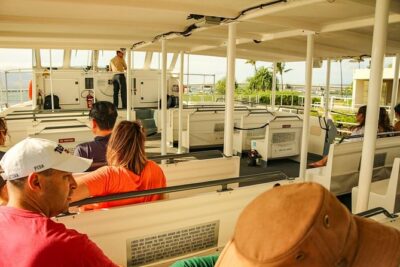
After the exhibits and film, you board a U.S. Navy-operated boat for the short ride to the USS Arizona area. The crossing takes about 10 minutes and is described as calm, with views of the surrounding military installations. That boat moment is more than transportation; it’s the visual transition from “I’m in Honolulu” to “I’m about to see history in its original setting.”
Then you’re at the memorial itself, where you’ll have about 1 hour.
USS Arizona Memorial: quiet rules, visible remains, and the Remembrance Wall
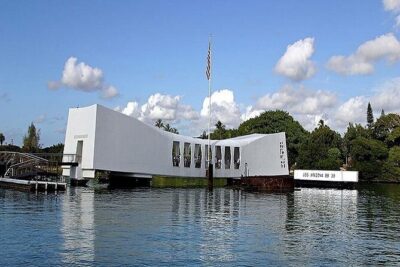
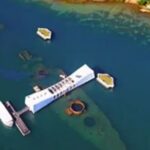
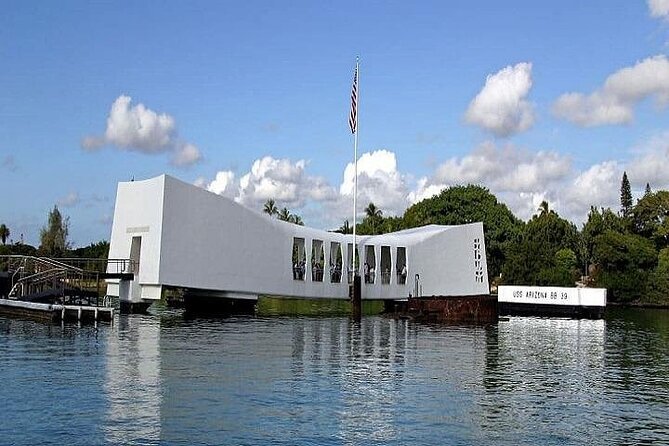
This is the emotional centerpiece of the day. The USS Arizona Memorial is a white, open-air structure spanning the remains of the sunken battleship. It’s designed for reflection, and the atmosphere is meant to be respectful.
Here’s what makes the experience specific (and worth your time). Inside the memorial, you can look down into the water and see parts of the ship below the surface. The ship’s outline is visible, and oil droplets often called The Tears of the Arizona can still be seen rising to the surface. That’s a detail that turns the visit from “viewing history” into a direct reminder of what the sailors and Marines endured.
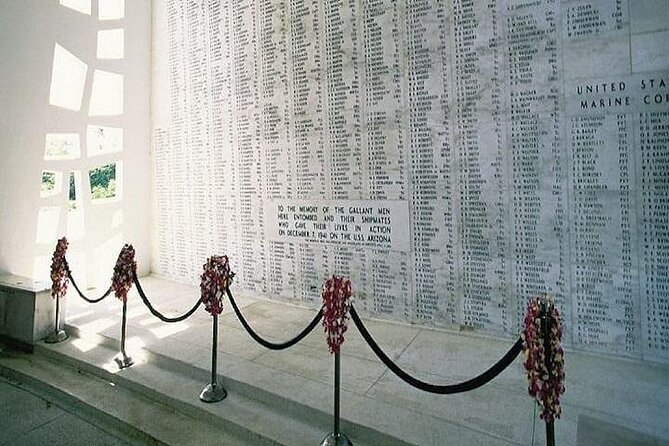
At the far end, you’ll find the Remembrance Wall, inscribed with the names of 1,177 crew members who died aboard the USS Arizona. Seeing names laid out like that is powerful in a way no general story can replace. It’s also one reason this tour gives you real time here instead of just a drive-by photo stop.
One consideration: the memorial experience asks for respectful silence while you’re there. If you prefer constant conversation during tours, this stop will feel quieter than the rest of the day.
Walking the USS Missouri deck: surrender context you can feel in your feet
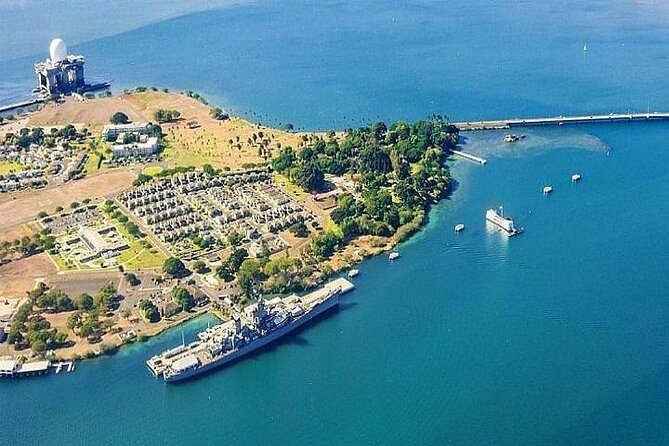
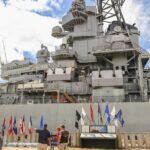
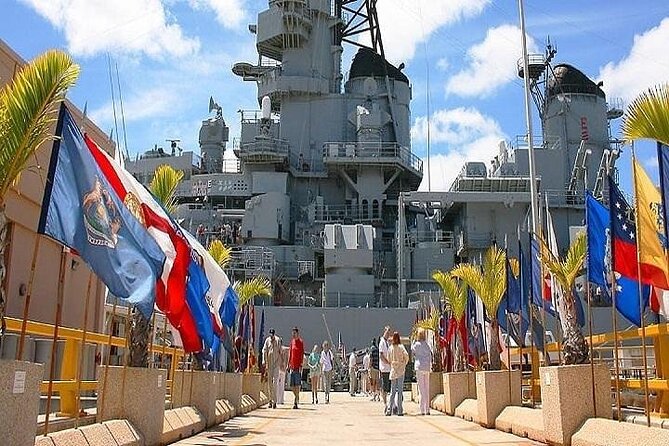
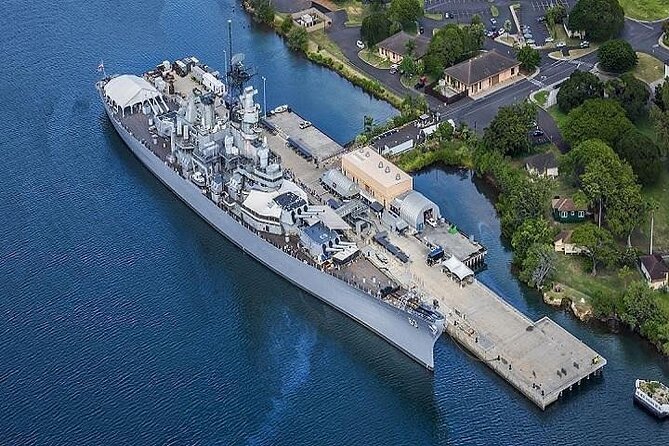
After USS Arizona’s quiet gravity, the day shifts into “how the war ended” mode. The tour takes you to the Battleship Missouri Memorial, described as the last battleship the U.S. ever built.
You’ll walk the deck with a guided deck tour that places the story in recognizable WWII landmarks—especially where General MacArthur and Admiral Chester Nimitz relate to the ship’s role. The deck tour also connects to the moment in 1945 when the Instrument of Surrender was signed aboard the Missouri, effectively ending WWII.
What I like most here is that you don’t just look at a ship. The tour includes time to view details such as officer and crew quarters, artillery, and a reference to a kamikaze aircraft crash. You’ll also see context around a surrender ceremony. Even if you know the headline (WWII ended), these physical details help you understand what kind of space that surrender happened in.
The practical drawback is simple: deck tours involve walking and stairs, and you’ll likely be on your feet more than you expected by this point in the day. Bring the right shoes and pace yourself.
USS Oklahoma Memorial on Ford Island: a land-based tribute to heavy losses
Next comes the USS Oklahoma Memorial, described as the only land-based memorial at Pearl Harbor. The ship’s losses were severe—more than 400 servicemen died during the attack, and the Oklahoma had the second-highest casualties only behind the USS Arizona on that day.
This stop is valuable because it widens your understanding of the attack beyond the Arizona alone. When people talk Pearl Harbor, the Arizona often becomes the default. Visiting Oklahoma helps balance the story: multiple ships were hit, multiple tragedies unfolded, and the impact was not limited to one moment or one vessel.
You’ll get around 2 hours here, which is enough time to absorb what you’re seeing rather than rushing through.
As with the rest of Pearl Harbor, watch the rules around bags and follow staff instructions quickly. The site works best when everyone moves together and you’re not stuck searching for a needed item.
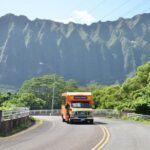
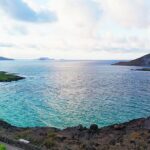

Beyond the ships: Punchbowl views, Iolani Palace stories, and church architecture
Not every Pearl Harbor tour gives you Hawaii’s broader context, but this one does. After the harbor stops, you shift into Honolulu and stop at landmarks that connect the islands’ past to the place you’re standing.
National Memorial Cemetery of the Pacific (Punchbowl)
The National Memorial Cemetery of the Pacific sits on top of an extinct volcano known as Punchbowl. It’s a final resting place for thousands of U.S. military members, marked by well-kept grounds and rows of white headstones against green vegetation.
The location also gives you something practical: great views over Honolulu—downtown, Diamond Head, and the coastline. Those sightlines help you picture the geography that surrounds the military areas you saw earlier.
Iolani Palace and Aliʻiōlani Hale area
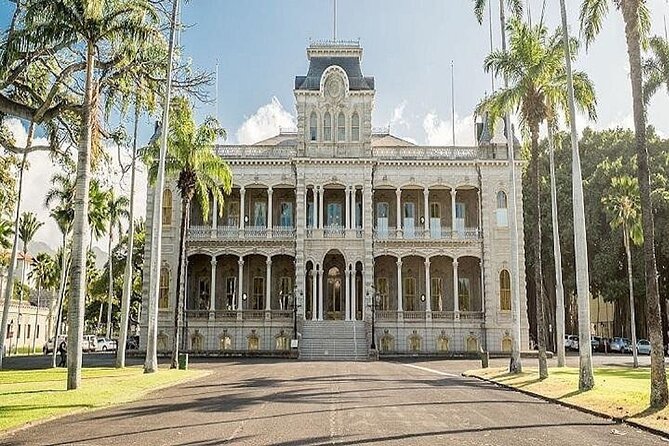
Next is Iolani Palace, the only royal palace in the United States. You’ll learn about Hawaii’s monarchy and hear stories tied to King Kalākaua and Queen Liliʻuokalani, the last reigning monarchs.
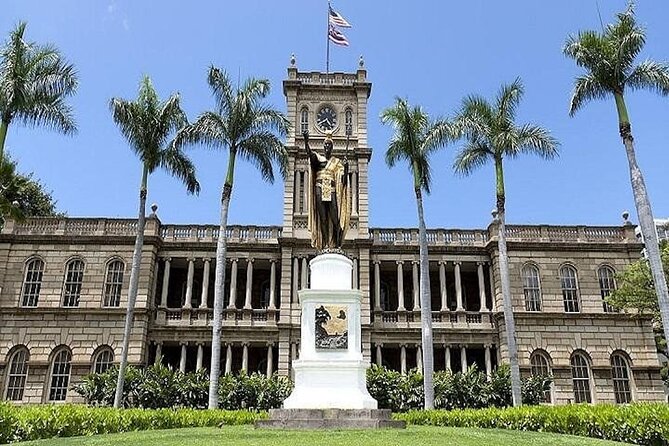
Even the short time at the palace works because it’s not just a building visit. Your guide adds context about the monarchy and then shifts into what the area represents, including viewing the King Kamehameha Statue in front of Aliʻiōlani Hale. The tour includes a talk-story approach about the Hawaiian Kingdom’s original government building.
A quick note: palace time is listed at about 15 minutes, so you’ll want to be ready to listen and keep moving.
Kawaiahaʻo Church
You’ll also visit Kawaiahaʻo Church, nicknamed the Westminster Abbey of the Pacific, and you’ll learn about its role as one of the oldest Christian places of worship in Hawaii and its significance in the islands’ religious history. This is a nice change of pace after the WWII-focused stops, and it helps you remember that Honolulu’s story didn’t start in 1941.
Downtown Honolulu narration: 45 minutes to tie the city together
The tour includes a downtown Honolulu portion with narration, about 45 minutes. It’s described as a blend of Hawaii’s cultural heritage and modern city life.
To me, this time works best as a transition. You’ve spent hours in a heavy historical setting, and then suddenly you’re looking at the city itself. The guide’s narration gives you a few anchors so downtown doesn’t feel like just passing scenery.
If your goal is to see Pearl Harbor and also get a human sense of Honolulu, this stop helps.
Price and value: what $116.99 covers on a long day
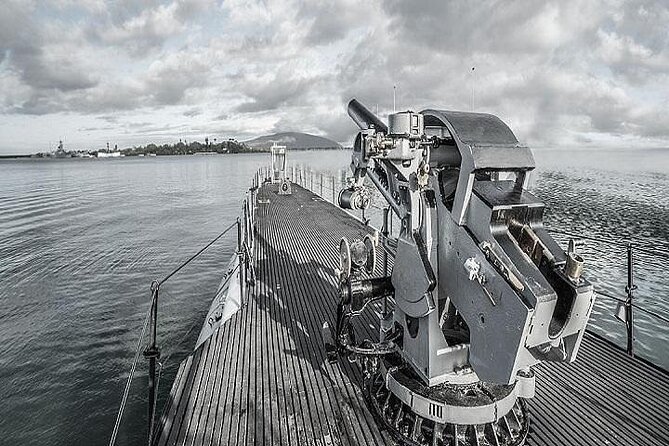
At $116.99 per person, you’re paying for a full-day package. That includes air-conditioned vehicle, Waikiki-area pickup and drop-off, and your guide’s narration across multiple major sites. Most importantly, you’re covered for admission tickets to the Pearl Harbor attractions via your guide.
Where the value really shows up is the time you save:
- Pearl Harbor can be hard to plan when demand is high.
- This format handles access so you can focus on the experience itself.
- You’re also getting non-Pearl Harbor cultural stops without needing a separate reservation plan.
The tradeoff is that this is not a slow museum day. You’re visiting key memorials and ships, plus a handful of major Honolulu landmarks. If your top priority is deep time in exhibit halls, you’ll probably want a different Pearl Harbor option designed specifically for museum time.
Practical tips that make the day easier
This tour asks you to be prepared, but the good news is the rules are simple.
- Wear comfortable shoes. You’ll be walking much of the day.
- Sun and weather matter. Sites can close due to stormy weather, so you should expect some schedule sensitivity.
- Bags and purses aren’t allowed inside Pearl Harbor. All bags may be stored for $7.00 each. Only clear plastic bags are allowed inside (clear and contents visible), and certain medical-equipment bag situations are allowed if the bag contents are transparent and appropriate.
- At the USS Arizona Memorial, plan for respectful silence while you’re there.
- There are on-site dining options at the Visitor Center and near the Battleship Missouri, plus snack and cafe options where you can purchase something before or after.
One small but important comfort tip: bring the kind of essentials you can access fast (like a phone and wallet). That reduces fumbling during bag checks and makes the day smoother if you’re crossing between multiple stops.
Also, no swimwear is allowed, and no smoking is permitted on visitor center grounds or at the memorial. If you’re wondering, yes, those rules get enforced.
Who this WWII Pearl Harbor tour suits best
This fits best if you want:
- A guided, story-connected Pearl Harbor day with the most important stops handled in one package.
- Hotel-area convenience and a schedule that starts early.
- A mix of WWII memorials and Honolulu landmarks like Iolani Palace and Punchbowl.
It may not be ideal if you:
- Prefer lots of quiet time in museums rather than memorials and deck walks.
- Struggle with walking. It’s noted as not recommended for travelers who cannot walk about 4 city blocks.
Group size is capped at 24, which usually keeps the day organized without feeling like a giant crowd crush.
Should you book this Pearl Harbor and WWII battleships tour?
If your priority is to see the key WWII sites at Pearl Harbor with guided context and no ticket stress, I think this is a strong choice. The combination of USS Arizona Memorial (the emotional center) and USS Missouri (the surrender and ship-deck story) is exactly the pairing that makes the day feel complete.
Book it if you also want Honolulu beyond the harbor—Punchbowl’s viewpoint, Iolani Palace’s monarchy stories, and Kawaiahaʻo Church’s significance give you a fuller sense of place.
Skip or consider another option if you want a heavier museum focus, or if a 7 to 9 hour day with walking isn’t your style. Otherwise, with the included admission and pickup, this is a practical way to spend a high-impact day in Oʻahu.
FAQ
What time does the tour start?
The start time is 7:00 am, and the total day runs about 7 to 9 hours.
Is pickup from Waikiki included?
Yes. Pickup and drop-off in the Waikiki area is included, and you’ll be traveling in an air-conditioned vehicle.
Where do airport pickups happen?
If you flew Southwest Airlines, pickup is at Terminal 2, baggage claim 31, area 5. If you flew Hawaiian Airlines, pickup is at terminal 1, area 1.
Are entry tickets included for Pearl Harbor sites?
Yes. Your guide provides the entry tickets for the attractions included in the tour on the day of your visit.
Can I bring bags or purses into Pearl Harbor?
No. Purses and bags are not allowed inside Pearl Harbor. Bags may be stored for $7.00 each, and clear plastic bags are allowed if the contents are visible.
Is lunch included?
No. Meals are at your own expense, though there are a few places to buy food near the Visitor Center and around the Battleship Missouri area.
What if weather affects the tour?
Sites are subject to close due to stormy weather. If the experience is canceled because of poor weather, you’ll be offered a different date or a full refund.