REVIEW · NORTH SHORE TOURS
North Shore Beginner Surf Lesson, Hawaii
Book on Viator →Operated by Surf N Sea · Bookable on Viator
Surf lessons on Oahu are pure courage training. This North Shore beginner lesson turns the big, scary unknown into a clear plan: land practice first, then real wave time with a small group for close coaching. Best part for your wallet and your sanity: all the equipment is included, so you’re not scrambling for rentals right before you paddle out.
One watch-out: there’s no transportation provided, so you’ll need to drive yourself from Surf N Sea to the surf spot.
In This Review
- Key things to know before you go
- Why the North Shore is such a smart place to learn
- What your $104 buys (and why it’s fair value)
- The 2-hour plan: land basics first, then wave time
- Waialua Bay: your starting line for paddling and first successes
- Haleiwa: finishing strong with etiquette and confidence
- How the instructors (like Henry and Travis) help you actually learn
- Gear and comfort tips that can save your day
- Who should book this lesson (and who should skip it)
- Price and logistics: the real decision points
- Tips for your North Shore surf day
- Should you book this Surf N Sea North Shore beginner lesson?
- FAQ
- Do I need to know how to swim for this lesson?
- How long is the North Shore beginner surf lesson?
- Is transportation included from Surf N Sea to the surf spot?
- What’s included with the ticket price?
- Are there age limits for the group lesson?
- What is the maximum group size?
Key things to know before you go
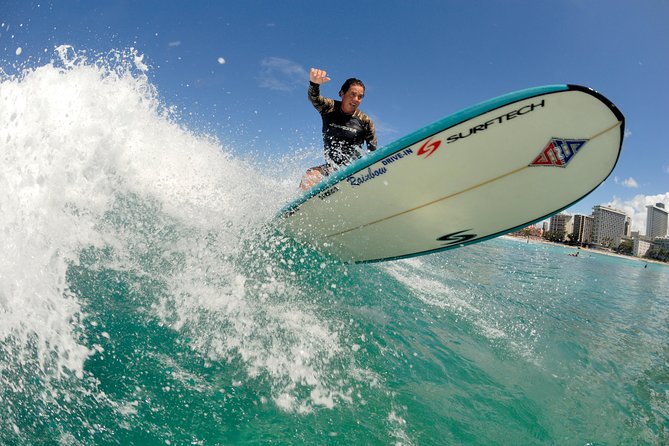
- Small group size (up to 4) means more hands-on attention when you’re learning to fall, paddle, and stand.
- All surf gear included (board + what you need) so you can show up and focus on surfing, not shopping.
- Two lesson options: morning or afternoon, both about 2 hours.
- Beginner-focused coaching on standing up fast, catching waves, and ocean etiquette.
- Waialua Bay and Haleiwa are the two surf areas used during the lesson window.
Why the North Shore is such a smart place to learn
Learning to surf feels intimidating anywhere. On Oahu’s North Shore, it’s also a little magical—because you’re in the real surf zone, not a fake “surf photo spot.” That matters, because your brain calms down when the environment makes sense. You get to watch how waves behave, learn where beginners fit in, and build confidence with instruction that matches the area.
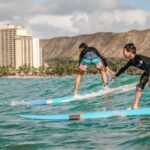
This lesson is built for first-timers, and the key word is control. You start on land and learn the basics before you’re asked to do everything at once in the ocean. Then you move through practical skills like safe falling, ocean etiquette, and the quickest beginner path from lying down to standing up.
Also, the North Shore context helps you understand why safety rules are repeated. Surf breaks are powerful, and the lesson keeps the vibe fun without ignoring reality. That’s especially important if you’re learning with kids in the group age range.
You can also read our reviews of more tours and experiences in Oahu
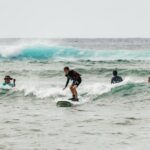

What your $104 buys (and why it’s fair value)
At $104 per person for about 2 hours, the value comes from what’s included and how structured the coaching is.
You get:
- Surf board
- All equipment you would need
That inclusion is not small. Surf lessons often add rentals and gear costs at the last minute. Here, you’re paying for the core experience and the tools you need to actually practice in the water.
Then there’s the group size: a maximum of 4 travelers. Fewer people means the instructor can correct your stance, help you paddle out more effectively, and keep your turns from turning into a long waiting game.
Is it “cheap”? No. But it’s priced like an active, hands-on Hawaii activity—one where the instructor’s time is the product. If you tried to DIY it with a board rental and no coaching, you’d likely spend more time guessing than improving.
The 2-hour plan: land basics first, then wave time
Your session starts with an introduction to surfing as an ancient Hawaiian sport—plus the modern rules of how to do it safely and respectfully. That part matters more than people think. Ocean etiquette isn’t just manners; it’s how you avoid collisions and chaotic paddling that can ruin your lesson.
On land, you’ll practice the fundamentals:
- Falling safely
- Ocean etiquette
- How to handle the board before you’re in real surf energy
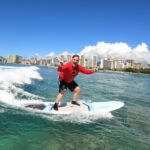
Then you head out. The water part is where beginners usually get overwhelmed, but this lesson breaks the chaos into steps. You practice going quickly from laying to standing—that’s the “make it real” skill. You also learn:
- How to catch waves
- What type of board to use as a beginner
- Where the best beginner surf spots are
- What to do when timing feels off
By the end, you should feel less like surfing is a mystery and more like it’s a sequence you can repeat.
Waialua Bay: your starting line for paddling and first successes
One of the key surf areas used during the lesson is Waialua Bay. For beginners, that usually means you’re trying to focus on manageable waves where the “learn” part beats the “survive” part.
This is also where the instructor’s job gets very practical. When you’re new, paddling out and staying oriented can be harder than standing up. That’s why the coaching tends to focus on:
- Getting you oriented before you start chasing waves
- Helping you time the moment you try to pop up
- Spacing you properly so the group doesn’t turn into a tangle of boards and arms
You also get real instruction on ocean behavior—how waves break, what to watch for, and how to choose the next wave instead of flailing at the first one you see.
And yes, sometimes the ocean gives extra surprises. I saw notes about instructors spotting a whale while out on the water—rare, but it’s the kind of memory beginners love taking home.
Haleiwa: finishing strong with etiquette and confidence
The second stop during the lesson window is Haleiwa. Haleiwa is close to the North Shore surf scene, so it’s a good match for teaching beginners. It’s where the day feels most “real Hawaii,” because you’re not only in the water—you’re in the surfing zone.
During this part, the emphasis typically shifts from initial setup to confidence building. That means more repetition and more chances to get the feeling right:
- Paddle out with better rhythm
- Catch waves more intentionally
- Stand with the technique you practiced on land
You’ll also keep practicing the etiquette side. As you improve, it’s easy to get excited and ignore rules. The lesson keeps you aligned so you don’t put yourself or others at risk.
A small group helps a lot here. When there are only a few people in the water, an instructor can keep track of who needs extra support and who’s ready to try again with a slightly new adjustment.






How the instructors (like Henry and Travis) help you actually learn
A huge part of why this lesson gets such strong ratings is the coaching style: clear directions, patient pacing, and safety-first attention. You might be paired with instructors such as Henry, Travis, Eric, Tanner, or Mark (availability varies), and the common theme in their teaching approach is keeping you moving forward without rushing you.
Here’s what that looks like in real beginner terms:
- They explain what you’re about to do before you do it
- They focus on getting you standing up, not just floating
- They help you paddle out and choose waves you can realistically ride
- They spot what’s going wrong fast and give a fix you can use immediately
A lesson like this succeeds when you leave feeling capable. That’s why the coaching includes rules and technique, not only “go try.” You’re learning how to surf in a way that can carry over even if you don’t have an instructor next time.
Gear and comfort tips that can save your day
This lesson provides the surf board and the equipment you need, which is great. But your comfort choices still matter.
Two practical notes:
- Wear a wet shirt (or something quick-dry that you’re comfortable getting soaked). Foam boards and surf setups can be rough on skin and can make you feel colder than expected once you’re wet and paddling.
- Come ready to swim. The requirement is clear: you must know how to swim. You’ll be out in the water long enough that confidence matters.
Also, because this is a beginner lesson, you’ll likely spend a lot of time learning through repetition—and that can mean more falls than you expect. So don’t show up stiff or under-rested. Treat it like a workout with a learning curve.
Finally, if you have any back or knee issues, keep an extra eye on how your body handles paddling, balance, and the up-and-down movement of getting on and off the board.
Who should book this lesson (and who should skip it)
This is a good match if:
- You’re a true beginner (first time or near-first time)
- You want a structured lesson with safety coaching
- You like small-group attention and don’t want to blend into a crowd
- You can swim and you’re comfortable in the ocean
It’s not a great match if:
- You have back or knee problems, since the lesson involves paddling, balance, and getting up and down repeatedly
- You’ve had recent surgery (not recommended)
- You’re bringing a child under 13 to a group lesson. For children under 13, a private lesson is required.
Age rules matter here because kids learn differently and water safety needs extra focus. The lesson keeps that in mind by adjusting who can join group instruction.
Price and logistics: the real decision points
The big logistics question is transportation. There’s no transportation provided. You’ll need to drive from Surf N Sea to the surf spot location. That’s not hard, but it does affect your day planning.
If you hate thinking about directions, parking, or timing, build in extra buffer before your lesson. Arriving late isn’t the end of the world, but your lesson is short—about 2 hours—so you don’t want to waste it stuck in traffic.
On the plus side:
- The lesson ends back at the meeting point.
- The meeting point is 62-595 Kamehameha Hwy, Haleiwa, HI 96712.
- You can choose a morning or afternoon session.
The weather side also matters. The experience requires good weather, and if it’s canceled due to weather, you’ll be offered another date or a full refund. In other words, don’t lock yourself into a tight schedule without flexibility.
Tips for your North Shore surf day
Here’s how to set yourself up for a smoother lesson.
- Bring swim-ready basics: you’ll be wet for most of the session.
- Warm up before you get in the water. Paddling and standing takes coordination, and cold muscles don’t help.
- Listen for the “one job” instructions. New surfers can overthink. When the instructor says focus on paddling rhythm or pop-up timing, do exactly that for the next attempt.
- Expect the learning curve. Getting up every time can happen fast for some people, but for others it’s the final 30 minutes that feels like progress.
One more practical mindset: the ocean etiquette lesson is there so you can relax. When you understand where you should go and how to share space, you don’t waste energy panicking.
Should you book this Surf N Sea North Shore beginner lesson?
If you’re new to surfing and you want a realistic, safety-focused first session, I’d book it. The combination of included equipment, small group size, and a coaching plan that starts on land and moves to repeatable wave skills is exactly what beginner lessons should be.
You might think twice if you:
- can’t drive easily that day (because no transportation is provided),
- aren’t comfortable swimming in open water,
- or have back/knee limitations that could make repeated paddling and balance hard.
If you meet the basic physical and swim requirements, this is the kind of activity that can turn Hawaii from something you watch into something you do—on a North Shore that’s built for surf learning.
FAQ
Do I need to know how to swim for this lesson?
Yes. The lesson requires that you know how to swim.
How long is the North Shore beginner surf lesson?
It lasts about 2 hours.
Is transportation included from Surf N Sea to the surf spot?
No. You’ll need to drive yourself from Surf N Sea to the surf spot location.
What’s included with the ticket price?
Your surf board and all the equipment you would need are included.
Are there age limits for the group lesson?
Yes. Group lessons are for children 13 years old and above. Children under 13 require a private lesson.
What is the maximum group size?
The activity has a maximum of 4 travelers.