REVIEW · SURF LESSONS
Oahu: Beginner-Friendly Waikiki Beach Surfing Lesson
Book on GetYourGuide →Operated by Surfer Girl Academy, LLC · Bookable on GetYourGuide
First waves in Waikiki feel unreal. This Oahu lesson turns the world-famous shoreline into a beginner-friendly classroom, with an instructor team that keeps you moving and learning at a comfortable pace. I like that you’re guided in an uncrowded part of the beach, so you spend more time actually trying than waiting in the shallows.
What I like most is the small group setup: it’s limited to 8 participants, with one instructor for every four people. You also get real ocean basics first, then supervised surf time, which matters when you’re new and the water is doing its own thing.
One consideration: this is hands-on ocean time, so it’s not for everyone. It’s not suitable for kids under 12, pregnant women, or wheelchair users, and you’ll need to be ready for wet gear, reef shoes, and changing clothes afterward.
In This Review
- Key Highlights That Matter
- Why Waikiki Beach Works for a First-Time Surf Lesson
- Your 2-Hour Schedule: Land Practice to 70 Minutes in the Water
- Gear You Get, and How It Affects Your Comfort
- The Coaching Setup: Why Beginners Feel Safe and Improve Faster
- Learning to Stand Up: What Coaches Actually Fix
- Photos and Video After the Lesson: Buy Them or Pass
- Price and Value: Is $125 Reasonable for Waikiki Surfing?
- Where You Start: Surfer Girl Academy and What Makes It Easy
- Who Should Book This Lesson, and Who Should Skip
- What to Do Before You Go (So You Don’t Feel Rushed)
- Should You Book This Waikiki Surf Lesson?
- FAQ
- How long is the Waikiki surf lesson?
- What does the lesson cost?
- Where do I meet for the lesson?
- Is the lesson only for advanced surfers?
- How much instruction happens on land?
- How long do I surf with an instructor?
- What gear is included?
- Can I buy photos or video?
- What should I bring?
- Who is this lesson not suitable for?
Key Highlights That Matter
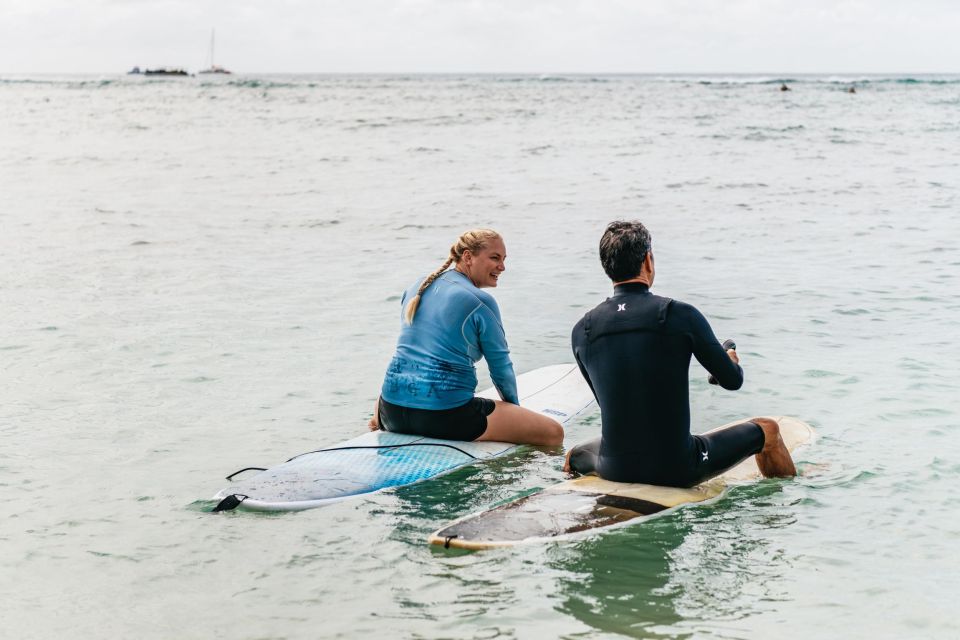
- One instructor per four students for close attention when you’re learning
- 20–30 minutes on land to practice the basics before you hit the waves
- About 70 minutes in the water with supervision as you stand, balance, and ride
- Full gear provided: board, leash, Hurley rash guard, reef shoes, and optional wetsuit
- Photos and video are optional purchases after the session, often a draw for first-timers
Why Waikiki Beach Works for a First-Time Surf Lesson
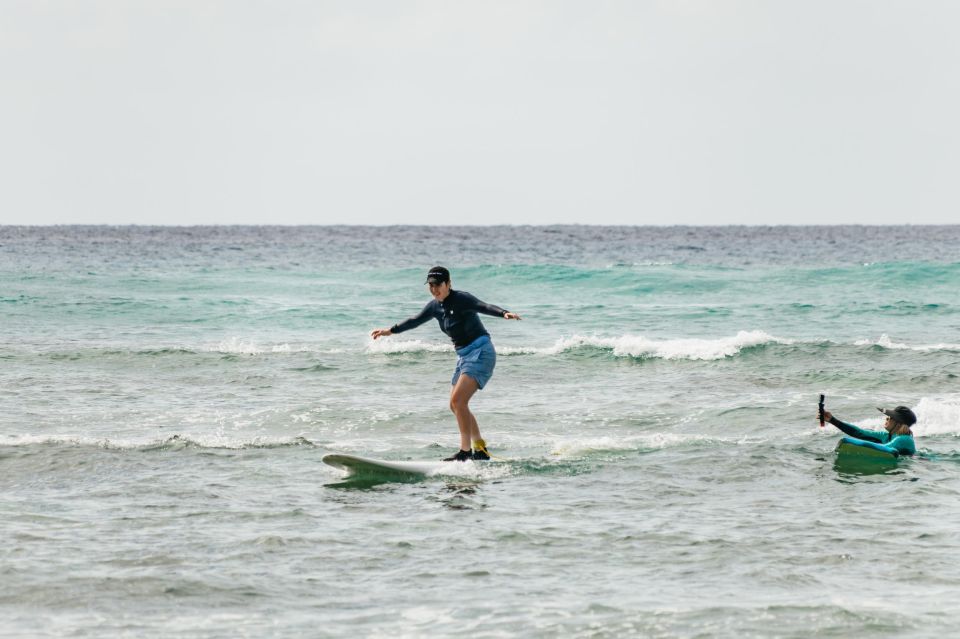
Waikiki has a famous name, but the real value here is how the lesson is run. You’re not dropped into chaos. The format is designed so you start with basics on a controlled foundation, then you move to the water with an instructor watching your stance, where your board is pointed, and how you time the wave.
You’ll also be surfing in an uncrowded part of the beach. That sounds like a small detail until you’re the one trying to pop up while people drift past you. Fewer distractions means better practice opportunities, and you feel the learning curve instead of getting knocked around by the crowd.
And yes, Waikiki is the kind of place where you can end up with bonus memories beyond the lesson—one lesson report included spotting turtles while surfing. Even if that doesn’t happen every time, it’s the same idea: you’re learning on a gorgeous stretch of Oahu, not some blank shoreline.
You can also read our reviews of more tours and experiences in Oahu



Your 2-Hour Schedule: Land Practice to 70 Minutes in the Water
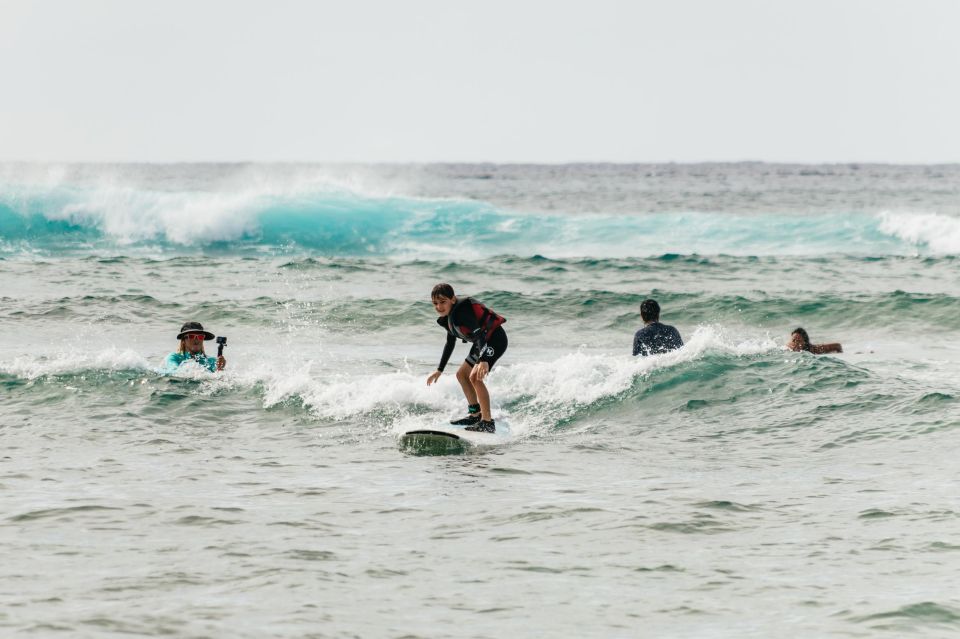
The lesson runs about 2 hours total, and the time is used in a smart order.
First comes 20–30 minutes of land instruction. This part is not fluff. You’ll go over surfing basics and general ocean safety, plus how to stand on the board correctly. If you’re new, this is where you stop feeling like you’re guessing. You learn what you’re aiming for before you’re balancing on moving water.
Then you hit the water for roughly 70 minutes of supervised surfing. You’re not left alone in the lineup. Instructors help you choose waves, position you, and correct the moment-by-moment stuff that makes the difference between a wipeout and a ride.
The lesson style also seems geared toward momentum. People often describe getting onto the board quickly—like early success within the first hour—because the coaches keep you moving and adjust the wave selection so you can feel progress instead of frustration.
Gear You Get, and How It Affects Your Comfort

This is one of the easiest lessons to prep for because a lot of the hard stuff is handled for you. Your package includes:
- Surfboard
- Leash
- Hurley rash guard
- Reef shoes
- Wetsuit (optional)
- Sticker
Reef shoes matter more than you’d think. They help with traction so you’re not tiptoeing on slippery surfaces. The leash matters because it keeps the board attached to you when you fall, which helps you get back into the action faster.
A rash guard is also a practical win. It reduces friction and helps with sun exposure, especially on a Hawaiian beach where the light is strong. If you’re sensitive to sun, bring sunscreen anyway; the lesson doesn’t replace that.
What to bring is simple but worth respecting:
- Swimwear
- A change of clothes
- Towel
- Sunscreen
- Water
- Cash
If you forget something, you might still manage, but you’ll feel rushed. Surf time is better when you can relax between attempts.
The Coaching Setup: Why Beginners Feel Safe and Improve Faster
This is where the experience earns its high marks. The group is small—limited to 8 participants—and the instructor-to-student ratio is one instructor for every four people. That matters because first-time surfers need fast feedback. Small corrections to your posture and board direction can turn a struggle into a first ride.
You’ll start with instructor guidance on basics, then you get ongoing help once you’re out there. Some instructors referenced by name include Noah, Kai, Mito, Yuko, John, Shuzi, and Miko. You shouldn’t worry about knowing names going in, but it does tell you something: the teaching team is experienced and focused on breaking down technique into steps you can use right away.
I also like that the lesson design supports different paces. One of the nicest parts of learning to surf is realizing you can be a beginner and still make progress. The coaching approach is about setting you up with the right wave for your ability level, then adjusting on the fly as your confidence grows.
Learning to Stand Up: What Coaches Actually Fix
Standing up on a surfboard sounds like one move. In reality, it’s a chain of tiny choices: where your eyes are, how your shoulders line up, how your hands push, and how your weight shifts once you’re upright.
The land portion helps you rehearse the key posture steps without the added pressure of breaking waves. Then in the water, instructors focus on the same essentials—your starting position, whether the board is pointed correctly, and how you pop up and balance.
Some lesson reports highlight that coaches positioned boards in ways that made learning faster and easier. Others mention that instructors were able to spot mistakes while you were out there, then correct them efficiently. That combination—prep on shore plus real-time watching in the water—cuts down the amount of time you spend repeating the same mistake.
And if you fall (you will, at first), that’s still part of the learning. The goal is not avoiding falls. The goal is getting back into the wave plan quickly, with feedback that helps you improve your next attempt.






Photos and Video After the Lesson: Buy Them or Pass
Photos and video are not included. You can purchase them afterward. Many first-timers like this because surfing is fast and you’re focused on balancing, so it’s hard to remember how your first rides looked.
Some lesson reports mention a GoPro-style setup and a purchase option around $45 for the video/photo set. If you’re the type who loves proof of progress, that price can feel reasonable compared to the memories. If you’re traveling with a tight budget, you can skip it and still feel like you got your money’s worth from the instruction time alone.
My advice: if you want the full story of your first Waikiki surf day, plan to budget for it. If not, don’t sweat it. The real win is the skills and confidence you take away.
Price and Value: Is $125 Reasonable for Waikiki Surfing?
At $125 per person for a 2-hour lesson, this isn’t a casual bargain price. But it also isn’t overpriced when you look at what’s included and what you’re actually buying.
You’re getting:
- A dedicated instructor
- A small-group lesson with close supervision
- Surfboard, leash, rash guard, and reef shoes
- Optional wetsuit
- A structured 20–30-minute land session plus about 70 minutes in the water
That matters because beginner surfing lessons can turn expensive when you factor in gear rental, extra time, and the frustration of not having enough coaching. Here, you get the instruction framework and the equipment up front. And because the class size is capped and the ratio is tight, you’re paying for attention, not just access to the beach.
So if you want your first surf lesson to feel like a guided skill-building experience instead of a trial-and-error gamble, the value is pretty strong.
Where You Start: Surfer Girl Academy and What Makes It Easy
You’ll meet at Surfer Girl Academy. Parking by the ocean is free, which is a big deal in Waikiki where easy parking is often the real challenge.
The meeting point being straightforward helps you focus on the lesson, not on getting lost before you even change into swimwear. If you arrive on time and come prepared with the basics (towel, water, sunscreen), the rest tends to feel smooth.
Who Should Book This Lesson, and Who Should Skip
This surf lesson is suitable for all skill levels, including total beginners. It’s built for you if you:
- Want to learn the fundamentals with real ocean safety coaching
- Prefer a small group and close instruction
- Are okay with wet conditions and doing some active work in the water
It’s not suitable for:
- Children under 12
- Pregnant women
- Wheelchair users
If you’re deciding between a very short lesson and this 2-hour format, I’d lean toward this one. You get enough time to learn the basics on land and then apply them in the water for a meaningful stretch.
What to Do Before You Go (So You Don’t Feel Rushed)
Surf success starts on land. Here’s how to show up ready:
- Wear or bring swimwear, since you’ll be changing into it before heading out.
- Pack a change of clothes. You’ll want to get out of wet things quickly afterward.
- Bring a towel and water. Your day will move fast once you’re on the sand and then in the ocean.
- Use sunscreen before you start and reapply as needed. The lesson includes gear, not shade.
- Bring cash. The activity mentions cash among what to bring, and photos/video are available for purchase.
Also, don’t overthink fitness. One reason this lesson works for beginners is that the coaching focuses on technique. You don’t need to be a strong athlete to begin catching waves, but having basic mobility and balance helps.
Should You Book This Waikiki Surf Lesson?
If your goal is a first-time surf experience in Waikiki that feels structured, supervised, and genuinely beginner-friendly, I’d book it. The combination of a small group, a tight instructor ratio, and a clear progression from shore practice to extended supervised water time is exactly what you want when you’re new.
If you hate the idea of buying photos/video afterward, that’s easy to handle—you can skip it. If you’re looking for a calmer lesson where you can build confidence wave by wave, this is the kind of setup that makes sense.
Just go in expecting real ocean work, a few early tumbles, and the kind of coaching that helps you improve quickly.
FAQ
How long is the Waikiki surf lesson?
The experience lasts about 2 hours total.
What does the lesson cost?
It costs $125 per person.
Where do I meet for the lesson?
Meet at Surfer Girl Academy. Parking by the ocean is free.
Is the lesson only for advanced surfers?
No. It’s suitable for all skill levels, including beginners.
How much instruction happens on land?
You’ll get about 20–30 minutes of dry land instruction, including basic technique and general ocean safety.
How long do I surf with an instructor?
You’ll have roughly 70 minutes of supervised surfing in the water.
What gear is included?
The lesson includes an instructor, lesson, surfboard, leash, Hurley rash guard, and reef shoes. A wetsuit is optional.
Can I buy photos or video?
Yes. Pictures and video are available for purchase after the lesson.
What should I bring?
Bring swimwear, a change of clothes, a towel, sunscreen, water, and cash.
Who is this lesson not suitable for?
It’s not suitable for children under 12, pregnant women, or wheelchair users.