REVIEW · SURF LESSONS
Surfing Lessons On Waikiki Beach
Book on Viator →Operated by Big Wave Dave Surf & Coffee · Bookable on Viator
Waikiki waves feel more doable with the right setup. This surf lesson pairs small-group attention with hands-on Waikiki surfing safety coaching, plus a quick look at how Hawaiian surfers think about the ocean. It is built for first-timers who want confidence fast, not just a quick dip.
My main caution is that conditions and beach logistics can change how easy things feel. Waikiki can get busy, and when it does, the start area can feel crowded and hearing instructions in the water can be tough. If you are a nervous swimmer or hate noise, plan to ask questions before you head out.
In This Review
- Key Takeaways Before You Paddle Out
- Getting to Big Wave Dave Surf & Coffee and Settling In
- The Real Plan: Beach Basics, Then Guided Wave Time
- Waikiki’s South-Facing Setup for First-Time Surfers
- Gear Included: Board, Leash, Locker, and the Small Fees
- Small Group Coaching: Why It Can Feel Personal
- When Waves Are Big vs When They Are Friendly
- Safety and Supervision: The Part You Should Never Ignore
- Price and Value: What $129 Really Buys
- Who This Lesson Fits Best
- Quick Practical Tips for Your Best Shot
- Should You Book This Waikiki Surf Lesson?
- FAQ
- How long is the Waikiki surfing lesson?
- What is included in the price?
- Do I need to bring surf equipment?
- Where do I check in?
- Do I have to know how to swim?
- How many people are in the group?
- What if the weather is bad?
Key Takeaways Before You Paddle Out
- Maximum five per lesson: You get closer, more personal coaching than big-deck group classes.
- 20 minutes on land first: You learn safety, paddling, and board basics before anyone yells Go catch it.
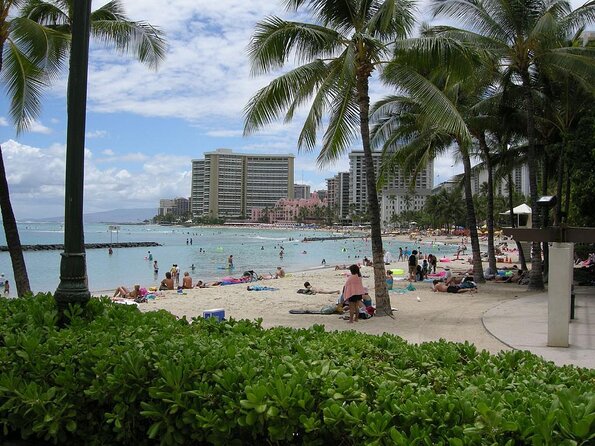
- Beginner-friendly water near Waikiki Beach Walk: South-facing water tends to be gentler, with soft sand and shallower feel.
- Included surfboard and leash plus a locker: You do not need to bring gear or juggle your stuff.
- Instructor coaching matters a lot: People repeatedly mention patient, clear instruction from coaches like Derek, Tanner, Joshua, Josh, Alex, Cody, and Mouse.
- Wave size can vary by time of day: One strong tip is morning for higher tides, afternoon for smaller waves.
Getting to Big Wave Dave Surf & Coffee and Settling In
You meet at Big Wave Dave Surf & Coffee on Lewers Street (226 Lewers St #154, Honolulu). It is right by Waikiki Beach Walk, so you are not spending your whole day on logistics.
Plan to arrive about 20 minutes early for check-in. That buffer matters because you will want time for the locker, getting sorted, and a calm mental shift from vacation mode to water-ready mode. You get a mobile ticket in English, so having it ready on your phone helps.
The lesson ends back at the meeting point, so you can rinse and regroup without figuring out a second location. If you have to coordinate with other people in your group, the round-trip setup is simple.
You can also read our reviews of more tours and experiences in Oahu

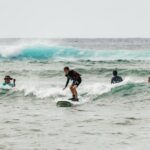

The Real Plan: Beach Basics, Then Guided Wave Time
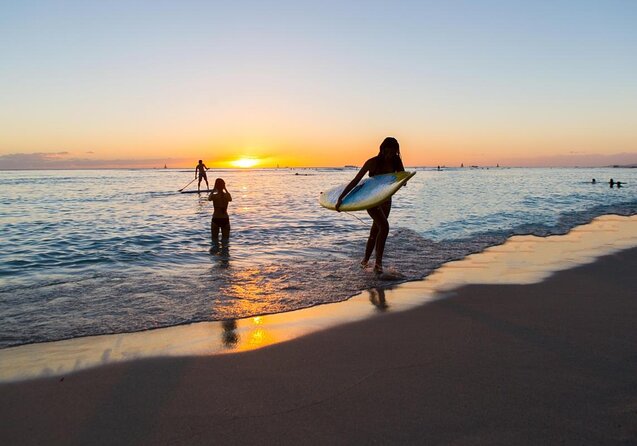
This lesson runs about 1 hour 30 minutes total. The teaching is split into two parts, and that pacing is one reason beginners often do well here.
First comes an on-beach session of about 20 minutes. You learn water safety etiquette, plus practical skills like paddling, how to handle the surfboard, and what to do when a wave is coming. You also get instruction on wave handling so you are not guessing the moment you are out there.
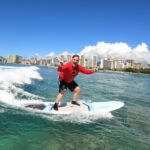
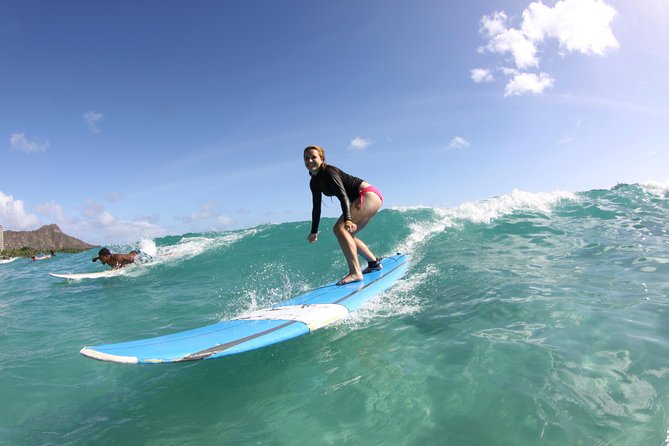
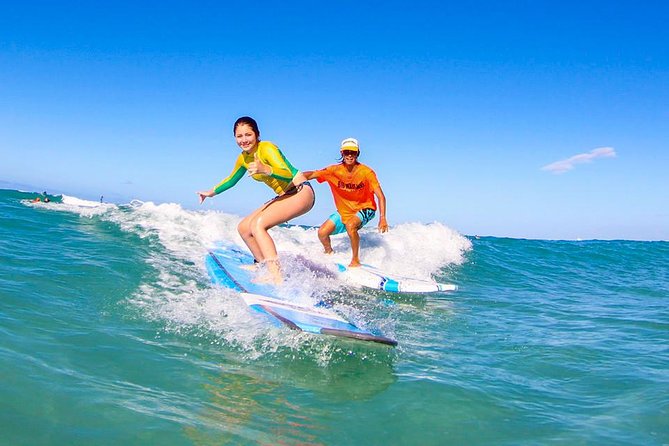
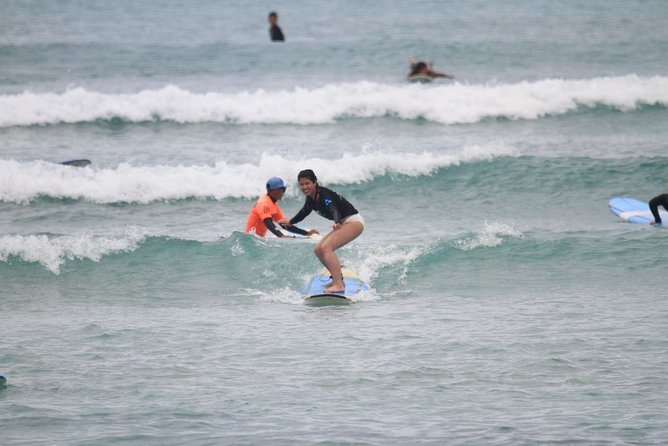
Then you move into the water for the guided part. Here is what you should expect: the instructor stays close while you practice the core challenge, standing up and riding your first Waikiki waves. In plain terms, your goal is to go from lying on the board to popping up without panicking.
This is also where your fitness level shows. The activity is listed for moderate physical fitness, and you must be able to swim. Waikiki can look easy from the sand, but you still need the confidence to handle being out in the water.
Waikiki’s South-Facing Setup for First-Time Surfers
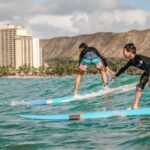
The south-facing area off Waikiki is a common beginner choice, and the lesson is designed around that. The water is described as a soft, sandy bottom and shallow waters, which can make wipeouts feel less dramatic and helps you focus on the board work.
That matters for your learning curve. When you are not worried about the bottom or struggling to stand in deep water, you spend more brainpower on timing, paddling power, and balance.
Also, the vibe here is not just technique. The lesson includes deeper insight into the culture of surfing in Hawaii, which tends to make first-timers feel like they belong rather than just getting instructions and being tossed into the waves.
Gear Included: Board, Leash, Locker, and the Small Fees
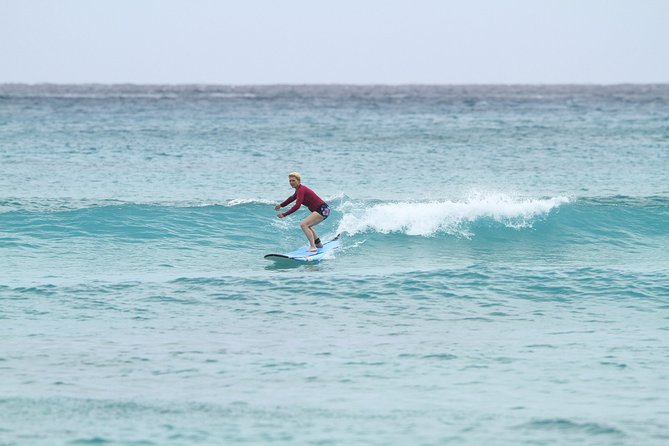
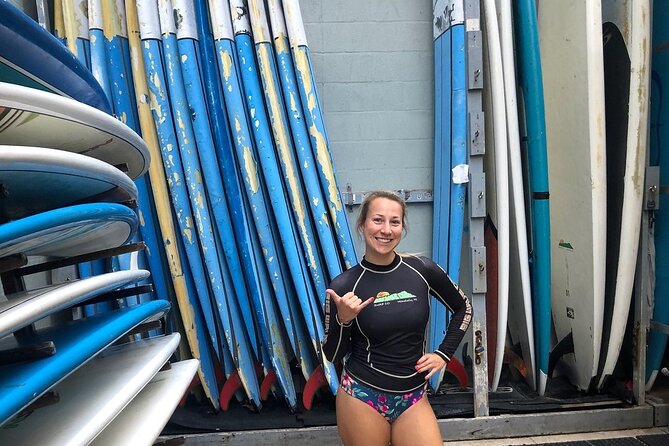
You get the key surfing gear you need: surfboard and leash are included. That alone is value, because you avoid the hassle and extra expense of bringing your own board.
You also get access to a locker, which is included for storing your belongings. For many people, this is the difference between enjoying the lesson and constantly worrying about where your wallet is.
What is not included:
- Photography is not included, though you can reserve it in advance.
- A rash guard rental is listed at $5.
- An optional lock rental is also $5, or you can bring your own.
If you are planning to rent, decide before you get there. A quick plan saves time and stress.
Small Group Coaching: Why It Can Feel Personal
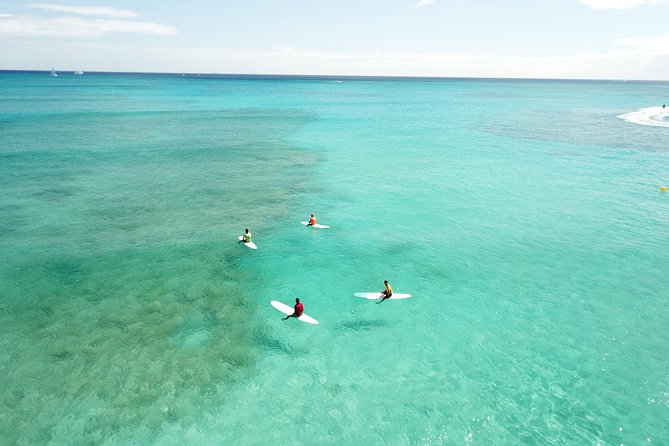
This activity is designed for a maximum of five travelers. That small cap is the big promise behind the lesson: fewer people in the water means more attention when it matters.
In real-world feedback, a lot of the best moments center on instructors who are patient and tuned in. Coaches named Derek, Tanner, Joshua, Josh, Alex, Cody, and Mouse show up repeatedly in positive experiences, with themes like clear explanations, encouragement, and help when standing up finally clicks.
Here is the practical takeaway for you: you should leave the lesson with a plan for what to practice next time. Many first-timers report feeling confident enough to surf with a partner after. That usually means they were not just told what to do, they were coached while doing it.
One thing to keep expectations realistic: some sessions can still feel busy. Waikiki is popular. In at least one experience, the launch point involved traffic with other activities nearby, and that stress can affect how smoothly paddling out feels.
And sound can be the weak link. A few people note that instruction volume can be hard to hear over waves. If you struggle with hearing in noisy water, position yourself where you can hear before paddling too far out.






When Waves Are Big vs When They Are Friendly
The lesson is set up for beginners, but Waikiki conditions shift. One helpful tip from an instructor’s advice is choosing timing based on the kind of waves you want.
Derek’s tip was simple: book in the morning for higher tides, and book in the afternoon if you want a start with smaller waves. You do not need to treat this as a rule, but it is a smart way to match your comfort level to likely conditions.
Also, wave quality affects how many attempts you get. One person felt they did not get enough good wave time for the price, while others described catching plenty of waves and standing up repeatedly. That spread is normal in surf lessons: the ocean is the boss, not the schedule.
If you are the type who gets discouraged by fewer takeoffs, you might prefer a time of day that you believe will bring calmer water to your first session.
Safety and Supervision: The Part You Should Never Ignore
This is a surf lesson, not a ride-along. The basics are taught: safety etiquette, wave handling, and paddling technique are all part of the beach and water coaching plan.
The bigger safety reality is that you are responsible for your own readiness too. The listing explicitly requires that you can swim and maintain moderate physical fitness. If either one is shaky, get honest with yourself before booking.
You should also watch the instructor dynamics during the lesson. Most accounts describe close attention and encouragement. Still, if you feel stranded or your group is not being guided clearly, speak up quickly. In surf, small gaps can snowball fast.
If you are going with someone nervous about getting out there, take a moment to align on what support you expect. You want a first surf experience that feels guided, not guesswork.
Price and Value: What $129 Really Buys
At $129 per person for about 1 hour 30 minutes, this is not a budget activity. So I look at what you get beyond the label beginner surf lesson.
You get:
- A professional instructor
- Included surfboard and leash
- Locker use
- A lesson format that starts on land with safety and technique
In other words, you are not paying just for time in the ocean. You are paying for a coached pathway to stand up sooner, plus the gear that makes it possible.
Where value can feel weaker is when wave conditions or logistics reduce the number of quality rides. One couple felt the experience was overpriced because their surfing opportunities were limited. That kind of mismatch can happen anywhere in Waikiki, but it is the main thing that can influence your satisfaction.
On the flip side, lots of positive experiences describe catching multiple waves, standing up quickly, and leaving with confidence. If you are a true first-timer, that outcome is usually worth the price.
Who This Lesson Fits Best
This lesson is a strong match for you if:
- It is your first time surfing and you want structured coaching
- You can swim and you are comfortable with moderate physical effort
- You like the idea of a small group with less waiting and more attention
- You want Waikiki as your classroom, with gentle beginner-leaning water
It may be a tougher fit if:
- You want guaranteed private instruction (this is capped at five)
- You get very anxious in noisy, crowded beach environments
- You cannot handle being in the ocean even briefly
If you are traveling with teens or a mixed-age group, the small-group setup can help everyone get attention. Several families reported that younger surfers loved it, including first-timers.
Quick Practical Tips for Your Best Shot
- Arrive early so you can settle, use the locker, and start calm.
- If you are wave-size sensitive, consider aiming for the morning for higher tides or the afternoon for smaller starts, based on instructor guidance.
- In the water, prioritize being in a position where you can hear. If you cannot, ask for clarification when you regroup.
- Rent a rash guard only if you think it will help your comfort. It is $5, and you do not need to buy anything else to participate.
Should You Book This Waikiki Surf Lesson?
Yes, I think you should book it if you want a beginner-first experience in Waikiki with a coached approach and included equipment. The combination of small-group limits, the on-land safety fundamentals, and the repeated success stories from instructors like Derek, Tanner, Joshua, Josh, Alex, Cody, and Mouse make it a solid bet.
But I would be selective if you need a guarantee for wave volume or quiet conditions. Surf depends on the ocean, and Waikiki can be busy. If you know you will get stressed by that, choose your time carefully and go in ready to listen and adjust.
FAQ
How long is the Waikiki surfing lesson?
The lesson runs about 1 hour 30 minutes (approximately).
What is included in the price?
Your price includes a professional instructor, a surfboard and leash, and locker use.
Do I need to bring surf equipment?
No. The surfboard and leash are provided. You can rent a rash guard for $5 if you want one.
Where do I check in?
You start at Big Wave Dave Surf & Coffee, 226 Lewers St #154, Honolulu, HI 96815.
Do I have to know how to swim?
Yes. The activity requires that you are able to swim.
How many people are in the group?
The lesson has a maximum of 5 travelers.
What if the weather is bad?
The experience requires good weather. If it is canceled due to poor weather, you will be offered a different date or a full refund.