REVIEW · WATERFALL HIKES
Byodo In Temple, Waimea Botanical Garden-Waterfall: Includes Fees
Book on Viator →Operated by 1 EPIC TOUR, LLC · Bookable on Viator
One day on Oahu can feel like a speed run. This tour pairs Byodo-In Temple with Waimea Waterfall and adds major viewpoints along the east and north shores, starting with Waikiki pickup. You also get an air-conditioned bus and free Wi-Fi, plus photo-friendly stops that keep you moving at a good pace.
I especially like the Waikiki hotel pickup (directly from your hotel) and the early start designed to help you reach popular spots before the biggest waves of buses. It is a simple setup: you show up, get on, and the day runs like a plan instead of a scavenger hunt.
The one trade-off is the schedule is tight. You get a lot of highlights, but some stops are brief, lunch is not included, and Dole Plantation does not have time for the maze or train.
In This Review
- Key takeaways before you go
- A fast, full-day Oʻahu sampler from Waikiki
- Why the Byodo-In and Waimea combo is worth the price
- Early road passbys: Waikiki energy, whale season timing, and classic viewpoints
- Halona Blowhole: quick photos, big ocean drama
- Makapuʻu Point and Rabbit Island: views on both sides
- Waimānalo: bathroom break, local shopping, and maybe malasadas
- Byodo-In Temple: a calm cultural reset in the middle of the day
- Tropical Farms macadamia stop: taste and shop without overthinking it
- Mokoliʻi (Chinaman’s Hat): short picture time, worth the shot
- Kuilima Farm Stand: banana lumpia turon and a quick snack stop
- Waimea Waterfall and Waimea Botanical Garden: swimming, shoes, and a real workout
- Dole Plantation with limited time: pineapple empire, no maze or train
- Lunch at Liliha Bakery: grab-and-go so you don’t lose momentum
- King Kamehameha I and Iolani Palace: royal history in a short window
- Bus comfort, timing, and what makes the day feel smooth
- Price and value: does $164 make sense?
- Who should book this tour, and who should skip it
- Should you book it? My call
- FAQ
- What is included in the tour price?
- How long is the tour?
- What time does pickup start in Waikiki?
- Is there time to swim at Waimea Waterfall?
- Is a walking tour required at Waimea Valley?
- What should I expect at Byodo-In Temple?
- Does the Dole Plantation stop include the maze or train?
- Is lunch included?
- Can I see whales on this tour?
- What happens if the weather is bad?
Key takeaways before you go
- Waikiki hotel pickup plus early departure to beat the biggest crowds
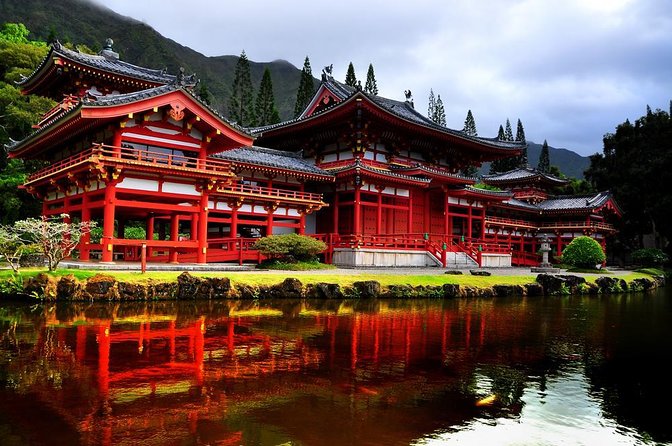
- Byodo-In Temple admission included (and it is a non-practicing temple open to all)
- Waimea Valley Waterfall swim time with life vests provided
- A mix of viewpoints and culture stops, not just shopping
- Several quick photo stops, so bring a phone strap and water
A fast, full-day Oʻahu sampler from Waikiki
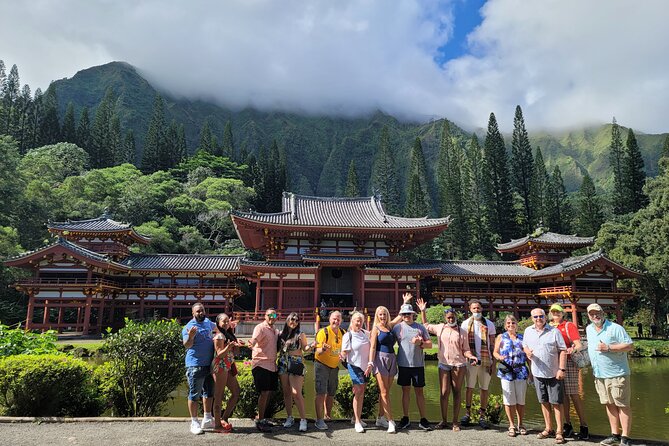
This is built as a one-day overview of Oʻahu’s big-name sights plus a couple of cultural stops that add meaning beyond just photos. Pickup begins between 6:30am and 6:45am, and the tour starts about 7:00am, usually ending around 4:00–4:30pm. That early start matters on Oʻahu—many popular places get crowded fast, and this schedule is trying to keep you ahead.
You ride in an air-conditioned bus with free Wi-Fi, which is a real comfort on a long day. Also, the group size is capped at 25, and smaller groups tend to make the on/off timing smoother at viewpoints and entry points.
If you hate rushing, pack a calm mindset. The day is long, and some stops are deliberately short so you can hit more “must-see” locations.
You can also read our reviews of more tours and experiences in Honolulu.


Why the Byodo-In and Waimea combo is worth the price
The core of the value is that admission fees are covered for both Byodo-In Temple and Waimea Valley. For many people, those two places are the reason they book this kind of tour at all—one is a peaceful cultural stop, and the other is a real waterfall swim day.
Byodo-In Temple is set at the foot of the Koʻolau Mountains inside Valley of the Temples Memorial Park. It was established in 1968 to commemorate the 100-year anniversary of the first Japanese immigrants to Hawaiʻi. It is a non-practicing Buddhist temple that welcomes people of all faiths to worship, meditate, or simply appreciate the setting—so it does not feel like a “only for insiders” place.
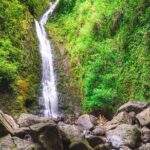
Waimea Valley is a different kind of payoff. You get time to walk through the Waimea Botanical Garden and, most importantly, swim at the waterfall. Life vests are supplied at no extra cost and are required for swimming. If you have ever watched waterfall swims online and thought, I want to try that, this is the part of the day you plan around.
There is also an optional upgrade you should know about at Waimea: a golf cart ride can be added (round trip $20 per person) if you do not want to do the rocky walk. Even with the cart, the waterfall area is still natural terrain—so you will want footwear that works on uneven ground.
Early road passbys: Waikiki energy, whale season timing, and classic viewpoints
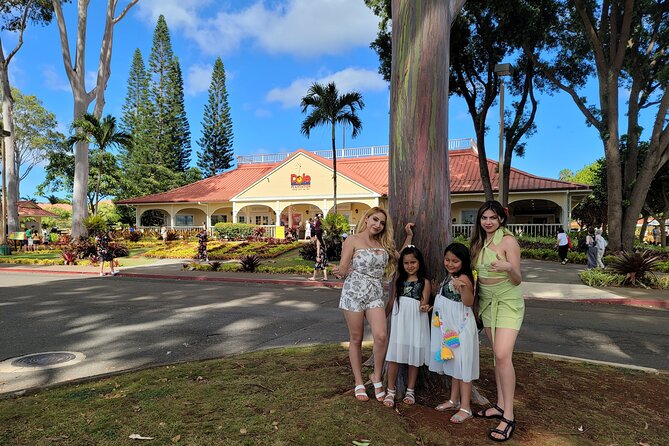
Before you start really “stopping,” the tour moves through key areas of the Honolulu/Waikiki side of the island. You pass the high-rise hotels along the shore in Waikiki and spend time cruising by landmarks around Kalakaua Avenue and nearby streets. You also get a look at the Honolulu Zoo area (including Komodo dragons and peacocks mentioned as part of the zoo’s theme), plus the Waikiki Aquarium reef exhibit.
Then you shift toward the east side with photo-friendly stops. One stop is tied to iconic views and the Emelia Earhart monument area. During whale season (end of November through March), you can watch for whales passing by. That timing is a big deal if you are visiting in winter—this tour builds the whale-watching window into the day rather than leaving it to chance.
Halona Blowhole: quick photos, big ocean drama

Halona Blowhole is one of those places where you stand at the viewpoint and the ocean does the work for you. This stop is about 15 minutes, with time kept tight for photos—then you move on quickly to stay ahead of other groups.
You get panoramic views of the ocean, cliffs, and neighboring islands. The site is also famous from film history, including being used in the movie From Here to Eternity (filmed in 1953) for a well-known love scene. Even if you are not a movie trivia person, it helps you understand why this specific spot became a “stop here” classic.
Practical tip: bring a light layer. Wind at coastal viewpoints can be stronger than you expect, especially early in the day.
Makapuʻu Point and Rabbit Island: views on both sides
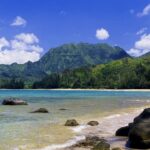
Next up are two east-side highlights that are mostly about sightlines rather than long walks. Makapuʻu Point is the easternmost point on Oʻahu and it is known for sweeping views over Makapuʻu and Waimānalo Bay on one side, plus the KaʻIwi Channel on the other. This is a spot where the island looks stretched out and layered—big sky, strong horizon lines.
You also visit the area around Rabbit Island, an uninhabited islet about 0.75 miles off Kaupō Beach near Makapuʻu. The info shared on the tour notes that the Hawaiian word mānana means buoyant, which is a nice cultural detail to keep in mind while you look out at water and tide.
This is another “stop, look, snap photos” segment. If you love hiking, you might wish there was more time. If you want a one-day highlights plan, it fits.
Waimānalo: bathroom break, local shopping, and maybe malasadas
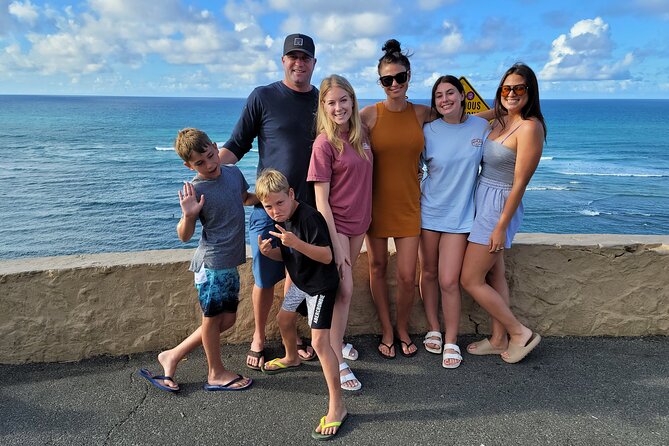
You reach Waimānalo, where the focus is on a mix of practical time and light shopping. There is a stop at a Hawaii souvenir/jewelry shop with a restroom break built in. You can browse Hawaiian-made items at your own pace, then re-board without feeling like you missed your only chance to breathe.
There may also be a possible extra stop for malasadas if time allows, based on the owner’s discretion. It is not guaranteed, but it is a fun option to watch for.
If you have sensitive stomachs, keep your expectations simple: treat this as a snack-and-souvenir intermission, not a sit-down meal.
Byodo-In Temple: a calm cultural reset in the middle of the day
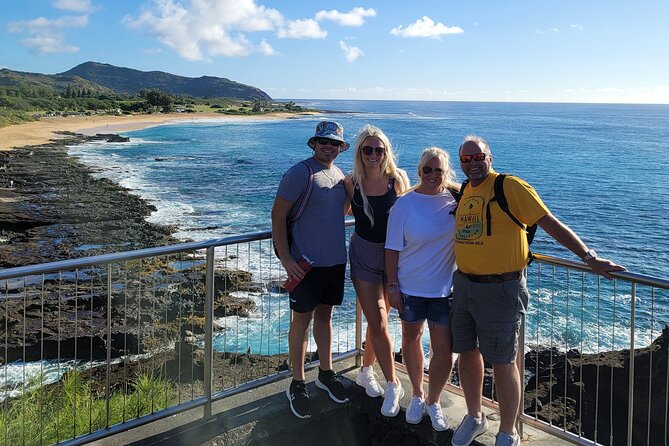
This is the first “slow-down and really see it” stop. The Byodo-In Temple visit runs about 25 minutes, with admission included.
The tour describes the temple as a smaller-scale replica of the original Byodo-In Temple in Uji, Japan, which is recognized as a UNESCO World Heritage Site. Even if you have never heard the name before, the layout and setting make it feel special—quiet, photogenic, and far from the rush of city streets.
What I like about this stop for first-time visitors: it gives you a place to learn respectful ways to be present. It is described as non-practicing, so it is not about attending a service you do not understand. You can worship, meditate, or just appreciate the beauty with minimal pressure.
Photo tip: spend a minute looking up and around, not just straight ahead. The mountain setting and the temple architecture both show up in the wider angles.
Tropical Farms macadamia stop: taste and shop without overthinking it
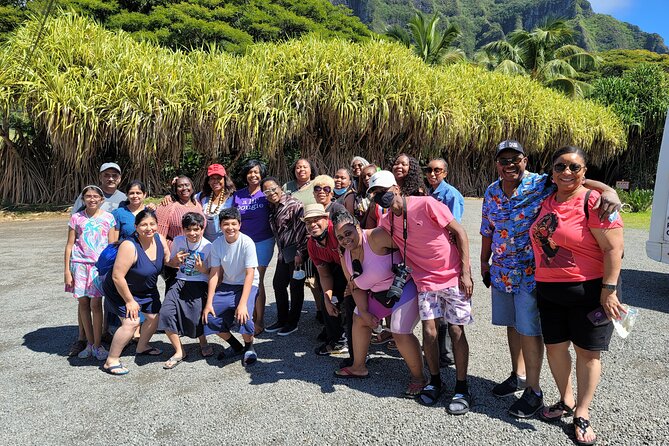
At Tropical Farms (macadamia nut farm outlet), you get about 20 minutes. This is a classic Oʻahu stop that helps you bring home something island-specific.
You will have time for restrooms and to enjoy local products. The tour frames it as being set in the shadow of the Koolau Mountains on the east coast, so it is not only shopping—it is also a scenic break from riding.
This is one of those stops where you can buy something small and feel like you did. If you prefer to travel light, think of it as sampling and souvenir shopping rather than a big spend.
Mokoliʻi (Chinaman’s Hat): short picture time, worth the shot
Next comes Mokoliʻi, also commonly nicknamed Chinaman’s Hat. The official name used here is Mokoliʻi, and it’s a basalt islet in Kāneʻohe Bay, part of Kualoa Regional Park. The tour notes it is about 1/3 mile offshore of Kualoa Point and is a product of marine erosion.
This stop is picture taking only—you do not hang out for long. But that is exactly why it works: you get the signature view without eating up the day.
If the water looks calm, you will get better photos. If it is windy, keep your phone secure and accept that you are shooting fast.
Kuilima Farm Stand: banana lumpia turon and a quick snack stop
You then hit Kuilima Farm Stand, a brief 10-minute stop geared toward a Filipino dessert. The featured treat is freshly fried banana lumpia, often referred to as turon, and the cost is noted as $1 per treat.
This is a small detour that can make the whole day feel more fun. You are not committing to a full meal; you are grabbing a hot snack, tasting something specific, and moving on.
My advice: if you plan to swim later at Waimea, do not overdo it here. Keep it light so you feel good when you change plans from snack mode to swim mode.
Waimea Waterfall and Waimea Botanical Garden: swimming, shoes, and a real workout
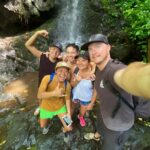
This is the star of the itinerary for many people, and for good reason. You get about 2 hours total, with 1 hour to swim and 45 minutes for the walk through the Waimea Botanical Garden.
Swimming rules are clear:
- Swimming is allowed
- Life vests are supplied and required
- The walk back and forth involves natural, rocky ground
Entrance to Waimea is $20 per person for adults, and the tour states that entrance is covered with booking. The fine print you should keep in mind is that optional comfort upgrades cost extra. The walk is described as not for everyone, and the tour also suggests a golf cart ride (round trip $20 per person) if you want less walking.
What to bring is simple and practical:
- Water shoes or reef shoes if you have them (totally optional, but the ground is rocky)
- A way to keep your phone dry
- A small towel or quick-dry layer for after
One more reality check: the Pacific Islanders in the tour info note walked barefoot. You do not have to go that route, but it hints at the fact that this is not a manicured, flat walkway.
If the waterfall is running well, your experience here can feel like a full mini-vacation inside your full-day tour.
Dole Plantation with limited time: pineapple empire, no maze or train
Dole Plantation is a fun stop, but you need to go in knowing the constraints. Your time is about 25 minutes, and the tour explicitly warns there will not be time for the maze or the train, both of which take over 2 hours.
So what should you do with 25 minutes?
- Do a quick walk-through and grab photos of the pineapple setting
- Buy a small pineapple-themed item if it helps you remember the day
- Treat it like a taste of Dole, not the full attraction package
The background shared on the tour is part of the value: James Dole bought land at age 22, experimented with crops, and settled on pineapple. The tour also highlights canneries and advertising that helped pineapple become a nationwide product, then mentions the later development of a small fruit stand and a plantation-style home turned archive/living museum.
In other words: even with limited time, you leave with a better sense of how pineapple became an Oʻahu symbol.
Lunch at Liliha Bakery: grab-and-go so you don’t lose momentum
Lunch is at Liliha Bakery on Nimitz Road or the Haliewa area, and the tour gives you about 45 minutes. Lunch is not included, so budget for whatever you pick.
Why this kind of lunch stop works on a day like this: you can eat without turning your schedule into a long sit-down. You also get to choose what fits your appetite and timing.
If you plan to shop later for gifts, keep your lunch simple so you still have energy. This day is about movement.
King Kamehameha I and Iolani Palace: royal history in a short window
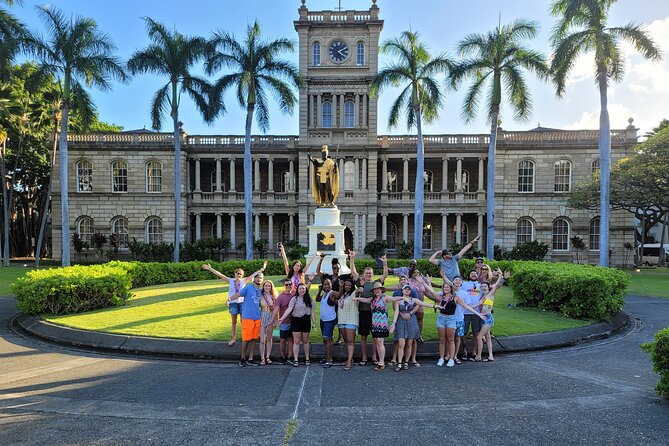
After lunch, you get a viewpoint/photo-style segment focused on Hawaiian royal identity. You learn about King Kamehameha I, who unified the Hawaiian Islands into a royal kingdom in 1810 after years of conflict. The tour notes why unification mattered, including protecting the islands from being pulled apart by competing western interests.
You also see the best-known Kamehameha statue in front of Aliʻiolani Hale (home to the Hawaiʻi State Supreme Court), across from Iolani Palace, and a short walk from historic Kawaiahao Church and the State Capitol. The tour highlights that the statue dedicated in 1883 was actually the second version after the ship delivering the original statue was lost at sea near Cape Horn.
Then you move to Iolani Palace, described as a living restoration of Hawaiian national identity. It was built in 1882 by King Kalākaua, and served as the official royal residence and the center of political and social life until the monarchy was overthrown in 1893. It has been a National Historic Landmark since 1962 and is noted as the only official royal residence in the United States.
This is a lot of meaning packed into a short timeframe. If you want more time inside the palace or want deeper context, you could always pair this tour with a separate Iolani Palace visit later. But as a one-day overview, it connects modern Hawaiʻi to the story behind the islands.
Bus comfort, timing, and what makes the day feel smooth
Even with a long list of stops, this tour is structured to reduce friction. The biggest practical wins are:
- Air-conditioned transport with free Wi-Fi
- Direct hotel pickup across Waikiki
- Early timing to get to stops before the heaviest crowds
In the feedback you can see a pattern: the guide (often Captain Vince, and at times Justin is mentioned as a guide) keeps the day entertaining, stays on schedule, and helps the group feel like a shared experience rather than a bunch of strangers.
Also, the guide encourages learning Hawaiian words and phrases during the ride. Even if you only remember a couple, it changes how you notice signs, names, and cultural details the rest of the trip.
Small note: you are not meant to bring or use large motorized scooters, and the driver cannot lift any motorized wheelchair. If you have mobility needs, plan carefully around that before booking.
Price and value: does $164 make sense?
At $164 per person, this is not a bargain-basement deal. But it is also not just paying for a bus ride. You are paying for:
- Round-trip style transport with Waikiki hotel pickup
- Covered admission for Byodo-In Temple
- Covered admission for Waimea Valley
Then you add what you do with that access: swimming at Waimea (with vests provided), a temple visit with included entry, multiple scenic viewpoints, and stops that lead to small but memorable food/snack moments.
Where your extra spending comes in is pretty predictable:
- Lunch is not included
- Optional add-ons like the Waimea golf cart cost extra
- Treats at farm stands are either small-cost or at your own pace
- Shops along the way mean you might end up buying gifts
If you value convenience (pickup, schedule, admission included) and you want to see both cultural and nature highlights in one day, the price holds up.
Who should book this tour, and who should skip it
I think this is a great fit if:
- You are short on time and want Byodo-In Temple and Waimea Valley in one day
- You like a plan with frequent stops, not a single long drive to one attraction
- You want your guide to handle timing and navigation while you focus on enjoying
I would skip or rethink it if:
- You hate rocky walking and do not want the possibility of rugged paths (even with the option to take the golf cart)
- You want a slow day with long stays inside each attraction
- You expect Dole Plantation to include the maze or train (it will not)
Should you book it? My call
If your ideal Oʻahu day includes temple calm, a waterfall swim, and a handful of iconic viewpoints—this is a strong booking. The admission inclusions and Waikiki pickup are the big reasons the value works, and the early timing helps you avoid some of the crowd pressure.
Just go in with the right expectations: it is a full-day route with brief stops, and your budget should cover lunch plus any optional extras. If that sounds fine, book it and pack your sense of adventure.
FAQ
What is included in the tour price?
The tour includes hotel pickup from Waikiki, an air-conditioned vehicle with free Wi-Fi, Byodo-In Temple admission, and Waimea Valley entrance. Lunch is not included.
How long is the tour?
The duration is about 8 hours 30 minutes (approx.), typically ending around 4:00–4:30pm.
What time does pickup start in Waikiki?
Pickup starts between 6:30am and 6:45am, with the tour starting around 7:00am.
Is there time to swim at Waimea Waterfall?
Yes. You get about 1 hour to swim. Life vests are provided and are required for swimming.
Is a walking tour required at Waimea Valley?
There is a walk through the Waimea Botanical Garden area, and the route to the waterfall is described as rocky and not for everyone. A golf cart ride is offered as an additional option.
What should I expect at Byodo-In Temple?
The visit is about 25 minutes with admission included. It is a non-practicing Buddhist temple that welcomes people of all faiths to worship, meditate, or appreciate the setting.
Does the Dole Plantation stop include the maze or train?
No. The tour notes there will not be time to do the maze or train, and the Dole stop is limited to about 30 minutes.
Is lunch included?
No. Lunch at Liliha Bakery is provided as a 45-minute stop, but it is listed as not included.
Can I see whales on this tour?
If you visit during whale season (end of November through March), the tour includes a stop where you may be able to view whales passing by.
What happens if the weather is bad?
The experience requires good weather. If it is canceled due to poor weather, you are offered a different date or a full refund.