REVIEW · WORKSHOPS
Honolulu: SUP (Standup Paddleboard) Yoga Class
Book on GetYourGuide →Operated by Yoga Floats · Bookable on GetYourGuide
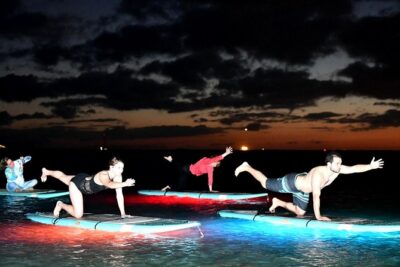
Yoga on a paddleboard sounds weird, until it works. This 75-minute class in Honolulu has you doing familiar yoga shapes—seated, kneeling, and reclining—while you float on the water and stay steady with balance coaching. I like that it’s not just for advanced yogis. You can try standing poses when you’re ready, and you still get guidance tailored to your comfort level.
Two things I especially love: the instructor-led small-group setup (limited to 10) and the way the class uses the ocean itself as part of the experience—starting with meditation, then ending with savasana while the waves gently rock you. One consideration: this activity is not suitable for everyone, including children under 12 and pregnant women, and you’ll be in swimwear the whole time.
In This Review
- Key highlights worth planning for
- Paddleboard Yoga at Magic Island: Why This Setting Changes Everything
- Finding Your Spot at Magic Island Without Stress
- From Shore to Waist-Deep: The Anchored Setup That Makes It Feel Safe
- The Yoga Flow: Seated Meditation, Ocean Rocking, and Standing Balance
- The Savasana You’ll Remember: Lying Meditation With Wave Rocking
- Small Group Coaching: How You Get Real Feedback on Your Balance
- Who Should Book This SUP Yoga Class—and Who Should Skip
- Price and Value: Is $53 Worth 75 Minutes on the Water?
- What to Bring (and What Actually Matters)
- Etiquette and Safety Basics You’re Expected to Follow
- Quick verdict: Should you book Honolulu SUP Yoga?
- FAQ
- Where is the meeting point for the Honolulu SUP Yoga Class?
- How long is the class?
- How much does it cost?
- Is transportation to and from the activity included?
- What should I bring?
- Is the class suitable for beginners?
- Do I need to be a strong swimmer?
- What’s included in the price?
- Is a photo package included?
- Is the activity suitable for children or pregnant women?
Key highlights worth planning for
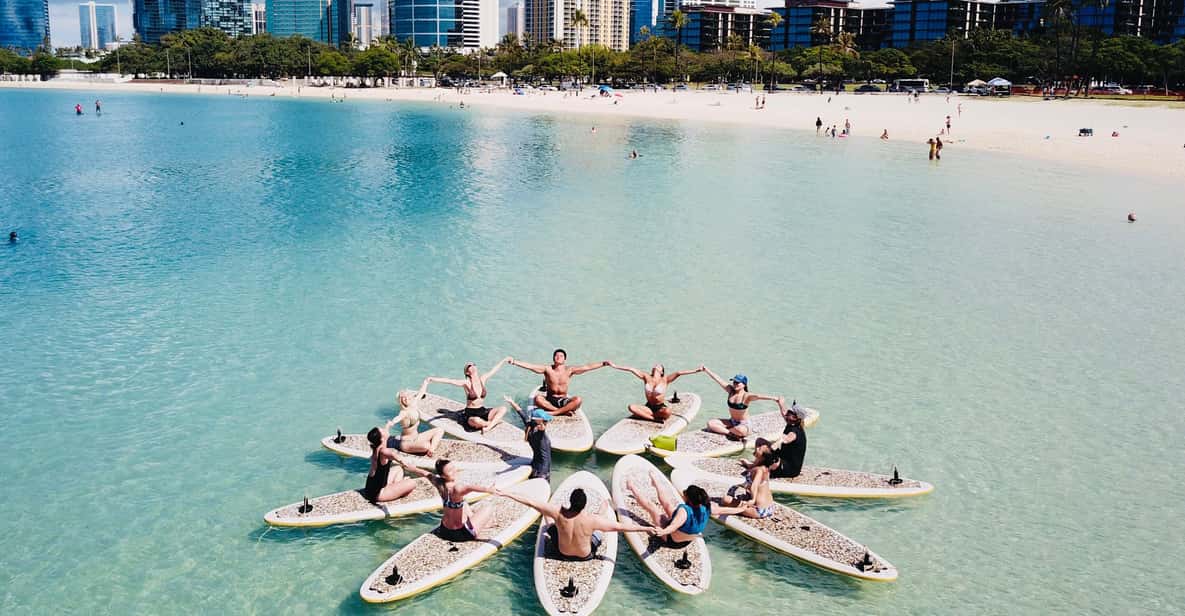
- Magic Island meeting point at the south end of the parking lot, with easy spotting of gear and the Yoga Floats van
- Waist-deep, anchored water so you can focus on balance without feeling like you must swim hard
- Seated meditation to ocean-rocked savasana, with a steady flow of poses in between
- Options for every level, including modifications if standing or balancing feels too intense
- Chill fall potential, where the vibe stays light if you wobble (and there’s no ego involved)
Paddleboard Yoga at Magic Island: Why This Setting Changes Everything
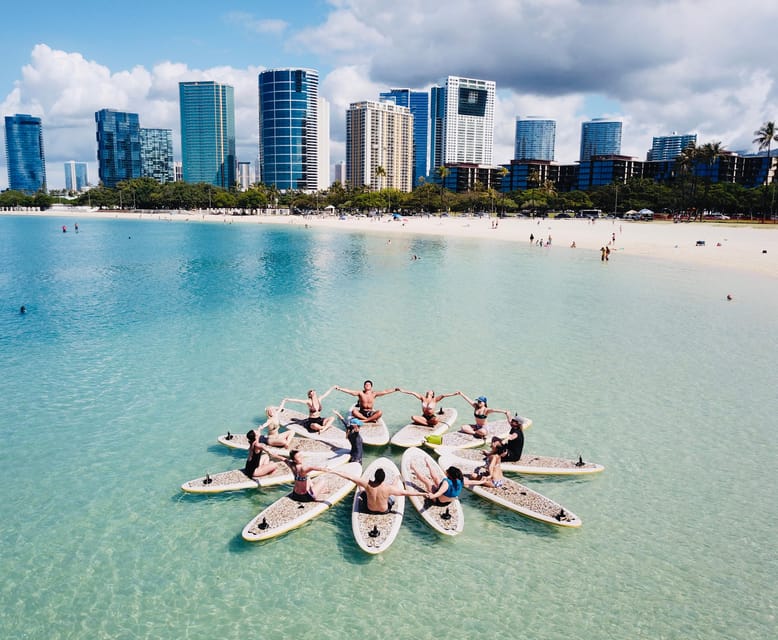
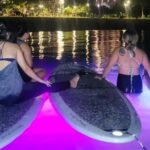
Honolulu’s shoreline near Magic Island is the kind of place that makes you want to slow down. The class takes that energy and turns it into practice. Instead of doing yoga on a flat mat, you’re on a board that moves with the water. That movement is the point: you’ll feel your core working, your ankles waking up, and your mind settling as you learn to stop fighting the rocking and start using it.
What makes it work is that the session is built around stages. First, you get the fundamentals while you’re still on shore. Then you move into waist-deep water and drop an anchor so the board isn’t drifting. That means the experience is challenging, but it’s controlled. You’re not trying to conquer the ocean; you’re learning how to stay centered on a gently shifting surface.
And because it’s yoga, not a fitness boot camp, the class feels balanced. You get time to attempt poses, but you also get time to recalibrate. If you’ve done yoga before, you’ll recognize the shapes. If you haven’t, you’ll still be able to follow along through the options offered by the instructor.
You can also read our reviews of more tours and experiences in Honolulu
Finding Your Spot at Magic Island Without Stress
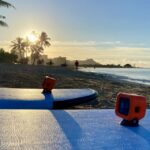
The meeting point is the south end of the Magic Island parking lot in Ala Moana Beach Park. You’re looking for white and gray boards in the grass or the colorful Yoga Floats van.
If you like clean, simple logistics, this part is good news: it’s one specific location. You also know what to watch for, which reduces the usual travel anxiety of, Where exactly do I go? If you run into trouble locating the group, you can call 808-585-1917.
My practical tip: arrive a few minutes early, not because you’ll be rushed, but because you’ll want time to change into swimwear, grab sunscreen, and get your towel ready. When you start the class with a seated meditation, it helps to begin calm rather than trying to set yourself up mid-breath.
From Shore to Waist-Deep: The Anchored Setup That Makes It Feel Safe
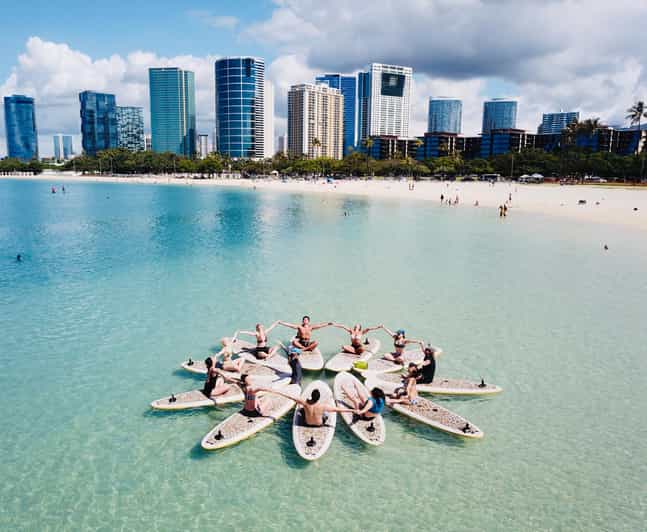
Once you meet your instructor and small group, you don’t jump straight into chaos. While you’re still on land, the instructor explains the basics of paddleboard yoga—how to position yourself on the board, and how to stay balanced and centered.
Then comes the move into the water. You’ll wade out with your board to waist-deep water. The class drops an anchor there. That detail matters more than most people expect. An anchored board means you can focus on alignment, breath, and balance cues instead of worrying about drifting.
Also, you don’t need to be a strong swimmer. The session stays shallow the entire time, so you can keep your feet and confidence working together. If the thought of water-based activities makes you tense, this shallow, anchored plan is a big reason the class feels approachable.
The Yoga Flow: Seated Meditation, Ocean Rocking, and Standing Balance
The class starts with a seated meditation. Even if your body feels restless, the routine helps you settle into the motion of the water early. This is one of those smart teaching choices: before you ask your muscles to balance, you train your attention to soften.
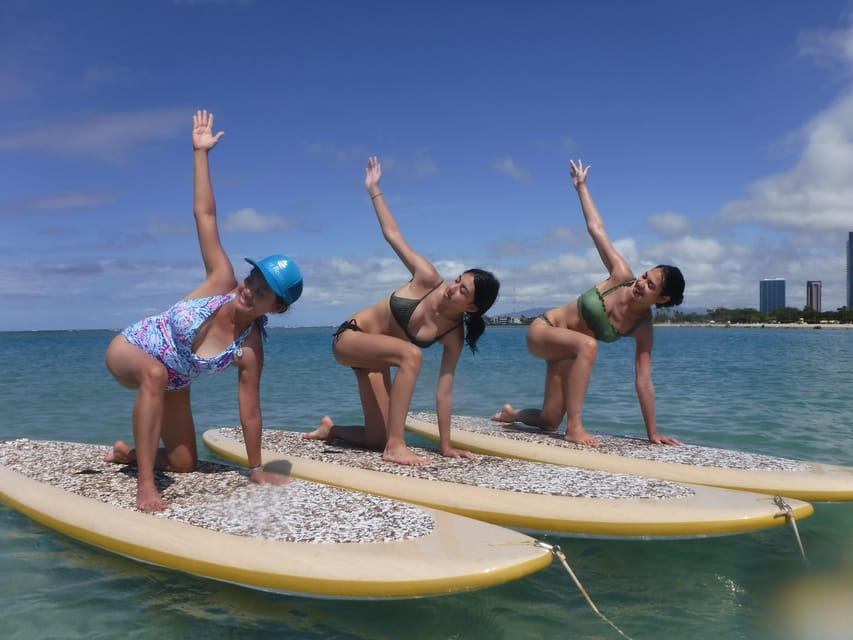
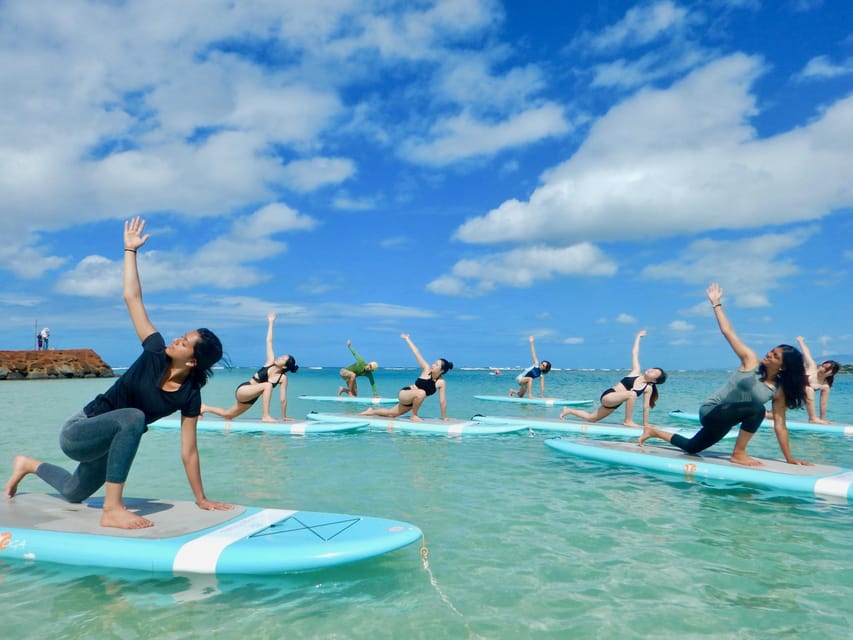
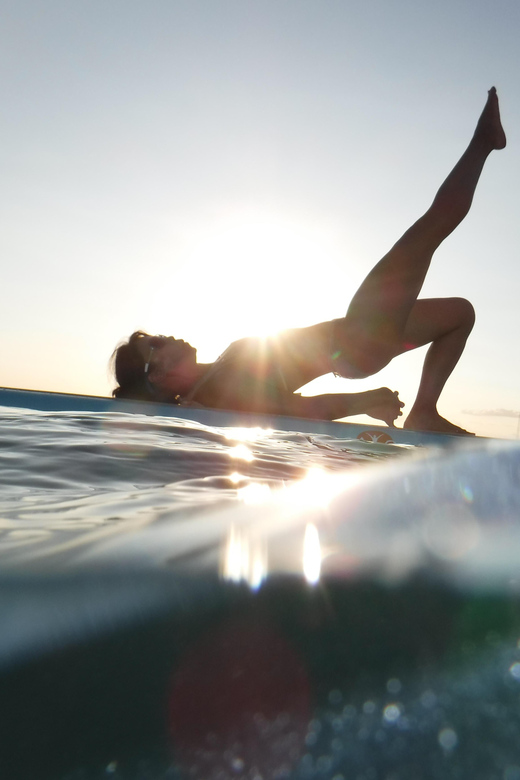
From there, the instructor guides you through yoga poses adapted for the board. The class shifts between seated, kneeling, and reclining positions, which makes the learning curve gentler. These variations help you understand how stability works on a moving platform. You’ll learn what it feels like to root through your body, even when the board gives you that ocean sway.
Then, as confidence builds, you may get to try standing and balancing poses. This is where you’ll feel the core engagement and ankle control most clearly. You’ll also understand why instructors emphasize being centered. When your weight drifts, the board responds. When you find that stable line through your legs and hips, the motion becomes something you can work with instead of something you fight.
One fun aspect: there’s free time to work on any poses you want during the session. That’s great if you already know your favorite sequence, or if you want to slow down and practice the one movement that felt tricky earlier.
And yes, you might fall. The vibe is described as chill and good-humored, with no embarrassment if you wobble. That matters, because falling is part of learning balance. The best classes keep it light so you don’t stop trying just because you slipped once.
The Savasana You’ll Remember: Lying Meditation With Wave Rocking
The class closes with savasana—lying meditation—while you feel the waves gently rocking you. In traditional yoga, savasana is about stillness. Here, stillness becomes different. You’re not trying to freeze the environment. You’re learning to relax with motion.
That ending is honestly one of the strongest reasons to book this class. By the time you reach savasana, you’ve already done balance work and breathing. Then the ocean provides the calming sensation. Fingers and toes trail in the water, and the whole mood shifts from effort to ease.
If you like experiences where the environment becomes the teacher, this is it. If you’re someone who gets restless in quiet rooms, the ocean movement gives you a gentle rhythm that still feels soothing.



Small Group Coaching: How You Get Real Feedback on Your Balance
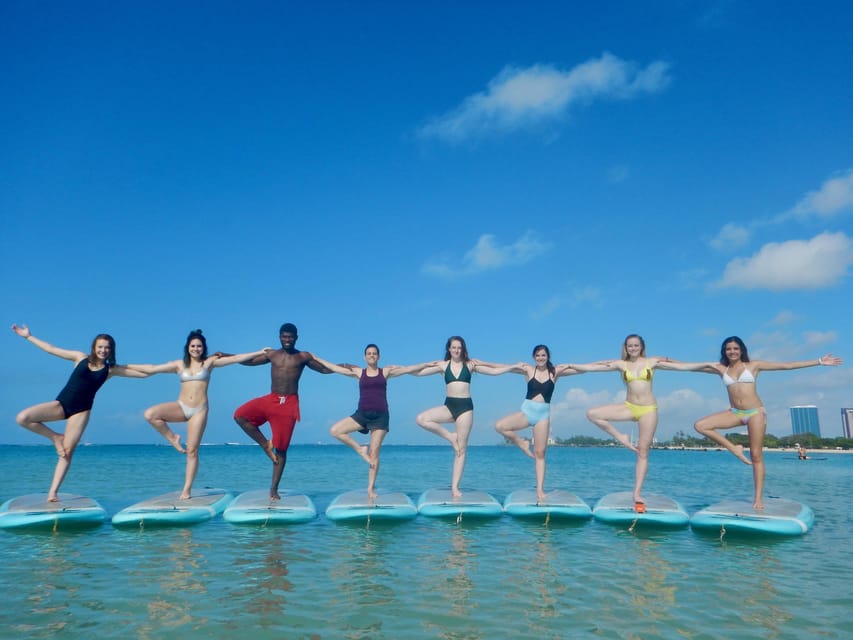
The group is limited to 10 participants, which keeps the attention practical. In a bigger class, the instructor’s coaching can feel generic. Here, you get more chances to adjust.
This is especially valuable for paddleboard yoga because balance isn’t just strength. It’s stance. It’s how you distribute weight. It’s how you keep your gaze steady and your breath consistent while the board moves.
Your instructor offers options throughout the class to match your ability level. I like that the teaching approach doesn’t frame standing poses as the only goal. Instead, it treats them as a choice you can approach gradually. That means a beginner can still feel successful, and an experienced yogi can still feel challenged without being pushed past comfort.
The friendly, informative style shows up repeatedly in feedback. One coach named Allie is mentioned as being helpful and very informative. That kind of experienced, patient coaching is exactly what you want when you’re balancing on water for the first time.
Who Should Book This SUP Yoga Class—and Who Should Skip
This experience fits well if you want a yoga practice with a sensory twist and a bit of a challenge. You don’t need to have done paddleboarding before, and the class is suitable for all skill levels due to instructor options.
You should plan for it if:
- You want to work on core stability and balance in a fun setting
- You like yoga sequences but want something different than a studio mat
- You enjoy calm outdoor mornings near the water
You should skip it if:
- You’re under 12 years old (not suitable)
- You’re pregnant (not suitable)
If you’re nervous about water activities, don’t ignore that. Still, the anchored, waist-deep setup is designed to keep you comfortable. The best way to decide is to ask yourself: Am I okay doing light wading and wearing swimwear for about 75 minutes? If yes, you’ll likely feel at home.
Price and Value: Is $53 Worth 75 Minutes on the Water?
At $53 per person for a 75-minute class, you’re paying for more than a “yoga session.” You’re paying for the instructor time, specialized gear, and a guided experience in the water that takes planning to run safely.
Here’s where the value holds up:
- All necessary equipment is included, so you’re not scrambling to rent a board or figure out what to use
- The guide handles the water setup and the anchor process, which is a big deal for safety and comfort
- The small group size means you’re more likely to receive individual feedback as you learn balance
Also, you’re getting a complete flow, not just a quick try-out. The class includes seated meditation, a sequence of poses adapted for the board, and a full savasana ending. That arc is what makes it feel like a real practice, not a gimmick.
Photo packages cost extra—$10 per person—but the class itself is the main event. If you want photos, you can plan around that. If you don’t, you still get the moment.
What to Bring (and What Actually Matters)
This class asks for practical items. You’ll want to show up ready to be comfortable outdoors and in the water.
Bring:
- Swimwear
- Towel
- Sunscreen
- Water
That’s a simple list, and it’s also the list that prevents the usual discomfort problems. Sunscreen matters because you’re on the water and the sun reflects. A towel matters because you’ll be wet and you’ll want something warm to wrap up afterward.
What to remember about attire: you’ll be in swimwear, so plan for that. If you’re prone to getting cold easily after water, consider whether you have a plan for warmth after the class (like changing quickly and having a dry layer nearby).
Etiquette and Safety Basics You’re Expected to Follow
The rules are straightforward: no smoking, and no alcohol or drugs. That’s not just about policy. It’s about keeping the water-time experience calm, safe, and focused.
You’ll also store belongings safely during the class. The equipment comes provided, and there’s a safe place to store your items. That takes one more uncertainty off your plate.
Finally, the instruction is in English. If you want to learn the balance basics and hear pose options clearly, this is a good match.
Quick verdict: Should you book Honolulu SUP Yoga?
Yes—if you want something peaceful that still challenges you. This is the kind of class that turns an ordinary yoga routine into an outdoor training session without losing the relaxation part. The anchored, waist-deep setup makes it feel manageable, and the small group size keeps it personal. You’ll leave with a stronger sense of balance and a savasana that feels different because the ocean is part of it.
Skip it only if you fall into the clear limits listed (under 12 or pregnant). Or if you strongly dislike being in water for a full hour-ish, even if it’s shallow, you might find the experience stressful instead of fun.
FAQ
Where is the meeting point for the Honolulu SUP Yoga Class?
You’ll meet at the south end of the Magic Island parking lot at Ala Moana Beach Park in Honolulu. Look for white and gray boards in the grass or the colorful Yoga Floats van.
How long is the class?
The duration is 75 minutes.
How much does it cost?
It costs $53 per person.
Is transportation to and from the activity included?
No, transportation to/from attractions is not included.
What should I bring?
Bring swimwear, a towel, sunscreen, and water.
Is the class suitable for beginners?
Yes. The class is suitable for all skill levels, and the instructor provides different options throughout.
Do I need to be a strong swimmer?
No. The class stays shallow the whole time, and the instructor has you wade to waist-deep water and drop an anchor.
What’s included in the price?
Included are a professional guide, all necessary equipment, and a safe place to store belongings.
Is a photo package included?
No. A photo package is available for $10 per person, but it’s not included.
Is the activity suitable for children or pregnant women?
No. It’s not suitable for children under 12 or for pregnant women.