REVIEW · SURF LESSONS
Oahu: 1-on-1 Surfing Lesson in Waikiki
Book on GetYourGuide →Operated by Manifesting Aloha Surf School · Bookable on GetYourGuide
Surf lessons in Waikiki can happen fast. What I like most about this private instruction is the guaranteed first wave, plus the fact that you get all the gear so you start learning right away.
The lesson is built around real skills you can use immediately: safety basics, how to paddle efficiently, how to pop up, and how to catch a wave without panic. And because it’s one-on-one, the coach can adjust to your pace, even if paddling feels harder than you expected.
The main thing to plan for is conditions. This activity needs good weather, and if it’s canceled for poor weather you’ll be offered a different date or a refund.
In This Review
- Key takeaways before you paddle out
- Finding the small triangular beach for your 1-on-1 start
- The coach’s first demo: safety, paddling, and pop-ups
- 75 minutes of wave time with paddling help and pushes
- Included gear and what you should pack before you go
- Photos and videos the same day: is the $40 add-on worth it?
- Price and value of $178 for a Waikiki 1-on-1 lesson
- Who this surf lesson fits best in Oahu (and who should skip it)
- Weather, waves, and the Waikiki reality check
- Should you book this Waikiki 1-on-1 surf lesson?
Key takeaways before you paddle out
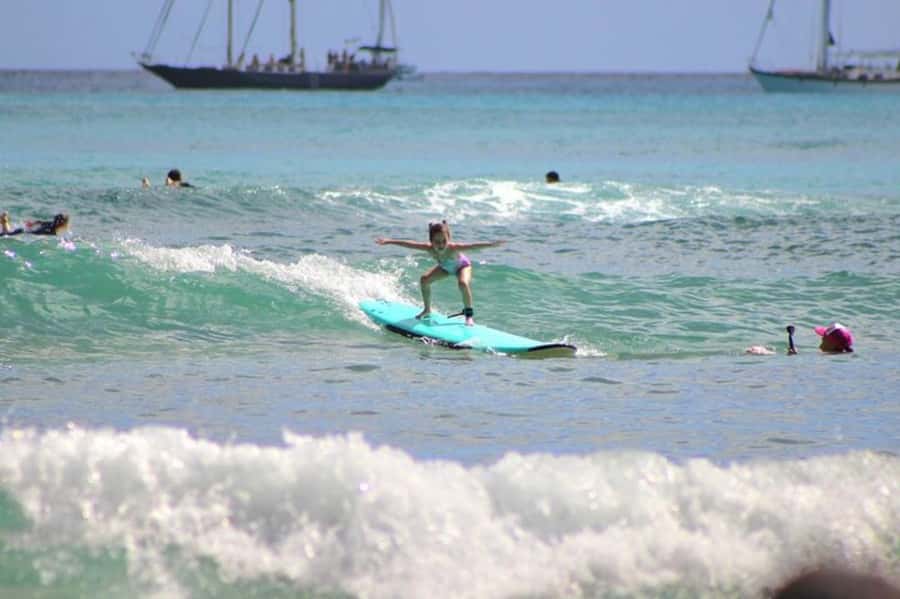
- Guaranteed first wave: Built-in confidence for beginners, even on lesson day
- Private 1-on-1 coaching: Less guesswork, faster corrections, and calmer nerves
- Practical coaching start: A demo near the water entrance for safety, paddling, and pop-ups
- Help when you get stuck: Instructors step in if you struggle paddling on your own
- Same-day photo/video option: Add $40 per person if you want an instant memory file
Finding the small triangular beach for your 1-on-1 start
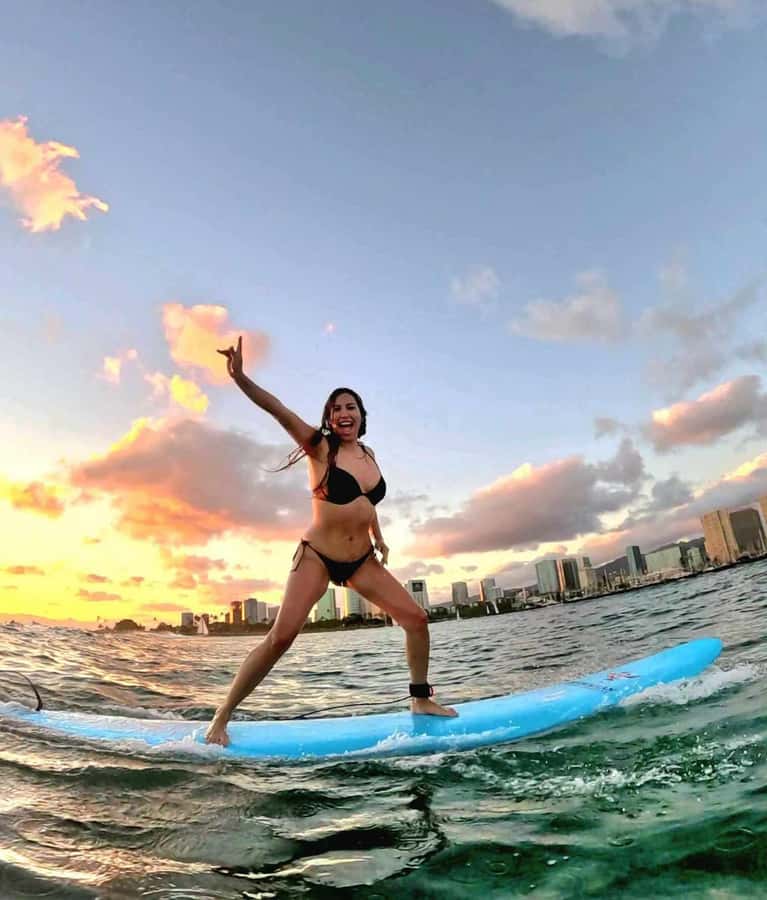
Your lesson starts at a simple spot: the end of a free parking lot, by a small triangular stretch of beach on the ocean. It’s the kind of meeting point where you don’t need a complicated “tour bus” moment, but you do need to arrive with enough time to locate the water and the instructor calmly.
If you can’t find parking in that free lot, there’s a paid parking lot to the right just before it. If you run into trouble, you can call, and they’ll do their best to answer between lessons. Translation: give yourself a little buffer, because ocean timing is real timing.
Before you step into the water, expect the quick fit-check that matters. The coach helps you choose the best size rash guard (water shirt) and water shoes. That sounds minor, but getting the fit right affects comfort, grip, and how confident you feel the moment you’re balancing on the board.
You can also read our reviews of more tours and experiences in Honolulu
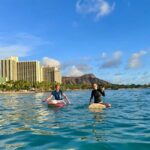
The coach’s first demo: safety, paddling, and pop-ups
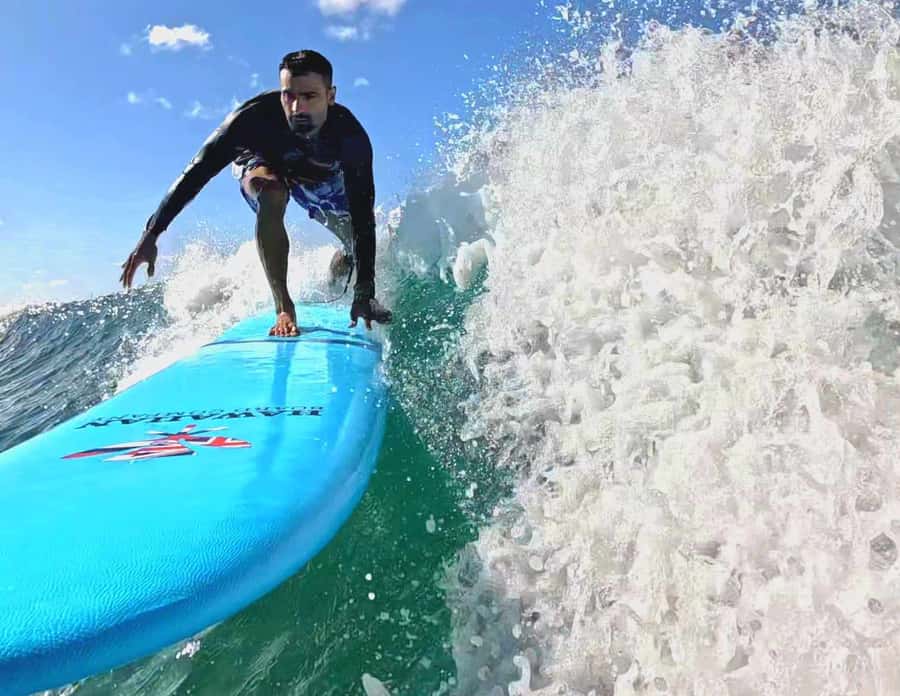
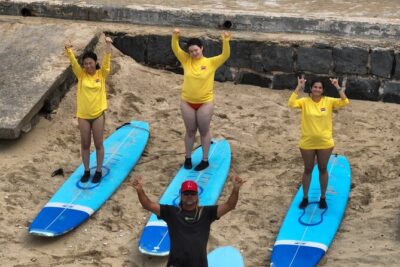
You’ll meet your instructor at the water, near the entry area. Then you start with a demo close to where you’ll actually practice. This matters because it gives you the mechanics before the ocean adds variables.
The first coaching block focuses on what could make or break your session:
- Safety basics: How to move around on the board and what to watch for in the surf zone
- Paddling technique: How to get your timing right and reduce wasted effort
- Pop-ups: Getting from lying to standing with control, not rushing into it
If you’ve ever tried to learn from a video, you know the common problem: you don’t know what you’re doing wrong until it’s already happening. This format solves that early. A good instructor can spot tiny issues—hand placement, the push-off timing, or whether you’re losing balance—and correct them before you burn through your practice time.
Also, you can ask questions at the start. That sounds basic, but for a first-time surfer, it can turn anxiety into curiosity. A calm coach helps you focus on the next step, not the fear of the next wave.
75 minutes of wave time with paddling help and pushes
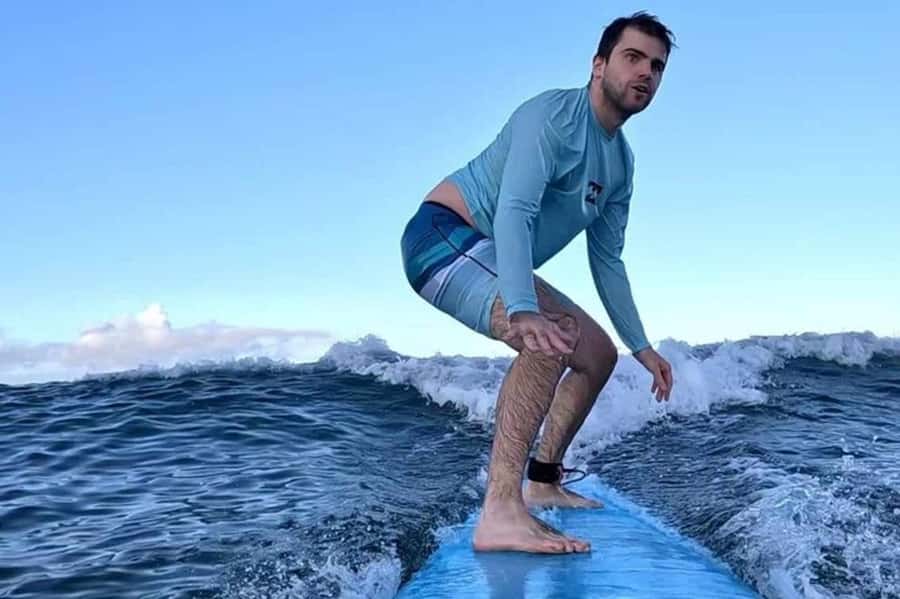
Once the demo is done, you get your main practice: 75 minutes in the water. This is where private coaching earns its keep. You’re not rotating through a group of people on a schedule. It’s you, your instructor, and the waves.
One detail that’s especially helpful for beginners: the instructor will help if you’re struggling to paddle on your own. That’s huge, because many first-timers think the hard part is standing up. In reality, getting into position is often the bigger hurdle.
Then comes the most exciting part—getting comfortable catching waves. The coach will help you with positioning and can push you on waves so you get the timing and momentum you need. That support matters because it lets you experience what it feels like when everything clicks, rather than spending the whole lesson only working toward that moment.
And yes, there’s a guarantee to catch a wave during your first lesson. I’d still treat it as a coaching promise, not a magical guarantee of perfect conditions. Your job is to follow instructions and stay engaged. The instructor’s job is to guide you to the moment where standing and riding become possible for your skill level.
In lessons with instructors like Jake, the coaching style is described as protective and confidence-building, with a strong focus on helping you get to a stable stance. That kind of energy is exactly what you want when the ocean is asking a lot from your balance.
Included gear and what you should pack before you go
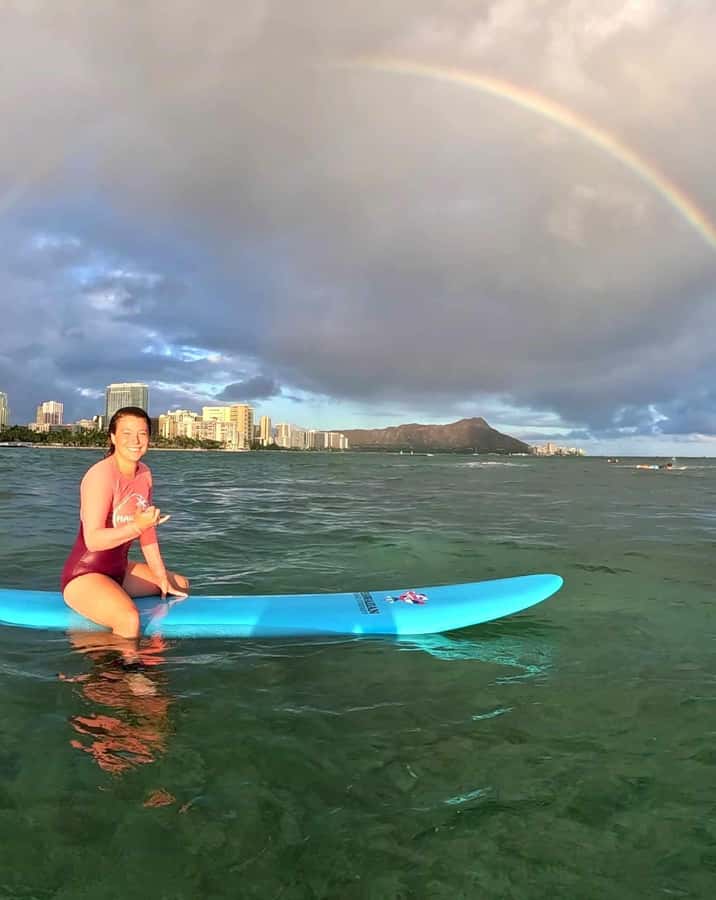
This lesson includes the main surf essentials: a surfboard, rash guard, and water shoes. That’s good value, because surf gear can be pricey to buy or annoying to rent for a short session.
Even with gear included, you still need to bring the basics:
- Swimwear
- Towel
- Sunscreen
The sunscreen piece is on you because the lesson doesn’t include it. Reef-safe is often a good idea in Hawaii, but the only hard requirement here is that you show up with sunscreen so you don’t spend the day thinking about sunburn instead of waves.
What you can expect from the included gear:
- The rash guard helps with comfort and friction, especially when you’re learning how to pop up and reposition on the board
- Water shoes can reduce slip risk and make getting in and out of the water feel less sketchy
- The board size matters for beginners, which is why the coach helps with the initial fit and setup
A practical tip: wear your swimwear under layers you don’t mind getting wet. Once you’re changing and drying, it’s easier when you don’t have to wrestle with a wet outfit on the side of the beach.
Photos and videos the same day: is the $40 add-on worth it?
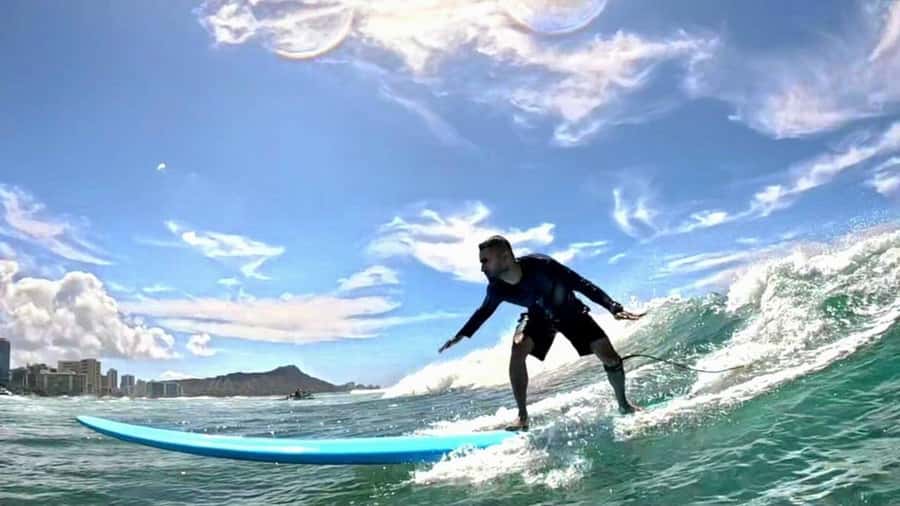
After you paddle back in, you’ll have the option to purchase a photo/video package. The price is $40 USD per person. If you choose it, photos and videos are uploaded the same day and sent to you by email.
Is it worth it? For many people, yes—because the surf learning curve is intense. You’ll be focused on timing, stance, and breathing, and your brain won’t capture the moment you make it work. Photos and short clips are the proof that the lesson delivered what you wanted: you caught waves and learned the basics in real conditions.
If you’re the type who likes a clean souvenir, this is also a low-effort add-on. No walking around with a phone held over salty spray. Just do the lesson, then get the memory file later.
If you’re trying to keep costs down, you can skip the package and still leave with the experience. But if you’re going to spend $178, you might as well consider the $40 as a small investment in a stress-free reminder.






Price and value of $178 for a Waikiki 1-on-1 lesson
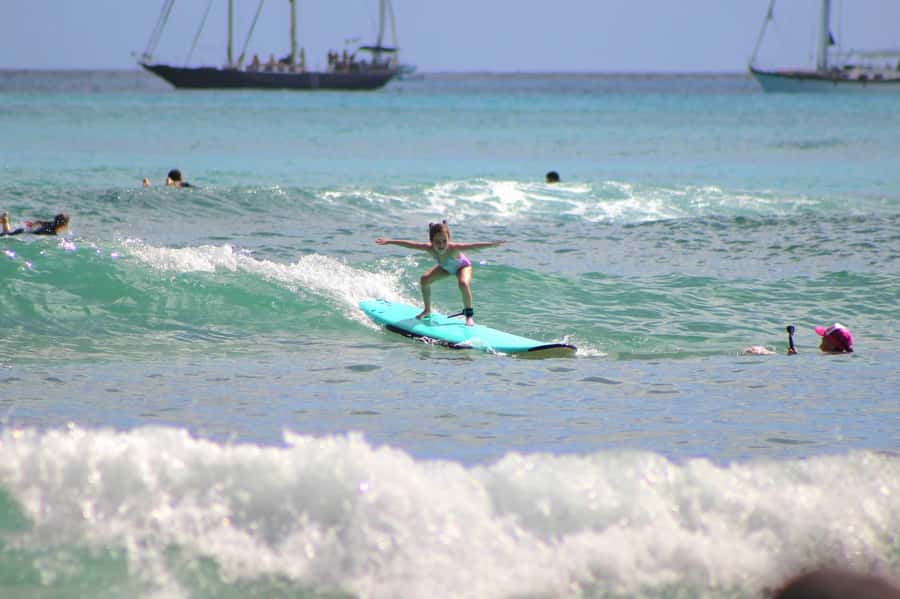
At $178 per person for a 75-minute private lesson, this isn’t a bargain price. It’s a premium price tag. The question is whether you get premium value—and you mostly do.
Here’s how the value adds up based on what’s included:
- Private 1-on-1 instruction: You’re not sharing time, attention, or coaching feedback
- All necessary gear included: surfboard, rash guard, water shoes
- Safety and skills coaching: you’ll practice the steps you need to progress
- Guaranteed first wave: not every lesson can offer that kind of confidence setup
For beginners, private surf coaching tends to compress the learning curve. You get corrections faster, you spend less time guessing, and you’re more likely to experience standing and riding within your lesson window.
Where the cost doesn’t include extras:
- Transportation
- Sunscreen
- Towels
- Water and drinks
- The optional $40 photo/video package
So, the real value math depends on you. If you already live nearby and can show up prepared with sunscreen and a towel, the session feels like a straightforward pay-for-the-expert experience. If you need to factor in rides plus rentals plus impulse purchases, your total trip cost rises.
Still, for $178 you’re paying for time with a coach and a structured session in the Waikiki surf zone. That’s the kind of value that often beats trying to “figure it out” on your own in a busy ocean setting.
Who this surf lesson fits best in Oahu (and who should skip it)
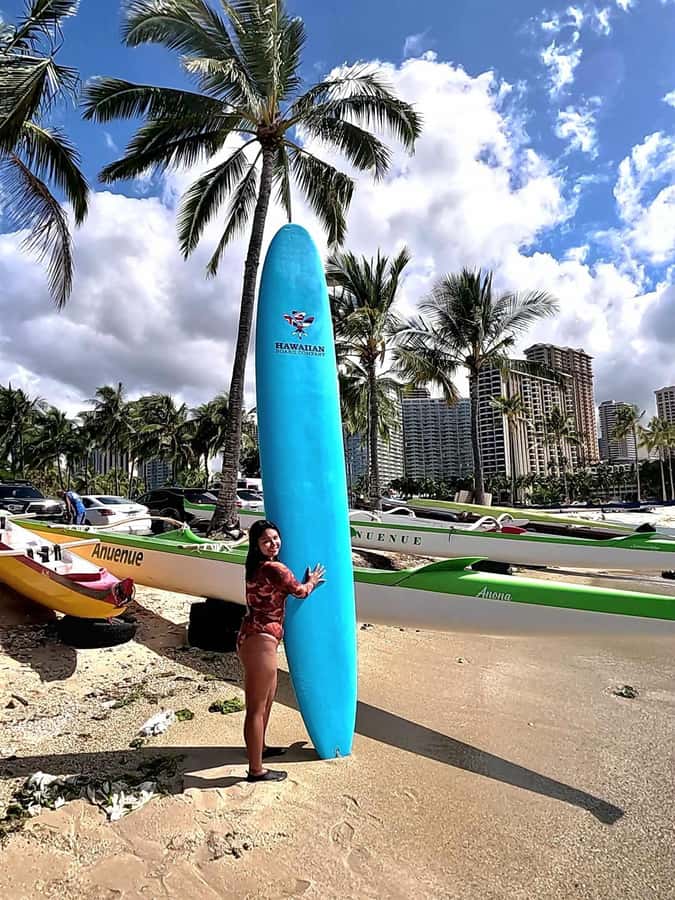
This is listed as suitable for ages 4 and older, but it’s not for everyone. The lesson isn’t recommended for:
- Children under 4
- Pregnant women
- People with back problems
- People with pre-existing medical conditions
If you fall into those categories, don’t try to make it work. The ocean includes sudden movement, paddling strain, and the physical demands of balancing on a board.
Who it’s best for:
- True beginners who want step-by-step coaching and real-time feedback
- People who want a private, low-stress experience instead of group learning
- Surfers who want a focused reset on fundamentals like paddling and pop-ups
And if you’re nervous about standing up, you’ll appreciate the way private instructors can keep you stable and confident. In lessons like those taught by Jake, the coaching approach is described as attentive and protective, with lots of advice aimed at helping you stand and enjoy the ride.
Weather, waves, and the Waikiki reality check
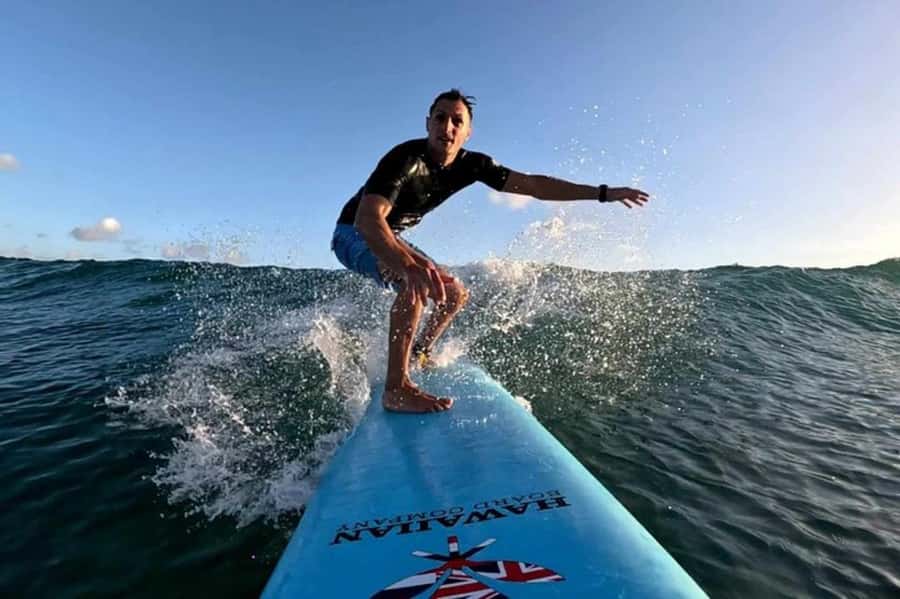
Surfing depends on conditions. This lesson specifically calls out that good weather is required. If it’s canceled due to poor weather, you’ll be offered a different date or a full refund.
That’s not a small detail. It changes whether your session happens as planned, and it affects the kind of waves you’ll face.
My practical advice: plan your schedule so you have flexibility. If you’re staying on Oahu and you can rearrange around one day of rain or wind, you’re in a good spot. If you’re locked into tight departures, have a backup plan before you commit.
Should you book this Waikiki 1-on-1 surf lesson?
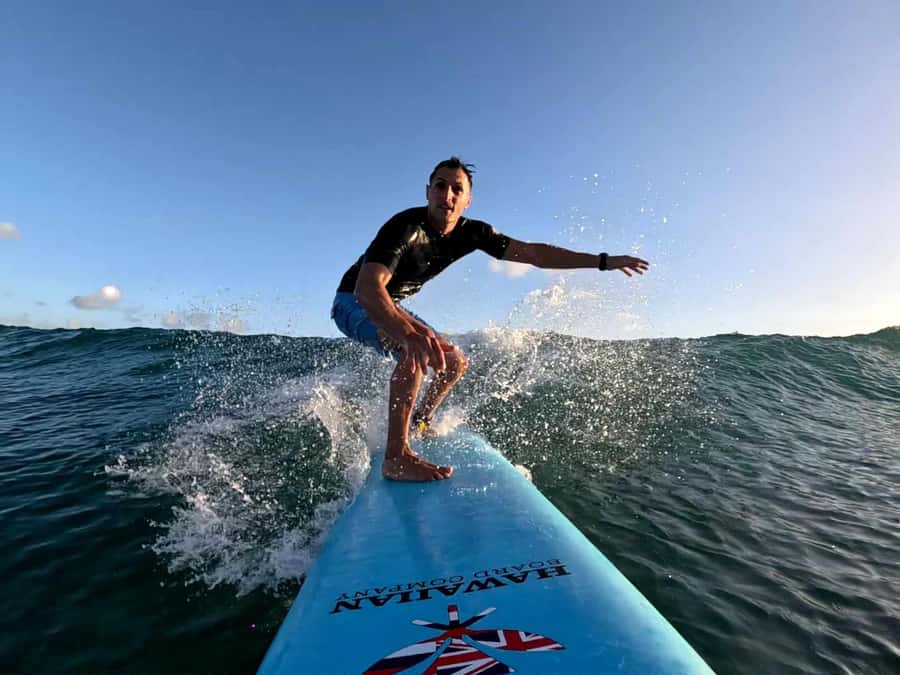
If you want the best odds of getting your first wave with less stress, I’d book it. The combination of private coaching, included gear, and the guarantee to catch a wave during your first lesson is exactly what beginners look for when they’re tired of theory and ready for real ocean learning.
Book it if:
- You’re a beginner and want structure: safety, paddling, pop-ups, then wave time
- You like the idea of one coach focusing on you the whole time
- You want photos/video sent by email the same day if you choose the add-on
Maybe skip or reconsider if:
- You don’t have any flexibility for weather
- You fall into one of the listed non-suitable categories (pregnancy, back problems, pre-existing medical conditions)
- You’re expecting transportation and supplies to be included
If you show up prepared with swimwear, a towel, and sunscreen, this is one of the most efficient ways to learn surfing on Oahu without turning your first day into a guessing game.