REVIEW · NORTH SHORE TOURS
Learn to surf with a local big wave rider on the North Shore of Oahu
Book on Viator →Operated by Chance King · Bookable on Viator
Big-wave surfer coaching turns panic into pop-ups. On Oahu’s North Shore, you learn to surf with Chance King of Haleiwa Surf Surf School, a lifelong local and tube-rider type who knows exactly how to translate ocean energy into beginner wins. What I love most is the short, clear beach briefing plus the way the lesson is set up so you’re not just standing around watching. I also like the 100% refund promise if you aren’t having fun at any point. One consideration: if you’re prone to motion sickness, the ocean can still get to you, so tell your instructor early and plan to speak up fast if you feel off.
This is built for real people with real schedules. The session lasts about 1 hour 30 minutes, and it starts with 15–20 minutes on the beach for safety, stance, and how to navigate the break before you head out. You get a private setup for your group, with room for patience and quick fixes, not a slow shuffle through a huge class.
North Shore learning has a personality, and you’ll feel it in the pacing. Expect a beginner-friendly vibe, often with instructors working together so everyone can take turns without chaos. The drawback is simple: it’s weather dependent, so you may need a flexible plan if conditions are rough.
In This Review
- Key things I’d watch for before you go
- First Stop: Haleiwa Surf Lessons with Chance King at Kahalewai Place
- The 15–20 Minute Beach Plan That Makes the Ocean Less Scary
- Getting Up and Riding: How the Coaches Aim for Real Waves
- Choosing the Right Break and Avoiding the Crowded-Mistake
- Coaching Style: Patience, Practical Advice, and Calm Ocean Handling
- What to Wear: Save Your Skin from Board Burn
- Timing and Group Setup: Why 90 Minutes Feels Longer
- Value on the North Shore: What You’re Actually Paying For
- Who Should Book This Surf Lesson (and Who Might Think Twice)
- Should You Book Haleiwa Surf Surf School with Chance King?
- FAQ
- How long is the surf lesson on Oahu’s North Shore?
- Where do we meet for the tour?
- Is this lesson private or shared with other groups?
- Is this surf lesson suitable for beginners?
- What happens first during the lesson?
- Do you guarantee you will be able to ride?
- What language is the instruction provided in?
- What if the weather is poor?
- Can I cancel for a full refund?
- Are service animals allowed?
Key things I’d watch for before you go
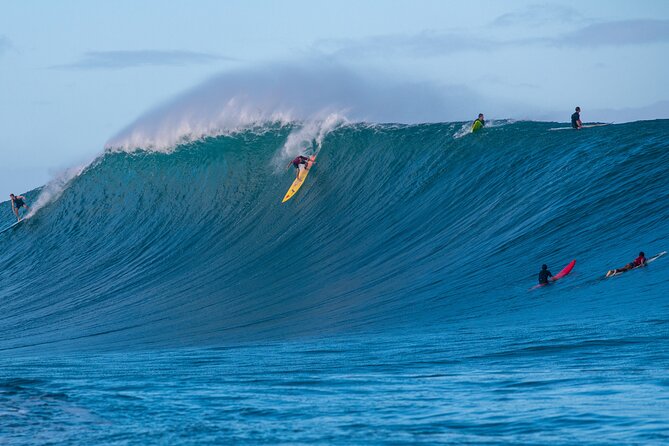
- A local, big-wave rider teaches the fundamentals with firsthand North Shore instincts.
- 15–20 minutes of beach coaching before you’re in the water.
- You’re designed to get up and ride, not just catch a few flutters.
- Refund if the session isn’t fun, which flips the usual surf-class risk into your favor.
- Small-group feel even in the lineup, with instructors helping things stay calm.
First Stop: Haleiwa Surf Lessons with Chance King at Kahalewai Place
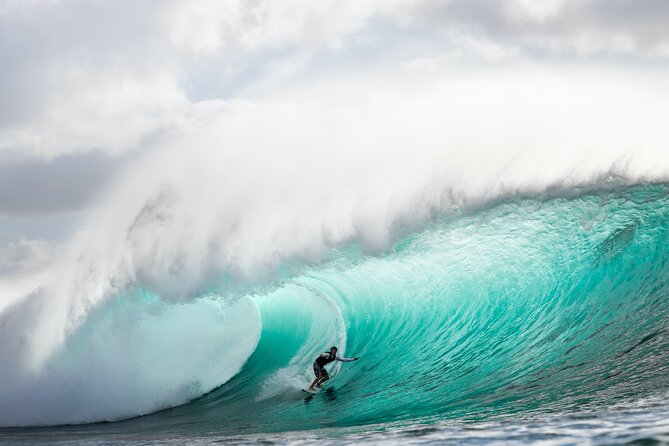
You start at Kahalewai Place in Haleiwa. That matters more than it sounds, because North Shore surfing lives and dies by timing. When you’re meeting close to the action, you waste less time in transit and more time learning the actual flow of the break.
Chance King runs Haleiwa Surf Surf School, and his background shows in the tone of the instruction. This isn’t “send it and hope.” It’s coaching from someone who grew up on the north shore and lives in the ocean. That local experience doesn’t mean he talks in surf jargon. It means he spots the common beginner mistakes quickly and corrects them before they become bad habits.
You’ll also like the practical setup: the lesson is offered in English, it’s a private activity for your group, and it typically works for most travelers. Service animals are allowed, which is good to know if you travel with a helper animal.
One more detail worth noting: even though this is private, you may still share the general break area with other surfers and schools. In that case, the best lessons are the ones where everyone can coexist, take turns, and not turn the ocean into a traffic jam. The coaching style here seems built for that kind of calm.
You can also read our reviews of more tours and experiences in Oahu.

The 15–20 Minute Beach Plan That Makes the Ocean Less Scary
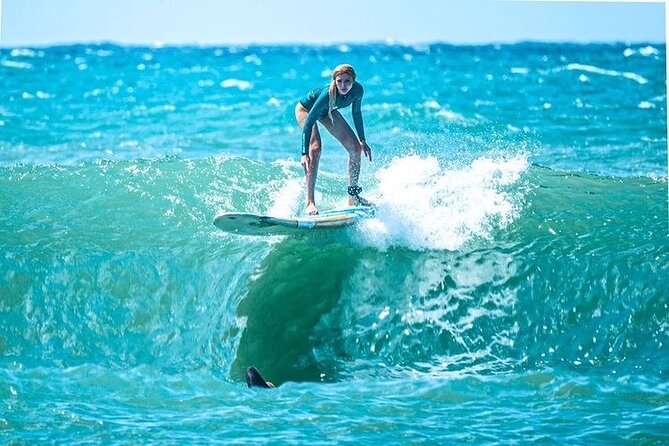
The session begins with a 15–20 minute beach instruction and safety briefing. This is the part that separates a frustrating first hour from a “wait, I’m doing it” hour.
On the beach, you’ll cover the basics you actually need:
- how to properly stand on your board
- how to navigate the surf break
- and what to do for safety so you don’t just react in panic when sets arrive
What I like about this structure is that it creates a mental map before you get pushed around by waves. You learn what to aim for, and you also learn what to avoid. That means when you finally paddle out, you’re not starting from zero.
This is also where you can ask questions that feel too early to ask once you’re wet. If you’re nervous, tell them immediately. If you have balance issues, mention it. The lesson format is fast, but it gives enough beach time to steer you in the right direction.
And yes, you should come prepared to move. Those first minutes are short, so you’ll get more out of it if you’re paying attention instead of waiting for the lesson to begin.
Getting Up and Riding: How the Coaches Aim for Real Waves
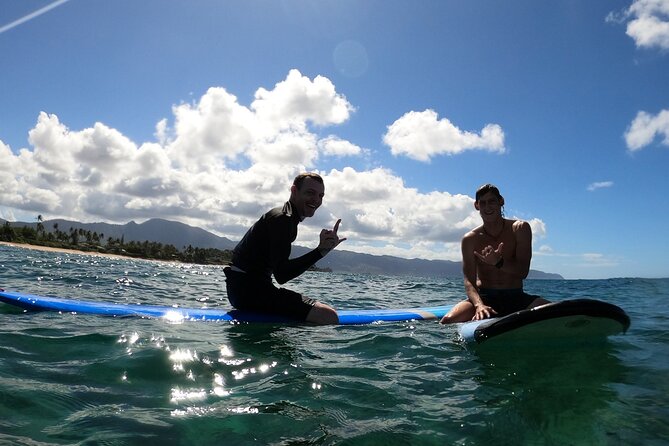
The promise here is straightforward: you’re guaranteed to get up and riding during your session. The idea is simple: the instructors pick a plan that fits beginners, keep you moving through the learning curve, and don’t treat day-one surfing like a lottery.
A few things that show up in how the lesson feels:
- You’re guided quickly through the steps that lead to your first ride.
- Coaches give pointed feedback while you’re trying, not after you’ve already repeated the mistake five times.
- The pace is designed so you can actually rest between attempts.
One helpful detail from the way the instructors teach: when you’re in a more focused coaching setup, you tend to get more time actually doing the surf skill, rather than just waiting for your turn. People often notice that one-on-one means more waves per person, with fewer long gaps.
You might also have more than one instructor in the mix. Chance King teaches, and you could be assisted by Caleb and/or Charlotte during your session, depending on scheduling and group needs. Different instructors can mean different coaching styles, but the common thread is clear: patience, quick corrections, and an emphasis on safety while still giving you chances to catch fun rides.
Choosing the Right Break and Avoiding the Crowded-Mistake
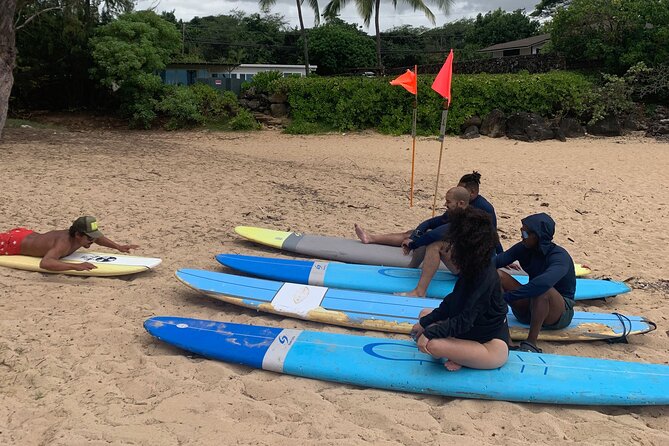
North Shore has world-famous surf breaks, and for beginners the lesson is not about chasing the biggest waves. It’s about learning how to read waves, pick an angle, and get moving.
So a big part of the coaching is choosing the right spot during your session. In practical terms, you benefit from a beach/break that:
- helps you stand up sooner
- avoids excessive crowding
- gives you a surf rhythm that doesn’t feel random
One tip you’ll hear in many good surf lessons is to consider timing. If you can, schedule an earlier time in the day. You’re likely to find calmer crowd conditions and a more relaxed flow for learning. That doesn’t mean the ocean is ever quiet, but it can mean less chaos while you’re building confidence.
Also, if you have kids or first-timers, the right break can make the difference between fear and curiosity. Several families mention that the instructors kept the experience comfortable and steady even for nervous new surfers.
Coaching Style: Patience, Practical Advice, and Calm Ocean Handling
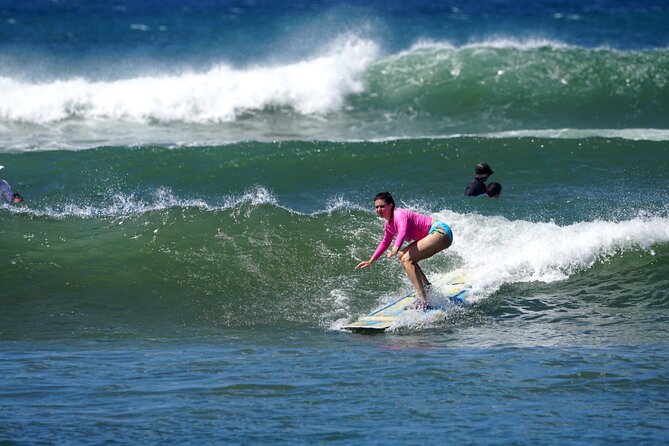
Chance’s style is what you hope for in a first lesson: patient coaching with tips that are specific enough to actually apply. When you’re learning to surf, vague advice is useless. The coaching here tends to focus on small, actionable corrections like how you’re standing, how you’re approaching the wave, and how you’re positioning yourself in the lineup.
Caleb’s approach is described as chill but precise. That matters. Beginners don’t need intense yelling; they need the next step. Charlotte also gets credit for staying supportive and responsive, especially when situations shift.
One important real-world example: if someone feels sea sick or overwhelmed, the instructor should notice and help them get back safely. In at least one experience, Charlotte guided a student back to shore and made sure they were okay. That’s not just kindness. It’s part of what good surf safety looks like in practice.
For parents, this is a big deal. You’re not just paying for waves—you’re paying for attention. If your kid is scared, you want an instructor who stays close and doesn’t rush. If your kid is improving, you want someone who keeps the energy positive.






What to Wear: Save Your Skin from Board Burn
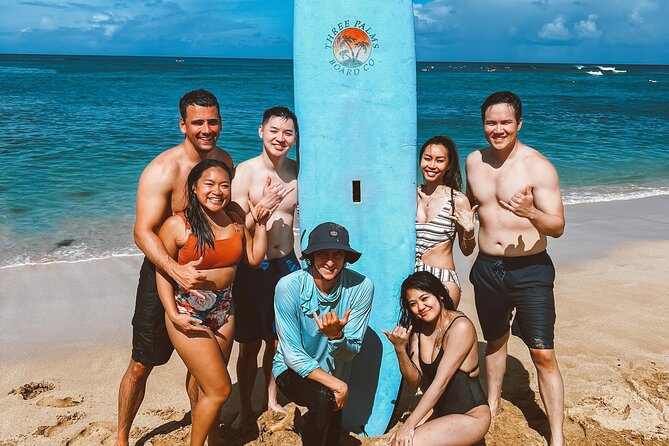
Surf lessons on Oahu are active, and you’ll be on a board. That means skin protection is not optional.
A very practical recommendation from past participants: wear a one-piece and something that covers your thighs to help with board burn. That’s the kind of detail that sounds small until you’re rubbing your way through your next session.
Beyond that, use your common sense:
- expect ocean wind
- plan for sand
- and keep your comfort in mind so you can focus on learning
If you get cold easily, you’ll want to think about what you wear under the sun and water temps. The data here doesn’t specify wetsuits, so you’ll want to follow whatever guidance you’re given at booking and bring gear that matches your comfort level.
Timing and Group Setup: Why 90 Minutes Feels Longer
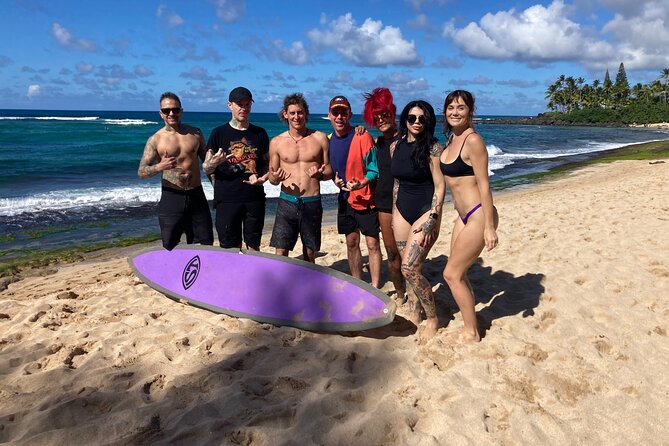
The total time is about 1 hour 30 minutes. Inside that, the first 15–20 minutes are on the beach, which means you’ll spend the rest in the water practicing with coaching.
That matters because surfing is one of those skills where you learn by doing, not by watching. If you spend too much time waiting, you lose the moment. The format here works because it gets you into the real cycle:
- brief coaching
- quick try
- feedback
- repeat
Also, because it’s private for your group, you avoid the feeling of being one more number in a large class. You’re more likely to get individualized corrections and enough opportunities to try.
Some instructors handle multiple learners at once, and you may see other surfers in the water. But the overall vibe seems designed so you aren’t stuck waiting while others take every wave. Instead, you should get a steady rhythm with enough rest built in.
One small planning note: if you want the “best learning mood,” leave yourself breathing room before and after. People often say it’s fun enough that you wish you booked earlier or had more of the day available. That’s a good sign. Surf lessons can turn into a mini obsession.
Value on the North Shore: What You’re Actually Paying For
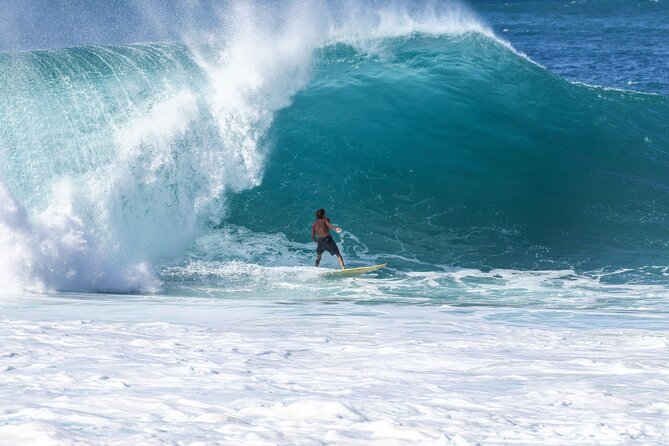
Price isn’t provided in the details here, so I can’t compare costs to other schools. But you can still judge value by the structure.
Here’s what makes this lesson feel like more than a basic rental-and-try:
- Local coaching from Chance King, who grew up on the north shore and knows how to teach safely and effectively.
- A short beach briefing that gives you the basics before you paddle out.
- A guarantee that you’ll get up and ride, which shifts the risk away from you.
- A 100% refund option if at any time you aren’t enjoying your session.
That refund promise is the wild card. Most experiences ask you to accept the risk. This one puts the responsibility on the team to make sure you’re actually having a good time. In practice, that means you should communicate early. If something feels wrong, speak up before you mentally check out.
Add in the fact that it’s a private activity, and you’re buying a focused coaching window rather than a vague “group lesson” feel. Even for families and first-timers, that focus can translate into better skill and less stress.
Who Should Book This Surf Lesson (and Who Might Think Twice)
This lesson is a good match if:
- you’re surfing for the first time
- you want a coach who knows the north shore rules, not just generic surfing theory
- you’re traveling with family members or friends and you want a private setup
- you want a lesson that is safety-minded but still pushes you toward real rides
It’s also been done with young kids, including a family with a daughter around 8 years old who was able to stand up a few times. If you’re bringing kids, you’ll appreciate the instructor attention and the way they stayed close when a child was nervous.
You might think twice if:
- you know you’re highly prone to sea sickness and you struggle in moving water
- you want a full-day surf trip with lots of scenic breaks instead of a concentrated 90-minute coaching session
That said, the team has shown the ability to handle a student who felt sea sick by helping them back to shore and checking in.
Should You Book Haleiwa Surf Surf School with Chance King?
If you want a first surf lesson on Oahu that feels safe, focused, and designed around getting results, I’d book this. The key reasons are the beach briefing, the guarantee that you’ll get up and riding, and the refund promise if the session isn’t enjoyable.
It’s also a great call if you like learning from locals who actually live the water. Chance King brings the north shore perspective, and instructors like Caleb and Charlotte can keep the mood calm while you build confidence fast.
One last piece of advice: bring the right clothing to reduce board burn, schedule at a time that fits your energy, and speak up early if you feel unsure. Surfing rewards quick feedback, and this setup is built for that.
FAQ
How long is the surf lesson on Oahu’s North Shore?
The session lasts about 1 hour 30 minutes.
Where do we meet for the tour?
The activity meets at Kahalewai Place, Haleiwa, HI 96712, USA.
Is this lesson private or shared with other groups?
It is a private tour/activity, so only your group participates.
Is this surf lesson suitable for beginners?
Yes. Most travelers can participate, and the session starts with a beach instruction and safety briefing that covers how to stand on your board and navigate the surf break.
What happens first during the lesson?
You get 15–20 minutes of beach instruction and a safety briefing, including basics for standing and handling the surf break.
Do you guarantee you will be able to ride?
You are guaranteed to get up and riding during your session. If you are not enjoying the session at any time, you will receive a 100% refund.
What language is the instruction provided in?
The experience is offered in English.
What if the weather is poor?
This experience requires good weather. If it is canceled due to poor weather, you’ll be offered a different date or a full refund.
Can I cancel for a full refund?
Yes. You can cancel up to 24 hours in advance for a full refund. If you cancel less than 24 hours before the start time, the amount paid will not be refunded.
Are service animals allowed?
Yes, service animals are allowed.