REVIEW · HALEIWA
Oahu: Beginner Group Surf Lesson on North Shore
Book on GetYourGuide →Operated by North Shore Banzai Surf School · Bookable on GetYourGuide
You can feel the ocean energy fast here. This beginner lesson on Oahu’s North Shore is built for first-timers (ages 6+), with certified instructors Keoni and Kalani Nozaki who bring 20+ years of teaching experience. I like that you start with real coaching on paddling and standing, not vague tips, and I also love the small-group setup that keeps eyes on you while you’re actually trying to ride. The main drawback to think about: you’ll need to be comfortable in the ocean and moving through surf-suitable conditions, since this isn’t a calm-pool style activity.
In practice, what makes this lesson work is the structure. You get a welcome at the surf school near Haleiwa, a safety briefing, a board and rash guard, and then guided reps—paddle, pop up, and practice on waves—under instructor watch. One more consideration: there’s no pickup, so plan to reach the meeting point on your own.
If you’re dreaming about catching your first wave in a place that surfers actually talk about, this is a solid way to get started without wasting your limited vacation time.
In This Review
- Key things I’d bet on (before you book)
- First-timer surfing on Oahu’s North Shore, starting near Haleiwa
- The 2-hour lesson flow: safety, then paddle, then pop-up
- 1) Welcome and safety briefing
- 2) Gear up with a board and rash guard
- 3) Coaching basics: paddling to standing
- 4) Practice time with instructor eyes on you
- 5) Back to the surf school to wrap up
- What makes the instruction stand out: Keoni and Kalani’s approach
- North Shore energy: what you’ll feel in the water as a beginner
- What’s included (and what isn’t) so you can plan like a pro
- Group size (max 8) and why it changes your results
- Price and value: what $125 buys you for a first wave goal
- Who should take this beginner North Shore lesson
- Should you book it? My practical take
- FAQ
- How long is the beginner surf lesson on Oahu’s North Shore?
- Is pickup included?
- What’s the meeting point?
- What’s included in the price?
- What should I wear or bring?
- What age is this lesson suitable for?
- Is this lesson wheelchair accessible?
Key things I’d bet on (before you book)
- North Shore coaching focus: you practice the basics (paddling to standing) right away.
- Two instructors with lots of teaching reps: Keoni and Kalani Nozaki bring 20+ years of experience.
- Small group (max 8): more attention while you’re in the water, not just on land.
- Board and rash guard provided: you show up in swimwear and go surf.
- Single-participant option: if you book alone for a slot, you may get a shorter, more personalized session.
First-timer surfing on Oahu’s North Shore, starting near Haleiwa
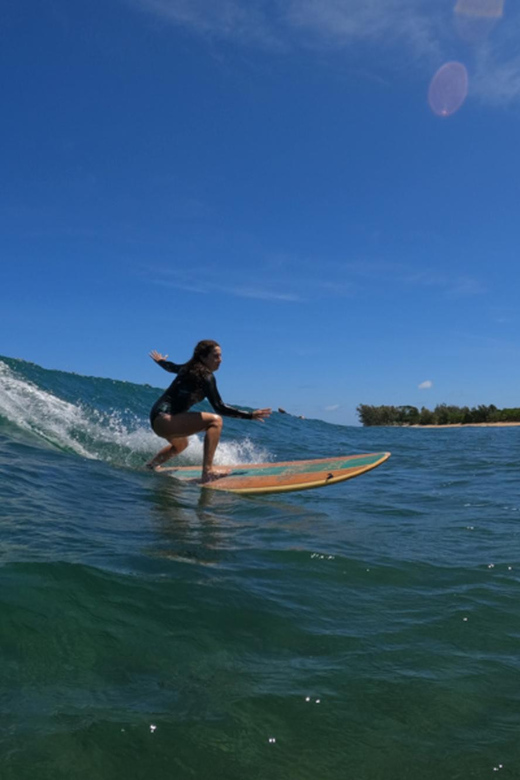
The North Shore is one of those Hawaiian areas you hear about even if you’ve never surfed. What you might not realize is that it’s also a great classroom for beginners—if the instruction is right and the pace is beginner-friendly. This lesson starts near Haleiwa, where the vibe is both local and relaxed: you can watch surfers in the distance, but your day isn’t built around showboating. It’s built around you learning the fundamentals in a safe, supported way.
You’ll meet at a parking lot close by the beach, then check in at the surf school. From there, the morning (or your session) moves quickly from setup to technique. That matters for beginners. The more time you spend waiting around, the less time you spend actually practicing. Here, the schedule is tight enough that you’re in the water learning how your body should move.
If you’re traveling with kids, this is also a good age fit. It’s suitable for ages 6 and above, so you won’t be stuck in the awkward middle of trying to “teach” someone who’s not quite ready—or leaving a kid out because the class only takes adults.
You can also read our reviews of more tours and experiences in Haleiwa.


The 2-hour lesson flow: safety, then paddle, then pop-up
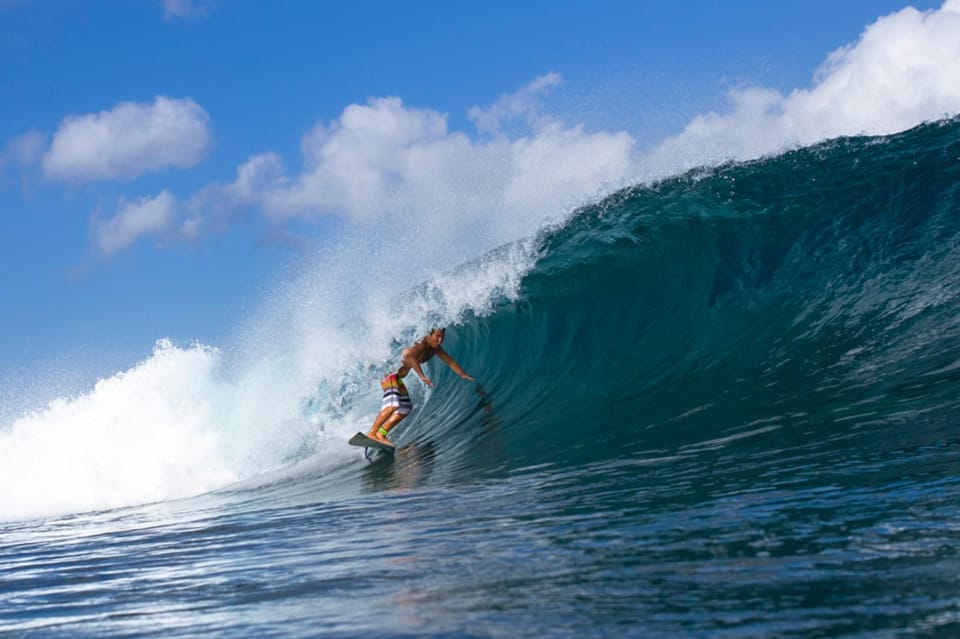
This is a beginner group lesson, but it’s not just a casual let’s-see-what-happens session. You’ll go through a clear sequence that covers the skills you need in the order you need them.
Here’s what you can expect, step by step:
1) Welcome and safety briefing
You’ll arrive a little before start time—plan on 5–10 minutes early for check-in. Then you get a welcome and a safety talk before you hit the water. This kind of briefing is more than rules. It helps you understand what to do when you’re in a real surf environment: how to handle your board, how to think about paddling, and what to expect when waves hit.
For first-timers, that reduces panic. And less panic means more chances to actually catch a wave.
2) Gear up with a board and rash guard
Next, you’ll be provided a surfboard and a rash guard. That’s a nice value point because surf lessons can get pricey once you add gear rentals. You’ll still want to show up in swimwear and bring a towel, since food and drinks aren’t included.
3) Coaching basics: paddling to standing
The lesson teaches the real mechanics—starting with paddling. If you’ve only ever watched surfing on video, paddling can look simple. In real water, it’s where your energy goes. The coaching here focuses on getting you moving efficiently so you can save effort for the moment you need to stand.
One of the best bits I’d highlight from the coaching feedback: instructors help with paddling so you conserve strength. That directly affects how many good attempts you’ll get. If you’re burning out before you even try to stand, you’ll feel like the ocean is winning. Good paddling coaching prevents that.
Then comes standing up—pop-up mechanics, timing, and how to shift from lying/sitting to getting your feet under you when a wave gives you the chance.

4) Practice time with instructor eyes on you
After you learn the basics, you hit the waves and practice. This is where you find out whether the technique clicks. Since the group is small (limited to 8 participants), you’re not lost in a crowd. The instructors can watch, spot what’s off, and adjust.
In the feedback I saw, people repeatedly credited small, targeted help—especially around paddling—plus guidance that helped them stand successfully on some waves. When it happens, it happens fast, and you’ll likely feel that shift from struggling to actually making progress.
5) Back to the surf school to wrap up
When you’re done, you return to the surf school near Haleiwa. This is also where you can share your experience with other surfers. I like these little wrap-up moments because they help you process what you did right (and what you’ll try differently next time).
What makes the instruction stand out: Keoni and Kalani’s approach
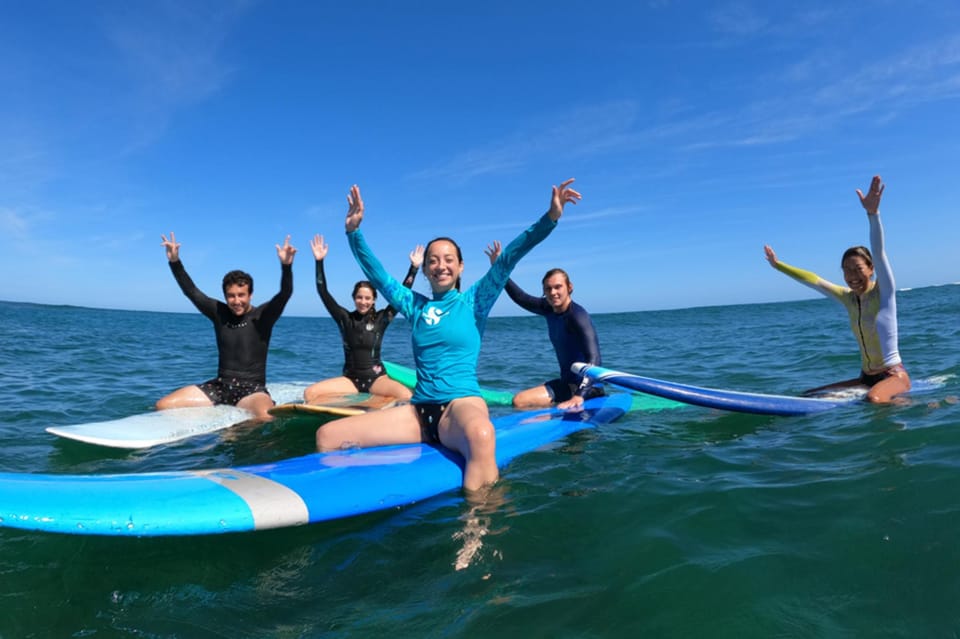
In surf lessons, there’s a big difference between teaching “surf vibes” and teaching technique. This one leans hard into technique, while still keeping the mood positive.
You’ll learn from instructors Keoni and Kalani Nozaki, and the experience level matters: they have over 20 years of teaching experience. That translates into two practical things you’ll feel during your session:
- They can break down motions into steps that make sense fast.
- They can stay patient while you repeat the same skill again and again.
That patience is especially helpful for kids and for adults who feel awkward in the water at first. One piece of coaching that showed up clearly in feedback: help with paddling so you can spend less energy and stay ready for the waves that actually give you a shot. When you’re a beginner, that’s not minor. It’s the difference between one shaky attempt and multiple waves you can ride or at least stand on.
There’s also something useful about the way the class can flex. If you book as a single participant for a slot, the lesson can be 1 hour long instead of 2 to keep it more personalized. If you’re the type who learns quickly with direct attention, that’s worth paying attention to. Shorter can actually mean more focus.
North Shore energy: what you’ll feel in the water as a beginner
The North Shore has a reputation. That reputation can make people nervous—like you’re signing up for something too serious. Here’s the realistic angle: you’re not going out to prove anything. You’re learning in a guided environment.
Still, you should know what you’re signing up for. You’ll be in ocean conditions, not a beginner splash zone. You’ll paddle, you’ll wipe out at least some times (that’s normal), and you’ll learn how to respond when a wave shows up.
The good news is that the lesson is designed to be safe and fun for first-timers. “Safe” doesn’t mean “no waves.” It means you get instruction on how to move with the water and how to manage your board and your body in the surf zone.
Also, the timing helps. A 2-hour lesson is long enough to get real reps, but not so long you’ll lose all coordination. For beginners, that matters: you want repetition while your body is still learning, not after you’re exhausted and frustrated.
What’s included (and what isn’t) so you can plan like a pro
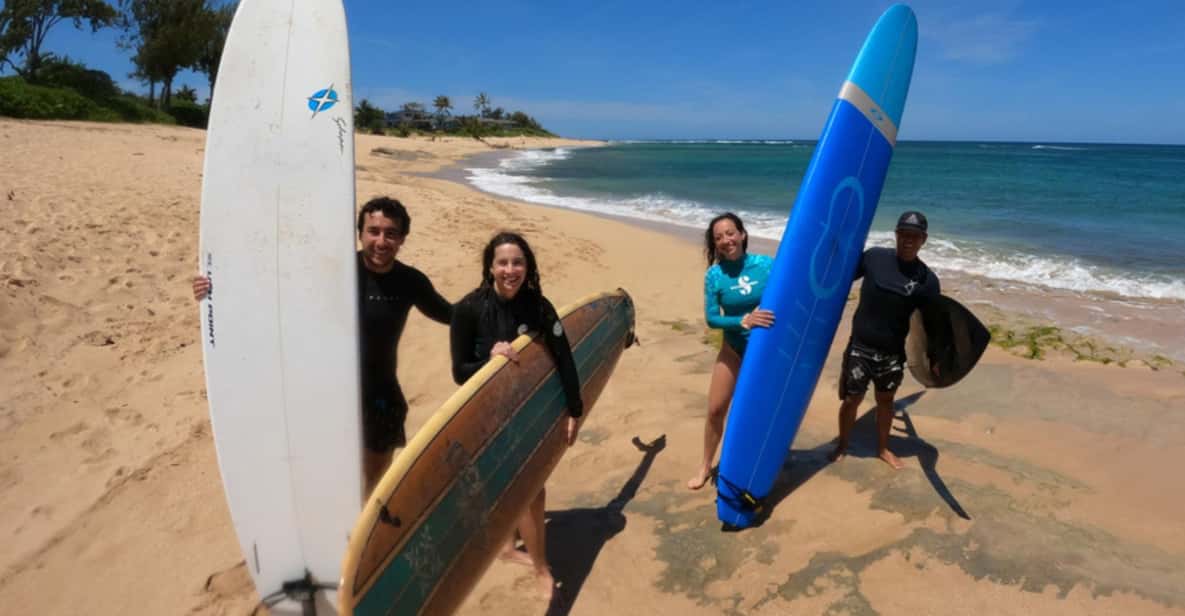
Here’s the practical breakdown:
Included:
- Surfboard
- Certified instructor
Not included:
- Food and drinks
- Pickup
So you’ll want to plan your day around that. Bring your own water or snacks if you need them before/after (but keep in mind the class itself doesn’t include food). And because there’s no pickup, you’ll want to arrive at the meeting point—a parking lot close to the beach—ready to check in quickly.
This is also why it’s smart to come prepared with the right clothing:
- Wear comfortable swimwear
- Bring a towel
If you’re traveling with kids, these “small” logistics matter. A towel and a dry change of clothes can turn a lesson from stressful to smooth.
Group size (max 8) and why it changes your results
A lot of surf lessons advertise “group,” but the group size decides whether you improve or just watch others surf. This lesson is limited to 8 participants, which is a sweet spot for beginners.
What you gain with a small group:
- More frequent instructor check-ins while you’re practicing
- Better chances to correct mistakes on the fly
- Less waiting between attempts (more time on your board)
And because the lesson focuses on basics—paddling and standing—the value of hands-on guidance is high. These skills aren’t just mental. They’re physical. You learn them by repeating them with feedback.
If you can get a single-participant slot, even better for focused coaching. You might only get 1 hour instead of 2, but the point of that shorter format is personalized attention. For some people, that’s the best possible ratio of time to instruction.
Price and value: what $125 buys you for a first wave goal
At $125 per person for a 2-hour beginner group lesson, you’re not buying a casual beach stroll. You’re paying for certified instruction, a board, and the time block to practice in a structured way.
For me, the value question isn’t just the hourly rate. It’s this: surf lessons are expensive when you spend most of the time figuring out what to do. Here, you start with a safety briefing, learn the fundamentals (paddling and standing), then practice with instructor oversight. That increases the chance you’ll catch waves and actually feel progress.
You also get to start from a real coaching background. Instructors Keoni and Kalani Nozaki have 20+ years of teaching experience, and you can feel it in the coaching style—friendly, patient, and clearly focused on helping you do the motion, not just understand it.
If you’re the kind of traveler who wants to trade vacation time for a meaningful skill, this kind of lesson is often worth it. If you’re expecting a purely recreational session with no technique focus, you might find you want something more informal. But for first-timers chasing that first real wave moment, this is a strong value play.
Who should take this beginner North Shore lesson
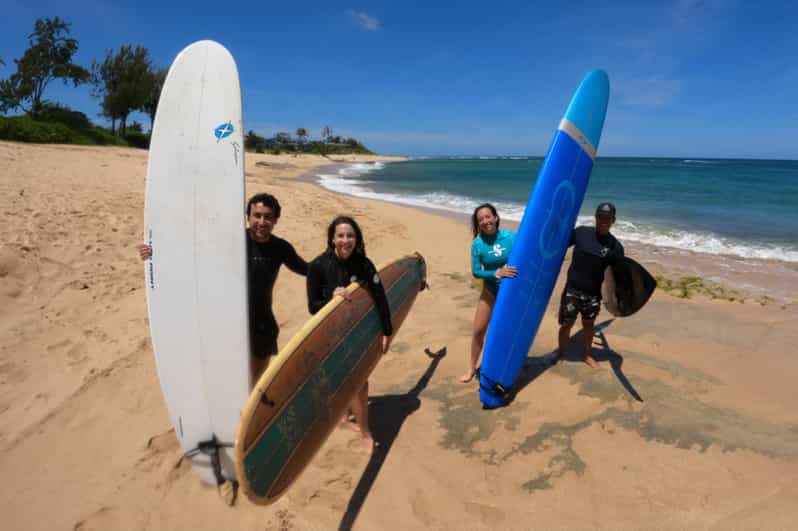
This lesson fits best if you:
- Want to try surfing for the first time without guessing what to do
- Are traveling with a family or group and want a safe, beginner-friendly environment
- Prefer small-group attention over a big class
- Can handle being in the ocean and learning through repetition
It’s suitable for ages 6 and above, which makes it a good family activity. And the coaching style seems to work for both kids and adults.
Two notes to match expectations:
- It’s not suitable for children under 6.
- It’s not suitable for wheelchair users.
If you’re unsure, think of it this way: this is a real surf lesson, not a sitting-on-a-board experience. If you’re ready for ocean time and basic movement, you’ll likely have a great experience.
Should you book it? My practical take
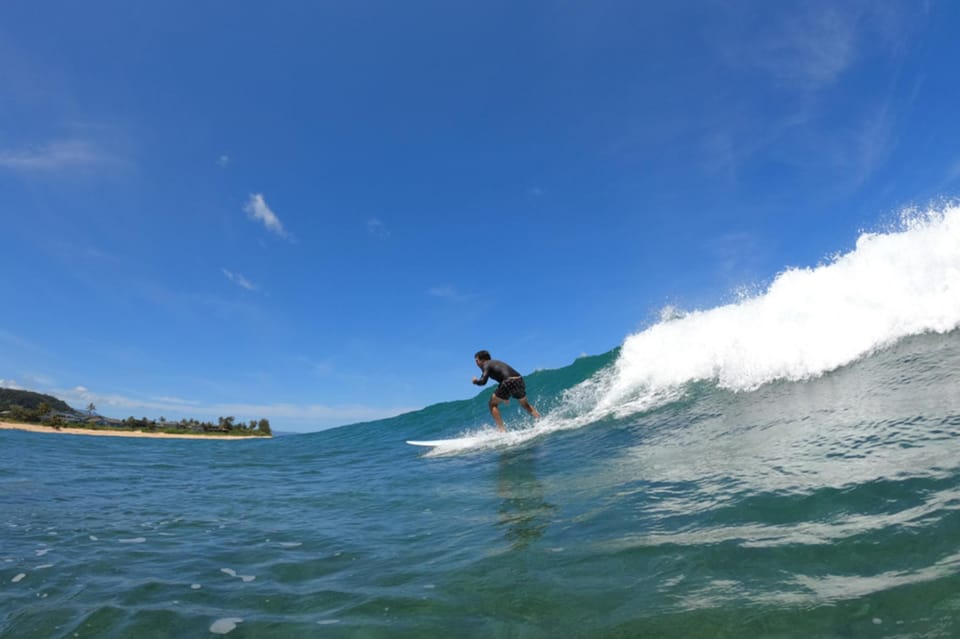
I’d book this beginner lesson on the North Shore if your goal is simple: catch your first wave, learn the fundamentals correctly, and leave with enough confidence to try again. The small group size (max 8), the included board and rash guard, and the coaching focus on paddling and standing all point to a session designed to get you moving in the right direction quickly.
Skip it or consider another option if:
- You strongly need pickup or another built-in transportation solution.
- You’re not comfortable with ocean conditions for the full practice portion.
- Your group includes someone under 6 or a wheelchair user (since it’s not suitable for those cases).
If you book, show up ready. Wear your swimwear, bring your towel, and arrive early so check-in doesn’t eat into the fun. Then trust the process: paddling first, standing second, and waves third.
FAQ
How long is the beginner surf lesson on Oahu’s North Shore?
The standard lesson runs for 2 hours.
Is pickup included?
No. Pickup is not included, and you’ll meet in a parking lot close by the beach.
What’s the meeting point?
Meet in the parking lot near the beach.
What’s included in the price?
The price includes a surfboard and a certified instructor.
What should I wear or bring?
Wear comfortable swimwear and bring a towel.
What age is this lesson suitable for?
It’s suitable for ages 6 and above.
Is this lesson wheelchair accessible?
No, it’s not suitable for wheelchair users.