REVIEW · SHARK DIVING TOURS
Oahu: Cageless Shark Dive Adventure
Book on GetYourGuide →Operated by Go Adventure Hawaii · Bookable on GetYourGuide
Sharks, right next to your snorkel. This cage-free shark swim off Oahu’s North Shore is all about the close-up feeling, without the metal tube between you and the sea. I love the small group size (up to six) and how the crew stays focused on calm, clear instruction in the water. One drawback: it’s not for you if you’re dealing with heart problems or you get hit hard by seasickness.
I also like the way you’re not just watching animals—you’re learning what you’re seeing. The safety team explains shark biology and behavior, and in one tour I read about, Safety Diver Ricky and Captain Jordan kept everything controlled while Nicole handled photography. You can come out excited, but also with a better sense of why these sharks behave the way they do.
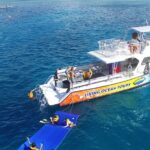
The whole thing runs about 2 hours, so it’s compact and efficient. You’ll start at 66-105 Haleiwa Rd, spend time getting set, then you’ll be out on the water long enough to get that real “I’m in their world” moment—and you must check in 30 minutes before departure at the boat, or you won’t be able to join once the charter leaves.
In This Review
- Key things to know before you book
- Why Oahu’s North Shore is built for a cage-free shark swim
- Price and what $121 really buys you
- The 66-105 Haleiwa Rd meetup and the 2-hour flow
- How the safety system works without cages
- What sharks and pelagic species you can realistically hope to see
- Winter bonus: humpback songs while you snorkel
- What’s included (and what you should bring)
- Gear and comfort tips for a smooth, non-panicky swim
- Photography and capturing the moment without messing up the rules
- Who this tour suits best (and who should skip)
- Should you book this Oahu cageless shark swim?
- FAQ
- How long is the Oahu cageless shark swim?
- What is included in the price?
- Is this suitable for non-swimmers?
- Can I bring a GoPro or camera?
- What might I see during the swim?
- When do I need to check in?
Key things to know before you book
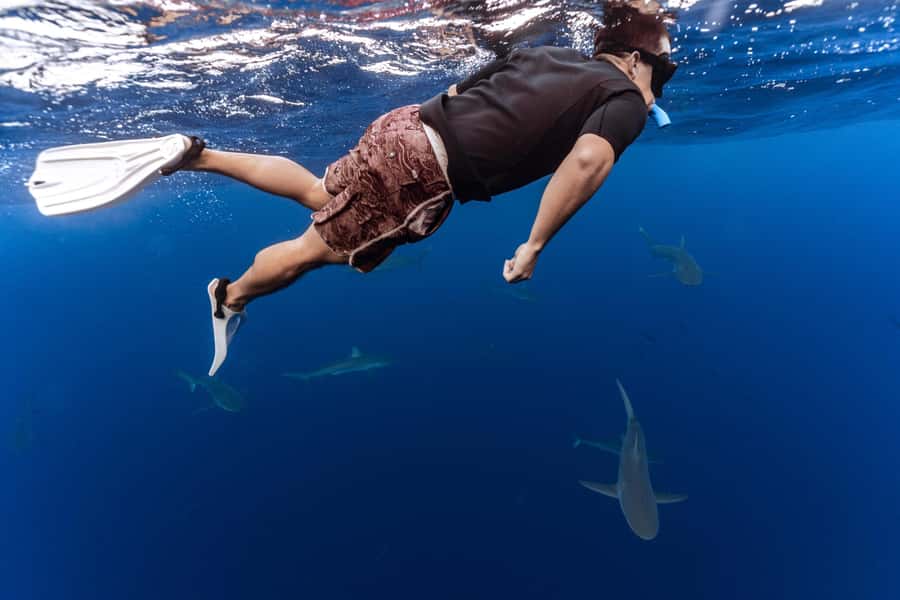
- Cage-free means real closeness: you’re snorkeling with Manō (including Galapagos, sandbar, and tiger sharks) with safety divers guiding spacing.
- Small group, more personal attention: limited to six participants, which helps keep the experience organized in moving water.
- A safety-first crew in the water: you’ll get a briefing and then continuous guidance so you’re not left figuring it out alone.
- You might see more than sharks: tuna, mahi mahi, barracuda, and oceanic dolphins are possible.
- Winter can add humpback whale songs: during winter months, you may hear humpback whales while you’re out there.
- Bring the basics and plan for motion: towel, sun protection, snacks, water, and camera are smart; non-swimmers and frequent-motion sickness people should skip.
Why Oahu’s North Shore is built for a cage-free shark swim
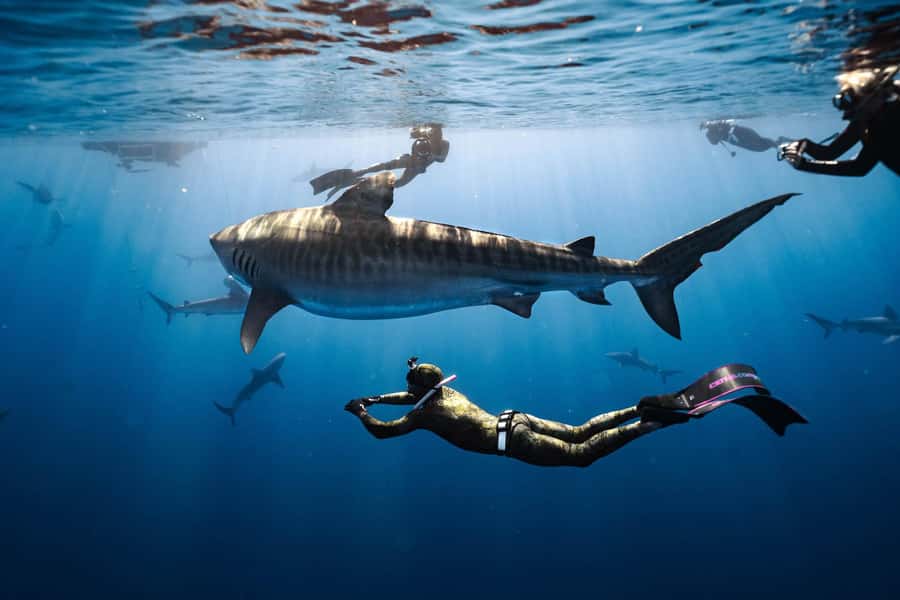
Oahu’s North Shore is one of those places where the ocean feels like it has its own calendar. Conditions, currents, and seasonality all affect what shows up. That’s part of why this format works so well: the crew is set up for a short, focused time on the water and to react to what’s present.
This experience is also designed around respect and boundaries. You’re told not to touch marine life or plants, which matters because it keeps animals behaving naturally and keeps you from panicking when something swims close. The goal is not to grab a moment—it’s to float, watch, and learn.
And yes, the sharks can come close. That’s the point of a cage-free swim. But the safety system is what stops it from feeling wild or chaotic.
You can also read our reviews of more tours and experiences in Oahu.

Price and what $121 really buys you
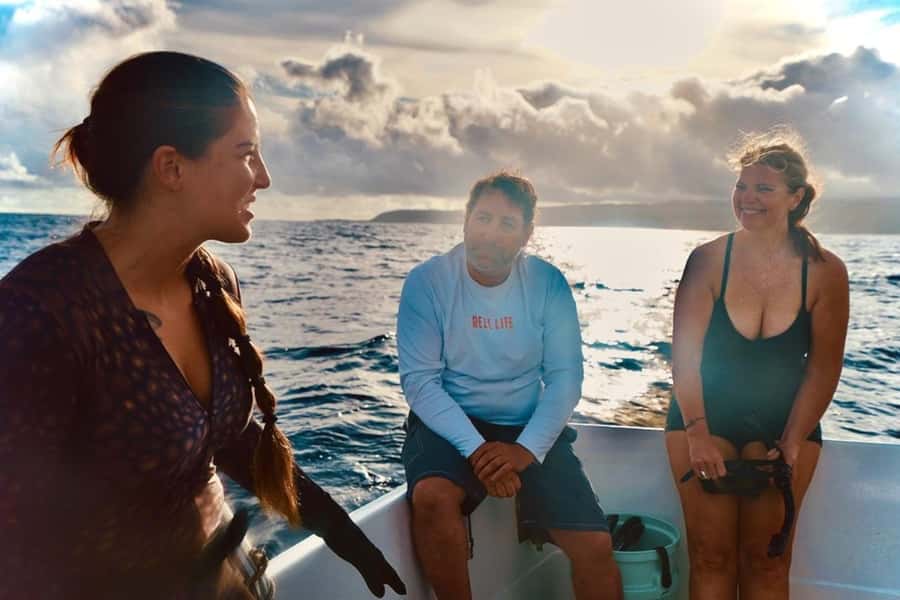
At $121 per person for about 2 hours, you’re paying for two things that are hard to DIY: professional safety oversight and gear that actually gets used. The tour includes mask and fins, plus a wetsuit top and a safety briefing—so you’re not showing up and suddenly realizing you forgot the one item that matters.
What makes the value feel better than a bargain-tour comparison is the small group limit. With up to six people, the crew can give real attention and keep spacing tidy. For a water experience where comfort and calm matter, that’s not a small detail—it’s the difference between feeling relaxed and feeling like you’re watching other people’s chaos.
Two costs to keep in mind: transportation to the starting point isn’t included, and meals aren’t included. For a compact tour, that usually means you’ll want a snack plan before you go.
The 66-105 Haleiwa Rd meetup and the 2-hour flow
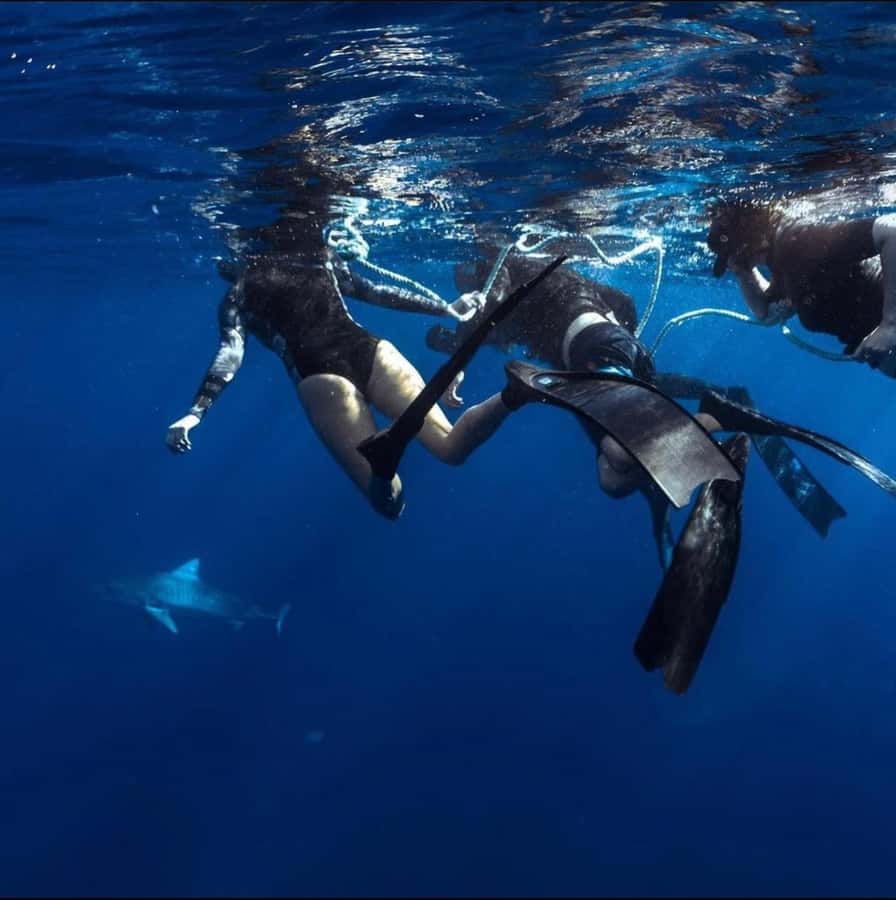
Plan on total time of about 2 hours, starting at 66-105 Haleiwa Rd. You’ll need to check in with the captain at the boat 30 minutes prior to departure. Late arrivals can’t be accommodated because each charter runs on a strict schedule.
The timing is simple: a short water transport segment takes you out, you then spend the guided portion centered on getting set up and spending time in the water, and you return on a matching ride back. The schedule you’re given adds up to a tight window, so this is not a long sit-and-talk shore day.
How to make this easier on yourself:
- Arrive early, so you’re not rushed while sun and ocean time are already moving.
- Use the time before the water to get your towel and camera ready, because once you’re suited up, you’ll want to just focus.
How the safety system works without cages
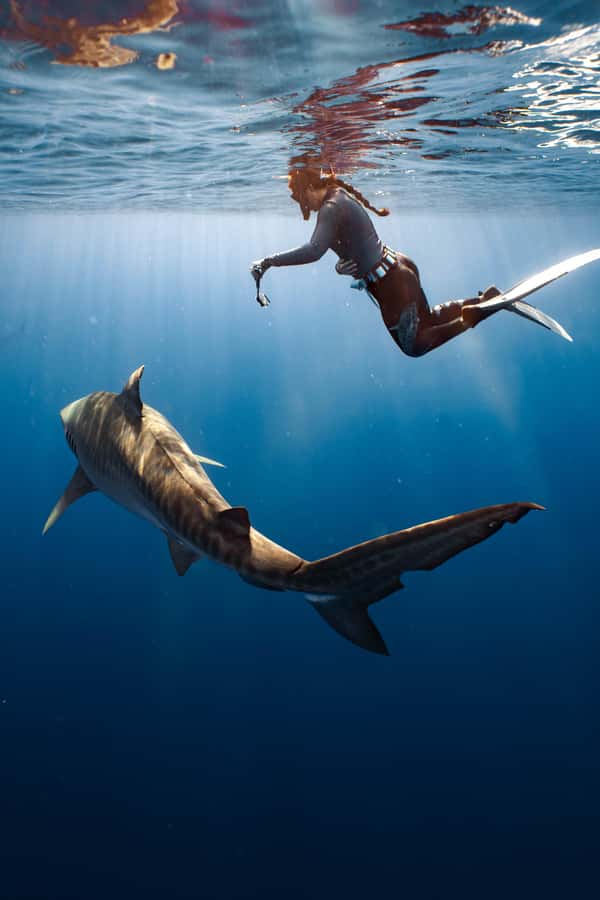
Cage-free doesn’t mean free-for-all. It means your experience depends on the crew staying on top of spacing, behavior, and participant comfort.
Here’s the practical part you should expect: you’ll get a safety briefing, then you’ll be in the water with trained safety divers watching what’s happening. If a shark comes close, you’re guided on where to position yourself and how to stay calm. In one account, sharks approached at times, and the safety divers gently guided them away when needed. That’s a big deal for your confidence: it shows the team has a plan, not just hope.
Also, you’ll be taught about shark biology and behavior. That matters because sharks don’t swim like movies. Knowing what they’re doing—how they move, what they’re likely responding to—helps you interpret what you’re seeing instead of guessing.
A quick reality check: this isn’t for people who need everything to stay perfectly motionless. It’s an ocean, so there’s going to be movement. If you’re prone to seasickness, skip it. If you’re a confident swimmer, follow the rules, and you’ll likely feel more in control than you expect.
What sharks and pelagic species you can realistically hope to see
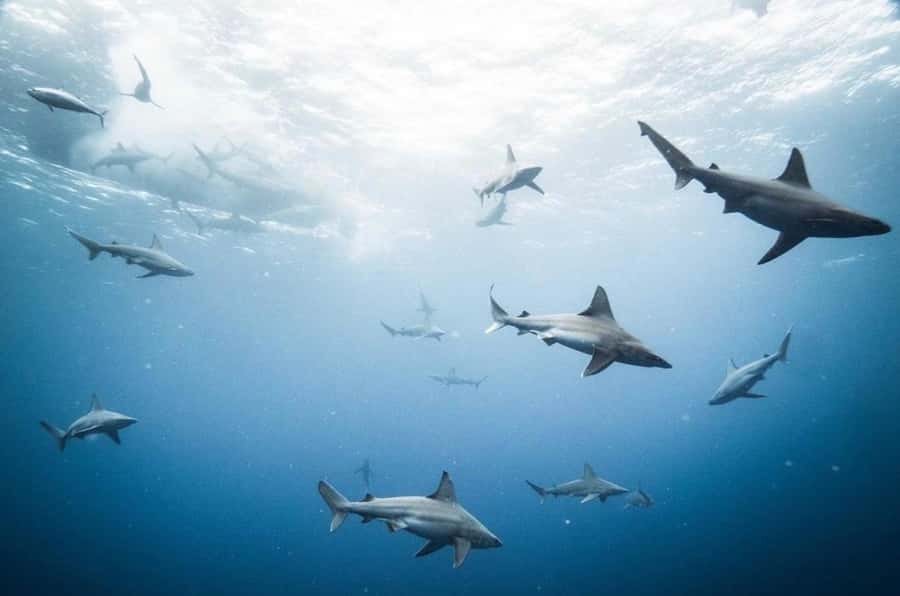
The star is Manō, and this swim is specifically positioned around seeing multiple types. Depending on what’s around during your time, you may spot:
- Galapagos sharks
- Sandbar sharks
- Tiger sharks
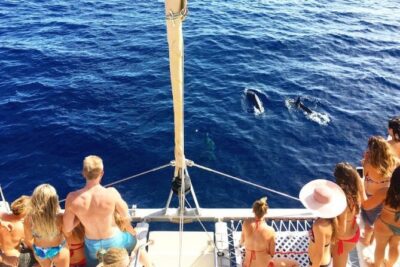
You can also look for other pelagic life while you’re out there. The plan includes the possibility of tuna, mahi mahi, barracuda, and oceanic dolphins. Some trips also add barracuda and even humpbacks in winter.
What I like about this setup is that it doesn’t sell a single guarantee. It gives you a realistic menu of what could appear. In other words, you’re not betting your whole experience on one animal showing up, which helps your mindset when conditions shift.
And because it’s cage-free, when something appears, it feels immediate. You’re not staring through a barrier—you’re watching real movement from a few feet away.






Winter bonus: humpback songs while you snorkel
In winter months, there’s a special extra. You might hear the mesmerizing songs of humpback whales while you’re out in the water. Even if you don’t see a whale clearly, those sounds can add a whole other layer to the experience.
One account mentioned seeing two humpbacks along with barracuda and plenty of sharks. That’s not something you can demand, but it is a real possibility when the season lines up.
Think of it like this: sharks are the visual main event, but the whale songs can be the emotional soundtrack.
What’s included (and what you should bring)
Included items:
- Mask and fins
- Wetsuit top
- Safety briefing
What you should bring (this stuff is on you):
- Towel
- Camera (GoPros and personal cameras are allowed)
- Snacks
- Water
- Sun protection
A practical note: you’re wearing gear and you’re going to be in the sun and wind depending on the day. A towel is more important than people think, especially once you’re back on shore and you want to get comfortable fast. Snacks and water help you avoid the hangry phase, since meals aren’t included.
For cameras, the rules are simple: you can record and take photos. Just keep your attention where it needs to be—on your position and your breathing, not on trying to film while doing something sketchy.
Gear and comfort tips for a smooth, non-panicky swim
This type of experience goes best when you treat your body like a calm device: steady breathing, relaxed posture, and no rushing.
Because you’ll have mask and fins provided, your biggest comfort variable is fit. When you put on your gear, double-check that your mask sits well and your fins don’t feel like they’re about to slip. If anything feels off, ask before you get in.
Also, recognize your limits. This activity is not suitable for non-swimmers, and it’s not for people with heart problems. If you’re unsure about what that means for you, it’s worth taking seriously. A safer choice now beats a scary water moment later.
Finally, don’t touch marine life or plants. That rule protects you and the animals. It also prevents you from doing something you might regret the moment you do it.
Photography and capturing the moment without messing up the rules
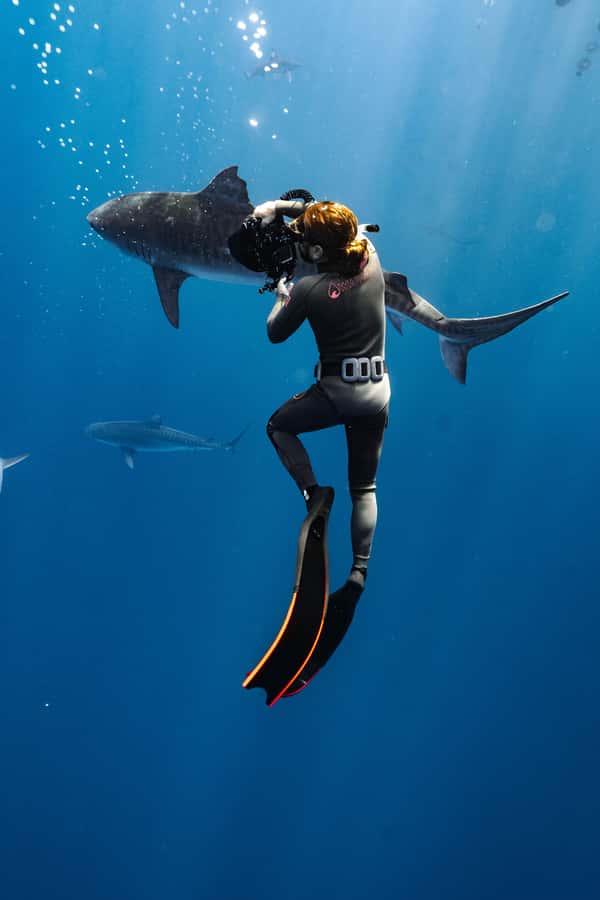
If you’re bringing a GoPro or a personal camera, you’ll want to plan for two realities: water conditions change, and your best shots often come from staying calm rather than chasing angles.
You’re allowed to bring action cameras and other personal cameras, which is great. But the best results come when you:
- keep your body stable
- avoid frantic movements
- follow the safety diver’s guidance immediately if something changes
And remember, no touching. Even if a shark glides close enough for a dream photo, the correct move is to let it pass without contact.
Who this tour suits best (and who should skip)
This experience fits best if you:
- can swim confidently
- feel comfortable with ocean motion
- want a close look at sharks with professional safety divers nearby
- enjoy learning while doing
Skip it if you:
- have heart problems
- are not a swimmer
- get seasick easily
Also, be honest about your fear level. If you’re nervous, that doesn’t automatically mean it’s wrong for you. The key is whether you can follow instructions and keep calm. In the accounts I read, the crew’s focus on safety and attentiveness helped people feel secure in the water.
Should you book this Oahu cageless shark swim?
If you want a short, high-impact ocean experience that feels genuinely controlled, I think this is a strong pick. The included gear, small group setup, and constant safety guidance make the cage-free concept feel less risky and more like a guided encounter with real wildlife.
Book it if you’re excited by the idea of Manō sharks, possible dolphins and tuna, and winter humpback whale songs. Don’t book it if you’re prone to seasickness, not comfortable swimming, or dealing with health limits that make ocean activity unsafe for you.
One last tip: the check-in timing matters. Show up early at 66-105 Haleiwa Rd, check in on time with the captain, and you’ll start relaxed instead of stressed. That mindset pays off fast once you’re in the water.
FAQ
How long is the Oahu cageless shark swim?
The total duration is about 2 hours.
What is included in the price?
Mask and fins are included, along with a wetsuit top and a safety briefing.
Is this suitable for non-swimmers?
No. The activity is not suitable for non-swimmers.
Can I bring a GoPro or camera?
Yes. GoPros and other personal cameras are allowed.
What might I see during the swim?
You can look for Manō sharks such as Galapagos, sandbar, and tiger sharks, and the experience may also include pelagic sightings like tuna, mahi mahi, barracuda, and oceanic dolphins. During winter months, you might hear humpback whale songs.
When do I need to check in?
You must check in with the captain at the boat 30 minutes prior to departure. Late guests can’t be accommodated.