REVIEW · SHARK DIVING TOURS
Open Water Shark Dive
Book on Viator →Operated by Hawaii Adventure Diving · Bookable on Viator
Sharks visit your snorkel. This Oahu shark safari runs out of Hale‘iwa Boat Harbor and is built around a calm, safety-first way to swim near big marine life in open water. You get a structured briefing, then you’re guided on a short swim session while a safety diver watches conditions and wildlife behavior.
What I really like is the human side: the team teaches shark behavior and how to act in the water, so fear has somewhere to go. I also love the small-group setup—up to six people—so you spend more time actually in the water and less time waiting your turn.
The one clear drawback to plan for: this isn’t for people who can’t swim. If water conditions are rough for any reason, it can also be harder to get in comfortably—one past guest described getting sick and being unable to climb down when the sea state turned choppy.
In This Review
- Key things I’d bank on before you go
- Hale‘iwa Harbor and the 2-hour pace you’ll actually feel
- Your crew’s safety-first approach (and why it works)
- Getting geared up and ready for open-water snorkeling
- The on-water rhythm: entry, swim next to wildlife, then back to harbor
- What you might see in Hale‘iwa waters: sharks plus more
- Photos and the photo pack choice (don’t leave this to chance)
- Price and value: is $161.57 a fair deal for this setup?
- Who this is perfect for—and who should skip
- Weather and sea state: the one variable you can’t control
- Should you book this Oahu open-water shark safari?
- FAQ
- Where does the tour start and end?
- How long is the tour, and how much time is spent in the water?
- How many people are on the tour?
- What should I know about swimming ability?
- Is snorkel gear provided?
- What language is the tour offered in?
- What marine life might I see?
- What happens if weather is poor?
Key things I’d bank on before you go
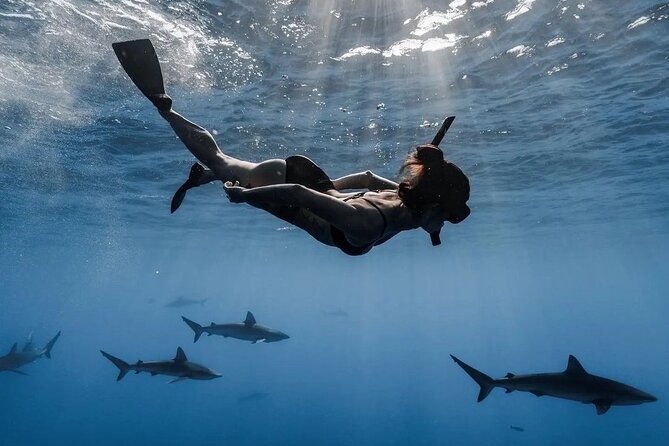
- Small group (max six) means more attention and less crowding in the water
- Marine biologists + professional safety diver keep the focus on behavior and safety
- About 45 minutes in the water inside a total tour time of up to two hours
- Safety diver enters first to check conditions and where wildlife is hanging out
- Complimentary snorkel gear is provided for you
- Photo/video moments matter here, and many people say the photo pack is worth it
Hale‘iwa Harbor and the 2-hour pace you’ll actually feel
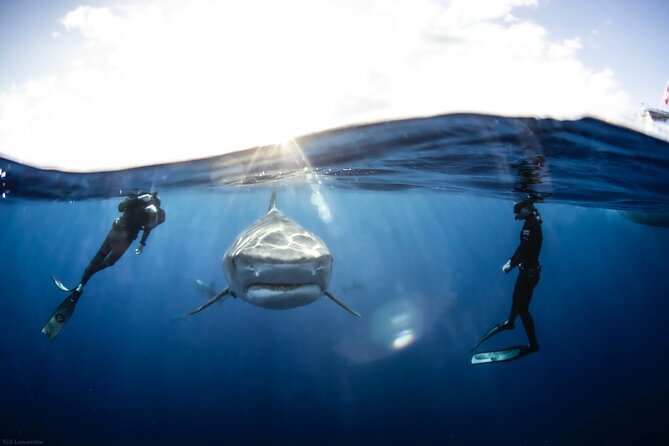
This tour is short on paper, and it’s short in real life too. Total time runs up to two hours, with around 45 minutes in the water. You’re not spending half a day commuting to a remote site—you’re starting at Hale‘iwa Boat Harbor, then doing the heart of the experience right after gearing up.
You’ll want to arrive about 15 minutes early. That buffer helps you get fitted quickly, get settled, and avoid that last-minute rush that can make nervous first-timers feel worse. The activity ends back at the same meeting point, so you’re not stuck piecing together transportation after you get wet and salty.
It’s also offered in English, and it uses a mobile ticket. If you’re traveling light, that’s a plus. And since the meeting point is described as near public transportation, you’re not locked into needing a rental car.
You can also read our reviews of more tours and experiences in Oahu.

Your crew’s safety-first approach (and why it works)
The experience is built around a proper briefing—before you ever hit the water. Once you’re on the vessel and geared up with the complimentary snorkel setup, the crew runs through what marine life you might encounter and what shark behavior typically looks like.
They also cover the guest behavior side. That matters more than people expect. When you understand what calm looks like—where to position your body, how to move, and what not to do—you stop guessing. In the water, you can spend your brain on noticing sharks and fish instead of panicking about the unknown.
Names you might see from past trips include Stacy (captain), Ronnie (marine biologist), Meagan (photography), and crew members like Annika and Terry. The common thread in the way people describe it is simple: clear instructions, calm tone, and attention to safety details.
One smart operational detail: the safety diver enters first to assess conditions and wildlife behavior. Only after that check does the crew invite guests in. That extra step is one reason many guests say they felt safe and in control even when they were excited or nervous at the start.
Getting geared up and ready for open-water snorkeling
Your gear is handled before you go. You’ll get complimentary snorkel equipment as part of the experience. From there, it’s about being comfortable in your setup—strap fit, mask position, and how you’ll breathe once you’re in.
Here’s what I’d do if I were you: treat the 45-minute swim as real time, not a casual dip. If you haven’t snorkeled before (or you’re unsure about water comfort), take a few minutes on the boat to practice breathing steadily and to get your mask settled. A couple of past guests explicitly recommended having both swimming ability and snorkel experience.
Then comes the part that turns a fear story into a respect story: stepping into open ocean water and seeing big animals up close. Many people describe an adrenaline rush at first—then a shift into awe once they realize the team has a plan and the sharks are behaving normally in their environment.
The on-water rhythm: entry, swim next to wildlife, then back to harbor
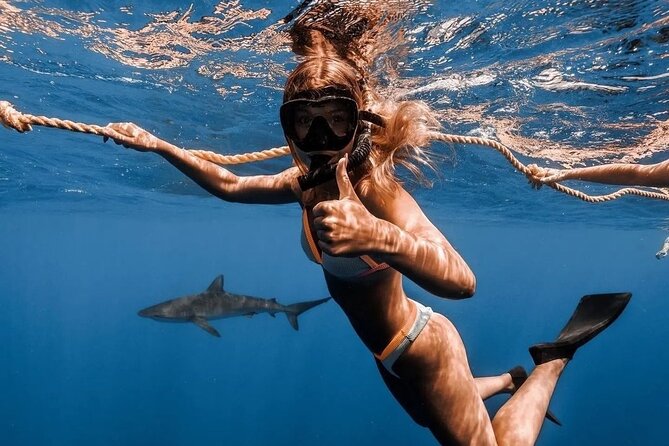
Once conditions are checked and you’re invited in, you’re free to snorkel and photograph while staying close to the crew’s safety guidance. The experience is not positioned as a long, exhausting swim. It’s more like a focused safari session.
You’ll likely spend time moving slowly and looking around for signs of sharks—sometimes they’re right where you can observe them clearly, and sometimes you’ll have to scan and wait for them to reappear. The crew’s job is to help manage that rhythm, so you’re not flailing or drifting far away.
When you finish the snorkel/dive session, you’ll cruise back toward Hale‘iwa harbor. That ride isn’t just travel time. The crew uses it to discuss what you saw and answer questions. I like this format because it turns the experience into something you can take home—what you noticed, what it likely meant, and how shark encounters work in nature.
What you might see in Hale‘iwa waters: sharks plus more
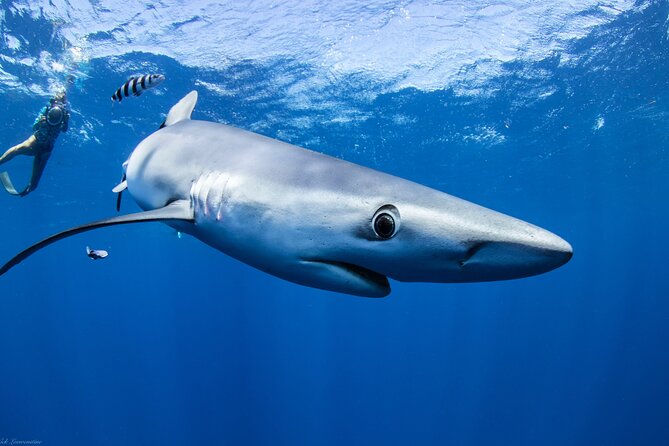
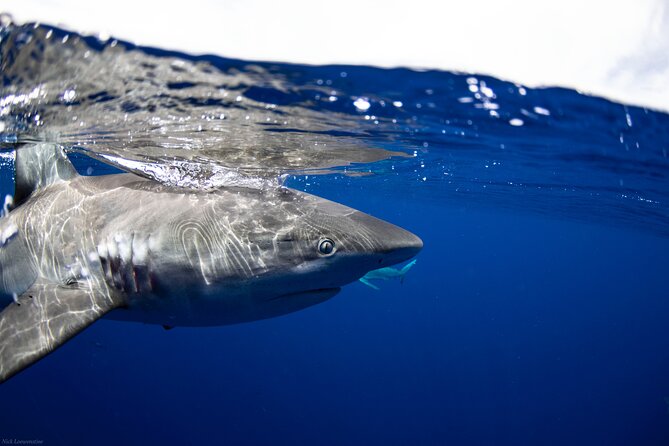
The big draw here is obvious: you’re looking for sharks in open ocean conditions with a close-up view. Past outings include sightings of Galapagos sharks, and a few reports mention a tiger shark appearing in a way that truly surprised people.
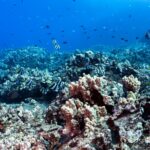
You’re also not seeing sharks in a vacuum. Guests mention other marine life like fish and barracuda as well. Even if sharks take the lead, that variety helps you stay present. It can also make the water feel less like one long waiting game.
One useful mindset shift I’d recommend: go in ready to watch behavior, not just to chase sightings. When you’re relaxed and moving calmly, you’re more likely to notice small changes—how a shark swims, how it circles, and how it reacts to the presence of people without acting like it’s doing anything dramatic or chaotic.


Photos and the photo pack choice (don’t leave this to chance)
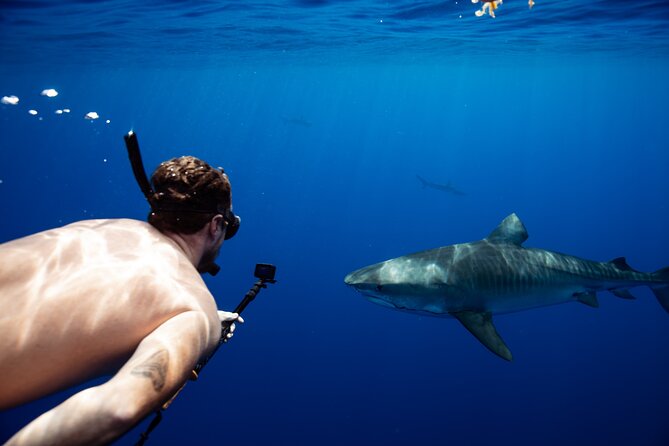
This tour is set up for underwater memories. The experience specifically mentions underwater photographs and videos, and multiple guests suggest the photo pack is the way to go.
If you’ve ever tried to shoot underwater video with your phone, you already know the problem: you spend more time wrestling gear than enjoying the moment. With a dedicated photographer on the team—people have mentioned Meagan in that role—you can focus on staying in position and letting the crew do the documentation.
My practical take: if you’re doing this as a once-in-a-lifetime bucket-list experience, plan to budget for photos if offered. The water is clear, sharks can show up fast, and having high-quality images helps you remember what it looked like when you were actually there—not just what you thought you saw.
Price and value: is $161.57 a fair deal for this setup?
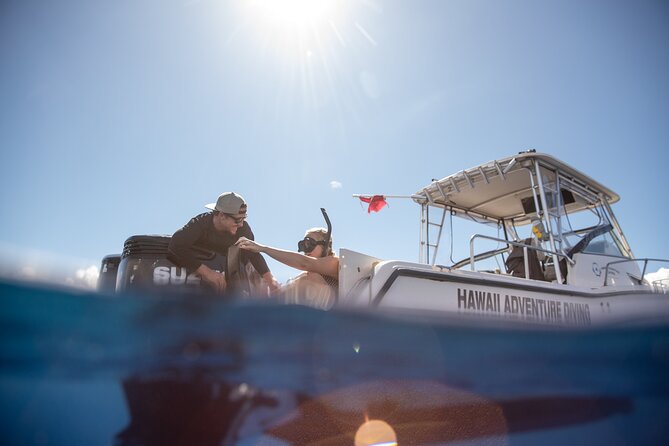
At $161.57 per person, you’re not paying for a long ferry ride or a big theme-park style attraction. You’re paying for a short, guided open-water session with a specific promise: marine life observation with professional safety oversight and instruction.
Here’s what you’re buying for your money:
- A small group size (max six), which usually means less time waiting and more time getting attention
- A safety diver who checks conditions first
- A briefing that teaches shark behavior and how to act appropriately
- Complimentary snorkel gear, so you’re not adding rental costs
- An experience designed to create underwater content, with a photo pack option
Is it cheap? No. But it is focused value. If you want to do a calm, guided shark snorkeling session rather than taking your chances with an unstructured boat outing, the price starts to make sense.
The main value question is whether you’ll be comfortable in open water for the duration. If you’re not a confident swimmer, that’s where the cost can feel wasted—because the experience isn’t designed for people who can’t enter comfortably and stay safe.
Who this is perfect for—and who should skip
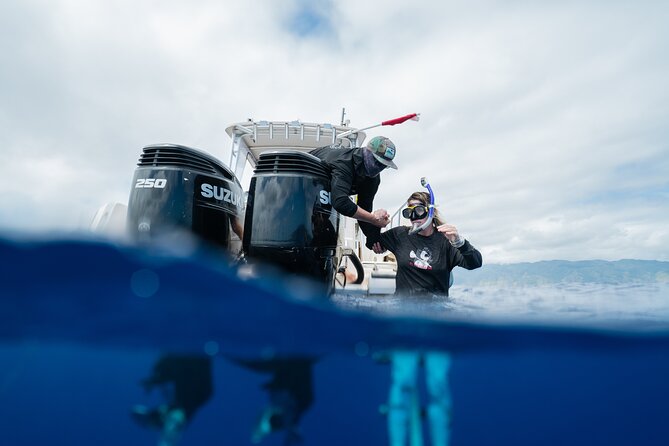
This experience is described as most travelers can participate, but it is not recommended for people who cannot swim. If you get panic in water, or you struggle with breathing techniques, this is not a good place to practice.
It’s a great match if:
- You’re curious about sharks and want to see them in a real natural setting
- You like structured coaching (briefing, rules, clear guidance)
- You want a small group rather than a crowded boat
- You’re comfortable snorkeling and staying calm under excitement
It’s a poor match if:
- You can’t swim or you’re not confident entering and leaving the water
- You know you get very sick on boats (some guests have reported feeling unwell when conditions were rough)
- You’re expecting a guaranteed shark sighting every second—open ocean doesn’t work like that
That last point is important. Even with strong guidance, the ocean controls the pace.
Weather and sea state: the one variable you can’t control
This is an experience that requires good weather. If conditions aren’t right, it will be canceled or rescheduled (you’d be offered an alternate date or a full refund). That matters because open ocean swimming depends on wave and surface conditions—not just sunshine.
One past guest left a caution flag after rough seas made the boat feel unstable and prevented them from entering the water. I can’t sugarcoat that risk: if you’re not comfortable with a choppy ride or you’re sensitive to motion, you should think seriously about your comfort level before booking.
If you do go, bring your calm with you. Staying steady in your breathing, following crew directions, and moving slowly all help the whole experience go smoothly.
Should you book this Oahu open-water shark safari?
If you want sharks in open ocean, not in a cage, and you’re willing to swim comfortably with snorkel gear, I think this is a strong choice. The standout advantage is how the crew runs the session: briefing first, safety diver checks conditions first, and a small group that lets you actually enjoy the water instead of waiting in a crowd.
Book it if:
- You’re a confident swimmer and you can snorkel without panicking
- You want clear shark behavior education, not just a thrill ride
- You value safety and guidance as much as the animal sightings
Skip or delay if:
- You can’t swim
- You have serious motion sickness concerns
- You know you struggle with rough boat rides and water entry
When it’s a calm day, this looks like the kind of experience that changes how you see sharks—from fear to respect—because you’re watching them as living animals, not as a scary headline.
FAQ
Where does the tour start and end?
It starts at Hale‘iwa Boat Harbor in Haleiwa, HI 96712 and ends back at the same meeting point.
How long is the tour, and how much time is spent in the water?
Total tour time is about two hours maximum, with approximate water time of around 45 minutes.
How many people are on the tour?
The experience has a maximum group size of six travelers.
What should I know about swimming ability?
Most people can participate, but it is not recommended if you cannot swim.
Is snorkel gear provided?
Yes. You’re provided complimentary snorkel gear before heading out.
What language is the tour offered in?
The tour is offered in English.
What marine life might I see?
The briefing covers possible marine life you may encounter, and past outings include Galapagos sharks. Some trips have also had tiger shark sightings, along with other fish.
What happens if weather is poor?
This experience requires good weather. If it’s canceled due to poor weather, you’ll be offered a different date or a full refund.