REVIEW · PEARL HARBOR TOURS
Pearl Harbor Tour with USS Arizona & Missouri Battleship
Book on Viator →Operated by OrigamiTours · Bookable on Viator
Pearl Harbor hits hardest when you can focus. This tour makes it easier to see USS Arizona by handling the big part of the day—private Honolulu pickup and getting you to the memorial area without you wrestling ticket chaos. I also like that you don’t just stop at one site: you pair the USS Arizona Memorial boat ride with the Battleship Missouri experience and then add historic Honolulu context around the edges.
The main thing to plan for is cost and tickets. Missouri tickets are extra and USS Arizona access depends on what’s available for your dates, so you’ll want to read the USS Arizona standby options closely before you assume everything is automatic.
In This Review
- Key points worth planning for
- Price and logistics: what $199 really buys
- Getting picked up in Honolulu: private ride, clear start point
- Ward Village drive-by: a modern contrast before the memorial
- Pearl Harbor National Memorial: planning your USS Arizona access
- What you’ll actually experience
- How early you should arrive
- If USS Arizona tickets aren’t available: your real options
- USS Missouri, aka Mighty Mo: where surrender happened
- Punchbowl Crater: a quieter stop with real weight
- Downtown Honolulu driving: Chinatown, Wo Fat Building, and old street markers
- ʻIolani Palace: the royal residence story you can actually walk through
- Ward Village again: wrapping the day with a different Honolulu mood
- What to wear and bring: the rules that can change your timing
- Bags and storage
- Food and water
- Strollers and restrooms (yes, this matters)
- Service animals
- The human factor: what the best days feel like
- Who should book this Pearl Harbor day (and who might not)
- Should you book it?
Key points worth planning for
- Pickup anywhere in Honolulu (and a home-base meeting point) keeps your morning stress low
- USS Arizona boat access puts you on the water toward the memorial area, not just looking at a fence
- Mighty Mo is the surrender ship—you get the setting where paperwork ended WWII in the Pacific
- Punchbowl Crater + Iolani Palace add meaning beyond the harbor memorial
- Max 30 people keeps the day from turning into a pack-and-shuffle bus schedule
Price and logistics: what $199 really buys
At $199 per person, you’re paying for the core of the day: private transportation and a planned route. That matters because Pearl Harbor mornings can be a mess of parking, lines, and timing. Having a driver handle the moving parts helps you spend your energy on the sites.
That said, the key add-ons are not included:
- Battleship Missouri tickets: $35 per person
- USS Arizona ticket: $1, which must be reserved 2 weeks in advance (or handled via standby options)
- Pearl Harbor National Memorial admission fee: $1 per person
So your realistic total is closer to about $236 per person when you include the Missouri ticket and the small Pearl Harbor admission fee. It’s still a decent value if it saves you from last-minute ticket scrambling and lets you keep the day tight.
Also note this: cancellations are non-refundable and cannot be changed. If your dates are firm, you’re good. If your plans might shift, that risk is on you.
You can also read our reviews of more tours and experiences in Oahu.

Getting picked up in Honolulu: private ride, clear start point
The tour starts at 427 Walina St, Honolulu, and you’re scheduled to end back at that same meeting point. The bigger perk is the pickup promise: you can be picked up anywhere in Honolulu at your hotel.
This matters because Pearl Harbor timing is unforgiving. If you’re late, you’ll feel it fast. A private pickup reduces your chance of missing your scheduled flow—especially if your hotel is far from the visitor center area or you’re dealing with morning traffic.
The tour runs about 5–6 hours, and it usually gets booked around 37 days in advance, which is a good clue that people plan this day early.
Ward Village drive-by: a modern contrast before the memorial
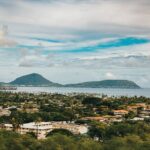
Before you hit Pearl Harbor, you drive through Ward Village—Honolulu’s newer, high-rise, master-planned district. Think sleek buildings, designer storefronts, and that clean, polished feel you don’t get near older neighborhoods.
This might sound like filler, but it actually works as a mental warm-up. You go from city comfort into a historic and solemn setting, and Ward Village gives you a fast “you’re on a different Honolulu” moment before the memorial day begins.
You’ll also pass through Ward Village again later, which helps the day feel less like one straight line and more like a full circle: harbor, remembrance, then city history.
Pearl Harbor National Memorial: planning your USS Arizona access
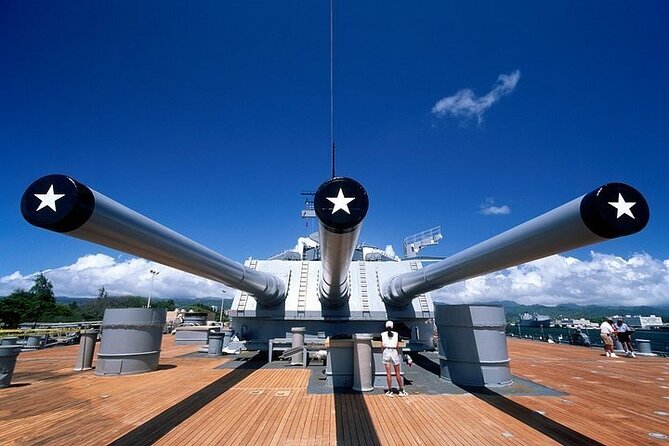
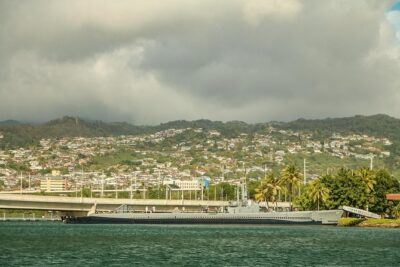
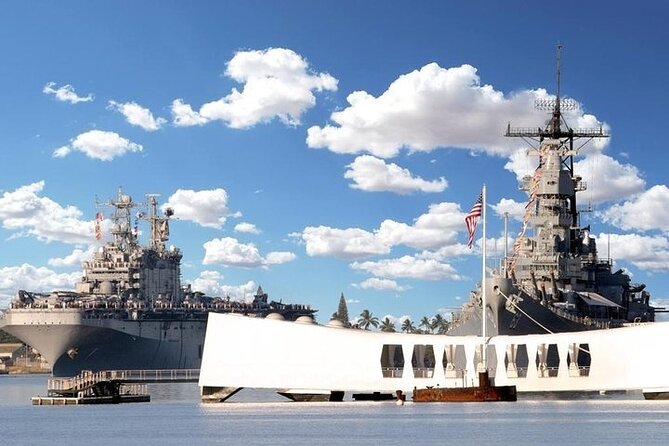
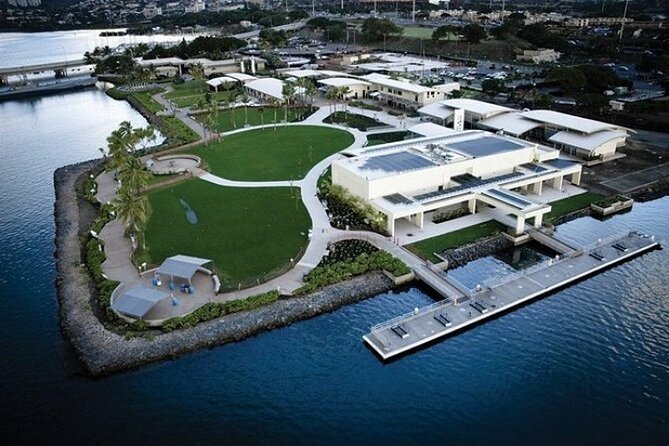
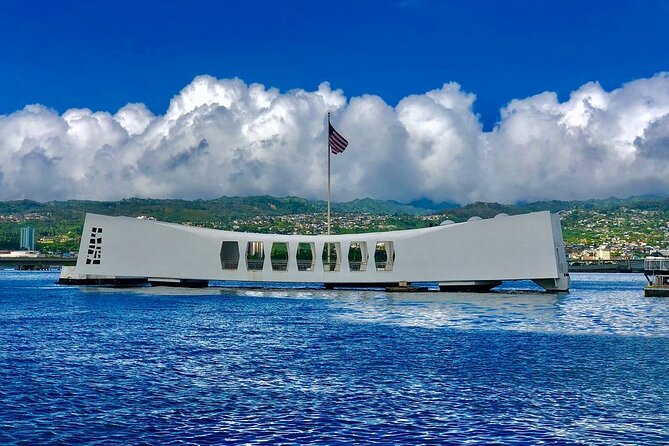
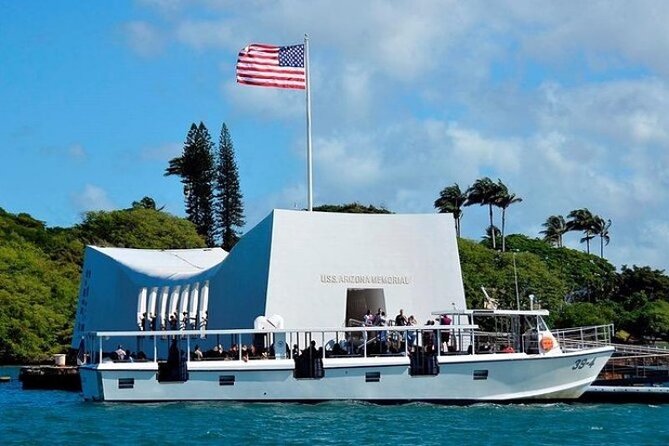
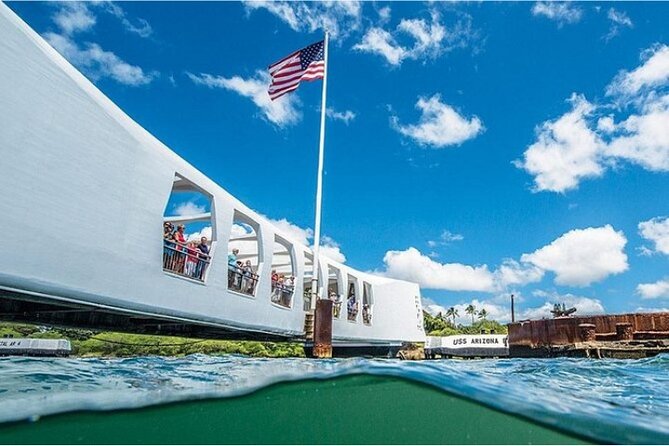
This is the heart of the day. You’ll spend around 2 hours at the Pearl Harbor National Memorial area and learn about the WWII event tied to the USS Arizona Memorial.
Here’s the practical part: USS Arizona access is time-based, and tickets matter. The USS Arizona ticket is listed as $1, and management says it must be reserved 2 weeks in advance. If it’s not reserved for your dates, you may need to use standby options.
What you’ll actually experience
You’ll go to the visitor center theater, watch the documentary, and then ride out by boat toward the memorial area. Food and drinks are restricted at the theater and on the shuttle boats, so plan on a water-only situation during the memorial segment.




How early you should arrive
Management guidance is clear:
- Arrive at the visitor center at least 1 hour before your scheduled ticket time (parking + stowing bags)
- Arrive at the Pearl Harbor Memorial Theater 10–15 minutes before your ticket time
If you’re the kind of person who likes to “figure it out once you’re there,” this is one place where that approach can backfire. Build in the buffer.
If USS Arizona tickets aren’t available: your real options
If your USS Arizona access is not already secured, management lists three standby paths plus a key detail: the last boat goes out at 4 pm.
Option A: you log on at 3 pm to try for tickets released for the next day at 3 pm.
Option B: go at 7 am and plan for the standby line (management says it won’t take long).
Option C: go to the Missouri Museum first, then do Arizona standby near the end of the day, aiming for the 3:30 pm boat.
If your heart is set on USS Arizona on a specific day, Option B is the most direct. Option A can work if your schedule is flexible. Option C is a smart plan if you’re also doing Missouri and you want to reduce the pressure of getting everything solved in the morning.
USS Missouri, aka Mighty Mo: where surrender happened
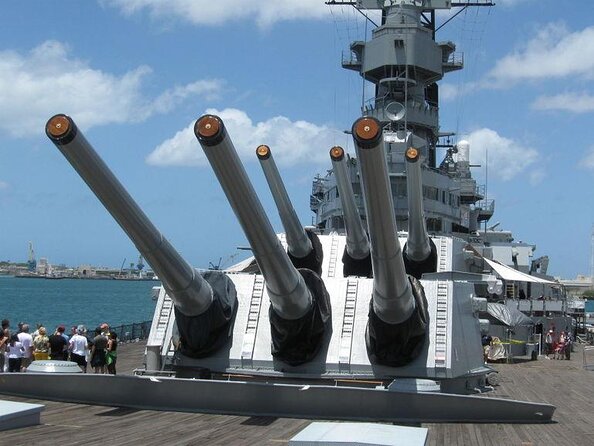
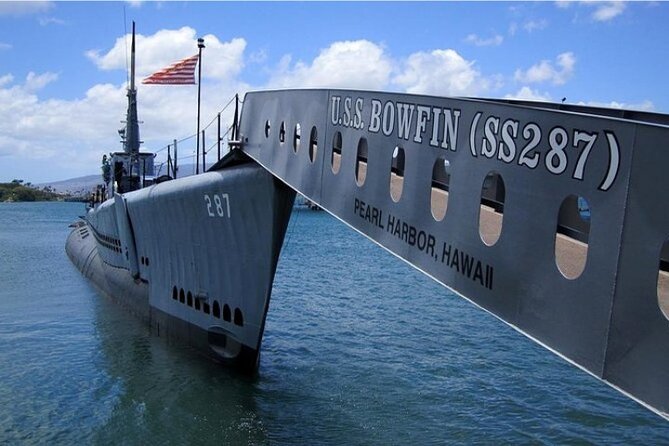
After Pearl Harbor, you’ll visit the Battleship Missouri Memorial for about 2 hours. This is where the story closes with steel. The ship is famously called Mighty Mo, and it’s the place where Japan signed official surrender documents—the formal end to WWII’s fighting in the Pacific.
You also get a look at life aboard a battleship. That piece is worth your attention because it helps you move from big-picture WWII dates into the day-to-day human side: how a warship works, how space is shared, and how hard conditions shape routine.
Missouri tickets are $35 per person and must be bought separately. Tickets are also non-transferable, and management says reservations can’t be made by commercial operators or agencies except under specific authorization terms—so don’t assume you can swap names or re-sell later.
Punchbowl Crater: a quieter stop with real weight
Next comes Punchbowl Crater, an extinct volcanic tuff cone in Honolulu. It serves as a memorial honoring U.S. Armed Forces members and those who gave their lives.
This is a different type of stop than Pearl Harbor. Pearl Harbor is intensely educational and focused on WWII events. Punchbowl is more reflective. It’s the kind of stop where you’ll feel your speaking voice get quieter without anyone telling you to.
It’s also a good pacing break. After hours by the water and among monuments, you get a moment to sit with meaning rather than information.
Downtown Honolulu driving: Chinatown, Wo Fat Building, and old street markers
A scenic drive through downtown gives you a fast, readable map of Honolulu’s layered past. You’ll roll by:
- Chinatown, one of the oldest in the U.S., shaped by Chinese immigrants and later influenced by multiple communities
- Nuuanu Avenue and Hotel Street, where historic architecture clusters
- The Wo Fat Building, plus landmarks tied to local arts and performances like the Hawaii Theatre Center and Arts at Marks Garage
You won’t have a long wandering window here, but the driving time gives you something useful: context. When you later look at photos or read about Honolulu neighborhoods, you’ll remember the street shapes you saw from the car.
If you prefer “one big museum stop” days, you might feel this part is lighter. But for most people doing Pearl Harbor, that mix of memorial + city story is a practical way to make the day feel full.
ʻIolani Palace: the royal residence story you can actually walk through
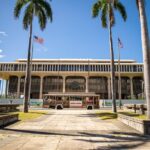
A short drive from Chinatown brings you to ʻIolani Palace, the only official royal residence in the United States. It was built in 1882 by King Kalākaua and was home to Hawaii’s last reigning monarchs. It served as the political heart of the Kingdom until the monarchy was overthrown in 1893.
What I like about adding ʻIolani Palace is that it changes the angle of your Honolulu day. Pearl Harbor frames the U.S. story through WWII and military conflict. ʻIolani Palace reframes Hawaii’s story through governance, identity, and a specific era of change.
Guided tours are available, and the palace’s American Florentine architecture is a visual payoff even if you only catch it from outside before your tour begins.
Ward Village again: wrapping the day with a different Honolulu mood
You’ll drive through Ward Village once more at the end. It sounds almost silly until you do it. Walking through solemn memorial spaces, then returning past glassy towers and clean storefronts helps you mentally reset.
It also makes the day feel less like a one-note history block and more like a full Hawaii itinerary slice: past and present, grief and daily life, military memory and modern city momentum.
What to wear and bring: the rules that can change your timing
This is one of those days where your gear can slow you down, even if you’re on a private schedule.
Bags and storage
At the Pearl Harbor Visitor Center, bags are prohibited. Clear, see-through stadium bags may be allowed, but the best advice is to plan for minimal carry. There is a privately operated bag storage near the visitor center entrance for a fee, open daily from 6:30 am to 5:30 pm.
Food and water
At the theater, shuttle boats, and USS Arizona Memorial: no food or drinks, other than clear water. Food is allowed in the visitor center snack shop. There are also other options nearby, including a lunch truck at the Battleship Missouri Memorial.
Strollers and restrooms (yes, this matters)
- Strollers are allowed in the visitor center, but not in the theater or at the memorial
- There are no public restrooms on the USS Arizona Memorial
If you’re going with kids or you’re dealing with mobility breaks, plan your timing around the visitor center facilities rather than assuming you can pause once you’re out on the water.
Service animals
Service animals are allowed, and the main sites are described as accessible for wheelchairs, with captioning and other supports in the visitor areas.
The human factor: what the best days feel like
A big chunk of your experience hinges on the driver. The positive feedback I saw had a clear theme: people felt taken care of, with a guide who was helpful and hands-on.
One name that comes up is Cesar, described as a luxury car driver who made the day enjoyable and helped get a USS Arizona spot. Another note praised a luxury-car setup and a guide who stayed thoughtful about comfort and pacing.
At the same time, I’ll be practical: there are also reports of missed pickup and poor communication tied to the provider. That doesn’t mean every day goes wrong, but it does mean you should protect yourself. Keep your confirmation details offline, double-check your pickup time the day before, and keep a backup plan for getting to Pearl Harbor if anything feels off.
Who should book this Pearl Harbor day (and who might not)
This tour fits you if:
- You want private transportation and pickup that reduces parking and timing headaches
- You want both key WWII sites—USS Arizona Memorial and USS Missouri—plus Honolulu history around them
- You like a structured 5–6 hour day, not a free-form all-day scramble
It might not fit you if:
- You hate ticket add-ons and strict timing rules
- You want to spend lots of time walking independently in neighborhoods rather than using driving stops for context
For most first-timers doing Pearl Harbor, this is a strong “one day, done right” format.
Should you book it?
If you can handle the ticket add-ons and you’re comfortable with early-arrival timing for USS Arizona, I’d say it’s a smart choice. The value comes from the private pickup and the way the day stacks meaning: memorial + surrender ship + Punchbowl + a look at royal Hawaii.
Before you lock it in, do this quick checklist:
- Confirm whether USS Arizona access is already secured for your date, or whether you’ll need a standby option
- Budget for Missouri ($35) and the small Pearl Harbor admission/add-on fees
- Plan your morning around the stated arrival buffers
If you’re prepared, you’ll get a smooth, focused day—serious moments at the water, then enough Honolulu history to make the whole trip feel like more than one stop.