REVIEW · 2-HOUR EXPERIENCES
Waikiki 2 Hours Private Guided Surf Lesson
Book on Viator →Operated by Kahu Surf School · Bookable on Viator
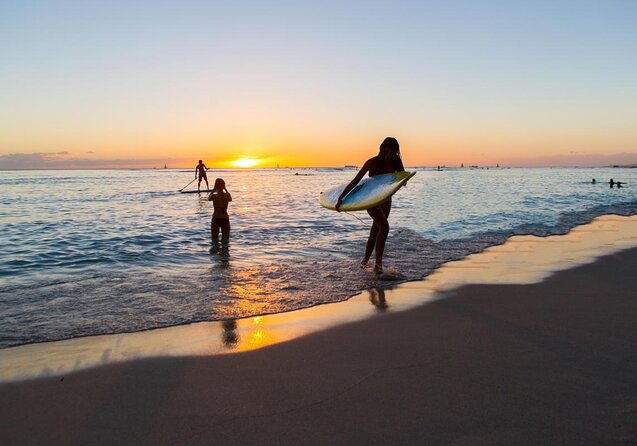
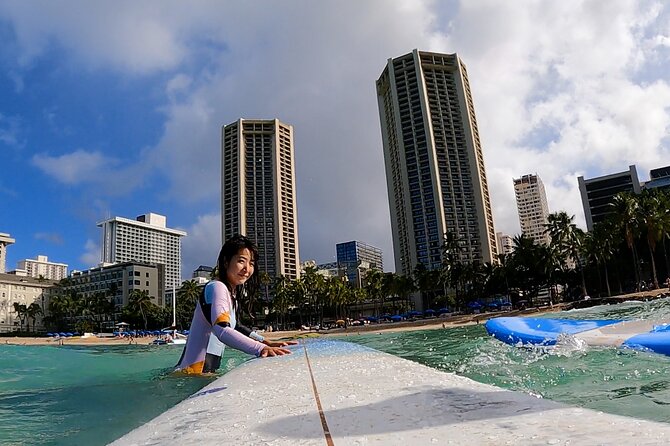
Surfing in Waikiki is a lot of fun. This 2-hour private guided surf lesson in Oahu pairs land and water demonstrations with applied surfing theory, then puts you into the lineup for repeat tries. It’s designed for first-timers, and the focus is on getting you standing up fast with personalized instruction.
What I like most is the lesson structure: you get land demo guidance and then immediate coaching in the water, instead of just being thrown onto the board. I also like the clear goal of wave time—depending on ability, you can ride up to 10–20 waves during your session, with the promise that 95%+ of students stand up many times in their first lesson.
One thing to consider is consistency. The activity description promises smooth service, but the posted experiences include a couple of negative stories about communication and refunds. In a place where timing matters, I’d personally confirm your details and keep receipts so you’re covered if anything goes sideways.
In This Review
- Key Points I’d Use to Choose This Lesson
- Waikiki Private Surf Lesson Basics: What You’re Really Buying
- Where You Meet in Waikiki (and Why It Matters for Timing)
- The First Half: Land Demonstrations That Actually Connect to What You’ll Do
- Into the Water: Coaching Designed for First-Time Stand-Ups
- How Many Waves Will You Ride?
- Camera and Video: Turning Wipeouts into Shareable Proof
- Private Lesson Upside: Faster Feedback and Less Waiting
- The One Caution I’d Take Seriously: Communication and Refund Stories
- Value for Different Types of Travelers
- Weather, Conditions, and Your Best Strategy
- Should You Book This Waikiki Private Surf Lesson?
- FAQ
- FAQ
- Do I need any prior surfing experience?
- How long is the Waikiki private guided surf lesson?
- How many waves can I expect to ride?
- Is instruction available in English?
- Where do I meet for the lesson?
- What happens if the lesson is canceled due to weather?
Key Points I’d Use to Choose This Lesson
- Private, one-group-only coaching: You won’t be blended into a bigger crowd, so you should get more focused attention.
- Land + water demonstrations: You learn positions and proven technique on shore, then apply them right away.
- Up to 10–20 waves: More tries usually means faster learning.
- No surf experience required: The lesson is built for beginners, not experts.
- English instruction: You’ll have guidance in a language you can understand quickly.
- Camera-friendly surf session: They say the lesson can be captured on camera, and at least one family booked extra raw footage.
Waikiki Private Surf Lesson Basics: What You’re Really Buying
This is a 2-hour private surf lesson in Waikiki, run in English, with a mobile ticket and pickup that starts and ends at the same meeting spot: 2450 Prince Edward St, Honolulu. It’s designed as a beginner-friendly experience, but it’s still physically active—you’ll need at least moderate fitness to paddle, balance, and keep trying.
The big value here is the teaching style: land instruction first, then water coaching so you can correct quickly. That matters for first-timers because most mistakes happen in the same places—stance, timing, and how you position your body as the wave forms.
Also, this lesson is positioned as personalized. That “depending on your abilities” part isn’t fluff. In practice, it usually means your instructor adjusts where you go in the water and how many attempts you get, so you spend more time trying and less time struggling.
You can also read our reviews of more guided tours in Oahu


Where You Meet in Waikiki (and Why It Matters for Timing)
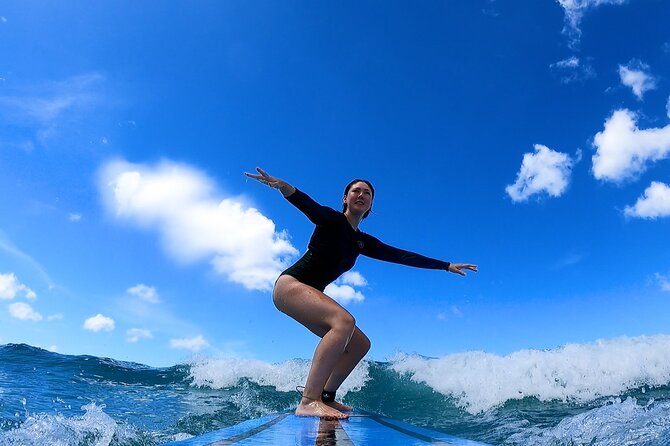
You meet at 2450 Prince Edward St and the experience ends back there. Since the starting point is near public transportation, it’s fairly easy to build into a normal day in Honolulu without needing a complicated plan.
Why this matters: Waikiki traffic and beach conditions can slow things down. If you’re trying to fit surfing between other activities, a fixed meeting point reduces uncertainty and keeps the day simple.
One note from the experiences people shared: at least one instructor chose to start later than the scheduled time to chase better surf conditions. That can be good (learning improves when conditions cooperate), but it also means you should keep your calendar flexible around your lesson.
The First Half: Land Demonstrations That Actually Connect to What You’ll Do
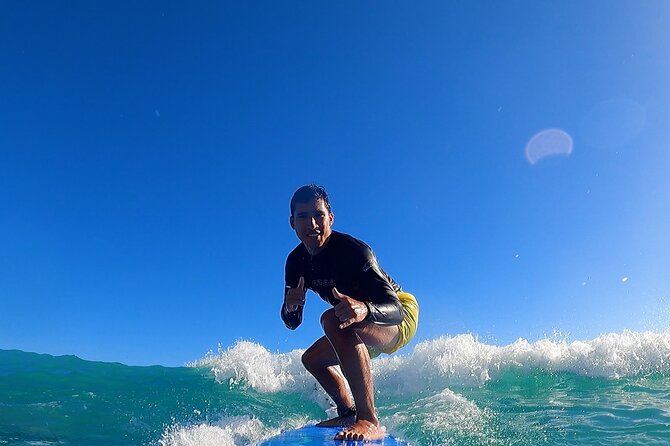
All lessons include land and water demonstration. On land, the goal is to teach you proper positions and technique, plus some applied theory about surfing.
In real-life terms, this is where you learn the “why” behind what you’re doing:
- how your stance affects balance,
- what to focus on before you commit to a wave,
- and what your body should do as the board meets the water.
This kind of instruction is especially helpful if you’re nervous. You don’t have to guess. Instead of scrambling to interpret what your instructor is saying while you’re already in the ocean, you get the visual and the pattern first, then you repeat it.
And the lesson promise is pretty specific: depending on your ability, you can ride up to 10–20 waves. The land work is meant to make those attempts more likely to succeed.
Into the Water: Coaching Designed for First-Time Stand-Ups
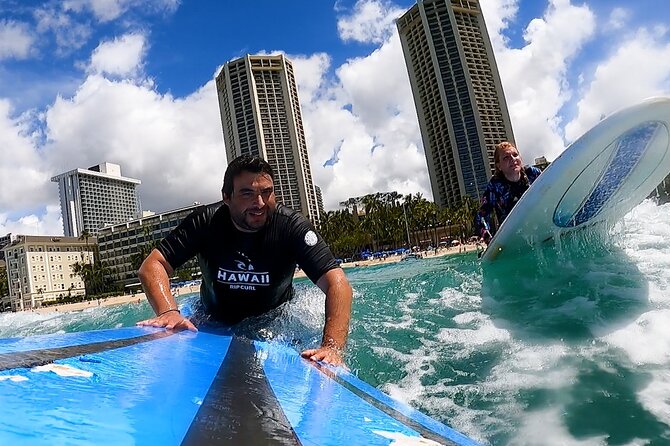
Once you’re in the surf, the experience is built around repetition. The description says it’s personalized, and the coaching approach in the shared experiences lines up with that: instructors stayed close, corrected technique, and gave clear, motivating guidance.
From the positive stories, a few coaching behaviors show up again and again:
- Staying by your side during the key moments, not just yelling instructions from a distance.
- Checking constantly for safety and making sure you’re in the right position.
- Helping you paddle and set up so you can actually catch waves—not just wipe out.
Some named instructors who delivered strong results include:
- Moki, praised for being supportive, energetic, and repeatedly helping both adults stand up and catch waves.
- Vance, liked for a fun, fundamentals-first approach in a 2-person format.
- Kaa’Aine (spelled that way in one note), praised for encouraging a 12-year-old and celebrating every successful catch.
- Cody, thanked for making a first bucket-list surf work at age 59.
Even with these great outcomes, the ocean still does ocean things. Wiping out is part of the deal, and the better instructors treat it as part of the learning curve rather than a failure.
How Many Waves Will You Ride?
The lesson promise is straightforward: depending on ability, you can ride up to 10–20 waves. The description also claims that 95%+ of students stand up many times during their first lesson.
That’s what you should look for as a buyer: not just whether you get into the water, but whether you get enough attempts for real progress. Two hours can be short if you’re mostly watching, but it can be enough if the instructor keeps you moving and sets you up to catch waves.
If you’re wondering what to expect for your own skill level, here’s the practical way to read that “personalized” line: beginners usually get more assistance and may have shorter, slower rides, but you still should be able to stand up multiple times if coaching is executed well.
You can also read our reviews of more private tours in Oahu






Camera and Video: Turning Wipeouts into Shareable Proof
One detail I’d consider before booking: the lessons say they can be captured on camera. That’s not just a nice-to-have. Surfing is one of those activities where people rarely remember what happened moment-to-moment—video helps you see your stance, your timing, and what worked.
In one shared experience, a family booked a raw footage video package and was glad they did, because it captured their daughter smiling while she caught waves.
If you care about preserving the moment (and let’s be honest, you’ll want at least one clip for the feed or the group chat), camera capture is a real value add.
Private Lesson Upside: Faster Feedback and Less Waiting
This is private—only your group participates. That difference is bigger than it sounds.
In a group lesson, instructors have to rotate attention. That often means your learning pace depends on how long you have to wait for help. In a private format, you’re more likely to get:
- immediate corrections after a wipeout,
- repeat attempts while the concept is fresh,
- and more personalized positioning and safety checks.
For first-timers, that translates to fewer wasted tries and more standing-up moments.
The One Caution I’d Take Seriously: Communication and Refund Stories
Here’s the balanced part. The overall experience has plenty of praise for instructors and teaching, but the posted negative experiences include claims about:
- a very unpleasant communication style from an owner,
- being told you aren’t on the schedule even after having confirmation/payment evidence,
- and refund issues when service wasn’t delivered as promised.
I can’t verify any individual story, but I can tell you what your practical response should be. If you book this lesson, take two steps:
- Keep your confirmation and receipts where you can quickly show them on your phone.
- Follow up ahead of time if you don’t hear back within a reasonable window.
In a sport where getting to the right place on time matters (and where conditions can affect scheduling), you don’t want last-minute confusion.
If you arrive and something doesn’t match your booking, handle it calmly and document what’s said. If you need to escalate, it’s easier when you already have dates, times, and proof.
Value for Different Types of Travelers
Who this lesson fits best:
- First-time surfers who want structure, not guesswork.
- Couples or small groups who want a focused lesson instead of a big-team session.
- Visitors who want a repeat-try learning style with a realistic shot at standing up.
- People who appreciate clear, motivating instruction from an experienced guide—especially when the guide stays engaged in the water.
One shared story even points to the fact that bucket-list surfers can enjoy the experience: a 59-year-old mentioned the staff made it happen. That doesn’t mean it’s effortless, but it does suggest the instruction can work across a range of ages as long as you meet the moderate fitness requirement.
Weather, Conditions, and Your Best Strategy
This experience requires good weather, and if it’s canceled due to poor weather, you should be offered a different date or a full refund. That’s normal for ocean activities, but it changes how you plan.
My advice: if you’re combining surfing with other beach or sightseeing plans, keep your schedule flexible on that day. Even with good weather, surf conditions can mean delays, like the case where an instructor started later because they wanted the best conditions.
Should You Book This Waikiki Private Surf Lesson?
I’d book it if your top priority is a beginner-friendly path to getting on your feet, with a lesson that’s built around land coaching and active wave attempts. The positive stories focus on exactly that: instructors who stay close, coach clearly, help you catch waves, and make the session feel safe and encouraging.
I’d book with extra care if you hate uncertainty around scheduling. Since there are negative accounts involving communication and refunds, confirm your details and keep proof handy. If you’re the type who has backup plans and likes to be organized, you’ll be fine.
FAQ
FAQ
Do I need any prior surfing experience?
No. The lesson is designed for beginners, and you don’t need surfing experience to start.
How long is the Waikiki private guided surf lesson?
It’s approximately 2 hours.
How many waves can I expect to ride?
Depending on your abilities, you can ride up to 10–20 waves during your session.
Is instruction available in English?
Yes, the lesson is offered in English.
Where do I meet for the lesson?
The start location is 2450 Prince Edward St, Honolulu, HI 96815, and the activity ends back at the meeting point.
What happens if the lesson is canceled due to weather?
The experience requires good weather. If it’s canceled due to poor weather, you’ll be offered a different date or a full refund.

![Honolulu: Pearl Harbor, USS Arizona Memorial [Early Access] - USS Arizona Memorial: the moment that becomes the whole day](https://cdn.honolulu-city.com/wp-content/uploads/honolulu-pearl-harbor-uss-arizona-memorial-early-access-400x208.jpg)