REVIEW · CANOES & KAYAKS
Family, Private & Group Standup Paddle Lessons in Waikiki
Book on Viator →Operated by Ohana Surf Project · Bookable on Viator
Surf is easier when someone drives the process.
This Waikiki lesson is built around a smooth flow: hotel pickup, a quick safety rundown, then you’re out on the water with a professional instructor and high-quality boards. Two things I really like about the setup are how the coaching is customized to your skill (I’ve seen instructors like Mark and Kai focus on calm, step-by-step technique) and how you get a stored-up lesson experience that doesn’t end at the sand—afterward you can view professional photos and video. The main thing to watch: even in a semi-private session, the water area can still have multiple instructors and groups at once, so it may not feel as one-on-one exclusive as you imagined.
You’ll hop on the Surf School Bus to Ohana Surf Project at the Waikiki Beach Marriott, gear up fast, and get real feedback while you try waves. One possible drawback to plan around is that if someone in your group can’t swim, you’ll need to flag it ahead of time because the format may shift toward a private lesson.
In This Review
- Key takeaways before you go
- From your hotel to the sand: how the pickup really works
- A small logistics detail worth planning for
- Gear-up, safety briefing, and the 2-hour rhythm
- If anyone can’t swim, speak up early
- What you do in the water: customized coaching that gets you up
- Expect more time learning than time waiting
- Photos, videos, and the post-session shop moment
- Price and value: is $118.84 a fair deal in Waikiki?
- Who feels the value most
- Who should compare closely
- Who should book this Waikiki surf lesson (and who should be cautious)
- Consider extra planning if…
- The small things that make the day go smoothly
- Final call: should you book Ohana Surf Project in Waikiki?
- FAQ
- What’s the duration of the Waikiki surf lesson?
- What’s included in the price?
- Are photos and videos included?
- Do you offer hotel pickup in Waikiki?
- What do I need to bring?
- Can non-swimmers participate?
- What happens if the weather is bad?
Key takeaways before you go
- Waikiki hotel pickup and air-conditioned shuttle keeps the day simple, with standard pickup windows 10–45 minutes before your start.
- Small-group coaching (max 8 people) helps you get attention without dragging the lesson for hours.
- All equipment is included, from rashguard and reef shoes to board and paddle.
- Your lesson ends with pro photo/video viewing, with purchase optional afterward.
- Good-weather dependent means you’ll want a flexible plan for Waikiki surf days.
From your hotel to the sand: how the pickup really works
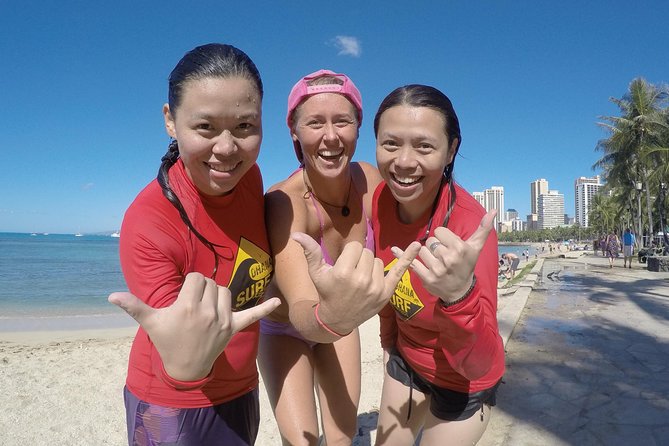
This experience starts in Waikiki, with a meeting point at 2552 Kalākaua Ave in Honolulu. If you’re staying in one of the standard pickup areas, you’ll get courtesy transportation that arrives 10–45 minutes before your lesson time. The vibe is practical: you’ll climb aboard a clean, air-conditioned yellow bus or a white shuttle van with the company logo, then head to the Ohana Surf Center at the Waikiki Beach Marriott.
Here’s the part that saves real vacation energy: you don’t have to coordinate parking, loading gear, or finding the shop. You just show up, check in, and follow the flow. If your hotel isn’t one of the four standard stops, you might still be able to arrange special pickup closer to your location—there’s a heads-up call or email expected at least 24 hours in advance.
After check-in, you’ll do the gear-up phase and get a brief safety rundown before you shuttle to the beach. When you’re done, they bring you back to your drop-off point, so the day stays contained and low-stress.
You can also read our reviews of more private tours in Oahu


A small logistics detail worth planning for
You should go prepared: bathing suit on, towel in hand, and sunscreen applied before you arrive. That way you’re not wasting lesson minutes changing on the fly. Also remember you’ll be near a public transportation network, but the whole point here is the ride you don’t have to arrange yourself.
Gear-up, safety briefing, and the 2-hour rhythm
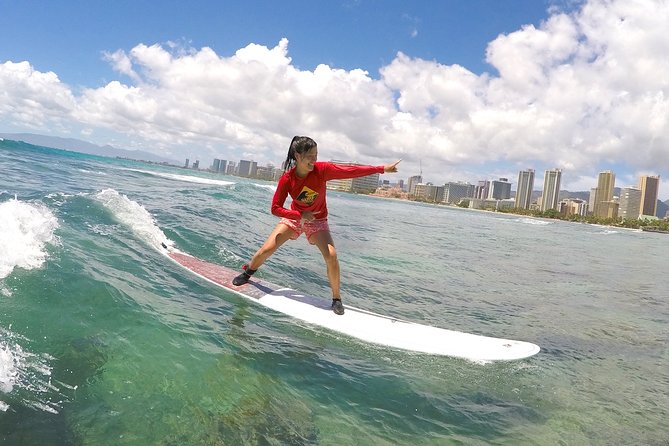
Surf lessons in Waikiki can feel chaotic if you show up unprepared. This one runs like a checklist. At the Surf Center (Ohana Surf Project), you’ll store your belongings in a safe place, then get into your rashguard and reef shoes. You’ll also be issued the paddleboard and paddle you’ll use during the lesson, plus the surf gear needed for the session.
Once everyone’s geared up, you’ll get a quick safety briefing. The tone is usually calm and encouraging—based on how instructors like Mark, Markus, Tyler, and Miguel are described in coaching style, the focus stays on making each step feel manageable. That matters because the hardest part for first-timers is often not the wave. It’s the fear of doing the wrong thing in front of everyone.
Then it’s out to the beach. You’ll meet your instructor, talk through your comfort level, and start building your “surf confidence” fast. The lesson is designed to fit in about two hours, so the pacing is steady rather than slow and stretched out.
If anyone can’t swim, speak up early
Most people can participate, but if you can’t swim, tell staff ahead of time. The experience notes that a private lesson may be required in that case. That’s not a scare tactic—it’s just how they keep the session safe and tailored.
What you do in the water: customized coaching that gets you up
In the water, the lesson structure is built around feedback and repetition. Even if you start as part of a group, the coaching keeps moving you toward standing and riding. Several people highlight how instructors stayed patient with beginners and gave clear direction after each attempt. That matches how effective surf teaching works: short instructions, then quick tries, then corrections.
A key practical point: although the overall session is group-based, it’s taught with a semi-private feel. Some coaching descriptions say it’s like one instructor per two people, which makes it much easier to get hands-on correction. You’re not just watching a demo from the shore.
The instructors’ personalities also seem to matter. People mention coaches like Kai being attentive and funny in a way that relaxes nervous first-timers. Others praise Mark or Markus for keeping instruction fun while still staying structured. And there’s a recurring theme: after you struggle, the instructor doesn’t just move on. They adjust what you’re doing and try the next wave with you.
You can also read our reviews of more tours and experiences in Oahu






Expect more time learning than time waiting
The two-hour schedule is short, but that’s the point. Instructors aim to keep you in the water and practicing rather than standing around. You may start with basics, then progress to riding waves once you’re comfortable with the board, paddling, and positioning.
Also, you might not get the ocean all to yourself. One honest consideration from past participants: even with semi-private booking, other groups and instructors can be in the same general area. The upside is you still get coaching and plenty of tries. The trade-off is that it may not feel like a private beach bubble.
Photos, videos, and the post-session shop moment
A lot of surf lessons end when you rinse off and leave. This one keeps the momentum going. After your time in the water, you return to the Surf Center where you can view photos and video from the session. Photos and videos aren’t included in the price, but the purchase option is part of the post-lesson experience.
This matters for two reasons:
1) You get proof you actually learned something, not just a blurry sand-memory.
2) It gives you something to review later when you’re practicing at home.
If you’re the type who wants a visual record—especially for kids or first-timers—this add-on format is worth paying attention to.
There’s also a shop component after check-in and after surf. If you want a souvenir rashguard or gear to keep training, you’ll likely have a chance to browse right at the end rather than hunting around Waikiki afterward.
Price and value: is $118.84 a fair deal in Waikiki?
At $118.84 per person for about two hours, this sits in a common midrange band for Waikiki surf instruction, but the value comes from what’s included. You’re paying for:
- a professional instructor
- all necessary equipment (rashguard, reef shoes, board, paddle)
- a safe place to store belongings
- round-trip transportation from select Waikiki areas
- taxes and fees
That’s not just “gear included.” In Hawaii, the difference between paying for lessons only versus paying for the full setup often shows up in your energy level. With pickup and included equipment, you don’t waste time figuring out rentals or dealing with extra costs for shoes, boards, and protective gear.
The main cost beyond the stated price is photos and videos, which you can choose to buy or skip. So you can treat this as a base lesson cost plus a souvenir option, rather than paying for a separate photo package up front.
Who feels the value most
- First-timers who would otherwise rent gear and guess their way through the basics.
- Families with kids who need patience and structure.
- Couples who want a real lesson rather than a casual board rental.
Who should compare closely
If you’re already an experienced surfer and only want private coaching, this might feel less “exclusive.” If you want that one-instructor focus, you may want to look for a more private format. The semi-private approach is great for learning, but it’s not the same as a fully private ocean session.
Who should book this Waikiki surf lesson (and who should be cautious)
This experience is built for “most travelers” and explicitly welcomes different levels. You’ll learn the basics, use the included gear, and work toward actually standing up and riding.
Based on how instructors are described—calm coaching, encouragement, and feedback even for nervous beginners—I think this is a good fit if you:
- are trying surfing for the first time
- want instruction that doesn’t overwhelm you
- bring kids or teens who learn fast with clear steps
- want the convenience of pickup and a structured day
Consider extra planning if…
- You get seasick easily. The experience suggests considering a remedy you’re used to using before the lesson (and talking to your doctor for recommendations).
- You have a medical condition or injury. The instructions ask you to advise staff ahead of time.
- Someone in your group can’t swim. That may trigger a private lesson requirement.
Also note the tour has a maximum group size of 8 travelers, which is one reason the coaching can feel manageable.
The small things that make the day go smoothly
A surf lesson in Waikiki can be wonky if you’re under-prepared. Here’s what you can control, based on the information you’re given:
- Wear your bathing suit and bring a towel.
- Apply sunscreen ahead of time.
- Expect to store belongings at the center so you’re not juggling bags in the sand.
- Come ready to follow a short safety briefing and listen for instructions while you’re on the board.
- Be weather-aware. This experience requires good weather, and if it’s canceled due to poor conditions, you’ll be offered another date or a full refund.
If you’re traveling from outside Waikiki, confirm your pickup details by the time window they promise. If you don’t receive pickup info 24 hours prior, contact Ohana Surf Project.
Language help is also available in written materials (Spanish, Japanese, Korean, Chinese), but the experience notes they can’t guarantee a speaking instructor in every language without enough advance notice.
Final call: should you book Ohana Surf Project in Waikiki?
I’d book this if you want a straightforward Waikiki surf lesson that handles the hardest parts for you: gear, instruction, safety flow, and transportation. The best version of this experience is for first-timers and families who want a real attempt at standing up—without wasting time figuring out logistics.
I’d think twice if your top priority is total exclusivity. Even when the format feels semi-private, you may still be sharing the water area with other groups. And if you or someone in your party has swimming limitations or medical concerns, plan to communicate that early so the lesson can be adjusted.
If you can handle good-weather variability and show up with sunscreen ready, this is a solid value way to get actual surf skill in a short, fun day in Waikiki.
FAQ
What’s the duration of the Waikiki surf lesson?
The lesson is about 2 hours.
What’s included in the price?
You get a professional instructor, all taxes and fees, and all necessary equipment (including rashguard, reef shoes, paddleboard, and paddle). Transportation to and from designated meeting spots in Waikiki is also included.
Are photos and videos included?
No. Photos and videos are available for purchase after your lesson.
Do you offer hotel pickup in Waikiki?
Yes. Courtesy pickup is offered from four standard pickup locations in Waikiki, typically 10–45 minutes before your lesson time. Special pickup may be possible for some other nearby hotels if you arrange it at least 24 hours in advance.
What do I need to bring?
Come prepared by wearing your bathing suit, bringing a towel, and applying sunscreen ahead of time.
Can non-swimmers participate?
You should advise staff ahead of time if anyone cannot swim. The experience notes that a private lesson may be required in that situation.
What happens if the weather is bad?
The experience requires good weather. If it’s canceled due to poor weather, you’ll be offered a different date or a full refund.