REVIEW · OAHU
Oahu Off the Beaten Path Small-Group Tour from Honolulu
Book on Viator →Operated by Spiritual Tours Hawaii · Bookable on Viator
Skip the beach-only script and learn Oahu’s layers. This half-day route pairs big viewpoints with local heritage stories, from Hawaiian legends at sacred sites to Japanese immigrant history in the Valley of the Temples. I like the way it moves quickly but thoughtfully, and I especially like that the small group size gives you real access to your guide.
You’ll likely ride in a comfortable, air-conditioned Mercedes-style van, with bottled water ready and a guide who slows down enough to explain what you’re looking at. Guides mentioned in past runs include Ama and Simina, both praised for being patient, attentive, and focused on safety while sharing culture through their own local perspective. One thing to consider: this is not a beach hang. You’re choosing history, geology, and spiritual sites over sand time, and one stop (Byodo-in Temple) has an admission fee not included.
In This Review
- 6 Things That Make This Oahu Off-the-Beaten-Path Tour Work
- A Short Oahu Loop That Gets Past the Beach Postcard
- Price and What You Actually Get for $144
- Start at the Honolulu Zoo and Enjoy the Small-Group Advantage
- Stop 1: Makapu‘u Point and the Meaning of the Bulging Eye
- Stop 2: Kaka‘ako Waterfront Park, Point Panic, and the Whale Chamber
- Stop 3: Byodo-in Temple Hawaii in Valley of the Temples
- Stop 4: Ulupo Heiau and the Menehune-to-High-Chiefs Thread
- Stop 5: He‘eia State Park and Oahu’s Oldest Fish Pond
- Stop 6: Kahi Hali‘a Aloha Memorial and Dignified Remembrance
- Small-Group Comfort: Vehicle, Safety Mindset, and Pacing
- Who This Tour Fits Best (and Who Might Want Something Different)
- Should You Book This Oahu Off-the-Beaten-Path Tour?
- FAQ
- How long is the Oahu Off the Beaten Path small-group tour?
- Where does the tour start and where does it end?
- What is the maximum group size?
- What is included in the tour price?
- Is admission included for all stops?
- What language is the tour offered in?
- What should I wear, and is there an age requirement?
- Is there a mobile ticket?
- Is free cancellation available?
- Is the meeting point easy to reach?
6 Things That Make This Oahu Off-the-Beaten-Path Tour Work
- A half-day, small-group format that keeps the pacing human (max 20 people)
- Makapu‘u Point with the bulging-eye legend tied to an old Tahitian god
- Kaka‘ako Waterfront Park’s Whale Chamber spiral, plus the area’s Point Panic Park vibe
- Byodo-in Temple Hawaii in Valley of the Temples, a 1968 commemoration and a replica of a UN World Heritage site
- Ulupo Heiau and He‘eia State Park, where you connect myths with living history like an ancient fish pond
- Kahi Hali‘a Aloha memorial, designed for dignified, permanent protection of ancestral remains
A Short Oahu Loop That Gets Past the Beach Postcard
Oahu can feel like two different islands. One part is beaches, shopping, and fast-moving tour buses. The other part is quieter and older: place names, sacred geography, and how people used land and water long before modern roads.
This tour leans hard toward that second Oahu. You get to see coastal overlooks and town areas, but the main goal is interpretation—how geology shaped settlement, how legends map onto real locations, and why some places are still treated with ceremony and respect.
It’s also built for people who don’t want a full-day grind. At roughly 5 to 6 hours, you can fit this around other plans without sacrificing the chance to learn.
You can also read our reviews of more tours and experiences in Oahu.


Price and What You Actually Get for $144
At $144 per person, the headline price is clear. What matters is what comes with it.
You’re paying for:
- Air-conditioned small-group transport (not a huge crowd cattle-car)
- Driver/guide plus local guidance
- Bottled water
- Fuel surcharge and landing/facility fees covered by the operator
That’s good value for Oahu, where “cheap” tours often skim on interpretation or leave you to figure out what you’re seeing on your own. Here, the pay-off is the storytelling tied to each stop: history, geology, and spiritual practices explained in a way that makes the place feel specific instead of generic.
One cost item to remember: Byodo-in Temple admission is not included, so you’ll want to budget for that ticket separately when you get there.
Start at the Honolulu Zoo and Enjoy the Small-Group Advantage
The tour starts at the Honolulu Zoo, 151 Kapahulu Ave at 9:00 am, and it ends back at the same meeting point. The location is near public transportation, which is handy if you’re not driving or you’d rather keep parking off your mind.
The max group size is 20 people, and that changes the day in a real way. With a smaller group, your guide can slow down, check in, and adjust stops when timing needs a tweak. In feedback from past guests, the guides were described as making sure everyone was comfortable and okay with the pace.
Dress code is smart casual. In practice, that means wear something you can stand and walk in lightly—comfortable shoes help, especially when you’re bouncing between viewpoints and outdoor memorial spaces.
Stop 1: Makapu‘u Point and the Meaning of the Bulging Eye
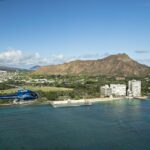
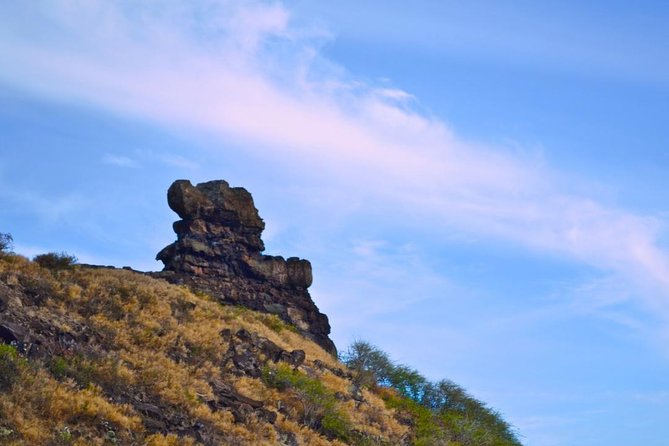
Makapu‘u Point is one of those places where the view earns the first few minutes. The lookout has a classic “Oahu drama” feel—coastline angles, ocean light, and the kind of horizon that makes your phone camera work overtime.
But what makes this stop worth the time is the story behind the name. Makapu‘u means bulging eye, and it’s tied to an old Hawaiian connection to a Tahitian god said to live in a cave in the area and have eight bright eyes. It’s the kind of detail that makes the viewpoint feel like a named place with memory, not just scenery.
You’ll have about 15 minutes here. That’s enough time to take photos, get your bearings, and hear the meaning of what you’re standing on—without the “rush-rush” feeling that can happen at fast photo stops.
Stop 2: Kaka‘ako Waterfront Park, Point Panic, and the Whale Chamber
Next is Kaka‘ako Waterfront Park, south of downtown Honolulu. It has a couple layers to enjoy: a pretty public park setting and the local nickname Point Panic Park, which adds a fun, modern Honolulu character to the tour.
The real standout is the park’s spiral of the Whales Chamber. It’s a striking design feature that turns a walk-by stop into something you can actually observe, pause for, and interpret.
This is also a good reset after the lookout. You trade open ocean views for a more built, city-adjacent environment. That contrast helps you understand Oahu as one connected place, not isolated “attractions.”
Plan for about 20 minutes, and use that time to slow your pace and look around. The point isn’t a long hike—it’s learning how culture and meaning show up even in public city parks.





Stop 3: Byodo-in Temple Hawaii in Valley of the Temples
If you want one stop that feels like a “time and culture bridge,” it’s Byodo-in Temple Hawaii at Valley of the Temples Memorial Park.
Here’s what makes it historically grounded:
- It was established on June 7, 1968
- It commemorates the 100-year anniversary of the first Japanese immigrants to Hawaii
- The temple is a smaller-scale replica of the original Byodo-in Temple in Uji, Japan, which is a UN World Heritage Site
This means you’re not just visiting a pretty building. You’re seeing how an immigrant community used a familiar sacred form to create continuity in a new homeland.
Admission for this stop is not included, so consider it a planned extra cost. If you’re trying to keep your day under control financially, it’s smart to bring along enough for the ticket so you’re not making decisions on the fly.
You’ll have about 25 minutes, which is enough for a quiet look, a few photos, and time to hear the context without feeling stuck in line for hours.
Stop 4: Ulupo Heiau and the Menehune-to-High-Chiefs Thread
Heiau sites are not “ruins” in the way you might think of old stone temples on continents. They’re places with meaning, and they often sit at the intersection of legend and real historical leadership.
At Ulupo Heiau State Monument, the guide connects it to two layers:
- In legend, it’s associated with the menehune
- Later, it’s linked with high chiefs of Oʻahu, including Kakuhihewa in the 15th century and Kualiʻi in the late 17th century
That timeline matters. It helps you see the site as something people returned to across generations, not a one-time story. Even if you don’t catch every date detail, you’ll understand the main idea: the land was political, spiritual, and practical.
You’ll have about 15 minutes here. The quick timing is intentional: you’re learning, not wandering all day. Still, if you’re the kind of person who likes to read plaques slowly and sit in silence, you’ll likely want to linger after the guide’s explanation. Just keep it respectful.
Stop 5: He‘eia State Park and Oahu’s Oldest Fish Pond
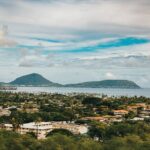
On the windward side of Oahu, He‘eia State Park (around Keʻalohi Point) adds a different kind of “wow.” This is where the tour connects land and water management with long-term history.
You’ll learn about:
- The significant changes over time in the area’s history
- The presence of indigenous plants and also Polynesian introduced plants
- The oldest fish pond on Oahu, along with its significance
Fish ponds are one of the most practical windows into island life. When you understand that people shaped coastal ecosystems to harvest food, the whole island geography feels different. You stop thinking of water as scenery and start thinking of it as infrastructure.
You’ll have about 20 minutes at this stop. That’s enough time to understand why fish ponds mattered and to see the area with a new set of questions: How did people use it? What changed? What stayed important?
Stop 6: Kahi Hali‘a Aloha Memorial and Dignified Remembrance
The final stop is Kahi Hali‘a Aloha, described as a place of loving remembrance. This is the most solemn stop on the route, and it’s also one of the most meaningful if you care about how societies handle memory.
The memorial was designed by lineal descendants to accommodate Hawaiian ancestral remains and offer permanent and dignified protection for future generations. The information provided also notes that it’s the first of its kind to offer this kind of permanent protection.
This stop isn’t about sightseeing. It’s about understanding that heritage isn’t just “old stories.” It can be ongoing, physical, protected, and tied to living responsibility.
Plan for about 20 minutes. You’ll likely spend that time listening and reflecting more than photographing. If you tend to get restless in quiet settings, remind yourself: this part of the tour is the point.
Small-Group Comfort: Vehicle, Safety Mindset, and Pacing
Across the day, the logistics support the learning. You’re not left to hustle. Bottled water is included, and the tour uses an air-conditioned vehicle, which matters on Oahu even when the day looks mild.
From guide feedback you may run into a safety-minded approach and extra attention to how comfortable everyone is with each stop. That kind of care matters on sacred sites and memorials, where you want the group to slow down and behave appropriately.
Pacing is also a big deal for value. Every stop is short—mostly 15 to 25 minutes—so you keep momentum without feeling like you’re sprinting across the island for a single “big moment.” If you like structured tours but hate feeling herded, this one fits.
Who This Tour Fits Best (and Who Might Want Something Different)
This tour is a great match if you:
- Want Oahu beyond beaches, with history and cultural context
- Prefer smaller groups and more guide attention
- Like learning about both Hawaiian traditions and how immigrant history reshaped island culture
- Want a half-day format that still covers several meaningful places
It might not be the right fit if you:
- Came only for beach lounging and sunset swims
- Want long stays at temples or museums (this is brief, guided time at each stop)
- Are trying to avoid any extra ticket costs, since Byodo-in Temple admission isn’t included
- Need a kid-friendly tour (minimum age is 18)
Should You Book This Oahu Off-the-Beaten-Path Tour?
I’d book it if your goal is to leave Oahu with a sense of place, not just photos. At $144 for a guided half-day with transport, bottled water, and local storytelling, it’s priced like a serious cultural experience rather than a basic bus tour.
Also, the lineup is smart. You get coastal meaning at Makapu‘u, modern-city interpretation at Kaka‘ako, immigrant heritage at Byodo-in, and sacred and practical history at Ulupo Heiau and He‘eia fish pond, then you close with Kahi Hali‘a Aloha. That mix keeps the day from feeling repetitive.
My call: book this when you want to understand Oahu, not just pass through it.
FAQ
How long is the Oahu Off the Beaten Path small-group tour?
It runs for about 5 to 6 hours.
Where does the tour start and where does it end?
It starts at the Honolulu Zoo, 151 Kapahulu Ave, Honolulu and ends back at the same meeting point.
What is the maximum group size?
The tour has a maximum of 20 travelers.
What is included in the tour price?
Included items are bottled water, the driver/guide, a local guide, fuel surcharge, and landing and facility fees.
Is admission included for all stops?
Admission is free at Makapu‘u Point, Kaka‘ako Waterfront Park, Ulupo Heiau State Monument, He‘eia State Park, and Kahi Hali‘a Aloha. Byodo-in Temple Hawaii admission is not included.
What language is the tour offered in?
The tour is offered in English.
What should I wear, and is there an age requirement?
The dress code is smart casual, and the minimum age is 18.
Is there a mobile ticket?
Yes, the tour offers a mobile ticket.
Is free cancellation available?
Yes. Free cancellation is available up to 24 hours before the experience start time for a full refund.
Is the meeting point easy to reach?
The meeting point is near public transportation.