REVIEW · SHARK DIVING TOURS
Safe and Educational Shark Dive from Haleiwa: Sharks Guaranteed
Book on Viator →Operated by One Ocean Diving · Bookable on Viator
Sharks, without the scary movie chaos. This Haleiwa experience is built around research-first education and a safety-led in-water setup, so you learn how to read sharks before you ever enter the ocean. You’re also taught how to spot the species cues you’re likely to see around Oahu and how to behave in a way that keeps both you and the animals calm.
I really like two parts of this outing: the pre-water teaching from marine pros, and the fact that you’re not left to figure it out on your own once you’re in the water. The team walks you through shark biology, behavior, and body language, and you’ll also get snorkeling and safety equipment plus a guided approach that keeps things clear and controlled.
The main thing to consider is that this is a structured, safety-focused swim. If you’re hoping for totally free-roam swimming from the start, the rope-and-guided setup may feel a little restrictive when you’re on the surface or in the line before your turns.
In This Review
- Key reasons I think this one works
- Why the Haleiwa Shark Encounter Feels More Like Science Than Spectacle
- Meeting at Haleiwa and What You Do Before the Ocean Part
- The In-Water Setup: Rope, Snorkel Gear, and Controlled Exposure
- Learning to Read Sharks: Behavior, Body Language, and What to Do
- What You Can See: Species Cues, Tiger Shark Chances, and Ocean Extras
- Price, Photo Options, and Real Value at $165.71
- Who This Oahu Shark Encounter Suits Best
- Practical Tips That Make a Big Difference
- Should You Book This Shark Encounter From Haleiwa?
- FAQ
- How long is the shark encounter experience?
- Where does the tour start in Haleiwa?
- What’s the price per person?
- Is this a private tour?
- Is snorkeling gear included?
- What language is the tour offered in?
- What happens if the weather is poor?
- What is the cancellation window for a full refund?
- Is there a minimum number of travelers?
Key reasons I think this one works
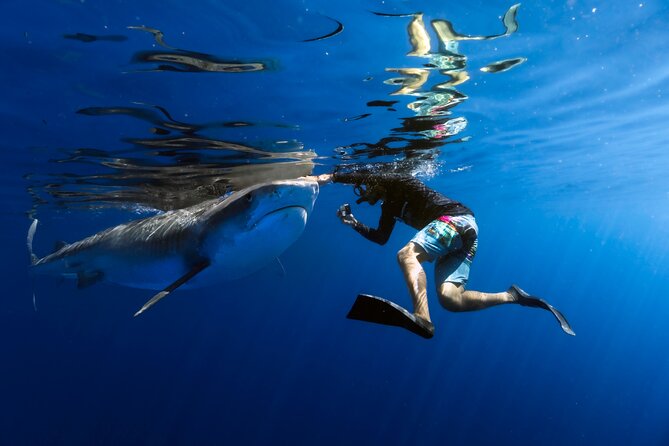
- Research-based briefing before you’re in the water, focused on behavior and body language
- Safety-first gear and positioning, including a rope connected to the boat
- Species spotting skills for sharks plus pelagic fish, whales, and turtles
- Culture and conservation context, including MANO (sharks) and support for the Hawaii Shark Count
- A strong photo option, often highlighted as worth it if you want proof from the water
Why the Haleiwa Shark Encounter Feels More Like Science Than Spectacle
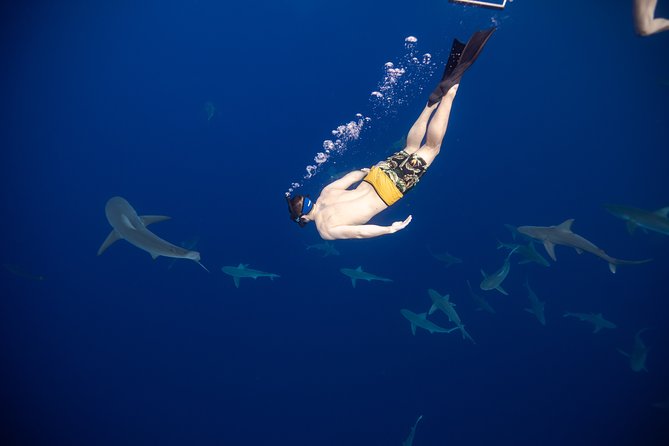
If you’re drawn to the idea of seeing sharks up close, you probably also have the same worry I hear from friends: this could turn into chaos or “feed the fear” tourism. What makes this experience different is the emphasis on how sharks behave and why they act the way they do.
Before you enter the water, you’re guided through shark biology and physiology in plain language—how those body functions shape behavior. You also get hands-on conversation about what to look for, like specific body language signals, and what those signals can mean in the moment. Instead of just telling you to stay calm, the team explains the logic behind the rules, which helps your brain relax faster.
This is also tied to the idea that conservation isn’t just a slogan. You’ll hear about shark role in Hawaiian and Polynesian culture, including MANO (sharks), and how the program connects with research efforts like the ID work behind the Hawaii Shark Count. That cultural piece matters because it frames sharks as part of a living ocean story, not just a scary animal for a bucket list photo.
You can also read our reviews of more tours and experiences in Oahu.


Meeting at Haleiwa and What You Do Before the Ocean Part
Your day starts at the Haleiwa Commercial Loading Dock (66-101 Haleiwa Rd, Haleiwa). The activity runs about 2 hours total, and it’s designed as a smooth loop: meet, head out, learn, go in, then return to the same dock.
What you’ll do early is the part that changes the whole experience. You’ll ride out with a marine biologist plus a safety lead who teaches and sets expectations. From there, you go through practical prep that covers:
- what species and other big ocean animals you should scan for
- how to tell different sharks apart (and what cues matter)
- what gender differences can look like, and how behavior may shift
- what your own behavior can trigger—good and bad
- how weather and seasons affect sightings and movement
Even if you’re not a “science person,” this kind of briefing helps you read the scene once you’re floating above real animals. You’ll know what you’re looking at, not just what you hope you’ll see.
The In-Water Setup: Rope, Snorkel Gear, and Controlled Exposure
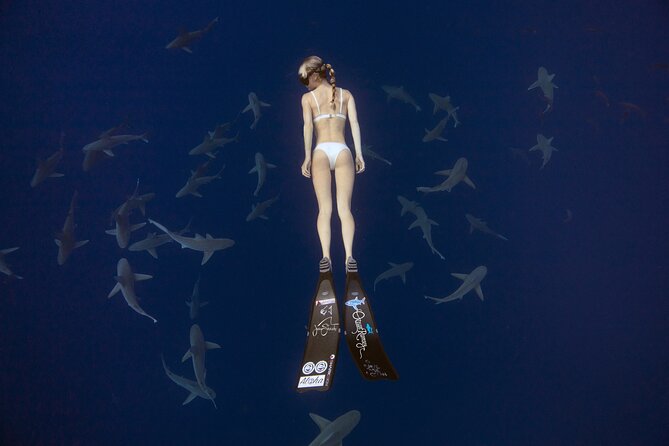
Once you’re ready, you get snorkeling and safety equipment provided. The in-water structure is built for safety and for minimizing disturbance.
The most important detail: you’ll swim using a secure rope connected to the boat. In practical terms, that means you’re not wandering alone. You’re holding position, staying connected, and moving as instructed. Many first-timers find this comforting because you’re not constantly trying to keep track of where the team is.
You’ll also have a safety pro close by while you’re in the water. That support matters in two ways:
- If you get nervous, you have guidance fast instead of scrambling on your own.
- If your body movement gets tense, they can cue you toward calmer, slower actions that reduce stress for everyone.
In terms of time, you can expect substantial ocean time—one key point people keep bringing up is that there’s about an hour in the water, with multiple chances to snorkel freely while still staying within the safety plan. You may also get several short in-water sessions, depending on how your group fits into the planned rotations.
And yes, there’s filming. If you go for the photo/video option, the team may use a GoPro style setup during your water time so you don’t have to worry about capturing the moment with your own hands and your own camera at the same time.
Learning to Read Sharks: Behavior, Body Language, and What to Do
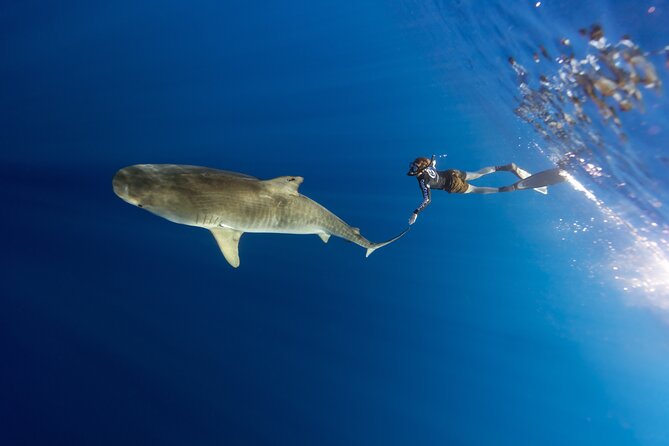
This is the heart of the value. You’re not just watching sharks—you’re learning how to interpret them, which turns a scary concept into something calmer and more interesting.
Here are the topics that matter most for what you’ll feel in the water:
Shark behavior signals you can actually notice
You’re taught what to watch for in the shark’s movement and body language. The goal is to help you recognize when a shark is cruising normally, curious, or responding to something in the water. When you understand the cues, you’re less likely to panic mid-moment.
How your actions affect shark behavior
A lot of fear comes from uncertainty. You’ll cover what your behavior can change—things like speed, splashing, and how you move once you’re in the water. You get coached on how to behave so you’re not creating the kind of chaotic energy that could make animals behave unpredictably.
Biology and physiology, translated
The team explains how physiology affects behavior. That’s not random “facts for facts’ sake.” It helps you realize sharks are working with real sensory and movement limits, and that their choices aren’t personal or aggressive—they’re functional.
How to deter or entice, respectfully
You’ll learn about how the team approaches shark and pelagic interaction without messing with the animals. Even if you never need to use those ideas directly, it’s reassuring to know the plan isn’t guesswork.
Culture plus conservation
The MANO (sharks) part isn’t just storytelling. It’s a reminder that people have lived with sharks in Hawaiian and Polynesian traditions, and the modern research approach is meant to respect that relationship. You also get connected to support for the ID program through the Hawaii Shark Count.
If you’re nervous, this is also where the fear often drops. People often say they end up realizing sharks aren’t acting like movie villains, and that the odds and the behavior patterns are far more about ocean life than danger.
What You Can See: Species Cues, Tiger Shark Chances, and Ocean Extras
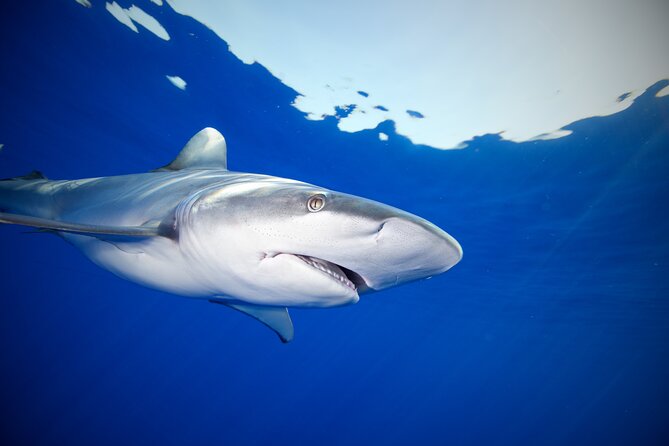
This is open water, so you can’t control exactly what swims by. But you can control how prepared you are to spot it.
The program focuses on searching for:
- different shark species
- pelagic fish (fast, open-water swimmers)
- whales when conditions line up
- turtles during snorkeling opportunities
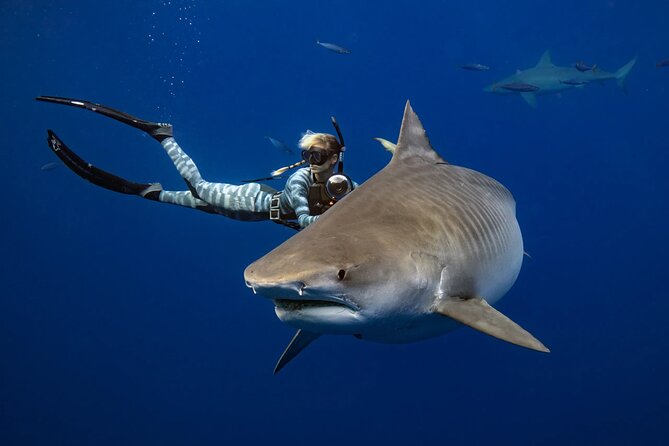
Tiger sharks come up again and again as a standout possibility, with people specifically excited about tiger shark season. If you’re flexible with your dates, that matters. The team also covers how seasons and weather can change what you see on a given day.
Even on slower shark days, you may still get big ocean sightings during the snorkel segments. Whales (including a baby whale reported on one outing) and turtles are both in the mix people talk about seeing. Dolphins weren’t guaranteed on every trip, so I’d treat dolphins as a bonus, not a promise.
The best way to maximize your chance is to stay engaged during the briefing so you know what to look for and where to scan.





Price, Photo Options, and Real Value at $165.71
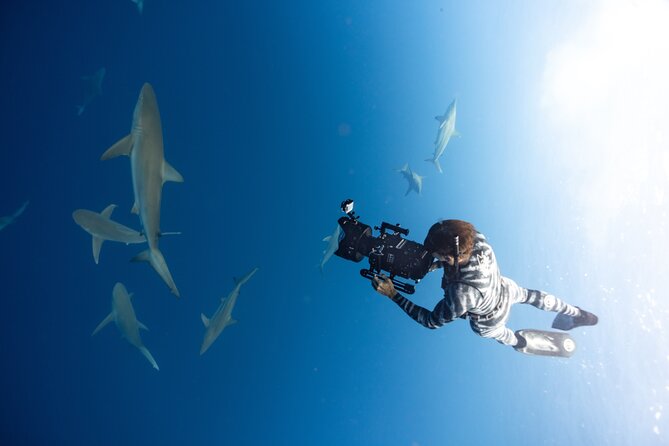
At $165.71 per person for about 2 hours, the price can feel steep if you compare it to a basic boat ride. But what you’re paying for is the combination of:
- marine biologist-led education
- a safety-focused in-water method
- provided snorkeling/safety equipment
- controlled exposure with a close safety presence
- a strong chance at a rare, up-close ocean moment
Also, the tour is positioned as private in the booking sense: only your group participates. In real life, that doesn’t always mean you’ll be on the boat completely alone, but it does mean you’re not joining a huge cattle-boat lineup.
One thing to think about: if your group ends up larger, the water flow can feel more line-based and structured. Some people prefer that, especially first-timers. Others want more personal space once they’re in the ocean. It’s worth noting if you’re very sensitive to crowding or you hate waiting for turns.
Finally, there’s the photo package. Many people call out that the picture package is worth it. That’s a “you decide” add-on, but if you want visual proof (and you don’t want to juggle a camera while staying calm in the water), it can be a practical choice. One caution from a different perspective: some people say the add-on can feel expensive, so I’d weigh it against whether you like getting edited, high-quality shots of your exact water time.
Who This Oahu Shark Encounter Suits Best
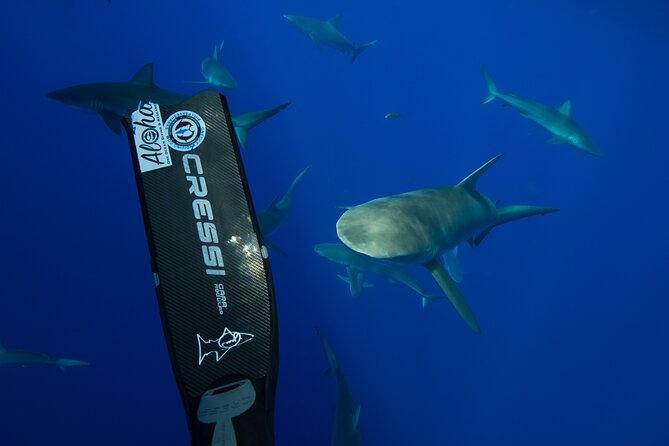
This is a strong fit if:
- you want a shark experience with education and safety structure
- you’re nervous but willing to follow instructions closely
- you like conservation and cultural context, not just animal sightings
- you enjoy snorkeling as part of the deal (not just standing on the boat)
Families with teens often do well because the team can keep the vibe calm and guided. People also highlight that the crew can be patient when nerves show up.
If you’re the type who hates rules once you’re in the water, you might find the rope-based setup less thrilling than you hoped. But the upside is you’ll likely feel safer sooner, which can turn the whole trip from “can I do this?” into “wow, I’m actually here.”
Practical Tips That Make a Big Difference
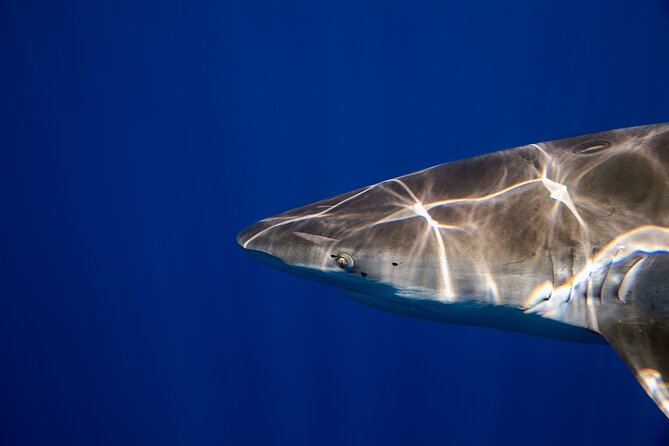
A few small things can make your day smoother, especially in Haleiwa where conditions can shift quickly.
Handle seasickness early
One simple but repeated tip: if you get motion sickness, take Dramamine as directed before you go out. Don’t wait until you feel bad.
Listen first, then move slowly
During the pre-water briefing, the team teaches how your behavior affects sharks. Take it seriously. Slow movements help you feel in control, and they help the ocean feel calmer too.
Don’t fight the rope setup
The rope is part of the safety plan. If you’re anxious, use it as your anchor. Think of it as the way the crew keeps everyone positioned and comfortable.
Bring your own camera if you want, but don’t assume you’ll be the one filming
Some people also bring their own GoPro. If you do, just remember you’ll still be focused on swimming calmly and listening.
If you’re on the fence, the briefing is half the product
A lot of people come in scared and leave feeling relieved because the team teaches them what’s happening and what’s not likely to happen.
Should You Book This Shark Encounter From Haleiwa?
If you want a shark experience that feels respectful, structured, and backed by marine expertise, I think it’s a smart choice. The combination of safety-first procedure plus a detailed “how to read sharks” lesson is exactly what turns a once-a-lifetime idea into an experience you can actually enjoy.
I’d pass or at least reconsider if you hate structure on water days, you’re extremely prone to seasickness without taking precautions, or you only want a completely free-roaming swim.
If you can handle a guided setup and you’re open to learning, this is the kind of Oahu activity that has a real chance of changing how you see sharks.
FAQ
How long is the shark encounter experience?
It runs for about 2 hours.
Where does the tour start in Haleiwa?
The meeting point is Haleiwa Commercial Loading Dock, 66-101 Haleiwa Rd, Haleiwa, HI 96712. The activity ends back at the same meeting point.
What’s the price per person?
The price is $165.71 per person.
Is this a private tour?
Yes. Only your group will participate.
Is snorkeling gear included?
Yes. Snorkeling and safety equipment are provided.
What language is the tour offered in?
The experience is offered in English.
What happens if the weather is poor?
This experience requires good weather. If it’s canceled due to poor weather, you’ll be offered a different date or a full refund.
What is the cancellation window for a full refund?
You can cancel up to 24 hours in advance for a full refund. If you cancel less than 24 hours before the start time, the amount you paid is not refunded.
Is there a minimum number of travelers?
Yes. If it’s canceled because the minimum number of travelers isn’t met, you’ll be offered a different experience/date or a full refund.