REVIEW · CANOES & KAYAKS
Stand-Up Paddle Yoga
Book on Viator →Operated by Yoga Kai · Bookable on Viator
Floating yoga on Oahu sounds like a dream. I like the idea of starting with breath on the water, then letting the guide tailor the class to your level. One consideration: the experience is run by Yoga Kai, and there are serious reports of no-shows and phone/contact issues, so you’ll want to confirm it’s operating right before you go.
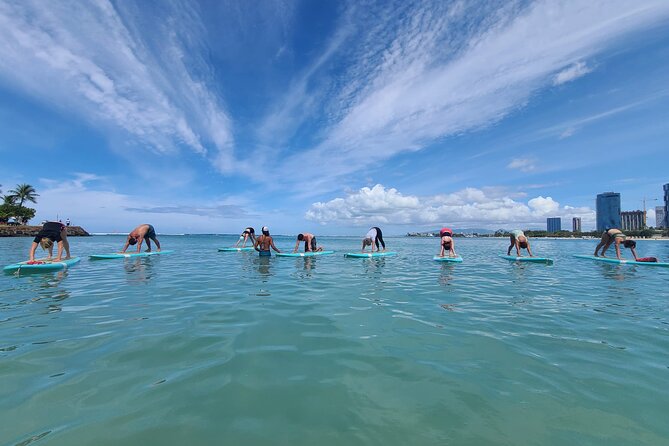
This is a 1 hour 15 minute session that feels part yoga class, part ocean field trip. You’ll meet on the beach, walk your way out with your SUP, anchor down, and practice a flow that gradually builds—then cools off into restorative postures and what they promise is a great savasana.
In This Review
- Key Things I’d Watch For (and Why They Matter)
- Stepping Into SUP Yoga: What the First Moments Feel Like
- The 75-Minute Flow: Breath, Balance, and a Sweet Savasana
- 1) Intro + Wading Out With Your SUP and Anchors
- 2) The slow start: breath and getting comfortable
- 3) A more active standing flow (with variations)
- 4) Restore time: restorative postures and savasana
- Meeting Point in Honolulu: Getting There Without Stress
- What You Really Get: Equipment, Instruction, and Support
- The hidden value of guided SUP
- Choosing the Tour Time: Match It to Your Comfort
- Who This Is Best For (and Who Might Prefer Land Yoga)
- You’ll likely enjoy this if…
- You might reconsider if…
- Weather and Ocean Reality: Why Your Body Will Be the Forecast
- Price and Value: What You’re Actually Paying For
- The Biggest Risk to Manage: Provider Reliability
- Should You Book Stand-Up Paddle Yoga in Honolulu?
- FAQ
- How long is the Stand-Up Paddle Yoga session?
- Where does the tour start and end?
- What language is the tour offered in?
- What happens when I arrive?
- What equipment is provided?
- Are there different tour times?
- Is this private or shared with other groups?
- Do I need to be an experienced yogi?
- What kind of weather is required?
- What is the cancellation policy?
Key Things I’d Watch For (and Why They Matter)
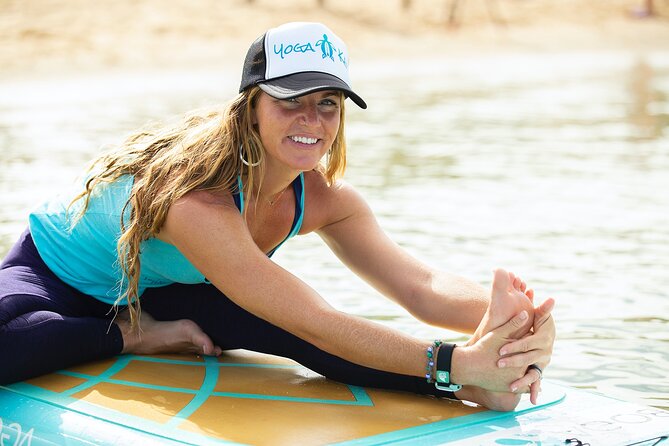
- Anchoring is part of the routine. You’re not just free-floating the whole time.
- The teacher adapts the pace. You’ll get options if the surface feels new.
- You’ll start slow on purpose. Expect breath work and balance before the stronger postures.
- Timing matters on the ocean. Choose the tour time that matches your comfort with water + sun.
- Operator reliability could be a concern. Low overall scores include claims of missed arrivals and hard-to-reach contacts.
Stepping Into SUP Yoga: What the First Moments Feel Like
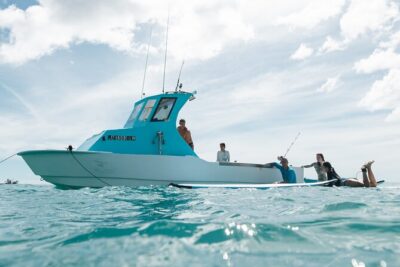
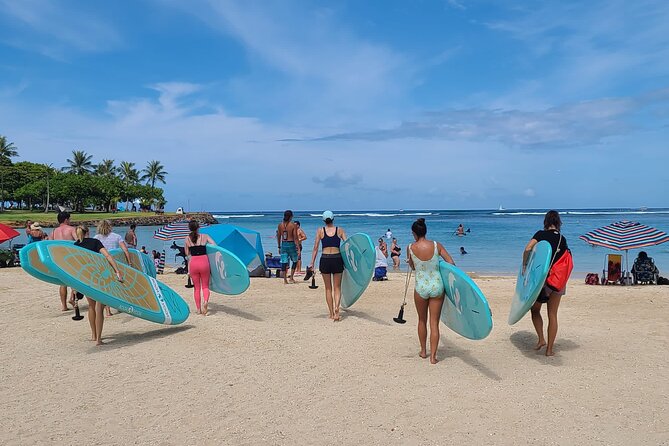
Stand-up paddle yoga is exactly what it sounds like: yoga, but you’re on a SUP board. In this Honolulu setup, the first stage is calm and practical. You meet on the beach for an introduction to your floating studio, and then you and your group head out with the boards and anchors.
That beach-to-water transition is more than a cute photo moment. It’s the part that helps you understand what you’re actually doing. You’ll learn how the board behaves as you wade out, and you’ll get a first feel for stability before you’re asked to move your body into poses.
I also like that the class begins with an intentional ramp-up. The teacher has you go slowly at first, tuning into your breath and getting used to the floating surface. That matters on a windy day or if you’re new to balancing on anything that isn’t solid ground. You don’t need to be a veteran yogi to enjoy this—what you need is a teacher who knows how to bring you along step by step.
You can also read our reviews of more tours and experiences in Oahu



The 75-Minute Flow: Breath, Balance, and a Sweet Savasana
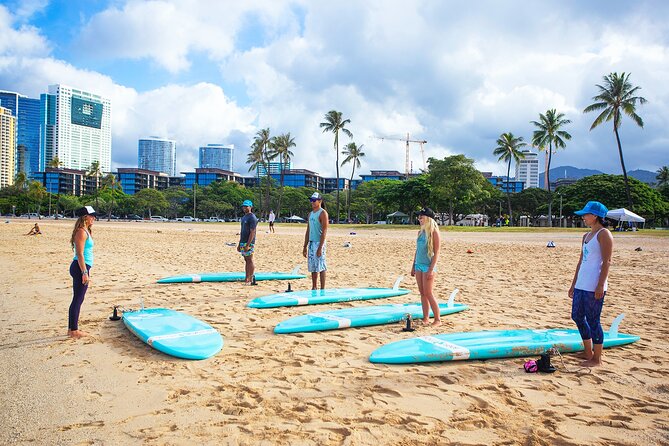
The session is about 1 hour 15 minutes. Realistically, that means you’ll spend enough time to get into the rhythm, but not so long that your legs start bargaining with you mid-pose.
Here’s how the arc works, based on what you’re told you’ll do:
1) Intro + Wading Out With Your SUP and Anchors
You don’t just get handed a board and sent away. You walk out together with the equipment, and then you wade to the practice location where the boards can be anchored. Anchors change the experience. Without them, it’s mostly balancing and catching yourself. With them, you can focus on alignment and breathing while still feeling the motion of the water.
2) The slow start: breath and getting comfortable
Your teacher leads a practice that starts gently. That initial phase is about connection: breathing, body awareness, and adjusting to the slight wobble. Expect standing and easy transitions before anything more intense.
This is one of the most valuable parts of the experience. If you start directly in a strong standing posture, balance becomes the whole game. Starting slow lets the ocean stay a background sensation instead of the main event.
3) A more active standing flow (with variations)
After you’ve settled in, you shift into a more active flow with different variations of standing postures. Standing is where SUP yoga tends to feel most different from land yoga—your ankles and core do extra work, and your brain stays busy.
The good news is that the teacher tailors the class to your experience. That typically means you’ll get options if your balance is still catching up, or if you need modifications. For you, that can turn what could feel intimidating into a challenge you can actually manage.






4) Restore time: restorative postures and savasana
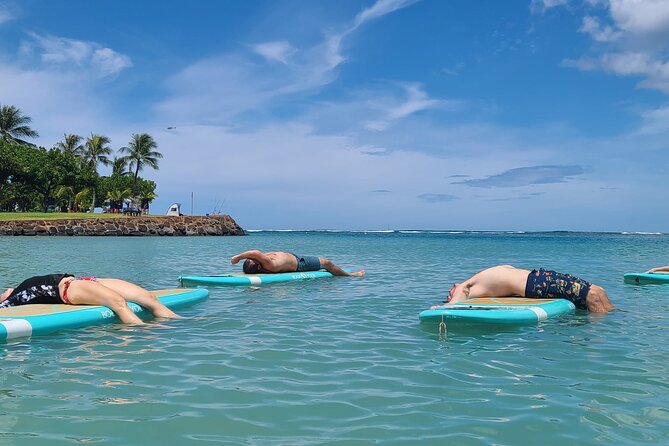
Then the session winds down into restorative postures. This is where many people feel the payoff: you’ve earned stillness. The class ends with savasana that’s described as especially sweet on the water.
Even if you’re not a savasana person on land, it’s hard not to soften when your body is finally off-duty. The water, the still anchoring, and the quiet breath-led pace can make relaxation feel more natural than at a busy studio.
Meeting Point in Honolulu: Getting There Without Stress
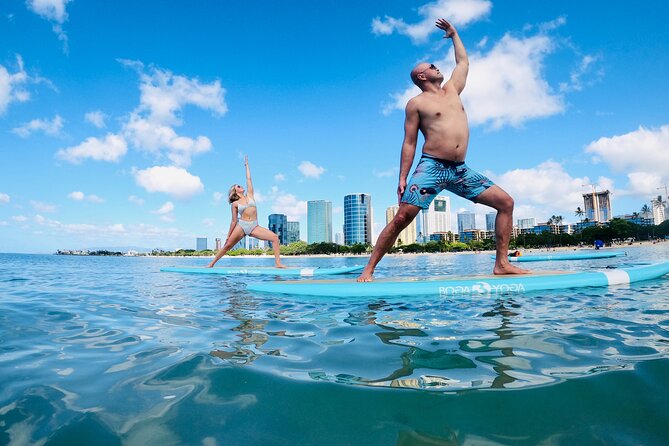
You’ll meet at Unnamed Road, Honolulu, HI 96815, and the activity ends back at that same meeting point. The info also notes it’s near public transportation, which helps if you’re staying without a car.
What I’d do if you’re planning your day: treat this like a real appointment. Arrive early enough to handle sun, water, and getting oriented with gear before you’re pushed into the water.
And here’s the practical reality check: this experience is run by Yoga Kai, and there are serious reports tied to the meeting time—things like arriving early and being told the operator wasn’t operating at that location anymore, or a guide not showing up, or phone numbers not working. Those are exactly the kinds of issues you want to prevent. If you book, confirm close to the start time and keep your confirmation details handy.
What You Really Get: Equipment, Instruction, and Support
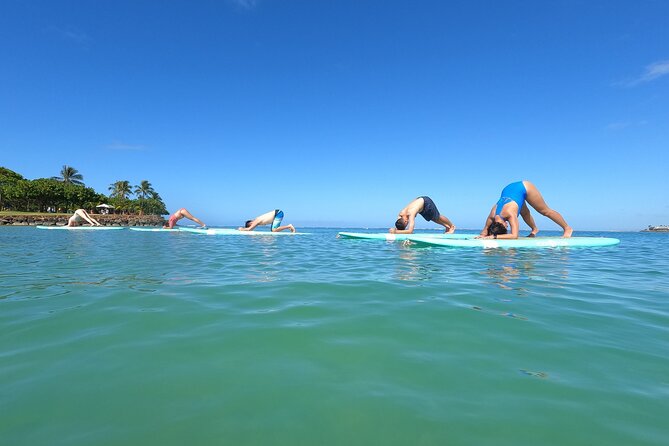
The experience includes the equipment and instruction you need. That’s a big deal for value, because SUP gear can be expensive and hard to source on short notice—plus, the learning curve is steep if you’re figuring it out alone.
In this session, you’re provided the necessary SUP setup (including the boards and anchors) and guided instruction throughout. The guide also adjusts the class to your experience level, which helps you feel like the class is designed for people—not just for those with ocean-balance superpowers.
The hidden value of guided SUP
SUP on its own is fun, but yoga on SUP has a specific skill set: controlled posture, calm focus, and micro-adjustments. When you have an instructor on-site, you don’t need to guess:
- where your balance should be
- how to distribute weight on the board
- when to hold still vs. when to shift
- how to take a safer variation if the surface feels too unpredictable
That instruction is part of why you’re paying for this as an activity, not just a beach hangout.
Choosing the Tour Time: Match It to Your Comfort
You can select from two tour times. The info doesn’t list the exact hours, but it’s still a helpful flexibility point. Your choice should come down to two things:
- how you handle early starts
- how you want the ocean conditions to feel during your session
SUP yoga is weather-dependent, so time selection can indirectly help. If one time tends to be calmer or more comfortable for you personally, pick that one. If you’re sensitive to sun or heat, choose the slot that feels most manageable for your body and your schedule.
And don’t forget: this is yoga. If you pick a time that leaves you rushed, you’ll spend the first part of class tense instead of tuning into breath.
Who This Is Best For (and Who Might Prefer Land Yoga)
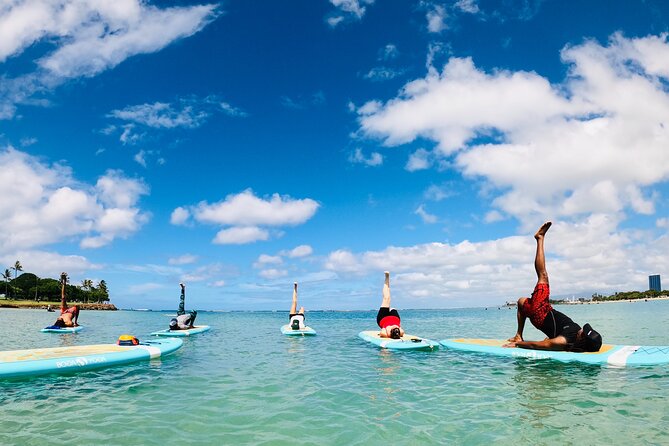
Most travelers can participate. That’s great. SUP yoga can work for beginners because the teacher starts slow and you get variations.
Here’s how I’d think about fit:
You’ll likely enjoy this if…
- you’re curious about SUP but don’t want to figure it out alone
- you like yoga that includes a clear progression (breath first, then standing work, then restoration)
- you want an outdoor Hawaii experience that doesn’t require hiking or navigating complex routes
- you appreciate instructors who adjust based on your comfort
You might reconsider if…
- you’re extremely uncomfortable on anything that moves (even when anchored)
- you have limited tolerance for outdoor wind or changing conditions
- you’re not comfortable handling the uncertainty of operator reliability issues—especially given the serious no-show/contact claims tied to this provider
This last one isn’t about yoga. It’s about peace of mind. If you need high certainty for your schedule, protect yourself by booking with strong free-cancellation terms and staying ready to adjust if something feels off.
Weather and Ocean Reality: Why Your Body Will Be the Forecast
This experience requires good weather. If conditions aren’t good, it may be canceled and you’ll be offered a different date or a full refund.
Even when the forecast looks fine, water conditions can shift fast. SUP yoga is built around balance and breath, and the ocean is not interested in being perfectly predictable. The anchored board helps, but it doesn’t remove everything.
So plan like a grown-up ocean optimist:
- bring what you need to stay comfortable in sun and wind
- expect the teacher to manage what’s safe and appropriate in real conditions
- be flexible if the day doesn’t cooperate
Price and Value: What You’re Actually Paying For
No price is included in the info you shared, so I can’t talk numbers. But I can talk value.
You’re paying for three things that add up:
- all the equipment (SUP boards and anchors) so you don’t rent or transport gear
- instruction throughout so you’re not guessing poses and balance
- a guided progression from slow breath work to standing flow to restorative finishing
If you’ve ever tried DIY SUP with a YouTube yoga video, you know the difference. Yoga on a board has tight timing and subtle cues. A teacher who can tailor the class improves both safety and enjoyment.
The other value angle is time. At 1 hour 15 minutes, you get a full experience without losing your whole day to setup, prep, and post-adventure fatigue.
The Biggest Risk to Manage: Provider Reliability
I’m going to be direct here. The overall rating is 3, and there are serious reports that the provider may not operate at the listed location as expected. Claims include a guide not showing up, a phone number that didn’t work, and a situation where someone says they weren’t refunded even after a missed tour.
That doesn’t mean the experience is always bad. It does mean you should treat this like a plan you actively verify, not a set-it-and-forget-it booking.
My advice before you go:
- confirm your tour close to the start time
- make sure you can contact the provider (not just once—try early)
- keep your booking confirmation accessible
- if you’re traveling on a tight schedule, build in flexibility so a weather or operator issue doesn’t wreck the day
Because the activity itself sounds wonderful. The ocean yoga part is the easy sell. The operational part is the piece you must sanity-check.
Should You Book Stand-Up Paddle Yoga in Honolulu?
If you want a yoga session that’s genuinely tied to place—ocean, sky, breath, and balance—this sounds like a great format. The structure (slow start, standing variations, then restoration and savasana) matches how most people learn safely on a moving surface. I also like that you get equipment and instruction, and the teacher is expected to tailor the class.
But I’d book with your eyes open. The combination of a low overall score and reports of no-shows/contact problems means your best move is to confirm and protect your schedule. If you can do that, you’ll give yourself every chance to enjoy what this activity promises: a peaceful, guided flow on anchored SUP boards, ending with the kind of relaxation that feels hard to fake.
FAQ
How long is the Stand-Up Paddle Yoga session?
The session is about 1 hour 15 minutes.
Where does the tour start and end?
It starts at Unnamed Road, Honolulu, HI 96815, USA and ends back at the meeting point.
What language is the tour offered in?
The experience is offered in English.
What happens when I arrive?
You meet on the beach for an introduction to your floating yoga setup, then you walk out with your SUP boards and anchors, wade to the practice location, and anchor down to begin the practice.
What equipment is provided?
The necessary equipment is provided, including the SUP boards and anchors, plus instruction for the class.
Are there different tour times?
Yes. You can select from two tour times to fit your schedule.
Is this private or shared with other groups?
This is a private tour/activity. Only your group participates.
Do I need to be an experienced yogi?
Most travelers can participate. Your guide tailors the class to your experience level.
What kind of weather is required?
The experience requires good weather. If it’s canceled due to poor weather, you’ll be offered a different date or a full refund.
What is the cancellation policy?
You can cancel for a full refund up to 24 hours before the experience’s start time. Changes within 24 hours aren’t accepted, and cancellations within 24 hours don’t get refunded.