REVIEW · SURF LESSONS
Beginner Surfing Lessons In Waikiki
Book on Viator →Operated by Hawaiian Boy Surf School · Bookable on Viator
Waikiki is a shortcut to ocean confidence. This private beginner lesson in Honolulu pairs you with a dedicated instructor at a legendary surf stretch and keeps the focus on your progress. You’re guaranteed to work toward standing and surfing your first wave by the end of the lesson, which is exactly what most first-timers want.
I like two things most: the private, one-on-one setup (so you aren’t sharing coaching time), and the way the lesson starts with practical basics. Expect instruction on safety, how to read ocean conditions, and basic technique before you actually try to catch waves.
One thing to consider: the experience is only about 1 hour, so if you want lots of slow practice on the board, you’ll feel the time pressure once you’re in the water.
In This Review
- Key Highlights Before You Go
- Waikiki Starter Surf: What Makes This Lesson Actually Click
- Price and Time: How $110 Maps to Real Value
- Where You Meet at Waikiki: Finding the Start Without Stress
- The Sand Session: Safety and Ocean Reading First
- In the Water: Standing and Catching Your First Wave
- Instructor Quality: The Names You’ll Hear in Good Lessons
- Waikiki Realities: What Success Usually Looks Like
- Who Should Book This Private Beginner Lesson
- Booking Window: When to Lock It In
- FAQ
- Is this lesson private?
- How long is the beginner surfing lesson?
- How much does it cost?
- Where do I meet for the lesson?
- Does the activity end at the same place?
- What language is the lesson offered in?
- Will I get a mobile ticket?
- Are service animals allowed?
- Can most people participate?
- What’s the cancellation window for a full refund?
- Should You Book This Beginner Surf Lesson in Waikiki?
Key Highlights Before You Go
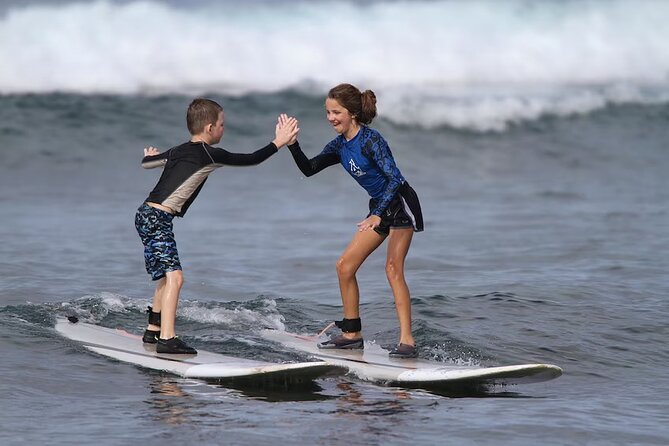
- One-on-one coaching in Waikiki: private lesson means feedback is aimed at you, not a crowd.
- Instruction before you get in: you’ll cover safety and ocean conditions first, then go for your first rides.
- Your instructor focuses on first-wave success: the lesson is designed so you’re trying to stand and surf by the end.
- Meet at a clear Waikiki landmark: Duke Paoa Kahanamoku Statue at Kalākaua Ave is the starting point.
- Beginner-friendly, most people can join: the operator states most travelers can participate.
- English instruction and mobile ticketing: confirmation at booking and an easy-to-access ticket help you show up ready.
Waikiki Starter Surf: What Makes This Lesson Actually Click
If you’ve ever watched surf videos and thought, I could never do that, this kind of lesson is built for you. Waikiki is one of the most famous places on Oahu to learn, but fame doesn’t equal easy. The smart move is getting a coach who can translate the ocean into simple, doable steps.
With private instruction, you’re not waiting your turn while someone else gets corrected. Instead, you get a stream of feedback right when you need it. That matters because surfing mistakes happen fast: paddle timing, stance, and wave selection all tangle together.
Also, I like that the lesson doesn’t treat surfing as a mystery. You start with safety protocols and ocean-condition basics, then you go out and try. That sequence helps you feel less like you’re guessing and more like you’re learning a skill.
You can also read our reviews of more tours and experiences in Oahu


Price and Time: How $110 Maps to Real Value
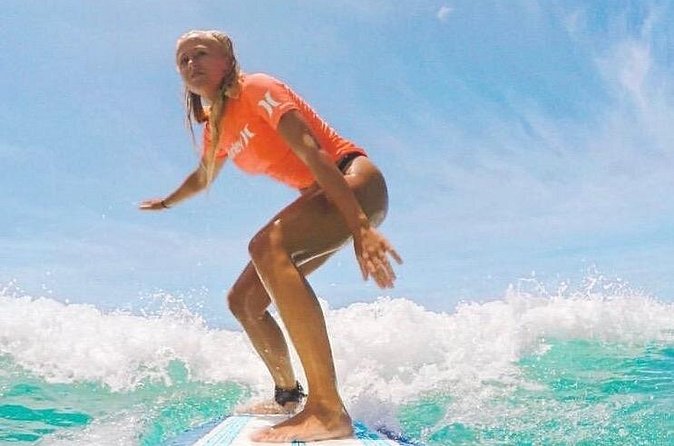
At $110 per person for about 1 hour, the cost isn’t “cheap,” but it also isn’t random. You’re paying for two things: personal coaching and time with someone who can keep you safe while you practice.
In surf lessons, the biggest value is not the board or the beach view. It’s the instructor’s ability to spot what you’re doing wrong and adjust it quickly. Since the class is short, the lesson has to be efficient, and the private format is part of what you’re buying.
Here’s the practical way to think about it: if you can only schedule one beginner session on Oahu, this gives you the strongest odds of having your first real wave attempt. If you can stay longer, consider stacking sessions so you can build on what you learn in your first hour.
Where You Meet at Waikiki: Finding the Start Without Stress
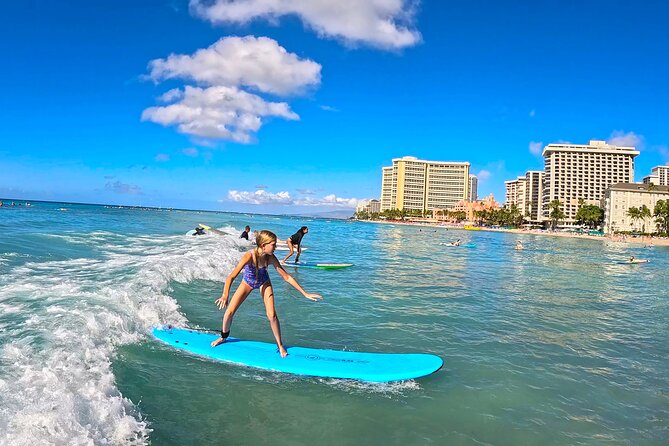
This lesson starts at the Duke Paoa Kahanamoku Statue on Kalākaua Ave, Honolulu. Ending back at the same meeting point makes the whole thing simpler because you don’t have to wonder where you’ll end up after you get tired and salty.
One small but important tip: arrive a bit early and give yourself time to check in. Waikiki can be crowded near the shoreline, and even with a clear landmark, you’ll save frustration by not sprinting to the beach at the last second.
Since the experience is near public transportation, you can fit it into a day without needing a car. That’s helpful if you’re also balancing beach time with other Oahu stops.
The Sand Session: Safety and Ocean Reading First
Most first-time surfers get hurt—or quit—because they skip the rules and jump straight to the board. This lesson is built the other way around.
Before you paddle out, you’ll go over safety protocols and talk about ocean conditions. That can include how to think about what the water is doing that day, and how to move with respect for the surf. You’ll also cover basic technique so your first attempts have structure, not just enthusiasm.
Even if you’ve watched surfing for years, the ocean has its own agenda. A coach who can explain what to watch for helps you avoid the most common beginner traps, like choosing waves that are far too much, or paddling in a way that fights your chances.
In the Water: Standing and Catching Your First Wave
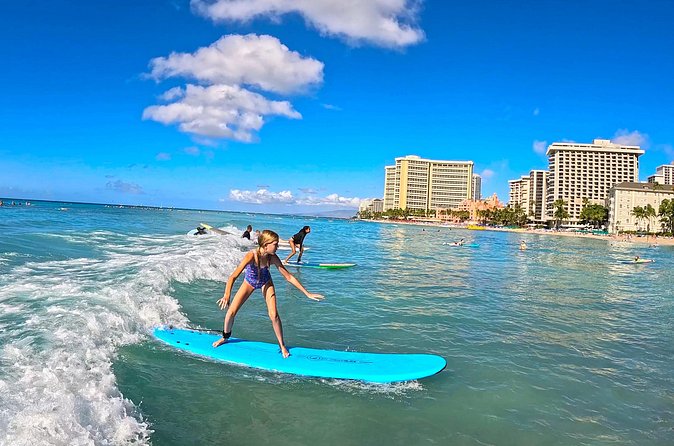
Now comes the part you actually came for. The lesson is designed to get you standing and attempting real rides by the end, with constant feedback.
What makes this phase work is the coaching loop. You try, you get corrected, you adjust, and you try again. On a surfboard, tiny changes can feel huge. Your instructor’s job is to keep those changes simple and focused.
Waikiki’s surf can be playful one minute and tougher the next. The instructor helps you aim for the right wave type for a first attempt, so you’re not just getting knocked around. And because the lesson is private, you’re more likely to get the right call for your skill level quickly.
Also, the review stories highlight a pattern: beginners often leave feeling more confident than they expected. That usually comes from getting a few successful moments early, not from perfection.






Instructor Quality: The Names You’ll Hear in Good Lessons
In the feedback, certain instructors show up repeatedly, and that tells you something. Preston is mentioned as supportive and informative from the moment you meet, and as someone who teaches beginners with clear guidance. Scotty is also praised for being encouraging and for teaching the basics that get people moving on the water.
Why does this matter to you? Because surf learning isn’t only about board skills. It’s about trust—trust that the coach understands how to break the skill down, and trust that they’ll keep you on track.
When the coaching style is strong, you tend to get the best outcome for a short lesson: you try more waves, you waste less time guessing, and your first successful ride sticks in your memory for all the right reasons.
Waikiki Realities: What Success Usually Looks Like
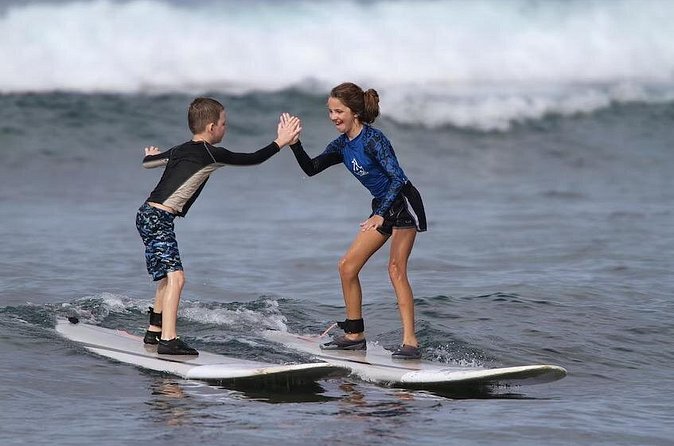
I want you to have a grounded expectation. A beginner surf lesson isn’t about mastering maneuvers. It’s about learning how to get into position, stand with control, and feel the wave under you.
The promise that you’ll be trying to stand and surf your first wave by the end is a helpful target. Still, ocean conditions and how your body adapts that day matter. Some people will catch a few waves easily; others will get one good ride and several useful attempts.
That’s normal. The win is not just the number of waves. The win is walking away with a clearer sense of what to do next time. Once you understand timing and stance, surfing stops feeling like chaos.
Who Should Book This Private Beginner Lesson
This lesson is a strong fit if you want a beginner path with fewer distractions. Since it’s private, it’s ideal for couples, solo first-timers, and families who want their kids to get direct attention.
The experience is described as suitable for most travelers, and service animals are allowed. That’s a good sign for people who need that flexibility.
It also works well if you’re short on time. You can pick a schedule that matches your day, and the duration is roughly 1 hour. If you’re trying to pack in Oahu activities, this lesson is a reasonable block without taking over your whole morning or afternoon.
Booking Window: When to Lock It In
On average, this type of lesson gets booked about 5 days in advance. That suggests Waikiki surf time slots can fill around popular visiting patterns.
If you’re traveling during peak times or you know you’ll want a specific day or start time, I’d book early rather than waiting until you’re already on the island.
FAQ
Is this lesson private?
Yes. It’s listed as a private tour/activity, meaning only your group participates.
How long is the beginner surfing lesson?
It’s approximately 1 hour.
How much does it cost?
The price is $110.00 per person.
Where do I meet for the lesson?
You meet at the Duke Paoa Kahanamoku Statue on Kalākaua Ave, Honolulu, HI 96815.
Does the activity end at the same place?
Yes, it ends back at the meeting point.
What language is the lesson offered in?
The lesson is offered in English.
Will I get a mobile ticket?
Yes. It’s described as having a mobile ticket.
Are service animals allowed?
Yes, service animals are allowed.
Can most people participate?
The info says most travelers can participate.
What’s the cancellation window for a full refund?
Free cancellation is allowed up to 24 hours in advance for a full refund.
Should You Book This Beginner Surf Lesson in Waikiki?
If you’re a true beginner and you only have time for one session, I’d lean toward booking it. You’re paying for private coaching plus a first-wave goal, and that combination is exactly how you get past the awkward, stuck-on-the-beach feeling.
Book it especially if you want a guided start: safety protocols, ocean-condition basics, then time in the water with focused feedback. And if you’re bringing kids or someone who gets discouraged easily, the one-on-one attention is a big advantage.
Just keep your expectations aligned with the short format. In one hour, you’ll learn enough to feel the ocean better and improve quickly, but the real mastery comes with repetition. If your schedule allows, doing a second lesson later is the easiest way to turn first-wave confidence into real progress.