Volcano air, then rainforest falls. This Oahu-to-Hilo day trip packs a Blue Hawaiian helicopter ride with up-close sights around Kilauea and beyond. It’s a fast way to see a lot of Big Island without renting a car for a full stay.
I like the helicopter piece most. You get a mandatory 45-minute safety briefing, then a 45-minute flight over lava fields and falls, with a possible Kilauea fly-over that depends on weather. Even when conditions limit what you see, the aerial perspective is the reason this tour is priced the way it is.
My second favorite part is the guided park time. You stop at Hawaii Volcanoes National Park sites built for real viewing—steam vents, the lava tube area, and the Kilauea summit region—while your driver (for example, people like Dexter or Everett in past groups) narrates what you’re looking at as you go. The main drawback to plan around: the Kilauea fly-over is not guaranteed, and weather can also affect how clear the volcano views are.
In This Review
- Key things I’d circle before you book
- Oahu to Hilo: why this day trip works (and feels intense)
- Blue Hawaiian helicopter: the thrill, the tradeoffs, and what to expect
- Seat comfort is real
- Hawaii Volcanoes National Park: short stops, big context
- Kilauea and Mauna Loa in one visit
- Chain of Craters Road: scenic, but not a drive-through fantasy
- Steam vents: the power you can feel
- The Nahuku–Thurston Lava Tube area: what you’ll get
- Kilauea views can be smoky: how to protect your expectations
- Akaka Falls and Hilo Town: finishing strong on “green Big Island”
- Lunch, narration, and the small-group rhythm
- Price and logistics: is nearly $1,000 per person worth it?
- Who should book this, and who should skip it?
- FAQ
- FAQ
- How long is the day trip from Oahu to Hilo?
- Is the helicopter flight supposed to include a Kilauea fly-over?
- What’s included in the price?
- What is not included?
- Can I cancel and get a full refund?
- Is there a weight limit for the helicopter?
- Is this tour safe for people with asthma or respiratory problems?
- Should you book this Oahu-to-Hilo volcano and helicopter day trip?
Key things I’d circle before you book
- 45-minute helicopter ride over volcanic terrain, with a required safety briefing first
- Kilauea fly-over depends on weather, so go in with flexible expectations
- Hawaii Volcanoes National Park admission is built in, plus multiple short stops
- Steam vents and the Nahuku–Thurston Lava Tube area give you that hands-on volcanic feel
- Akaka Falls State Park is quick but scenic, with an easy lookout
- A small group (max 12 travelers) helps keep the day from feeling chaotic
Oahu to Hilo: why this day trip works (and feels intense)
This is a serious long day. Plan for roughly 12 hours total, and expect it to be more “managed whirlwind” than slow vacation time. The payoff is that you get to swap Oahu for Big Island highlights for one day—without doing your own interisland scheduling and navigation.
Because interisland flight times and routes can change, your schedule can flex. The tour is designed around that reality, but you still need to treat the day like a commitment. If you’re the type who likes to roam freely and linger, you might feel rushed here.
Still, the structure has a practical logic: you fly over, you ride the helicopter first (when visibility is potentially best), then you spend the rest of the day getting your land-based volcano dose plus Akaka Falls and a quick pass through Hilo Town.
You can also read our reviews of more tours and experiences in Oahu


Blue Hawaiian helicopter: the thrill, the tradeoffs, and what to expect
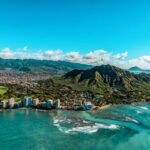
The helicopter portion is run by Blue Hawaiian Helicopters. The big thing to know up front is that you start with a mandatory 45-minute safety briefing. That sounds like a lot, but it’s part of why the ride is taken seriously by the operator. You’ll get weight checks, safety procedures, and how the flight will be handled.
Once you’re in the air, the tour calls out flying over lava fields and falls. Your first priority is the views—lava texture, coastal volcanic geometry, and the way the island’s terrain reads from above. The tour also notes a Kilauea fly-over is not guaranteed, because it depends on existing weather conditions.
That “not guaranteed” line matters. One pair of guests reported seeing mostly smoke because volcano activity wasn’t visually present when they flew. The lesson for you: helicopter days can be weather-dependent, so you’re not buying a guarantee of dramatic flames on schedule. You’re buying the chance to see the volcanic system from the sky, with the best possible routing based on conditions.
Seat comfort is real
Helicopter comfort can be hit-or-miss depending on where you sit. One reviewer described a tight fit and being pushed toward the door area, with another passenger partially in their lap. Another sat more comfortably in the back. You can’t control this, so if you’re sensitive to cramped seating, consider it part of the cost of admission.
Also check the weight rules carefully. For the FAA, passengers and bags are weighed at check-in for the helicopter tour. If you’re over 240 pounds, you may be contacted and assessed a comfort seat charge for an additional seat, paid directly to the operator. This isn’t optional, and it’s there for safety and comfort.
Hawaii Volcanoes National Park: short stops, big context
After the flight, you shift into the Hawaii Volcanoes National Park zone, and that’s where the tour earns its keep. You’re not just doing viewpoints from a single overlook—you’re getting a sequence of stops that tell the story of where the heat is, where water interacts with it, and what old lava flows left behind.
Kilauea and Mauna Loa in one visit
The park is home to Kilauea and Mauna Loa. The tour highlights that Kilauea’s latest eruption in June 2023 included lava fountains up to about 50 feet. Even if you’re not seeing active spectacle on your day, the area is active enough that the park experience feels alive.
You’ll also have a stop specifically associated with Kilauea Volcano, including admission included. This is a quick window—around 20 minutes in the schedule—so it’s best used as a visual anchor. Look for the way the summit caldera and vent systems show up from the accessible vantage points.
You can also read our reviews of more tours and experiences in Oahu






Chain of Craters Road: scenic, but not a drive-through fantasy
The tour includes time on Chain of Craters Road, a 19-mile (31 km) paved route along the East Rift and coastal portion of the park. The important catch is that some areas are inaccessible. In practice, that means you’re not guaranteed a full uninterrupted drive down the whole thing.
Still, even partial access gives you that volcanic “this looks different from anywhere else” sensation. The road winds through terrain shaped by past flows, and your guide narration helps connect what you see to how the system works.
Steam vents: the power you can feel
Next up is a stop for steam vents, about 20 minutes. This is where the tour goes beyond scenery and gives you a sensory moment. Groundwater seeps into volcanic rock, then the heat turns it into steam. Standing near vents changes your understanding of the park fast: it’s not just pretty geology. It’s a living heat system.
The Nahuku–Thurston Lava Tube area: what you’ll get
The schedule includes the Nahuku–Thurston Lava Tube area, also about 20 minutes. Lava tubes form when flowing lava creates a tunnel-like channel that later leaves a cave after the flow changes or stops.
One guest expected to walk through the lava tube and noted that access had been closed for a long time. You should take that as your cue: if walking inside the tube is your top goal, confirm what’s open on the day you go. Don’t assume it will match photos or expectations.
Even if you’re only getting viewing time, the concept is still worth it. It’s a different way to understand how lava moves and cools.
Kilauea views can be smoky: how to protect your expectations
Because helicopter routing and visibility are weather-dependent, you want a mindset shift: you’re buying access to volcano country and expert guidance, not a guaranteed fireworks show.
That mindset is practical. On days when you see less activity, the steam vents still do their job, and the park’s terrain still teaches you. If you only care about lava fountains and dramatic flames, you may feel disappointed.
Also pay attention to health cautions. The tour notes that passengers with asthma and other respiratory problems should consider other offerings to avoid potential issues from exposure to fumes. If you fall in that category, take it seriously and talk with a medical professional if you’re unsure.
Akaka Falls and Hilo Town: finishing strong on “green Big Island”
After volcano time, you get a change of pace at Akaka Falls State Park. It’s a short stop (about 20 minutes), and the good news is that the waterfall is easily viewable from a lookout point and surrounded by a jungle setting. This is the kind of quick nature break that makes the whole day feel less one-note.
Then you drive through Hilo Town and along streets lined with banyan trees on the coastline, known as the Hilo Walk of Fame. It’s not a long exploration, but it gives you a sense of where you landed—Hilo’s coastal energy, greenery, and local rhythm.
If you like finishing a tour with something light instead of more volcanic intensity, Akaka Falls plus the Hilo drive is a smart wrap.
Lunch, narration, and the small-group rhythm
What makes this tour feel smoother than many full-day packages is the inclusion of lunch and the narration from a professional driver/guide. The day isn’t just “drive, stop, photo, repeat.” Your guide narration helps you connect what you see at each stop.
Guides in past experiences included people like Dexter, Everett, Hugh, and Anthony, and the common thread was clear communication and local context. That matters because Hawaii Volcanoes National Park can feel overwhelming if you’re trying to self-interpret while moving quickly.
The tour also notes a maximum of 12 travelers. That small size helps with pace and coordination, especially when helicopters and interisland flights create natural bottlenecks.
Price and logistics: is nearly $1,000 per person worth it?
At $987.82 per person, this is not a “casual add-on” tour. You’re paying for three big ingredients:
- Roundtrip interisland airfare (Oahu to Hilo and back), with the warning that flight overage charges may apply
- A 45-minute helicopter tour plus a mandatory safety briefing and routing based on conditions
- A guided day that includes admission tickets for the park stops and lunch
If you tried to recreate this yourself, you’d be juggling flight schedules, ground transportation, and a helicopter booking that matches your timing. The tour bundles that risk and complexity.
Where the value can shrink is when weather reduces what you actually see. If you end up with smoke-dominated views or a limited Kilauea fly-over, you still get the park and vents, but your personal “wow factor” may drop. That’s not the tour being bad—it’s the reality of volcano country.
Also watch for extra charges:
- Comfort seat surcharge if you’re over 240 pounds (paid directly to the operator)
- Airline flight overage charges if needed
If your budget is tight, build in a small buffer for these variables.
Finally, this is a tour that’s non-refundable and non-changeable once reserved. So commit only if you can handle a long day and accept that weather might alter what you see.
Who should book this, and who should skip it?
This tour fits you best if you:
- Want helicopter time over volcano terrain and don’t want to plan it independently
- Like guided structure and short, high-impact stops
- Can handle a tight schedule and limited linger-time at each viewpoint
- Are okay with the reality that lava sightings and specific routes aren’t guaranteed
You might skip (or choose a different format) if you:
- Have respiratory issues like asthma and fumes could be a problem
- Hate cramped seating and want a more comfortable helicopter experience by design
- Only care about guaranteed active lava visuals on a set schedule
Families with kids can work too, but you should know it’s long. One past group described it as a unique family day that included the national park and helicopter time, with the new lava flows adding to the excitement.
FAQ
FAQ
How long is the day trip from Oahu to Hilo?
The tour runs for about 12 hours (approx.), including the interisland flight time and the land portions.
Is the helicopter flight supposed to include a Kilauea fly-over?
A Kilauea fly-over is not guaranteed. It depends on existing weather conditions.
What’s included in the price?
Included items are an air-conditioned vehicle, professional driver/guide narration, a 45-minute Blue Hawaiian Helicopters tour, interisland roundtrip airfare (with possible overage charges), and lunch. Admission tickets for the included park stops are also covered.
What is not included?
Not included: a comfort seat surcharge for passengers over 240 lbs, and any airline flight overage charges.
Can I cancel and get a full refund?
Yes, you can cancel up to 24 hours in advance for a full refund. If you cancel less than 24 hours before, it won’t be refunded.
Is there a weight limit for the helicopter?
All passengers and bags are weighed at check-in due to FAA regulations. If you’re over 240 pounds, you may be assessed a comfort seat charge for an additional seat.
Is this tour safe for people with asthma or respiratory problems?
The tour advises passengers with asthma and other respiratory problems to consider other tour offerings to avoid health problems from exposure to fumes.
Should you book this Oahu-to-Hilo volcano and helicopter day trip?
Book it if you want the most efficient way to see Big Island volcano country in one day—and you’re serious about the 45-minute helicopter part. This is also a smart pick if you like having a driver guide who can explain what you’re seeing, and you don’t want to manage interisland flights on your own.
Hold off or reconsider if your top goal is guaranteed dramatic lava visuals, or if cramped helicopter seating would genuinely bother you. Also take the weather dependency seriously: Kilauea fly-over is not guaranteed, and visibility can change fast in volcano conditions.
If you can handle a long day and you’re okay with “best possible routing” instead of a guaranteed show, this tour is one of the more direct ways to experience active volcano terrain plus a proper rainforest waterfall finish.