REVIEW · CYCLING TOURS
Historical Honolulu Bike Tour
Book on Viator →Operated by Bike Tour Hawaii · Bookable on Viator
Honolulu feels bigger on two wheels. This small-group ride (capped at 10) stitches together Waikiki to Chinatown with real Honolulu history stops, including a lift ride up Aloha Tower and mural walls in Kaka’ako.
I really like two practical things right away: the tour handles the gear and comfort for you with bikes and helmets, plus snacks and bottled water built into the morning. And the guide, Kelly, is the kind of person who helps you document the trip, taking lots of photos (and making them available after).
One consideration: even with a max group size, bike quality and pacing can vary from day to day. I suggest you do a quick bike check at the start (one rider reported a chain issue), and be ready for a fair amount of pedaling on a 13.5-mile route.
In This Review
- Key highlights worth planning for
- Meet at Kuhio Beach Banyan Tree for a Smooth 7:00am Start
- Price and what your $149 actually buys in Honolulu
- Waikiki to the Ala Moana Canal area: beaches, zoo vibes, and “why this place is here”
- What to watch for
- Aloha Tower Marketplace: the skyline moment via the first elevator in the Pacific
- Kaka’ako murals and Magic Island: art walls and a reclaimed-land lesson
- Chinatown fruit sampling and Neal S. Blaisdell Center’s Elvis connection
- From Kamehameha to Iolani Palace: royal and spiritual stops in one long string
- Safety, pace, and why the small-group limit matters on busy roads
- Who should book this Honolulu bike tour, and who might skip it
- Should you book this Honolulu Historical Bike Tour?
- FAQ
- What is the meeting point for the Honolulu bike tour?
- What time does the tour start?
- How long is the tour?
- How much does the tour cost?
- Is the tour guided, and what language is it offered in?
- What’s included in the tour price?
- What is not included?
- How far will you ride?
- What is the group size?
- Does the tour run in bad weather?
Key highlights worth planning for
- Aloha Tower elevator ride for broad harbor views (and an easy skyline moment that feels like a mini adventure)
- Kaka’ako street art stops where you’ll have time to shoot photos by major mural walls
- Downtown royalty and faith landmarks like Iolani Palace, Kamehameha Statue, Mission House, and Kawaiaha’o Church
- Elvis connection at Neal S. Blaisdell Center plus a statue and rock-and-roll context
- China Town fruit sampling for a quick taste of local flavor, not just sightseeing photos
Meet at Kuhio Beach Banyan Tree for a Smooth 7:00am Start
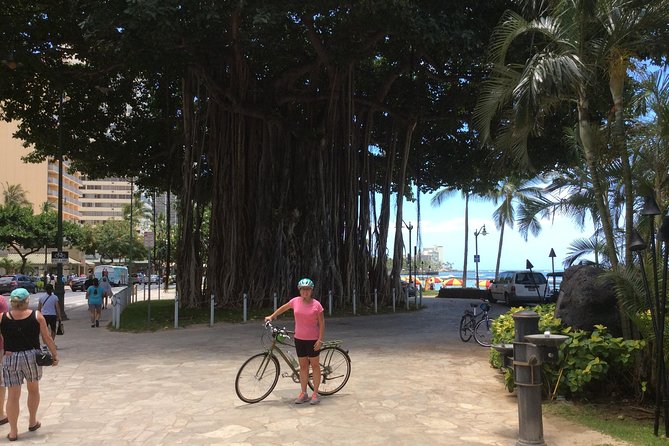
Your morning begins at Kuhio Beach, at 2453 Kalākaua Ave in Waikiki, right by the Kuhio Beach Hula Mound. The tour starts at 7:00am, which is a smart time to beat heat and crowds before you settle into the longer ride.
From the start, you’ll get equipped with your bicycle and helmet and then roll out with the guide. The route is built to keep you moving but not sprinting, with regular stops for photos and rest. If you’ve ever tried to bike Honolulu on your own, you’ll appreciate that this day is organized around safer-feeling segments and big landmarks you might miss wandering.
The ride is mostly flat, and the tour is designed for moderate physical fitness. You are still covering 13.5 miles, so think of it as a steady morning bike outing rather than a short, casual spin.
You can also read our reviews of more cycling tours in Oahu

Price and what your $149 actually buys in Honolulu
At $149 per person for about 4 to 5 hours, this tour sits in the “worth it if you’ll use the guide” category. The reason it can feel like good value is that you’re not only paying for narration—you’re paying for convenience: helmet, bicycle, bottled water, and snacks are included.
Also, the stops are packed with admission-free moments listed on the route, and the tour includes National Park fees. That matters in Hawaii, where small entry costs add up faster than you expect when you’re trying to see multiple sites in one day.
Then there’s the guide support. Many people in the reviews highlight that Kelly takes photos during the ride and shares them afterward, which turns the tour into a practical memory-capture tool—especially helpful if you’re solo or you don’t want to keep asking strangers to take pictures.
Waikiki to the Ala Moana Canal area: beaches, zoo vibes, and “why this place is here”
After you leave Waikiki, the tour rides past Waikiki Beach and the area around the Honolulu Zoo, where you’ll hear context about a collection with over 1000 critters. The big win here isn’t seeing the zoo itself—it’s how the narration frames why these spots sit where they do in modern Honolulu.
You’ll then glide near the Ala Wai Canals, a waterway developed in 1929. That’s one of those facts that helps you stop thinking of Honolulu as only modern resorts. Instead, you get a clearer sense of how the city shaped land and waterways to support traffic, housing, and recreation.
Between the canals and the next downtown stretch, you pass places like the promenade and the Honolulu Convention Center area, plus views toward Magic Island and along the shoreline. If you’re curious about how locals move between neighborhoods, this segment is where the bike format really helps. On foot you’d never cover as much in the same time, and by car you would miss the human-scale streets and details.
What to watch for
The route includes beach-adjacent roads and points where pedestrians, bikes, and cars overlap. The guide’s job is keeping you safe and together, and the group size (up to 10) helps with that. Still, keep your focus during crossings and when the group pauses.
Aloha Tower Marketplace: the skyline moment via the first elevator in the Pacific
One of the most memorable stops is at Aloha Tower Marketplace. You ride up in the elevator described as the first in the Pacific, and the point is simple: you get sweeping harbor views without needing to plan a separate outing.
You’ll also hear the backstory of how family and friends used to greet each other as ships arrived—an old-school view of the harbor that makes today’s skyline feel more grounded. And because this is a guided stop, you get more than scenery. The guide includes details about Honolulu Harbor life, including fish that frequent the area and the coral that supports healthy marine life.
The practical value here is time. You’re getting a high-impact viewpoint without adding extra transport or waiting around in lines. The stop is listed at about 20 minutes, so you should plan to do the basics: quick photos, a short look around, and then back to riding while the rest of the city is still ahead of you.
You can also read our reviews of more historical tours in Oahu
Kaka’ako murals and Magic Island: art walls and a reclaimed-land lesson
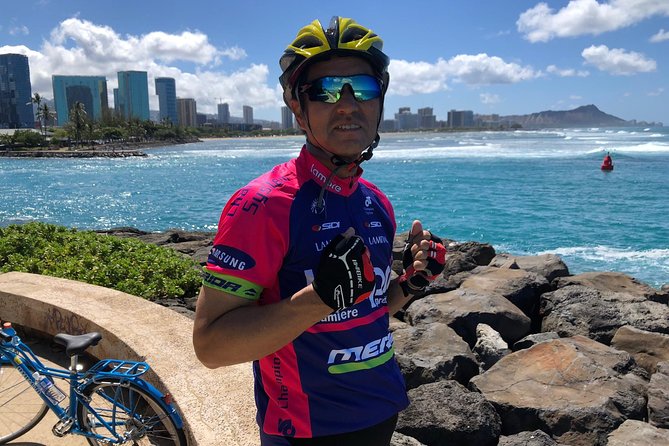
After downtown, the tour spends real time in Kaka’ako, including a photo moment by mural walls with dozens of paintings and active artists. This is the part that makes the ride feel less like a checklist. You’ll actually get chances to frame photos that look like Honolulu, not generic Hawaii.
The tour also points out how Kaka’ako is changing, with talk about major new development. Even if some of that future vision is more hype than science, the local context is useful. It helps you understand what you’re seeing right now, and why certain neighborhoods feel like they’re in transition.
From there, you continue toward Magic Island, part of Ala Moana Park, described as the People’s Park. The core story is that Magic Island is reclaimed land, and the park was constructed in 1947 to turn an unsightly landfill into something people would actually want to visit. That kind of transformation is exactly why biking works here. You can look around and start connecting the landscape decisions to the city’s current lifestyle.
Chinatown fruit sampling and Neal S. Blaisdell Center’s Elvis connection
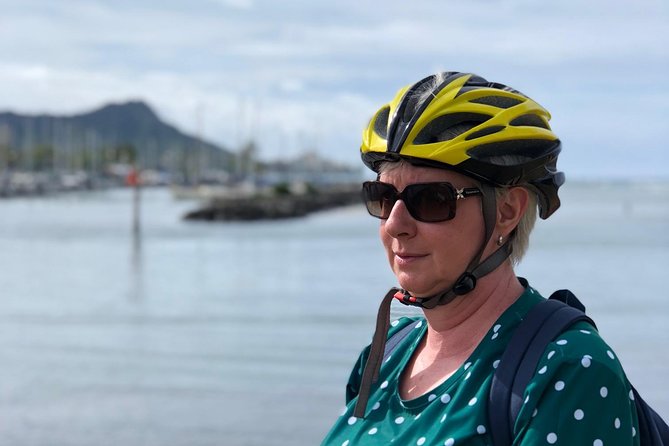
The downtown stretch leads toward areas where the city feels more local and less resort-oriented. The tour stops to sample some of Hawaii’s exotic fruits. That’s a great reset point mid-ride, and it’s also a reminder that this tour isn’t only about major monuments. You get small, sensory breaks that keep the morning from turning into constant photo stops.
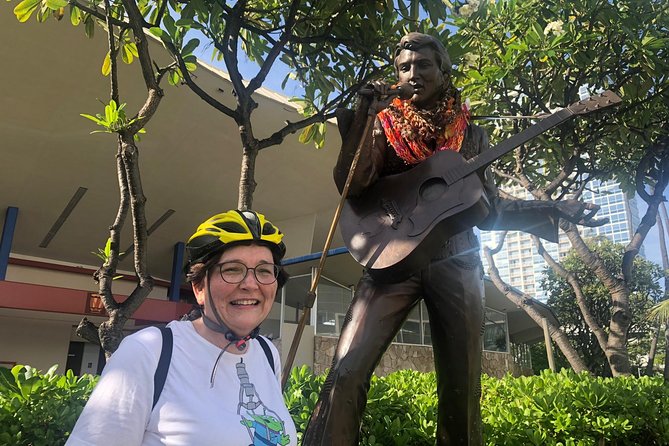
A key music-stop arrives at the Neal S. Blaisdell Center. This is where the tour highlights the King of Rock and Roll—Elvis Presley—and notes his last concert in 1973. Even if rock-and-roll isn’t your thing, it’s a useful moment because it places pop culture into a specific Honolulu location, not just into a general Hawaii fact sheet.
The stop is brief (about 5 minutes), but the statue is described as amazing, and the narration connects Elvis with other performers who have shared the venue sounds over time. That’s the kind of detail a guide can deliver quickly, so you don’t need a separate museum day to get context.
From Kamehameha to Iolani Palace: royal and spiritual stops in one long string
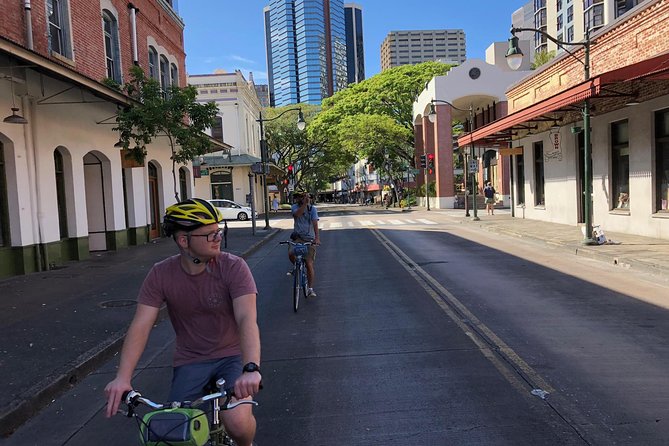
This is the most historic-heavy part of the ride, and it’s where you’ll feel how the tour turns a bike ride into a moving timeline.
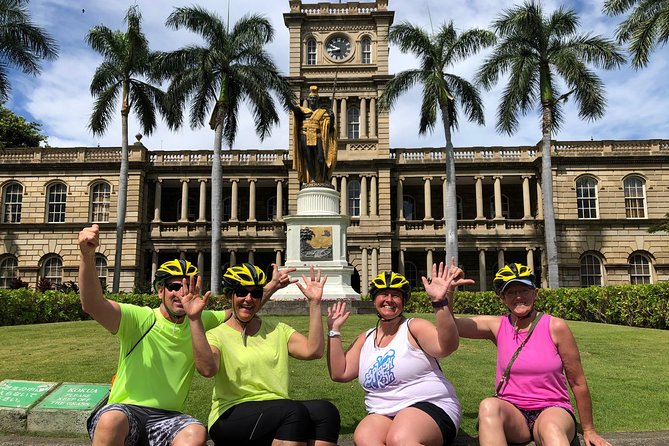
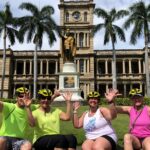
You’ll see the King Kamehameha Statue, with its recent refurbishment using real gold paint. The point of the stop isn’t only the statue. The narration connects Kamehameha to how Hawaii’s islands were united, and you also get mention of how the statue appears in opening scenes of Hawaii Five-0—useful if you recognize the look already and want to place it in real life.
Next is Iolani Palace. The tour frames it as the royal residence of the rulers of the Kingdom of Hawaii, and emphasizes that it’s the only royal palace on US soil and a National Historic Landmark listed on the National Register of Historic Places. That’s big context, and it helps you understand why this stop feels different from quick street corners. It’s a civic landmark you can’t really grasp at a glance.
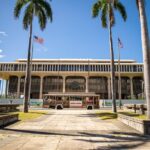
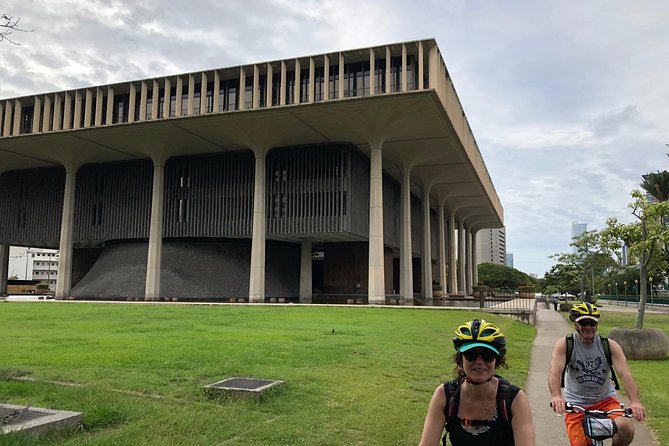
Then comes the Hawaii State Capitol, described as the only open-air capitol in the US, constructed in 1969. Rolling through lets you appreciate the architecture in motion. And yes, the guide uses local framing around the building and Hawaii’s natural mystique, which keeps it from feeling like a lecture you could read later.
Before or alongside these major civic landmarks, the tour also includes two standout religious-and-heritage stops:
- Hawaiian Mission Houses Historic Site and Archives, described as Hawaii’s first western-style home, brought by ship and built by the Hall missionary family, plus mention of a printing press that printed the first Bible in the Hawaiian language.
- Kawaiaha’o Church, built with over 14,000 coral stones and noted as welcoming visitors every Sunday for an 8:30am church service.
If you like understanding Hawaii through the lens of architecture and institutions, this block of stops is the heart of the value. You’re getting multiple landmark categories—royal governance, spiritual life, and early print-and-communication history—without changing days or hunting for tickets.
Safety, pace, and why the small-group limit matters on busy roads
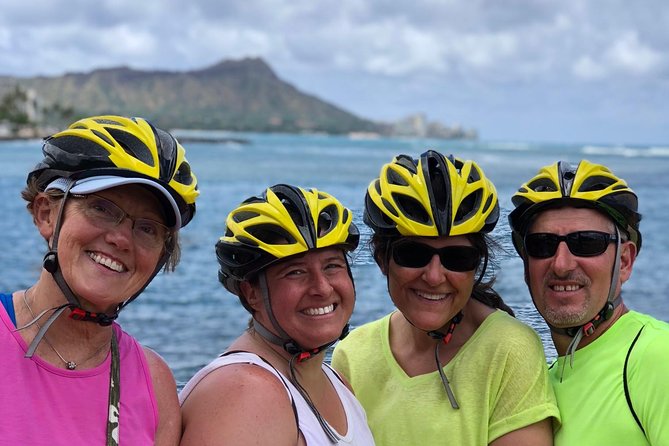
This tour is designed for safety with bikes and helmets provided, and you’ll stop regularly for rest and photo opportunities. The terrain is mostly flat, which is a big deal in a place known for steep hills elsewhere. It also helps first-timers feel comfortable without the pressure of constant climbing.
One practical detail that shows up in the reviews is that Kelly uses a speaker system so everyone can hear the narration clearly while riding. That helps tremendously on a bike tour, because without audio you end up guessing what you just passed and why it matters.
In terms of pacing, multiple reviews describe a steady tempo—not so slow that it feels like a walking tour, and not so fast that you’re working too hard. That balance is what makes the morning feel fun instead of exhausting.
And because one rider did flag a bike issue (a chain coming off), I’d treat the first few minutes like a pro cyclist does: check that everything feels solid before you start. If you notice anything off, speak up right away. It’s a small step that can save the rest of your ride.
Who should book this Honolulu bike tour, and who might skip it
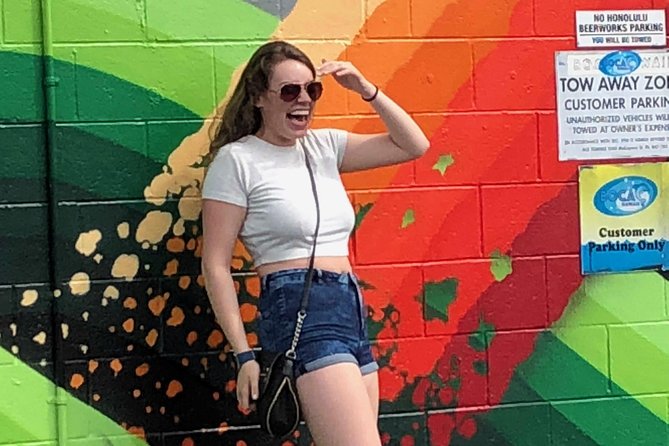
This tour makes the most sense if you want a single morning that combines landmarks, neighborhoods, and local flavor. If you’re the type who likes history but doesn’t want to sit inside all day, the mix of royal sites, pop-culture context, art walls, and harbor viewpoints fits your style.
It’s also a good pick for couples and solo travelers because the group is capped at 10, and the guide’s photo help makes it easier to feel like you got great shots without asking strangers all the time.
If you hate biking longer distances or you can’t comfortably handle 13.5 miles, you might feel the effort. The tour also runs in all weather conditions, so if rain or wind ruins your day, you’ll want to consider whether you’re okay dressing appropriately and riding anyway.
Should you book this Honolulu Historical Bike Tour?
If you want a structured Honolulu morning with helmets, snacks, and a guide-led story, I think this is a strong value at $149. The stops are chosen to build a full picture of the city—Waikiki’s beachfront identity, the canals and shoreline, the harbor view from Aloha Tower, street art in Kaka’ako, and then the downtown landmarks tied to Hawaii’s monarchy and spiritual life.
Book it if you like learning while you move and you appreciate small-group attention. Skip it if you’re not comfortable riding 13.5 miles or you strongly prefer sightseeing with minimal biking effort. For most people who fit the physical and style vibe, this is one of the more efficient ways to see multiple Honolulu highlights in one shot.
FAQ
What is the meeting point for the Honolulu bike tour?
You meet at Kuhio Beach, 2453 Kalākaua Ave, Honolulu, HI 96815, USA at the Kuhio Beach Hula Mound.
What time does the tour start?
The tour starts at 7:00am.
How long is the tour?
It runs about 4 to 5 hours.
How much does the tour cost?
The price is $149.00 per person.
Is the tour guided, and what language is it offered in?
Yes, it’s guided and offered in English.
What’s included in the tour price?
Bottled water, snacks, helmet use, bicycle use, and National Park fees are included.
What is not included?
Food and drinks are not included unless specified.
How far will you ride?
The riding distance is 13.5 miles.
What is the group size?
The tour has a maximum of 10 travelers.
Does the tour run in bad weather?
It operates in all weather conditions, so you should dress appropriately. Confirmation is received at booking time.