REVIEW · HISTORICAL TOURS
Through A Glass Darkly The Strange and Tragic History Of Honolulu
Book on Viator →Bookable on Viator
Honolulu isn’t just beaches and shopping. This short, 90-minute walk stitches together conquest, palace life, missionary power, and courtroom drama around central landmarks. I love that the guide keeps the pace human and the themes clear, and I also love the way the tour treats the past like something you can still feel in the architecture.
One thing to plan for: you’ll spend a lot of time standing, and two major interiors cost extra (Iolani Palace and Capitol Modern). If you need lots of sitting or step-free routes, ask for help with stairs and inclines in advance.
In This Review
- Key points to know before you go
- A 90-minute walk through power, faith, and legal battles
- Starting at King Kamehameha I: conquest in plain sight
- Iolani Palace: the monarchy’s grand stage, then the heartbreak
- Kawaiaha’o Church and Hawaiian Mission Houses: missionary influence with consequences
- Honolulu Hale and the Hawaii State Capitol: beauty, then the uncomfortable past
- Washington Place: Liliuokalani’s home and a personal kind of politics
- The Cathedral of St. Andrew: English-cut sandstone and a tragic tale
- Capitol Modern and Ali’iolani Hale: from Royal Hotel to the Supreme Court
- Price and value: why $39 can feel fair
- What to wear and how to pace your day
- Who this tour is best for
- Book it or pass?
- FAQ
- How long is the tour?
- Where does the tour start?
- What time does it start?
- Is the tour offered in English?
- Is admission included for all stops?
- What is the group size?
- Is a mobile ticket used?
- Is the tour accessible for people who need help with stairs or inclines?
- Can I get a refund if plans change?
Key points to know before you go
- A guided, compact route that packs royal history, missions, and the judiciary into about 1.5 hours
- Mostly free stops, with only Iolani Palace and Capitol Modern needing paid admission
- Central Honolulu landmarks on a walk starting at the King Kamehameha I Statue (10:45 am)
- A storytelling style that leans into strange, tragic, and sometimes spooky details
- Small group size with a max of 20, so questions don’t get lost
A 90-minute walk through power, faith, and legal battles
This tour is built for people who want real context, not just dates on a plaque. You’ll move through a tight cluster of Honolulu landmarks where the story keeps changing hands: Hawaiian rule, missionary-era influence, and the political systems that followed. It’s “strange and tragic” in the practical sense—you see how big forces shaped everyday lives.
The time window matters. At roughly 1 hour 30 minutes, you’re not committing your whole day to history. It’s ideal if you’re also doing museums, beaches, or the classic Waikiki rhythm and you want one focused block that makes everything else make sense.
The format helps too. You get a mobile ticket and a small group (up to 20), which usually means better pacing and easier Q&A. And yes, there’s a bit of theatrical fun in the storytelling—ghostly vibes mentioned in the guide’s tone—without turning the whole thing into a haunted-house act.
You can also read our reviews of more historical tours in Oahu


Starting at King Kamehameha I: conquest in plain sight
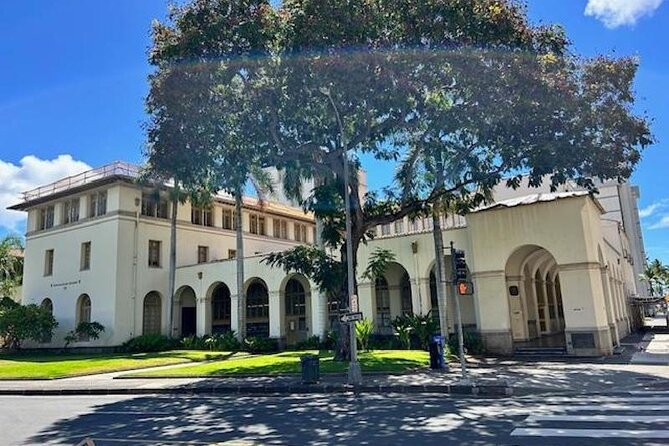
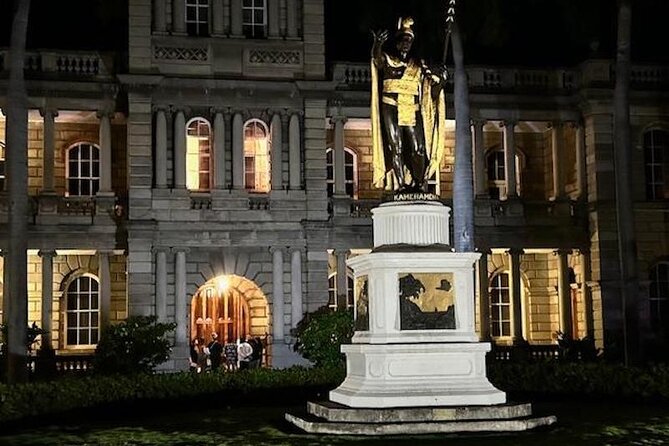
You begin at the King Kamehameha I Statue on S King St (447 S King St, Honolulu). It’s a strong start point because this is where power gets visual fast. The tour sets up Kamehameha’s conquest of Oahu with a story that doesn’t sugarcoat what it meant. In a short time, you get the sense that the island’s “unification” wasn’t a polite process—it was a turning point with consequences.
This first stop is also a useful mental warm-up. If you’ve been hearing Hawaii described as only romantic or peaceful, this segment corrects the record quickly. You’ll leave with a better understanding of why later sites—palaces, churches, government buildings—carry the weight they do.
Practical note: the group starts close to central streets, so it’s easy to plug into your day. Also, the walk is short enough that you can usually keep going even if you’re coming straight from another activity nearby.
Iolani Palace: the monarchy’s grand stage, then the heartbreak
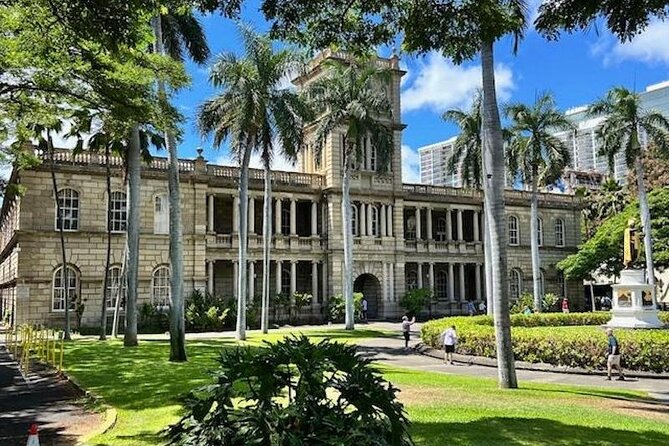
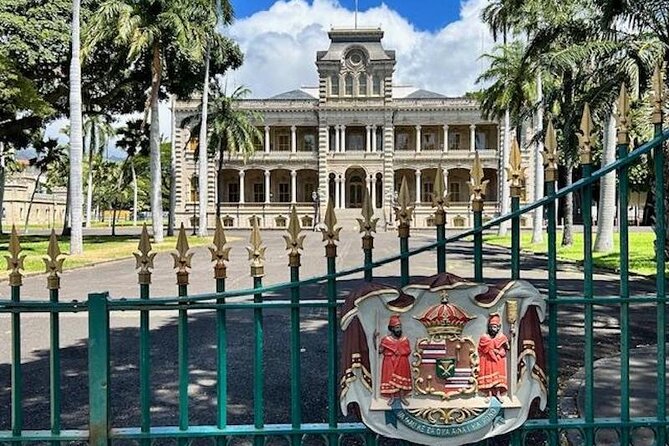
Next comes Iolani Palace. The contrast is part of the impact: you’re looking at a royal palace story that ends with the tragic overthrow of the monarchy. This stop is about 10 minutes, and you should know the key detail for planning: admission is not included.
What makes this stop valuable isn’t just the building. It’s the way the tour connects the palace to the bigger political shift happening around it. You’ll hear how the palace wasn’t just a backdrop for ceremonies—it was where legitimacy lived. And when that legitimacy was attacked, everything followed.
If you like history that explains cause and effect, Iolani Palace is one of the best uses of your time on the route. It turns personal loss into something you can understand at island scale.
Kawaiaha’o Church and Hawaiian Mission Houses: missionary influence with consequences
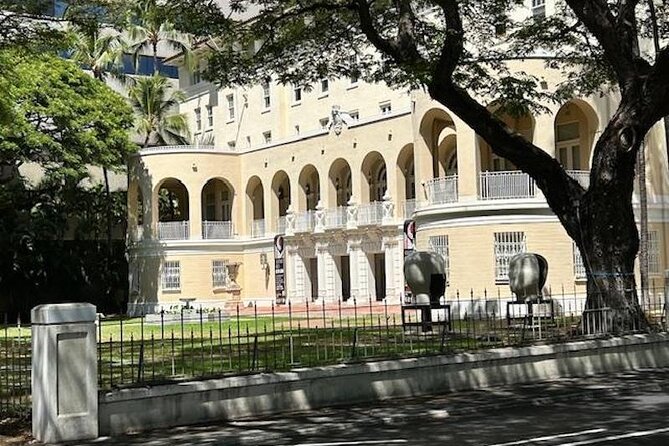
After the palace, you head to Kawaiaha’o Church, designed by Hiram Bingham (the tour frames him as an infamous missionary). The church is described as a stone church—yet, to Hawaiians, it was anything but. That line is a good hint of how the guide will treat the era: not as simple “help” stories, but as complicated cultural change.
Right after that, you visit the Hawaiian Mission Houses Historic Site and Archives. The tone here is blunt in a different way: the tour echoes a saying along the lines of missionaries came to do good, and they did very well. That doesn’t mean it was all good for everyone. It means influence was real—so real it left records, buildings, and lasting pressure on social life.
Together, these two stops are why the tour feels different from many “royal highlights” walks. You get faith, yes—but also the power to reshape language, education, and authority. You’ll probably notice that the stone walls and archival spaces are part of the story, not just scenery.
Time-wise, both stops are quick (about 10 minutes, then about 5 minutes). That’s good if you want a guided overview without sinking half a day into reading.
Honolulu Hale and the Hawaii State Capitol: beauty, then the uncomfortable past
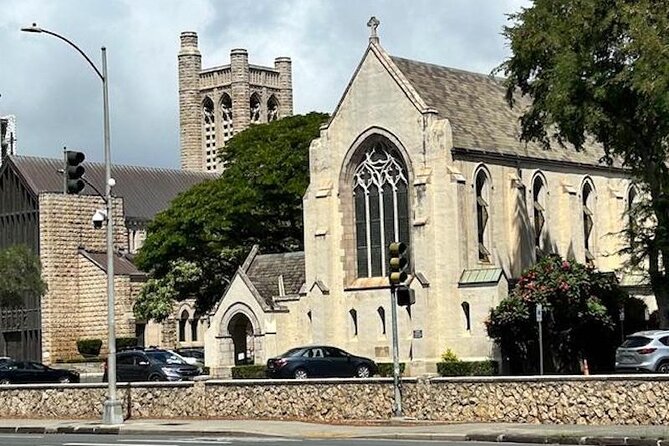
Next you pass by Honolulu Hale (City Hall). The building is described as Italianate Spanish Colonial Revival, and it’s easy to see why someone would call it lovely. But the tour doesn’t let you stay on the postcard level. It also points to an unlovely past tied to the structure.
This is a smart moment on the itinerary. It trains your eye. You start noticing that architecture can carry both beauty and history’s cost. You’re not just learning what happened—you’re learning why certain shapes and styles showed up in certain eras.
After that, you go to the Hawaii State Capitol, described as expressing the aloha spirit, and you’ll hear the story of a statue connected to the queen who embodied that spirit. Again, the guide’s framing is the point: you’re taught to look past symbolism and ask what symbols were used for.
These two stops are brief (about 5 minutes each), but they work as a bridge. You shift from monarchy and missions into governance—how leadership got redefined, and how public buildings became part of that message.






Washington Place: Liliuokalani’s home and a personal kind of politics

Then comes Washington Place, Queen Liliuokalani’s home. This stop adds something the earlier ones only hint at: the emotional reality behind political change. You’ll hear about an unhappy marriage and that she returned there after the overthrow of the monarchy.
It’s a small stop (about 5 minutes), but it lands because the story turns human scale. The tour makes it clear that regime change wasn’t only banners and speeches. It showed up in homes, schedules, and daily life.
If you’re the kind of traveler who remembers history better when it’s tied to people, this is where the tour starts sticking in your mind.
The Cathedral of St. Andrew: English-cut sandstone and a tragic tale
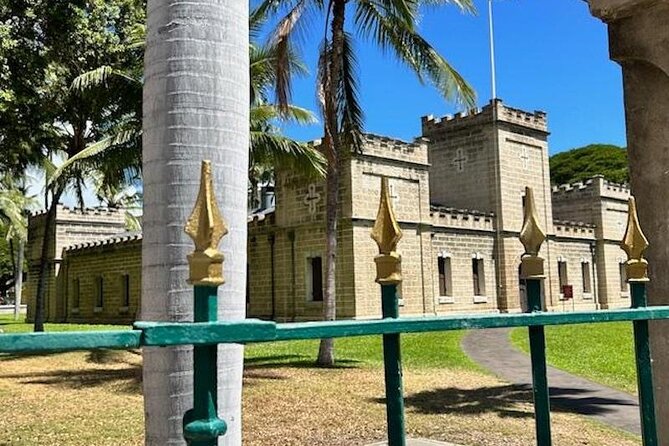
Next is the Cathedral of St. Andrew. You’ll get details that make the building feel earned: sandstone cut in England and shipped to Hawaii, and a stained glass nave that sounds like the kind of interior where you naturally slow down.
The tour also pairs the artwork with tragedy, including a tale involving a king and his little boy. Even if you don’t remember every detail later, you’ll feel the pattern: foreign materials and local life brought together, and then real grief woven into the narrative.
This stop is about 5 minutes. That’s short, so manage expectations: you’re getting the story and key visuals, not a full cathedral tour. If you’re a stained-glass person, you’ll likely want to come back later on your own time to see more closely.
Capitol Modern and Ali’iolani Hale: from Royal Hotel to the Supreme Court
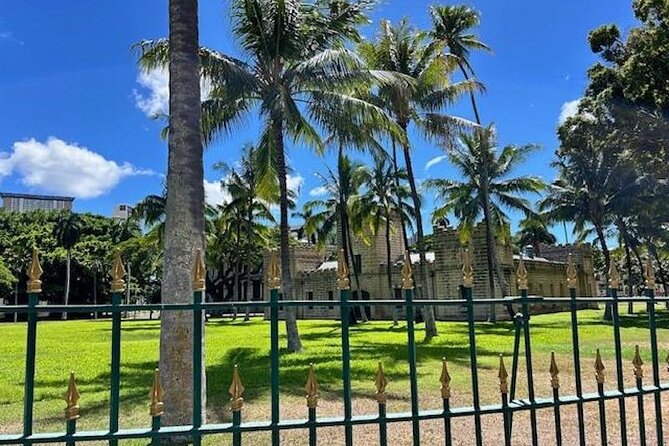
The last stretch mixes culture and law.
First, you visit Capitol Modern, also known as the Hawai’i State Art Museum. The twist here is that it used to be the original Royal Hawaiian Hotel, built in 1872. The tour connects that success to the later second Royal Hawaiian on Waikiki Beach—often called the Pink Palace.
This is a great stop for travelers who think “history” means only kings and battles. You’re seeing how wealth, tourism, and branding shaped Honolulu, right in the middle of later governance structures.
Then you finish with Ali’iolani Hale, now the Judiciary Building and home to the Hawaii State Supreme Court. This is where you hear about the Massie Affair, described as the marquee event of Hawaiian jurisprudence. That phrase matters. It frames legal history as a major turning point, not a dull side topic.
This finale helps you “close the loop.” You start with conquest and monarchy, then move through missions and government, then end where disputes get judged. It’s one of the tour’s strongest arcs because it keeps circling back to who had power—and how that power got enforced.
Price and value: why $39 can feel fair
At $39 per person, this is priced like a true guide-led walking experience, not like a bus tour with a long list of quick photo stops. And here’s the key value logic: many of the landmarks are free to view from the outside (or have free admission on-site), while only Iolani Palace and Capitol Modern have admission not included.
So your actual out-of-pocket cost is likely $39 plus whatever you choose for those two paid interiors. If you’re already curious about the monarchy and the buildings connected to later governance and cultural shifts, the guide’s job is to explain the “why” fast—before your own sightseeing gets chaotic.
Also, because the group stays small (max 20), you’re not just paying for a route. You’re paying for someone to connect the dots. Reviews you’ll find for this tour lean heavily toward the guide’s storytelling style, and that matches what the itinerary is built to do.
What to wear and how to pace your day
The tour is short, but it’s not seated. You’ll be standing a lot, and there’s enough walking between stops that comfort matters. Wear shoes you trust on city sidewalks, and plan a little flexibility in your schedule afterward.
One practical plus: help is available for those who need support with stairs or inclines, and the guide is set up to manage people’s pace. That said, if you know you struggle with standing for stretches of time, treat this as a “case-by-case” experience and consider contacting the operator before you go.
Weather also matters in Honolulu. Even when the forecast looks calm, quick changes happen. The route is mostly close by and the guide works to keep you comfortable, including managing shade when possible. Still, bring a light layer and be ready for sudden sprinkles.
Who this tour is best for
This one fits best if:
- you’re in Honolulu for only a couple days and want the “story behind the landmarks”
- you like history that includes the uncomfortable parts, not only the polished ones
- you want a guided route that helps you see government, religion, and culture as one connected system
It may not fit as well if:
- you’re hoping for mostly sitting and low-effort viewing
- you hate tours where the guide’s voice is central and the group keeps moving
- you’re only interested in one slice of history (this tour keeps bouncing between conquest, monarchy, missions, and court drama)
If you’re the type who also loves museums, this works well as a warm-up or follow-up to bigger sites later. It gives you a framework so other exhibits don’t feel like separate islands.
Book it or pass?
Book it if you want a compact, story-forward route that makes central Honolulu feel meaningful. For $39, the mix of palace, church, mission site, city governance, and courtroom context gives you a lot of understanding in just 1.5 hours—especially if you plan to pay the extra admission for Iolani Palace and Capitol Modern.
Pass (or pick a different format) if you can’t handle extended standing or you strongly prefer non-guided sightseeing where you control every stop. Also, if you don’t want political or legal themes, the final turns to the judiciary and the Massie Affair may feel like too much.
FAQ
How long is the tour?
The tour is about 1 hour 30 minutes.
Where does the tour start?
It starts at the King Kamehameha I Statue at 447 S King St, Honolulu, HI 96813.
What time does it start?
The start time listed is 10:45 am.
Is the tour offered in English?
Yes, it is offered in English.
Is admission included for all stops?
Admission is free for several stops, but admission is not included for Iolani Palace and Capitol Modern.
What is the group size?
The tour has a maximum of 20 travelers.
Is a mobile ticket used?
Yes, the tour uses a mobile ticket.
Is the tour accessible for people who need help with stairs or inclines?
Assistance is available for those who need help with stairs or inclines.
Can I get a refund if plans change?
Free cancellation is available up to 24 hours before the experience start time for a full refund. If you cancel within 24 hours, the amount paid is not refunded.