REVIEW · WORKSHOPS
Premium eFoil Lesson near Waikiki
Book on Viator →Operated by Efoil Waikiki · Bookable on Viator
You learn faster when the first minutes are guided. This private eFoil lesson near Waikiki blends ground-school practice with hands-on coaching so you spend less time guessing and more time riding. The setup includes a land simulator and gear fitting before you ever hit the water.
I especially like the 1-on-1 attention, because your instructor can adjust technique to your comfort level in real time. I also like the structure of three separate 20-minute water runs, which keeps you learning without frying your focus. One possible drawback: the full session is about 2 hours, but only about 60 minutes is actual water time, so plan your expectations accordingly.
Price and what it buys you is the real question here. At $299 per person, you’re paying for premium Flite Board eFoils, radio helmets, and instructor time that’s meant to get you off the start line and onto the foil with coaching, not just a safety briefing. The experience is also sensitive to conditions since it requires good weather. If you hate schedule risk, you’ll want a flexible plan.
In This Review
- Key takeaways before you book your Waikiki eFoil lesson
- What a private eFoil lesson near Waikiki actually feels like
- Price, timing, and value: is $299 worth it?
- Your 2-hour flow: ground school, simulator, then three water runs
- 1) Start at the meeting point in Kailua
- 2) Ground school and gear fitting (about 15–30 minutes)
- 3) Water time (about 60 minutes total, three 20-minute runs)
- Learning progression that actually helps: belly to sustained flight
- The instructor setup: why the private format matters
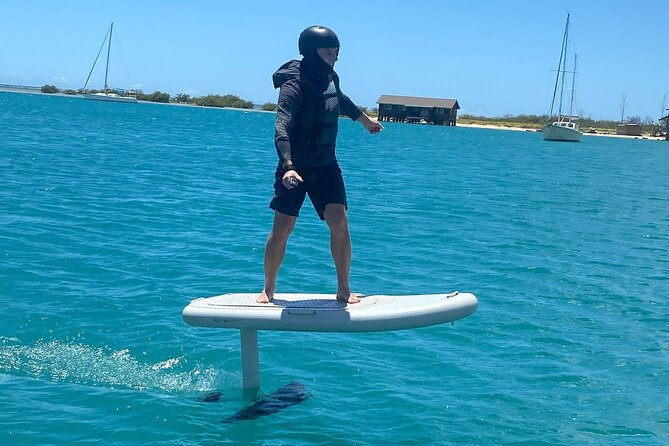
- Gear and safety: what you’ll wear and why it helps
- Photos and small add-ons: plan your “keepsake” budget
- Cancellation and weather: the only real risk in the plan
- Who this Waikiki eFoil lesson is best for
- Should you book? My take on the call
- FAQ
- How long is the eFoil lesson on the water?
- What’s included in the lesson?
- Do I need to know how to surf before I go?
- What if I’m over 205 lb?
- Are photos included?
- What happens if the weather is poor?
Key takeaways before you book your Waikiki eFoil lesson
- You get simulator reps first so the first moments on the eFoil don’t feel random.
- Three 20-minute water runs help you progress step by step without long, exhausting stretches.
- Gear fitting is built in (life vest and radio helmet), which matters when you’re learning balance fast.
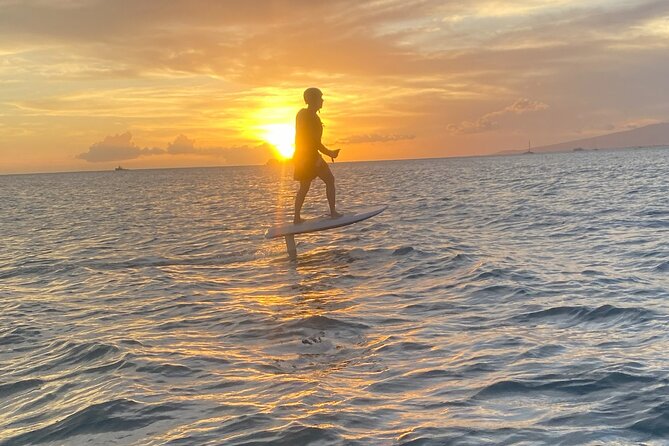
- You ride a Premium Flite Board eFoil with instructor coaching aimed at speed control and sustained flight.
- Private means only your group with the option to add students for a customized semi-private setup.
What a private eFoil lesson near Waikiki actually feels like
If you’ve ever rented gear that came with a quick handshake and a vague instruction, this won’t feel like that. The whole format is designed like a skills lab: quick classroom basics, then simulator practice, then short, coached water sessions that build on each other.
The lesson is about 2 hours total, and it’s private—only your group will participate. That matters because eFoil learning is timing-heavy. Your instructor can watch what your body is doing and correct it immediately. In one account, the instructor (Dan) was noted as especially helpful, and the big win was the 1-on-1 pacing for someone with surfing experience. Even if you’re not a surfer, that same “you go at your pace” approach tends to be the difference between progress and frustration.
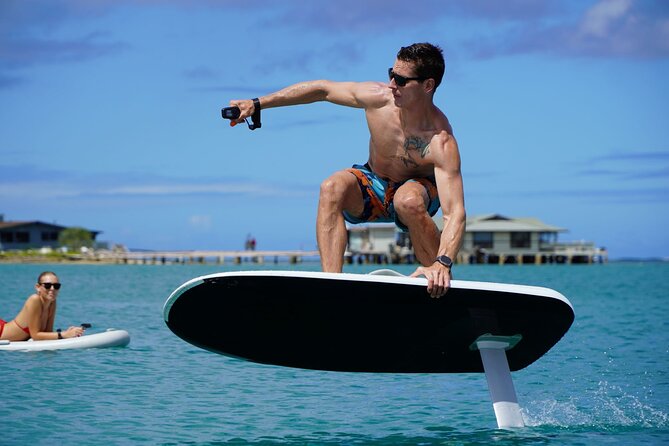
The eFoil is a Premium Flite Board model, and you’ll be on it with safety gear that includes radio helmets. The radio helmets aren’t just a perk; they let your instructor talk to you while you’re moving. When you’re learning speed control, footing, and touch-and-go foil maneuvers, that real-time coaching can save a lot of wobbling.
Reality check: the “wow” part is on the water, but you only get about 60 minutes there, split into three 20-minute runs. If you’re thinking you’ll be out there for two hours straight, that’s not how this lesson is set up. The pacing is intentional so you keep learning instead of wearing out.
You can also read our reviews of more tours and experiences in Oahu

Price, timing, and value: is $299 worth it?
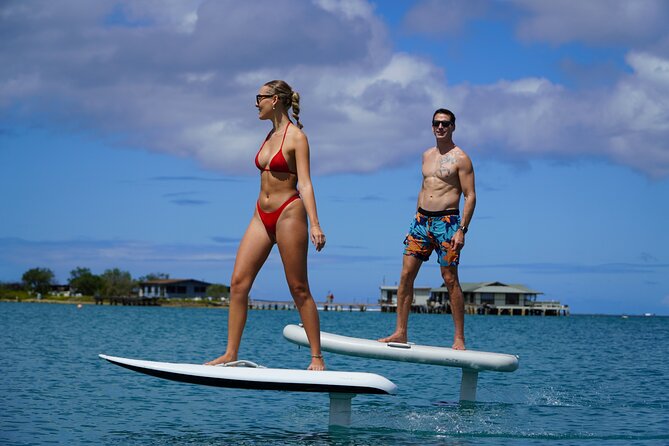
At $299 per person for roughly 2 hours, you’re not just buying ride time. You’re buying:
- instructor time for a private lesson
- simulator practice so you start the water with fewer unknowns
- access to premium eFoil boards
- safety gear including radio helmets and life vests
- a progression plan from belly riding to sustained flying
Here’s why that’s good value: eFoiling isn’t a “hop on and figure it out” sport. You need to learn throttle basics, balance under power, and how to control speed and direction. Without coaching, people tend to crash, overcorrect, or get too tense to progress. This experience focuses on turning those early attempts into repeatable skills.
Also keep in mind the extra costs that can nudge the total:
- photos are available for $39
- if you’re over 205 lb, there’s an additional Big and Tall charge of $49
None of that is necessarily bad—it’s just better to budget. If you want a crisp photo set of your first rides, factor it in. And if you’re near that weight threshold, confirm the correct fee before you get surprised at checkout.
Finally, the lesson is offered in English and typically has confirmations unless you book very close to the experience time. Plan to arrive ready and you’ll stay on schedule.
Your 2-hour flow: ground school, simulator, then three water runs
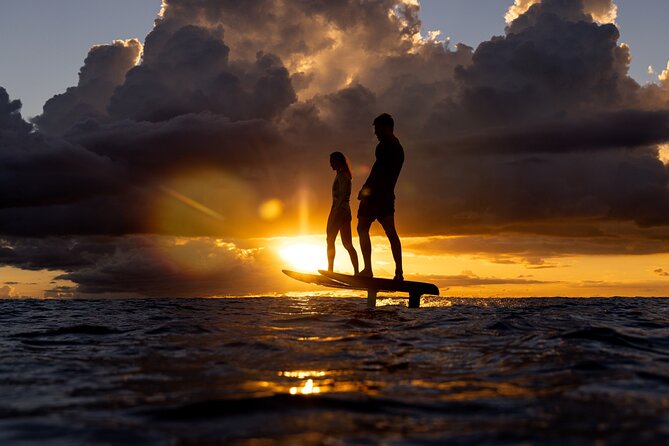
This lesson is built around a clear learning sequence. It’s not random; it’s engineered to help you progress without jumping ahead.
1) Start at the meeting point in Kailua
You’ll meet at Hawaii Efoil Experience, 1216 Akumu St, Kailua, HI 96734. The activity ends back at that same meeting point. That back-to-back start and finish keeps things simple, especially if you’re coming from Waikiki for the session.
2) Ground school and gear fitting (about 15–30 minutes)
You’ll get instruction on how the eFoil works and how to stay safe. You’ll also get fitted for your life vest and radio helmet. This is practical training: the radio helmet in particular helps you hear coaching while you’re learning at speed.
Then you practice on a land simulator. If you’ve never learned with a simulator before, the benefit is straightforward: you can build muscle memory for the basics without the stress of being fully exposed on the water right away.






3) Water time (about 60 minutes total, three 20-minute runs)
Once you’re ready, you’ll get three separate water sessions. That structure helps in two ways:
1) you can improve between runs while your instructor is still fresh and attentive
2) you avoid turning your learning into one long session where mistakes compound
Across those runs, the progression typically goes:
- belly riding first
- then knee riding
- then standing
- maneuvering and speed control
- touch-and-go foil practice
- progressing to sustained flying on the hydrofoil
It’s a step-by-step ladder. Each stage teaches balance and control without skipping too far ahead.
Learning progression that actually helps: belly to sustained flight
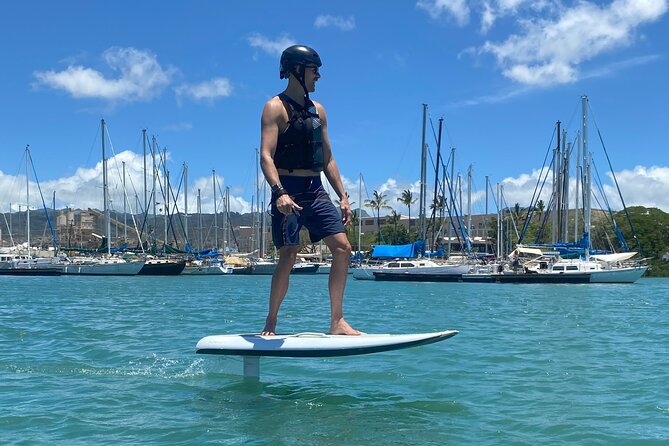
The teaching style here is about breaking the ride into problems you can solve.
Belly rides let you feel the board moving and learn how the eFoil responds before you ask your legs to balance. It’s a smart start because most first-timers struggle less with power and more with balance under motion.
Then you go to knee riding, which adds stability control while still keeping your center of gravity manageable. If you’re anxious, knee riding is often where your brain catches up. You stop thinking about everything at once and start understanding cause and effect.
After that, you progress to standing. Standing is where speed control and smooth inputs matter most. That’s also where the radio helmet can be a big deal. When you’re learning throttle control, quick corrections from your instructor can keep you from spiraling into panic.
The lesson then focuses on:
- maneuvering
- speed control
- touch-and-go foils
- sustained flying
Touch-and-go practice is exactly what it sounds like: you learn how to get onto the foil and then manage the transition so it feels repeatable. Sustained flying is the goal, but it’s reached by mastering the smaller steps first.
If you already surf, that helps. Balance skills often transfer, and you’ll probably feel comfortable faster. But the coaching is still designed for people who don’t have that background.
The instructor setup: why the private format matters
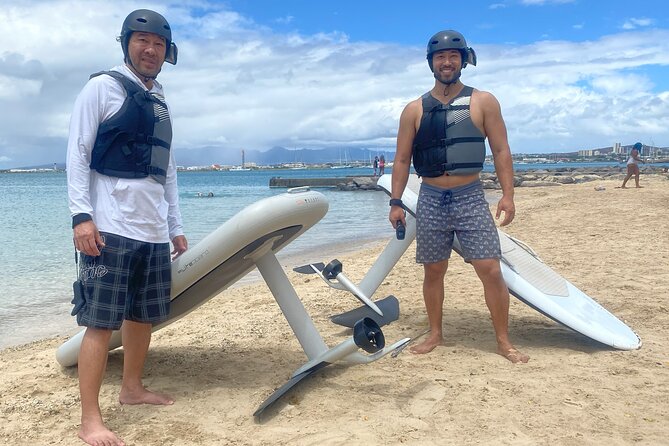
This is a private tour/activity. Only your group participates, and the lesson includes 1 eFoil per student. That part matters because eFoil learning is not like group kayaking where you can watch and wait. You need time on the board, not just instruction from the shore.
Your instructor can also tailor your pace based on skill level. That flexibility is important because first-time riders don’t all struggle with the same thing. Some people wobble. Some people tense up. Some people have trouble with speed control. A private instructor can adjust the teaching focus fast.
If you’re adding people to make it semi-private, you can call to add additional students. That’s useful if you’re traveling with friends and want everyone to learn at their own level instead of being pushed into a one-size-fits-all class.
Gear and safety: what you’ll wear and why it helps
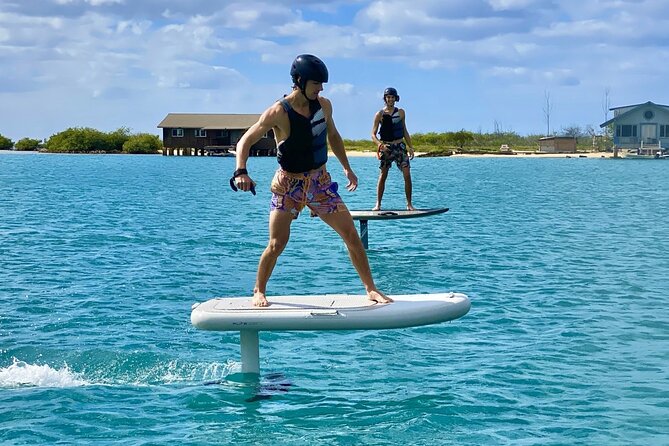
You’ll use safety gear that includes:
- life vest
- radio helmet
Those aren’t just “required items.” When you’re learning something this technical, gear reduces distractions. The vest helps you feel secure enough to focus on balance. The radio helmet helps you stay connected to instructions while you’re moving, which reduces the need to stop, look, and figure out what to do next.
You’ll also get training on safety and eFoil operation during ground school. Since eFoils require good control and weather conditions, the lesson is built to make you understand how the system works, not just how to hold on.
And because weather matters, it’s worth knowing you’ll need good weather. If it’s canceled due to poor weather, you’ll be offered a different date or a full refund.
Photos and small add-ons: plan your “keepsake” budget
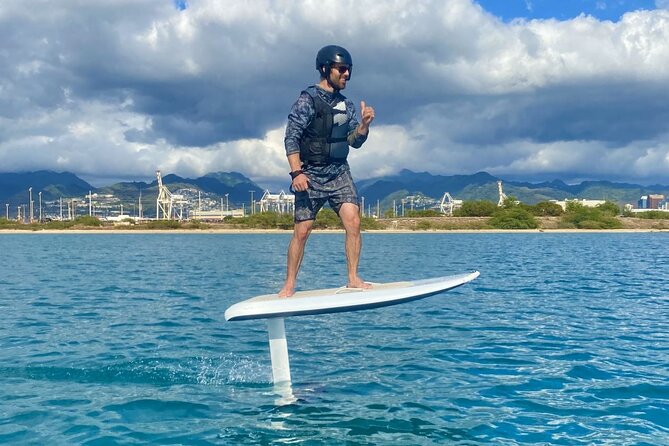
You can get photos, but they’re not included. Photos are available for $39, and you inquire after booking. If you’re the type who wants proof that you flew on a hydrofoil, this add-on can be a good way to justify the overall cost.
Just decide ahead of time. Otherwise, you might end up feeling rushed right after your best rides when you’re still riding the adrenaline wave.
Cancellation and weather: the only real risk in the plan
This experience has free cancellation, as long as you cancel at least 24 hours in advance for a full refund. If you cancel less than 24 hours before the experience’s start time, the amount you paid won’t be refunded. Changes less than 24 hours before start time aren’t accepted.
The other risk is weather. Since it requires good conditions, you may be rescheduled or refunded if poor weather cancels your session.
The good news: it’s a straightforward setup, and the experience ends where you start, so there’s less travel mess if things shift.
Who this Waikiki eFoil lesson is best for
This lesson is a great fit if you want:
- fast progress with a structured learning ladder
- private instruction without sharing board time
- simulator practice before water exposure
- a guided path to speed control and sustained flying
It’s especially sensible for:
- first-time eFoilers who want a step-by-step plan
- experienced surfers who want the transition from waves to hydrofoil balance
- couples, solo travelers, or friends who value coaching and want their instructor focused on them
If you hate short ride windows and prefer long time on the water, you might feel the three 20-minute runs are “too short.” But if your goal is learning quickly and safely, the pacing is built for exactly that.
Should you book? My take on the call
I’d book this lesson if you want the best shot at actually riding—on a hydrofoil—within a single session. The mix of simulator reps, gear fitting, and three coached water runs is the kind of structure that helps most people progress instead of stalling out.
But I’d think twice if:
- you can’t be flexible with weather-related rescheduling
- you’re expecting two full hours of nonstop water time
- your budget can’t handle add-ons like the $39 photos or the $49 Big and Tall charge if you’re over 205 lb
If those aren’t dealbreakers, this is a strong value for what you get: premium equipment, real coaching, and a learning plan that aims for sustained flight, not just a splash-and-go.
FAQ
How long is the eFoil lesson on the water?
You get about 60 minutes total on the water, split into three separate 20-minute water runs.
What’s included in the lesson?
The lesson includes 1 eFoil per student, about 15–30 minutes of ground school, and safety gear including radio helmets and life vests. It also includes the use of Premium Flite Board eFoils and simulator practice.
Do I need to know how to surf before I go?
No. Surfing experience can help with balance, but the lesson is taught with step-by-step progression and coaching for different skill levels.
What if I’m over 205 lb?
There is an additional Big and Tall charge of $49 for students over 205 lb.
Are photos included?
Photos are not included. You can purchase them for $39 by inquiring after booking.
What happens if the weather is poor?
This experience requires good weather. If it’s canceled due to poor weather, you’ll be offered a different date or a full refund.