REVIEW · LIVE SHOWS & ENTERTAINMENT
Rock-A-Hula Ticket
Book on Viator →Operated by Star of Honolulu Cruises and Events · Bookable on Viator
A time capsule of Hawaii starts with fire. Rock-A-Hula at the Royal Hawaiian Theater packs a live band and high-energy fire-knife dance into a story of Hawaii’s music and dance changes from the 1920s to today. I especially like that the production sits in a 750-seat premium theater, where the show feels built for a comfortable, proper night out.
One catch: the program mixes in Elvis and Michael Jackson-style rock and pop, and the audio balance can vary, with the sound mix sometimes making vocals harder to catch. If you’re hoping for a strictly traditional, music-only Hawaiian evening, plan your expectations.
In This Review
- Key things to know before you go
- Why this show is a smart use of your Honolulu evening
- Inside the Royal Hawaiian Theater: seating, comfort, and sightlines
- The main event: Rock-A-Hula and the 1920s-to-now storyline
- What the show emphasizes (and why it’s worth your attention)
- The Elvis and Michael Jackson angle: great fun, mixed expectations
- Fire knife dance and hula: what to watch for in each segment
- Practical tip for enjoying the choreography
- Meet & greet with the cast: included, and that changes the tone
- Price and value: is $99 reasonable?
- Timing: when to arrive and what to do beforehand
- Who Rock-A-Hula is best for
- Booking and planning tips that actually help
- Weather reality
- Should you book Rock-A-Hula?
- FAQ
- FAQ
- What time does Rock-A-Hula start?
- How long is the Rock-A-Hula show?
- How much is the Rock-A-Hula ticket?
- Is the ticket a mobile ticket?
- What’s included with the general seating admission?
- Is there a VIP upgrade available?
- Does the show run in bad weather?
- Is a service animal allowed?
- How many people are in the experience group?
- What is the cancellation window for a full refund?
Key things to know before you go
- 750-seat Royal Hawaiian Theater makes seating feel solid, with no obvious bad views.
- Live band plus fire knife dance keeps the energy high from start to finish.
- A Hawaii music and hula timeline runs from the 1920s through today, with different styles called out in the show.
- Meet & greet with the cast is included, and the experience is capped at 10 people.
- General seating included means you can focus on the show instead of upgrading to enjoy it.
- Mobile ticket makes entry fast once you’re at the theater.
Why this show is a smart use of your Honolulu evening
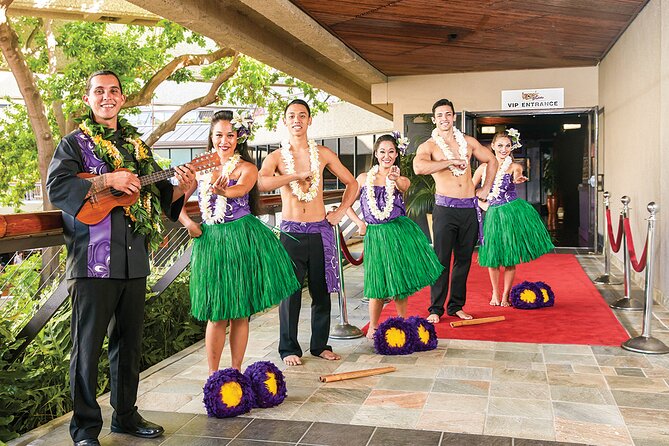
Rock-A-Hula is one of those Waikiki choices that works even when your day is already full. You’re not signing up for a long outing. This is a tight performance—about 1 to 3 hours—that you can slot in without needing transportation planning on top of everything else.
What I like about the format is the way it condenses a lot into one stage production. You get a sense of how Hawaiian music and dance changed as outside influences mixed in over time. And because the show uses live music, dance, and onstage storytelling, you’re not just watching costumes. You’re watching a sequence of eras connect.
It also has a “family night out” feel. The show is positioned for all ages, so even if you’re traveling as a couple, you won’t feel out of place. You’ll still get the full stage spectacle—just with an audience that’s more mixed than a strict adults-only theater crowd.
You can also read our reviews of more tours and experiences in Honolulu


Inside the Royal Hawaiian Theater: seating, comfort, and sightlines
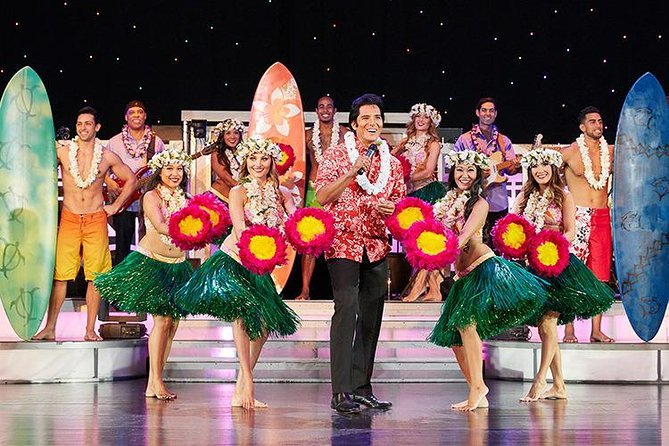
This performance happens in the Royal Hawaiian Theater at the Royal Hawaiian Center—one of the key reasons the ticket feels like more than just basic entertainment. The theater is 750 seats, built for a premier show experience, and the seats are described as soft and spacious.
That matters more than you might think. A live show gets long if you’re crunched or squinting. Here, the design and layout seem to give most people a workable view. In practical terms, you can pick general seating and not stress about finding the one perfect row.
The other seat-related benefit is simple: if you’re doing Waikiki on a vacation pace, you’ll appreciate being comfortable while the production runs. Even if the program leans louder at times (more on that below), you’re not battling a bad chair or narrow sightline.
The main event: Rock-A-Hula and the 1920s-to-now storyline
The show is built as a timeline. The “Hawaiian Journey” theme walks you through how Hawaii’s music and dance evolved—from the era often connected with Hapa-Haole hula to more contemporary styles.
Onstage, that storyline is delivered with a mix of:
- Live band performance (not background tracks)
- Dancers who shift styles across the decades
- Visual imagery, including footage that evokes actual concert scenes
- Big theatrical moments that keep the pacing moving
The result is that you’re not only watching individual acts. You’re getting context for why the styles changed. If you like your culture learning with your entertainment, this format is a good fit. It also helps you “place” what you might see later in other Hawaiian performances—why certain costumes, rhythms, or movement styles show up in different eras.
What the show emphasizes (and why it’s worth your attention)
The show is specifically framed around the evolution of Hawaii’s musical and dance forms. In other words, it’s not just a collection of popular songs. The production tries to connect the dots between traditional foundations and later pop influence.
That’s part of the value for a first-timer. You’re not only going to remember the fire and choreography. You’re also likely to leave with a clearer sense of how Hawaiian entertainment became a worldwide sound—without losing its own identity.
The Elvis and Michael Jackson angle: great fun, mixed expectations
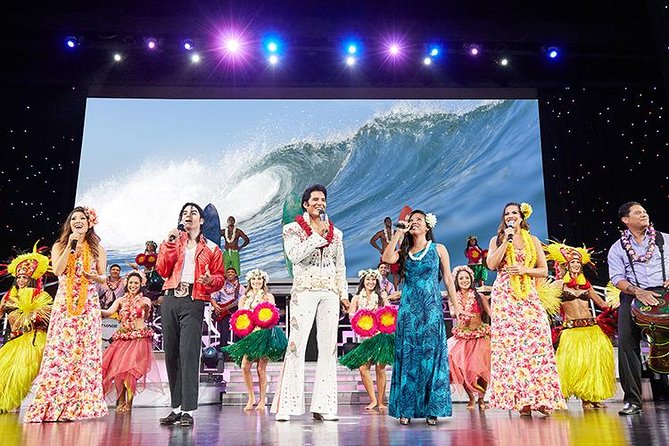
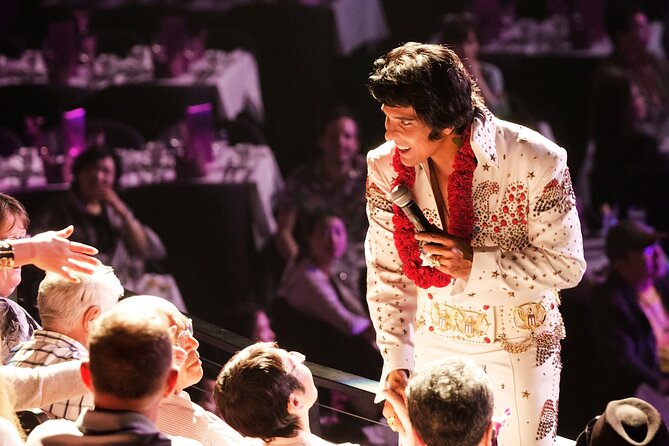
Here’s where you need to match your taste to the show. Rock-A-Hula includes tribute-style performances tied to Elvis Presley and Michael Jackson. For many people, this is the fun part. The impersonations and stage energy can be a real highlight, and the rock and pop segments help the show reach a wider audience.
For others, that’s the drawback. Some people expected the program to feel more strictly Hawaiian, with less time devoted to rock/pop tributes. And a few felt the balance between Hawaiian elements and rock/pop moments wasn’t what they hoped for.
So I’d treat this as a mixed-genre production: it’s Hawaiian-themed, with a timeline focus, but it also uses famous pop and rock icons to show how music and performance styles crossed over.
If you’re going with kids, teens, or anyone who likes recognizable mainstream performers, that rock/pop layer can make the show click quickly. If you’re traveling specifically for a deeper traditional-only hula experience, you might feel impatient when the show pivots into the tribute segments.






Fire knife dance and hula: what to watch for in each segment
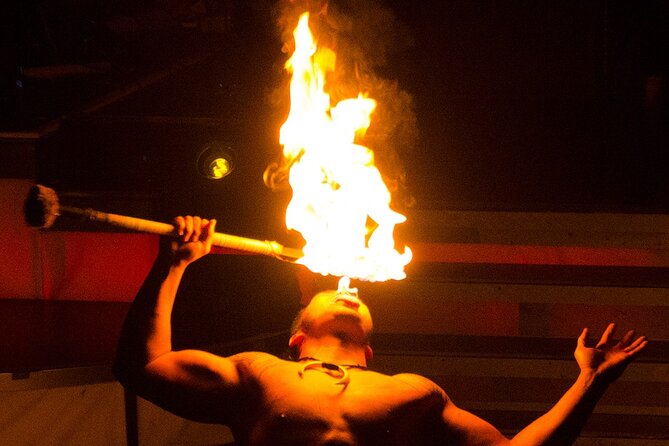
Let’s talk about the big visual hook. Fire dance is part of the show’s identity, and it’s often the moment people remember most clearly afterward—especially the fire knife dance and other fire-based stage skills.
When it works, it works fast. The lighting, the live band energy, and the dancers’ timing all build toward those stage moments, which makes it hard to look away. Even if you’re not a hula expert, you can still appreciate the precision and athletic control.
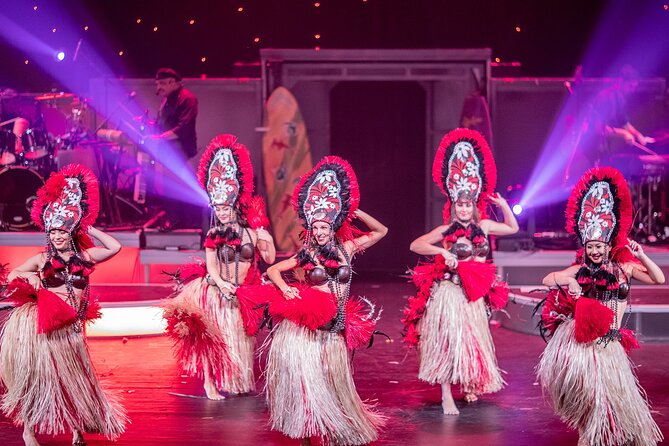
Alongside the fire, you’ll also see hula styles shift through the production. The show doesn’t treat hula like a single static thing. Instead, it presents dance as evolving with the music. That’s a helpful way to learn, because you’re seeing how movement changes with different rhythms and cultural influences.
Practical tip for enjoying the choreography
If you want the most out of the dance, watch your timing: don’t only look at the big fire moments. Pay attention to the transitions between styles. Those switchovers are where the show’s “timeline” idea becomes clearer—how performers adjust posture, hand shapes, and movement emphasis from one era to the next.
Meet & greet with the cast: included, and that changes the tone
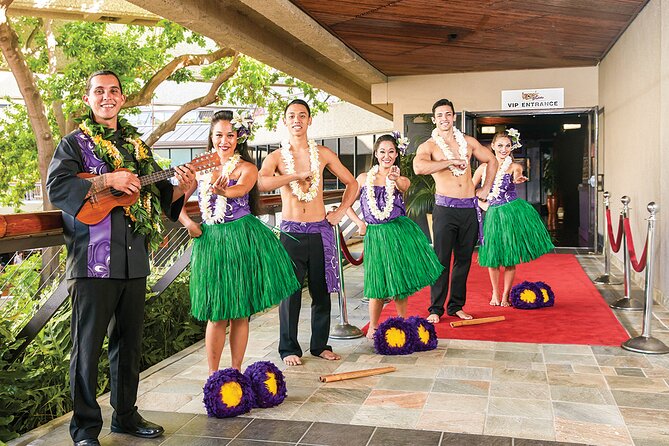
A standard ticket to a show is one-way: you watch, you leave. This one adds a human touch. Meet & greet with the cast is included, and the experience is capped at a maximum of 10 people.
That cap is a meaningful detail. It suggests you’ll have more personal interaction time than you would with a massive crowd event. Even if the meet-and-greet isn’t long, it can be the difference between a forgettable performance and a night you feel you truly participated in.
What I’d do if you care about this part: come in ready to be present. Don’t treat the meet-and-greet like a quick photo stop only. Even a short conversation can make the show’s cultural storyline feel more grounded, because you’re meeting the people bringing the timeline to life.
Price and value: is $99 reasonable?
At $99 per person, you’re paying for a complete production package: admission to the show (general seating), live musicians, dancers, fire performance, plus the meet-and-greet.
Is it a bargain? Not usually. But it also isn’t just a low-cost show with a thin cast. The theater is a premium 750-seat venue, and the show is structured like a real stage production rather than a casual performance.
The value question usually comes down to what you want from the night:
- If you want a polished, high-energy show with laughs, music, and stage spectacle, the price is easier to justify.
- If you only want strictly Hawaiian music and hula with minimal pop influence, you may feel the ticket cost is too high for the portion of the show you’ll enjoy.
One extra practical point: the ticket you buy may not cover a meal or buffet. If you’re planning on dinner as part of the outing, confirm what’s included with any add-on, because the show experience itself is separate from food upgrades.
Timing: when to arrive and what to do beforehand
Start time is listed as 7:15 pm. Since this is a theater show, I’d treat it like any good night-out plan: arrive early enough to settle in and avoid stress.
Before the show, Waikiki is built for easy pre-dinner wandering. You can keep it simple: eat nearby, then walk or taxi to the Royal Hawaiian Center area and be ready for the performance window.
Also, if you’re traveling with anyone who gets tired early, this show is ideal. It’s not a late-night marathon. It’s a focused evening event that lets you still enjoy a full vacation day without sacrificing your rest.
Who Rock-A-Hula is best for
This show fits best if you match at least one of these:
- You want a stage production with live music, not a low-key performance
- You’re interested in how Hawaiian music and hula changed over time
- Your group enjoys high-energy entertainment and fire dance
- You like the idea of recognizable pop performers in a Hawaiian-themed storyline
- You want an included meet & greet without paying for VIP
Who might want to skip it:
- People who want a purely traditional Hawaiian hula evening with no pop/tribute segments
- Anyone who is very sensitive to audio balance issues (some descriptions note the band can be too loud for the singers)
Booking and planning tips that actually help
Tickets are commonly booked about 27 days in advance on average. That doesn’t mean you must book exactly then, but it does suggest demand is real—especially if you’re going during busy parts of the year.
Because the show is time-specific, I’d pick your date based on your schedule first. Then book. If you’re also planning other Honolulu nights, treat this as your anchor event.
Also, because the show is in a theater setting with a mobile ticket, you’ll want your ticket ready on your phone when you arrive. It’s listed as a mobile ticket, so plan for a full charge before you head out.
Weather reality
The activity is described as operating in all weather conditions, but the cancellation policy also notes that if it’s canceled due to poor weather, you’ll be offered a different date or a full refund. Translation: have a backup plan in your calendar, and don’t wait until the last minute if weather is questionable.
Should you book Rock-A-Hula?
Book it if you want a fun, polished night in Honolulu with live music, fire knife dance, and a storyline that links Hawaii’s music and dance from the 1920s to today. The comfort of the Royal Hawaiian Theater and the included meet & greet add real value at the $99 level.
Skip or reconsider if you’re chasing a strictly traditional Hawaiian show and worry that pop/Elvis/Michael Jackson segments will pull you out of the experience. Also consider the sound issue: if you’re picky about hearing every vocal line clearly, you may want to go with the attitude that this is a high-energy production where the band can take the lead.
FAQ
FAQ
What time does Rock-A-Hula start?
Start time is 7:15 pm.
How long is the Rock-A-Hula show?
The duration is about 1 to 3 hours.
How much is the Rock-A-Hula ticket?
The price is $99.00 per person.
Is the ticket a mobile ticket?
Yes. The ticket is listed as a mobile ticket.
What’s included with the general seating admission?
Admission to the Rock-A-Hula show with general seating is included, and there is also a meet & greet with the cast.
Is there a VIP upgrade available?
The experience mentions that you can upgrade to a special VIP experience, but details aren’t provided here.
Does the show run in bad weather?
It is described as operating in all weather conditions. The cancellation policy also says if it’s canceled due to poor weather, you’ll be offered a different date or a full refund.
Is a service animal allowed?
Yes, service animals are allowed.
How many people are in the experience group?
The maximum is listed as 10 travelers.
What is the cancellation window for a full refund?
Free cancellation is available up to 24 hours in advance for a full refund. Canceling less than 24 hours before start time isn’t refundable.