REVIEW · NORTH SHORE TOURS
Beginner Surf Lesson in North Shore, Oahu
Book on Viator →Operated by North Shore Banzai Surf School · Bookable on Viator
First waves come fast on Oahu. A beginner surf lesson at Puaʻena Point is one of the simplest ways to experience the North Shore, with gear handled and coaching aimed at getting you upright quickly. You’ll also be near a beach where sea turtles are a common sighting.
I love the small-group format (max 10), because it keeps the attention practical instead of generic. I also love that you arrive to a ready-to-go setup: surfboard, leash, life jacket, rash guard or surf shirt, fins, plus a surf guide and instructions.
One thing to consider: the standard lesson runs about 2 hours, so you’re committing to a solid block of time. If you want a shorter 1-hour session, the private option is just you and the instructor.
In This Review
- Key points worth knowing
- North Shore in Two Hours: What Your Lesson Really Looks Like
- Price and Value: How $130 Adds Up on the North Shore
- Meeting at Puaʻena Point Beach Park in Haleiwa
- Included Gear That Makes Beginners Feel Safer
- How the Coaching Works: From Panic to Pop-Up
- Catching Waves: What You Should Aim For (and Not Stress About)
- Sea Turtles at Puaʻena Point: Enjoy the View, Follow Safety
- Small-Group Energy vs Private Coaching for Different Travelers
- What to Bring (and What You Can Leave at Home)
- When to Book and How Busy the North Shore Can Be
- Should You Book This Beginner Surf Lesson?
- FAQ
- Where is the meeting point for the lesson?
- How long is the beginner surf lesson?
- Is there a private beginner lesson option?
- What is included with the price?
- Do I need to bring my own surfing equipment?
- Are beginners welcome?
- How many people are in the group?
- Is transportation included?
- Are sea turtles likely to be seen?
- What is the cancellation policy?
Key points worth knowing
- Max 10 surfers means more personal coaching when you need it most
- Gear is included (board, leash, life jacket, rash guard, fins) so you travel light
- Puaʻena Point is the meeting point, in the Haleiwa area on Oahu’s North Shore
- Beginner-first instruction works for kids and adults of different comfort levels
- Sea turtles are common on this beach, so keep your eyes up between sets
North Shore in Two Hours: What Your Lesson Really Looks Like
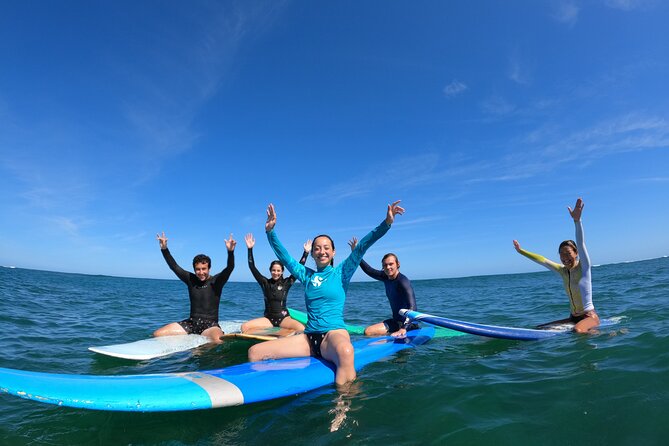
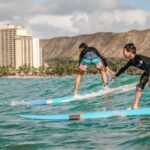
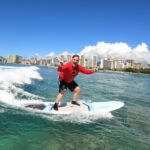
This is a straight-up beginner surf lesson, built for people who have never stood on a board before. You’ll spend your time learning the basics and then getting into the water, not hanging around for hours while other people do the fun part.
The format is about speed-to-skill. You’ll get instruction on how to handle the board, how to move in the water, and what to do when a wave comes your way. Then the goal is simple: catch waves early, even if you’re brand new.
In the small-group setting, you’ll be working through the same core fundamentals as everyone else, but the instructor can still adjust what you practice. That matters because the biggest beginner problems are usually specific: paddling harder than you need, standing too late, or getting nervous when the wave hits.
If you go private, the operator notes it becomes a 1-hour lesson instead of the standard ~2 hours. The promise is that you’ll get just as many waves either way, so you can choose based on whether you want group energy or total one-on-one focus.
You can also read our reviews of more tours and experiences in Oahu

Price and Value: How $130 Adds Up on the North Shore
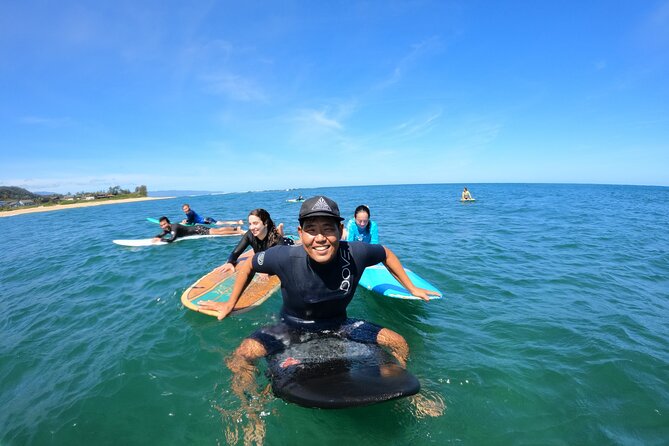
At $130 per person for about 2 hours, this lesson is priced like a real activity, not a watered-down intro. What makes it feel fair is the “included” list, because you’re not paying extra for key safety and comfort gear.
You get the surfboard, leash, life jacket, rash guard or surf shirt, and fins. That’s a big deal if you’re traveling with limited luggage. It also means you’re using gear that’s meant for learners, not whatever you can scrounge on your own at the last minute.
You’re also paying for coaching time. The description calls out a beginner-friendly course and emphasizes more personal attention in a small group (max 10). In the reviews, the instructors are praised for being kind, patient, and focused on getting people to catch waves, including kids.
One more value factor: the operator says they guarantee you’ll get just as much wave time either way—group or private. Even if you don’t think about guarantees while booking, it’s a useful signal: their instruction isn’t just about teaching theory. It’s about getting you into the action.
Meeting at Puaʻena Point Beach Park in Haleiwa
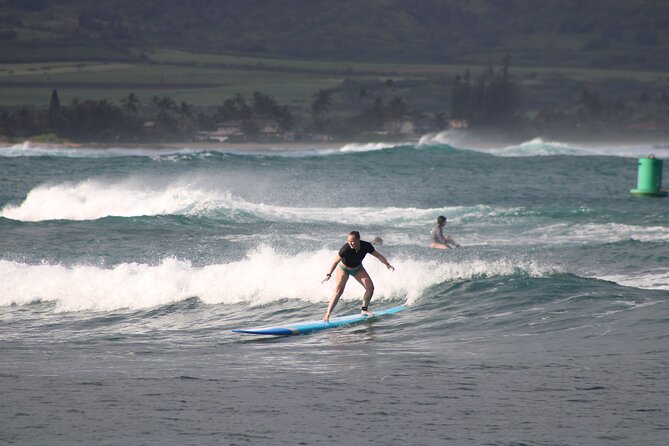
Your lesson starts at Puaʻena Point Beach Park (Kahalewai Pl, Haleiwa, HI 96712). That’s good news if you want to base yourself on the North Shore and keep your day simple. The experience ends back at the meeting point, so there’s no awkward shuffle to get yourself finished.
You’ll likely check in with your booking and use a mobile ticket. The confirmation is provided at the time of booking, so you can plan around that once you reserve.
Transportation isn’t included as a private transfer, but the tour info notes it’s near public transportation. Translation: you’re not locked into renting a car just to do this.
Because the North Shore can be busy, I recommend building in a little buffer for parking and walking to the beach area. The lesson is short enough that you don’t want to burn time arriving late and missing warm-up or the first wave attempts.
Included Gear That Makes Beginners Feel Safer
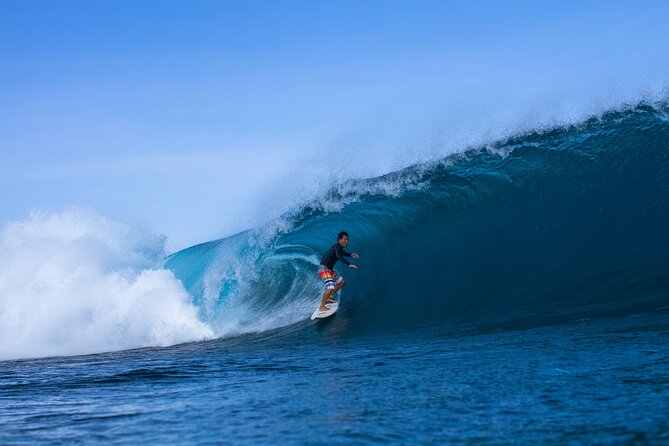
One of the smartest parts of this lesson is what they hand you before you ever reach the water. You get a surfboard, leash, life jacket, rash guard or surf shirt, and fins. For first-timers, that set-up reduces friction.
The life jacket is especially helpful early on. It’s not about turning surf lessons into swimming lessons, but it does help you feel stable while you learn paddling and positioning. The leash matters too because it helps you keep the board connected if you fall off.
The rash guard or surf shirt is also about comfort. You’ll be spending time in and around saltwater and sun, and wearing something designed for it beats improvising with whatever shirt you brought for dinner.
Fins are another detail that helps beginners. They improve control while paddling and can make you feel less like you’re battling the water. None of this makes you a pro overnight, but it does make the learning curve less scary.
And because everything is included, you can arrive with confidence and focus on the actual task: standing up and staying balanced for long enough to enjoy the ride.
How the Coaching Works: From Panic to Pop-Up
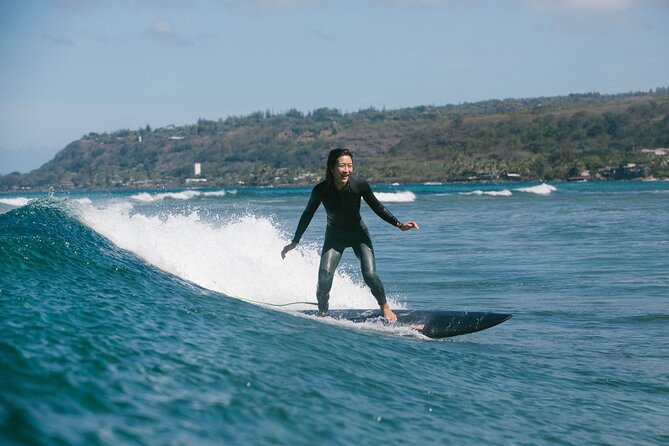
Beginner surf lessons succeed or fail on coaching clarity. Here, you’re not just handed a board and told good luck. You’re taught with a surf guide and instructions designed for novices.
The reviews point to a specific style that works: the instructors are patient and encouraging, and they focus on giving you feedback right when it helps. One standout example is an instructor named Mitch, praised for helping someone catch their first wave even though they expected it to be much easier.
You’ll likely cycle through a few core skills repeatedly. That repetition is what turns surf into something you can do without thinking too hard. Expect coaching moments tied to your posture, your timing, and your confidence as the wave lifts you.
If you’re learning with kids or with mixed ages, the teaching approach matters even more. One review highlights an instructor being super kind and patient with a 10-year-old, which is a reminder that beginners don’t all learn the same way. Some need reassurance. Others need small corrections.
The best part is that the instructor doesn’t stop at explanation. In the reviews, you’ll see mention of towing out and pushing off, which helps beginners get into the wave-catching rhythm faster. That’s huge. Getting “stuck waiting” is how some lessons lose momentum. This one aims to keep you moving toward the fun part.






Catching Waves: What You Should Aim For (and Not Stress About)
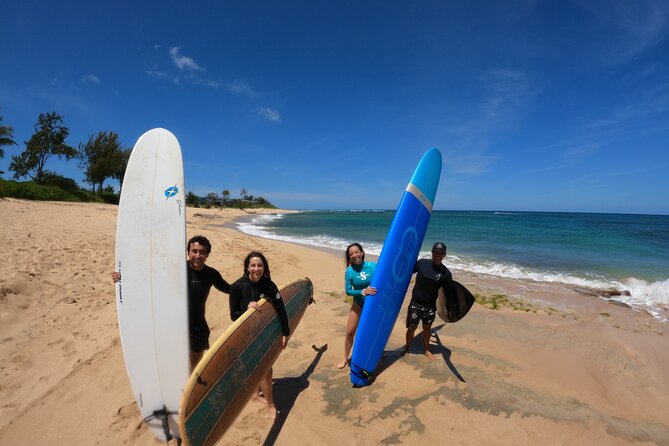
Your first lesson win isn’t looking perfect. It’s getting the sequence right: paddle, feel the wave, position the board, and stand at the right moment.
The operator’s overview stresses beginner access and that you’ll get waves either in group or private. That goal shows up in the way the lessons are described: you work on skills and then practice them with real wave attempts, with support in the water.
For beginners, the biggest mental hurdle is often fear of the fall. But you can’t control the ocean, only your actions inside it. That’s why life jacket support and hands-on guidance matter. They reduce the risk of panic when something changes—like wave size or timing.
You should also expect the lesson to feel active and physical. Surf is work. Even on days with gentler waves, you’ll be paddling, balancing, and getting up repeatedly. For many first-timers, that’s also part of the appeal: it’s an exercise you earn through fun.
If you’re coming with a kid or a teen, this lesson can be a confidence builder. One review describes a family-style experience with different skill levels, including teens with some experience. The instructor still made it fun and effort-light for everyone, which suggests the coaching adapts to the group’s needs.
Sea Turtles at Puaʻena Point: Enjoy the View, Follow Safety
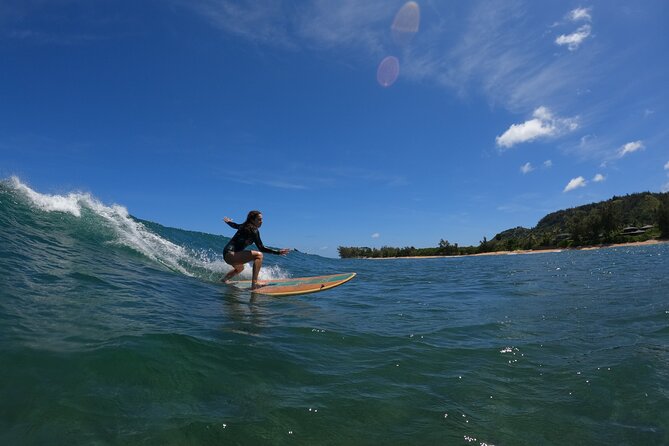
North Shore beaches have a reputation for sea turtles, and this lesson is specifically linked to that kind of spotting. The highlights say to look out for sea turtles, a common sighting on this beach.
In practical terms, keep your eyes up when you’re taking breaks on shore and when you’re repositioning. But don’t let turtle spotting distract you from safety. Your instructor is running the lesson. If they signal to move or adjust, follow that first.
Sea turtles can also add a sense of place. You’re not just learning a sport in a generic setting. You’re learning in one of Oahu’s iconic coastal stretches, where marine life is part of the day.
It’s worth noting that the turtle highlight is framed as a common sighting, not a guaranteed encounter. So if you don’t see any, don’t treat it like a disappointment. The surfing experience is still the main event.
Small-Group Energy vs Private Coaching for Different Travelers
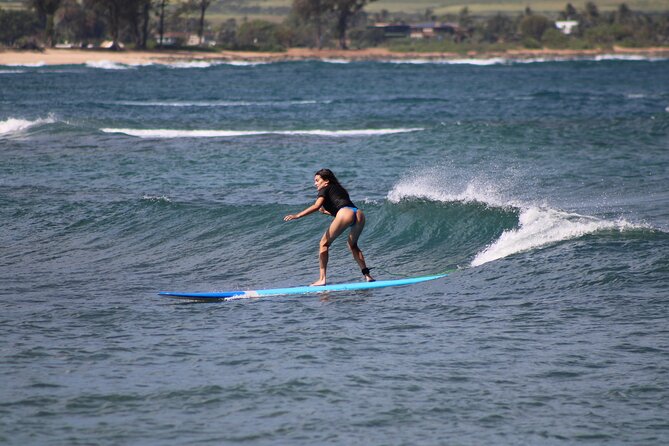
This lesson caps at a maximum of 10 travelers, so you’re not stuck in a huge class. That size strikes a practical balance. You get shared energy on the beach, but the instructor can still check on your progress without yelling over a crowd.
If you want more focused time, there’s a private option for just you and the instructor, and it’s listed as 1 hour. That can be ideal if you:
- want faster feedback cycles
- are nervous and prefer fewer people around
- want a custom pace that matches your comfort level
On the flip side, group lessons can be better for families or friend groups. One review describes three people doing a private beginner lesson together, including two teenagers and an adult with no experience, and the overall vibe was friendly and confidence-building for everyone. Even if you don’t book private, the lesson’s beginner approach aims to keep the atmosphere relaxed.
This is also a good fit for travelers who want a hands-on Oahu experience without spending the whole day on logistics. You’re learning the sport, getting guidance, and ending right back at the beach.
What to Bring (and What You Can Leave at Home)
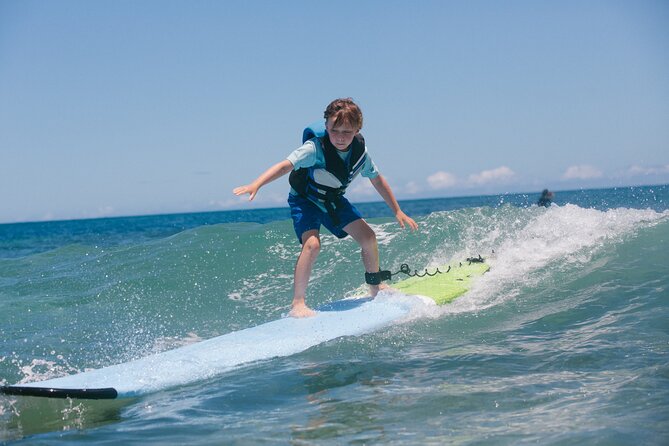
Because the surf essentials are included, you can travel lighter than you would for many activities. You don’t need to bring a surfboard, leash, fins, or a life jacket. You also don’t need to find a rash guard last minute.
That said, you should still plan for a typical beach activity day. Expect sun exposure. Even if you’re wearing a surf shirt or rash guard, you’ll want to protect your skin before you start paddling.
A second practical tip: bring a bag you can rinse or wipe down. After a lesson, you’ll be saltwater-soaked and sun-dried. Getting that under control keeps the rest of your day pleasant.
If you’re traveling with kids, you might think about extra comfort items like water and a change of clothes ready to go after. The activity ends back at the meeting point, so you’ll want to transition quickly from “wet and sandy” to “ready for the next stop.”
Also remember the lesson is offered in English, and service animals are allowed.
When to Book and How Busy the North Shore Can Be
The course is popular enough that it’s typically booked about 10 days in advance on average. If your trip dates are fixed and you want a specific time window, don’t wait until the last minute.
North Shore conditions can also change throughout the day, so building in a little flexibility helps. The lesson timing is not listed beyond the ~2 hours, so treat it as a standalone window rather than trying to stack too many tight activities right next to it.
On the planning side, you can cancel for free up to 24 hours before the experience start time for a full refund. That makes it easier to hold a spot while you lock in the rest of your day.
Should You Book This Beginner Surf Lesson?
Book it if you want a beginner-first, gear-included surf lesson on Oahu’s North Shore that aims to get you onto waves quickly. The combination of small-group size (max 10), included safety and comfort gear, and patient beginner coaching is exactly what you want when you’re learning for the first time.
I’d also recommend it if you’re traveling with kids, teens, or mixed experience levels. The lesson is described as friendly for novices and mentions instructors being kind and encouraging, which is the difference between a fun first attempt and a stressful one.
Skip or rethink only if you need a very customized agenda or a longer surf training session. This is a solid intro, not a multi-day intensive.
If you want an active, authentic North Shore experience that’s still manageable in a couple of hours, this is a strong choice.
FAQ
Where is the meeting point for the lesson?
The lesson starts at Puaʻena Point Beach Park (Kahalewai Pl, Haleiwa, HI 96712, USA).
How long is the beginner surf lesson?
The group lesson runs about 2 hours.
Is there a private beginner lesson option?
Yes. If it is just one on one (student and instructor), it is listed as a 1-hour private lesson.
What is included with the price?
Included items are the surfboard, leash, life jacket, rash guard or surf shirt, fins, and surf instructions or a guide.
Do I need to bring my own surfing equipment?
No. Surfboard, leash, fins, and a life jacket are included, along with a rash guard or surf shirt.
Are beginners welcome?
Yes. The course is described as beginner-friendly and open to surfing novices.
How many people are in the group?
The experience has a maximum of 10 travelers.
Is transportation included?
Private transportation is not included. The meeting area is near public transportation.
Are sea turtles likely to be seen?
Sea turtles are listed as a common sighting on this beach, so it’s worth keeping an eye out.
What is the cancellation policy?
You can cancel for a full refund up to 24 hours before the experience’s start time. Within 24 hours, the amount paid is not refunded.