REVIEW · AUDIO TOURS
Downtown Honolulu Self Guided Walking Audio Tour
Book on Viator →Operated by History with Action · Bookable on Viator
Honolulu history starts in one spot. This self-guided walking audio tour threads together royal sites, politics, and 20th-century memory across downtown.
You’ll follow a route that’s about 1.6 miles and built around location-triggered stories, with more than 23 audio moments.
I love the hands-free setup: the audio plays on its own based on where you are, so you can look up as you go. I also like the offline maps and offline-ready design, which helps when cellular coverage is spotty.
The main thing to watch is the app setup. You must download the tour while you have strong Wi‑Fi/cellular, and if your phone is struggling, you may lose momentum and end up just walking.
In This Review
- Key things to know before you go
- Why Downtown Honolulu Works So Well for a Self-Guided Audio Walk
- Price and Timing: Is $9.99 Actually Good Value?
- Getting Started: The App Password, Offline Download, and Setup That Can Trip People Up
- Route Basics: Start at Aloha Tower, Finish at the Queen Lili‘uokalani Statue
- Stop-by-Stop: From Kamehameha to Iolani Palace (and the People Remembered After Pearl Harbor)
- Stop 1: King Kamehameha Statue
- Stop 2: Kawaiahaʻo Church
- Stop (Missionary-period museum stop)
- Stop 3: Ali‘iolani Hale
- Stop 4: Honolulu Hale (City Hall)
- Stop 5: Patsy Takemoto Mink Statue and Memorial
- Stop 6: Sky Gate by Isamu Noguchi
- Stop 7: Hawaii State Capitol
- Stop 8: Eternal Flame Memorial
- Stop 9: Washington Place
- Stop: Iolani Barracks (Royal Guard before the coup)
- Stop: Iolani Palace (the only royal palace in the U.S.)
- Stop 10: Queen Liliʻuokalani Statue (end point)
- Comfort and Navigation Tips: Headphones, Heat, and Keeping the Audio Flowing
- What You’ll Learn (Without Needing a Guidebook)
- Who Should Book This Walk, and Who Might Prefer Another Plan
- Should You Book? My Practical Take
- FAQ
- Where does the tour start?
- Where does the tour end?
- How long does the walking tour take?
- How far is the route?
- Is the tour in English?
- Does the audio play automatically?
- Can I use it without cellular service?
- What do I need to do before I start walking?
- Are admission tickets included for attractions?
- Can I pause or start at any time?
Key things to know before you go
- GPS-triggered audio: stories start when you reach each landmark area
- Works offline after download: bring your phone, but you do not have to rely on signal
- Flexible pacing: start anytime, pause anytime, and take breaks for photos
- Downtown-to-palace route: you’ll move from royal history to Iolani Palace and beyond
- Free-admission stops listed: many sites are shown as no-ticket-needed, but the tour itself includes no entry passes
- Tech matters: download instructions use a password and an external app, so plan your setup time
Why Downtown Honolulu Works So Well for a Self-Guided Audio Walk

Downtown Honolulu is packed with meaningful buildings, statues, and memorials, and it’s laid out so walking feels natural. The tour format is a smart match for that: you’re not stuck with a group pace, and you’re free to stop at the exact spot that makes the story click.
What makes this one especially practical is how it’s built around you moving through the city. The audio plays automatically as you reach each stop, so you don’t need to constantly tap through menus. That means more time actually noticing details—signage, placement, and the scale of what you’re seeing.
You also get a clear storyline arc. Early stops focus on Hawaiian leadership and monarchy; mid-route shifts into government buildings and political change; later stops bring you to memorial memory, including Pearl Harbor. If you like history that connects different eras instead of dropping a random fact every block, you’ll appreciate the flow.
You can also read our reviews of more walking tours in Oahu



Price and Timing: Is $9.99 Actually Good Value?
At $9.99 per person, this is priced like a small, low-stress “education add-on.” You’re not paying for transportation or a guide; you’re paying for an audio system and a route that tells you what you’re looking at.
The time range matters here. Plan on 1–2 hours for the full walk at a comfortable pace. In practice, this usually turns into:
- about an hour if you keep moving and only glance at each stop, or
- closer to two hours if you take photos and linger near the bigger landmarks (like the palace area and memorials).
Also, the route length is about 1.6 miles, which is reasonable for most visitors. It’s far enough that you’ll feel like you did something, but short enough that you can bail early if it’s too hot or you want to explore on your own.
Getting Started: The App Password, Offline Download, and Setup That Can Trip People Up
This tour is self-guided, and no one meets you at the start. That’s fine—once the app is ready.
Here’s the practical setup in plain terms:
- After booking, you’ll receive an email and text with instructions and a password (search for audio tour in those messages).
- You download the separate Action’s Tour Guide App.
- Use the password in the app to unlock the tour.
- You’re instructed to download the tour while you have strong Wi‑Fi/cellular, because it’s designed to work offline after that download.
That “download first” rule is the big deal. If you try to run everything on weak signal, your audio might not behave the way you expect. My advice: do the heavy lifting before you begin walking. Stand somewhere with reliable signal near your start point, download, then put your phone away and enjoy the walk.
You’ll also want to use a device that matches what’s recommended:
- iPhone on iOS 15+
- Android 9+
- iPad/tablet with GPS and cellular connectivity
Finally, the tour is private in the sense that only your group participates—no mixing with strangers in a live guide scenario.
Route Basics: Start at Aloha Tower, Finish at the Queen Lili‘uokalani Statue
The walk begins at Aloha Tower Marketplace (Aloha Tower Dr, Honolulu) and ends at the Queen Lili‘uokalani Statue area (21024001, Honolulu).
It runs 9:00 AM–6:00 PM daily for the stated operating window listed. Since it’s a walking tour in an open downtown setting, timing matters more than you might expect.
Honolulu heat is real. In the afternoon, I’d expect you’ll want shade and indoor stops. The good news: downtown has plenty of places to duck inside between landmarks without breaking your momentum.
Also note the tour’s operating style:
- You can start and pause whenever you want.
- The audio plays on its own based on your location.
- You’re encouraged to follow the route and speed limits for the best experience.
If you’re the kind of person who likes to “just wander,” this still works—because you can pause and step off to look at something nearby, then come back when you’re ready.
Stop-by-Stop: From Kamehameha to Iolani Palace (and the People Remembered After Pearl Harbor)
Below is what you’ll experience as you move through the route. The story at each stop is the point, so I’m also sharing what’s worth looking for in the real world.
You can also read our reviews of more guided tours in Oahu






Stop 1: King Kamehameha Statue
You start with Kamehameha, and the audio sets a dramatic tone right away—warrior reputation, fierce leadership, and the reality that 1700s Hawaiian history involved intense power struggles between chiefs. It’s a strong opening because it frames everything that comes after: monarchy wasn’t just tradition; it was governance under pressure.
Practical tip: arrive ready to pause. This first stop is your “key” for understanding the rest of the Kingdom-era references.
Stop 2: Kawaiahaʻo Church
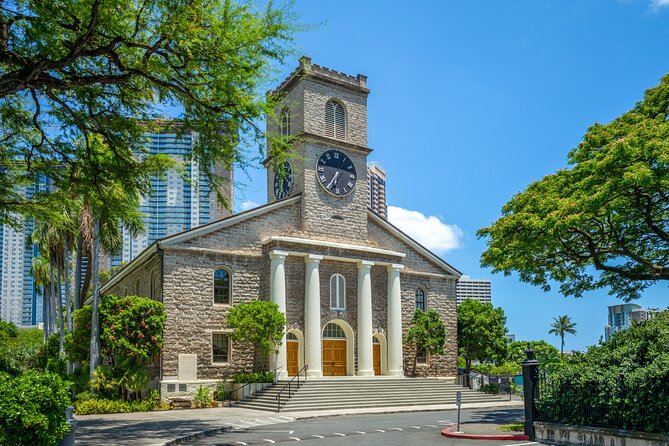
Next up is Kawaiahaʻo Church—not just a pretty landmark, but once described as the national church of the Hawaiian Kingdom. The story helps you see religious sites as part of the political and cultural system, not separate from everyday life.
If the church grounds feel quieter than the street outside, that’s normal. Take a moment to orient yourself before walking onward.
Stop (Missionary-period museum stop)
There’s a museum stop focused on Hawaii’s missionary period. This is valuable because it gives context for a major cultural shift many people skim over when they only focus on legends and royal figures.
If you’re deciding whether to rush: don’t. Even a short pause here can make later political and social changes easier to understand.
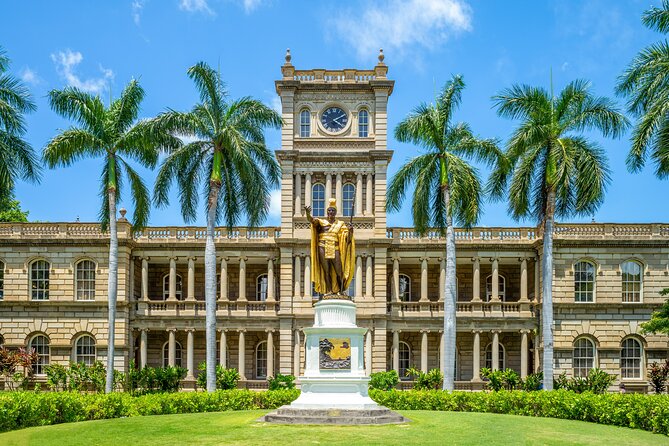
Stop 3: Ali‘iolani Hale
Ali‘iolani Hale connects monarchy to government. The audio explains that Kamehameha V built it as a palace for Hawaiian monarchs, but King Kalākaua converted it into government offices.
Look for how the building’s function changed. That’s one of those themes that repeats across this route: power adapts, spaces get repurposed, and the story behind the doors matters.
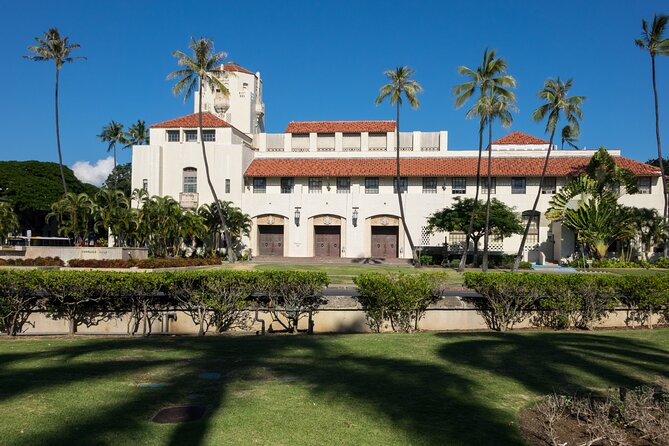
Stop 4: Honolulu Hale (City Hall)
At Honolulu Hale, the audio shifts into politics and reform-era tension. You’ll hear about Kalākaua returning from a world tour at the end of 1881—how Honolulu celebrated with a grand welcome banner—and then the darker side: plots around his downfall.
The story also references the Reform Party and how American political influence grew after the 1875 Reciprocity Treaty. This part is especially useful if you want a clearer timeline without hunting through books.
Stop 5: Patsy Takemoto Mink Statue and Memorial
Then the tour brings you forward in time to Representative Patsy Takemoto Mink. The audio highlights she was a third-generation Japanese-American who grew up in Hawaii.
This stop gives you a modern anchor. It’s not only about the Kingdom, and it’s not only about conflict. It’s also about leadership and representation in the U.S. context while still rooted in Hawaii.
Stop 6: Sky Gate by Isamu Noguchi
Sky Gate by Isamu Noguchi is a breather, visually and emotionally. The audio points you toward a way of seeing it: not a simple object, but an evocation—something like a feeling of Hawaii’s sky rendered in form.
This is the stop where I’d encourage you to slow down and actually look from different angles. Outdoor sculpture can be tricky in strong sun, so take a minute until the shapes make sense.
Stop 7: Hawaii State Capitol
Next is the Hawaii State Capitol area, with a reminder that before it existed, Hawaiians used ‘Iolani Palace as their seat of government.
This is a great “bridge” point. It helps you connect the route’s biggest landmark later to what you’re seeing now: the story isn’t just architecture; it’s where decisions got made.
Stop 8: Eternal Flame Memorial
At the Eternal Flame Memorial, the audio focuses on the people who died in the December 7, 1941 attack on Pearl Harbor. It also references Franklin Roosevelt’s famous words: a date that will live in infamy.
This stop is quieter by design. Give it space. If you’re walking with earbuds, I’d lower the volume here so the moment feels respectful and clear.
Stop 9: Washington Place
Now you’re at Washington Place, the former home of Queen Liliʻuokalani. The audio helps you picture how residence becomes connection—she’s described as having Native Hawaiians visit her constantly, and the idea that she never stopped being their queen.
It’s a strong contrast to the political plot points earlier. Here, the story leans toward personal presence and loyalty.
Stop: Iolani Barracks (Royal Guard before the coup)
You’ll hear about Iolani Barracks, and how it housed the queen’s royal guard before the coup led by Dole and the Annexation Club against Liliʻuokalani.
This is one of the more intense story beats on the walk. If you’re tired, it still pays off to listen fully. The audio explains the “why” behind the physical setting you’re standing near.
Stop: Iolani Palace (the only royal palace in the U.S.)
Next is Iolani Palace itself, dated to 1879. The audio calls it the only royal palace in the United States, which gives this stop extra weight even if you’ve seen palace-like buildings elsewhere.
If you’re the type who likes a clear visual takeaway: this is where you’ll want to look at scale and layout. The audio’s political framing makes the building’s purpose feel more real.
Stop 10: Queen Liliʻuokalani Statue (end point)
Finally, you finish at the Queen Liliʻuokalani Statue. The audio tracks how she gradually retreated from public life and focused on her home at Washington Place, staying close to her people.
The tour includes a line from her memoir, rendered as her willingness to give everything for them. It is for them that I would give the last drop of my blood; it is for them that I would spend, nay, am spending, everything belonging to me.
End here even if you’re in a hurry. This final stop is the tour’s emotional landing.
Comfort and Navigation Tips: Headphones, Heat, and Keeping the Audio Flowing
A few practical things can make this tour much smoother:
- Bring headphones/earbuds. The audio is the product, and downtown noise can be distracting.
- Download the tour first on strong Wi‑Fi/cellular, then switch to offline once you start.
- If you’re visiting in the afternoon, plan on heat breaks in buildings. A walking plan works best when you treat it like a series of short sprints, not a marathon.
- Device choice matters for navigation. If you’re using a GPS-dependent setup, make sure your phone is powered and your location services are on.
- Couples can share: the tour suggests you can share one tour by splitting headphones (so you both hear the audio without buying two tours).
Also, the tour encourages you to stick to the route and speed limit. This is for safety and for audio timing, since the audio triggers around each landmark area.
What You’ll Learn (Without Needing a Guidebook)
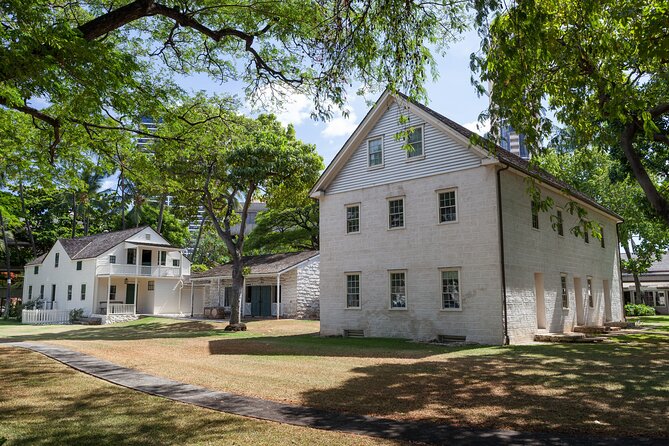
This tour is a compact way to understand a big chunk of Hawaiian and Honolulu storylines. You’re not just seeing monuments; you’re seeing how power moved through time.
You get a mix of:
- Kingdom-era leadership (Kamehameha, monarchy, Kawaiahaʻo’s Kingdom role)
- Government and political change (Ali‘iolani Hale’s conversion, Honolulu Hale and the Reform Party context, the Reciprocity Treaty reference)
- Modern civic leadership (Patsy Takemoto Mink)
- Art as interpretation (Noguchi’s Sky Gate)
- Collective memory (Pearl Harbor memorial)
That combo is why this works for many people. It’s not one-note. It’s a route that helps you connect people, institutions, and events.
Who Should Book This Walk, and Who Might Prefer Another Plan

This self-guided audio tour is ideal if:
- you like walking while learning
- you want a route that covers a lot of key downtown landmarks in about 1–2 hours
- you’re comfortable using a phone app and letting GPS control the audio
You might want to choose something else if:
- you don’t want to deal with app passwords and downloads
- you rely on staff to solve tech issues on the spot
- you’re sensitive to heat and don’t want an outdoor walk through downtown
A quick reality check: the content is strong, but the experience depends on the app doing its job. If you treat the setup step like part of the tour—download first, then walk—you’ll be happier.
Should You Book? My Practical Take
I’d book this if you’re excited to see Honolulu’s downtown through an organized lens—monarchy, government, modern representation, and memorial memory—without paying for a live guide.
I’d hesitate if you know you’ll be fighting with your phone on arrival. Plan your setup at the start point with strong signal, bring headphones, and start early enough that you’re not melting mid-route.
For a short history-rich afternoon that still gives you freedom, this format is a solid value at $9.99—as long as you respect the offline download step.
FAQ
Where does the tour start?
The tour starts at Aloha Tower Marketplace, Aloha Tower Dr, Honolulu, HI 96813.
Where does the tour end?
The tour ends at the Queen Lili‘uokalani Statue, 21024001, Honolulu, HI 96813.
How long does the walking tour take?
It takes about 1 to 2 hours.
How far is the route?
The tour is about 1.6 miles long.
Is the tour in English?
Yes, the tour is offered in English.
Does the audio play automatically?
Yes. Audio stories play on their own based on your location, and the tour is hands-free.
Can I use it without cellular service?
Yes. It includes offline maps, and you can use the tour offline after downloading it while you have strong Wi‑Fi/cellular.
What do I need to do before I start walking?
You’ll download the Action’s Tour Guide App, enter the password sent by email/text, and make sure the tour is downloaded with strong Wi‑Fi/cellular while onsite.
Are admission tickets included for attractions?
No. Attraction passes and entry tickets are not included, even though the tour notes many stops as free admission.
Can I pause or start at any time?
Yes. You can start anytime and pause anywhere to take breaks and continue later.