REVIEW · WALKING TOURS
Honolulu Downtown Walking Tour
Book on Viator →Operated by Hawaii Free Tours · Bookable on Viator
Royal Hawaii starts downtown. This Honolulu Downtown Walking Tour is a tightly focused morning stroll that turns big-name landmarks into a clear story of how the islands went from ancient roots to modern Hawai‘i. You’ll follow a local guide through downtown’s most important government and royal spaces without needing a car.
I especially like that the tour brings history to life through a real person’s storytelling—mine was guided by Susan, and she made the timeline easy to follow with plain-language answers. I also love the value: you pay $5 and most of the stops you enter are listed as free, so you’re mostly paying for guidance, not tickets. The pacing is the one thing to think about before you go.
Because it’s a “walking tour” in name, not a big-mileage hike, you should expect plenty of standing and talking. If you’re hoping for lots of movement and new streets at every minute, you might find the route feels short and the conversation takes the lead.
In This Review
- Key things I’d circle before you book
- How this $5 Honolulu downtown walk actually plays out (and why it’s good value)
- King Kamehameha Statue: where the story begins
- Ali‘iolani Hale and Iolani Palace: monarchy, diplomacy, and outside pressure
- Hawaii State Capitol: territory, statehood, and the timeline you can place
- Kawaiaha‘o Church and the nearby civic sites: faith and public life
- King Lunalilo Mausoleum: a calmer ending with legacy
- Pacing, walking distance, and why you might feel like you’re standing more than walking
- Who this Honolulu walking tour suits best (and who should choose differently)
- Quick tips to make the tour better for you
- Should you book this walking tour or not?
- FAQ
- How long is the Honolulu Downtown Walking Tour?
- Where do I meet the guide?
- What time does the tour start?
- How much does it cost?
- Are the tour stops free to enter?
- What happens if the weather is bad or I need to cancel?
Key things I’d circle before you book
- A local guide who explains the monarch-to-modern timeline in simple terms
- Stops with free admission listed, so you’re not stuck paying entry fees
- A short downtown loop (staying close to the center, not a long cross-island drive)
- Small group size with a maximum of 30 travelers
- Perfect for first timers who want the highlights without burning a whole day
- Easy morning logistics: starts at 9:00 am and ends back at the meeting point
How this $5 Honolulu downtown walk actually plays out (and why it’s good value)
Let’s start with the practical bits, because this tour is built around being easy. It runs about 1 hour 10 minutes (roughly 70 minutes) and starts at 9:00 am. You meet in front of the King Kamehameha Statue on Punchbowl St area (listed at 447 S. King St, Honolulu, HI 96813). The guide will be wearing a white or black t-shirt with the Hawaii Free Tours logo, so you’re not hunting around like it’s a scavenger hunt.
The price is $5.00 per person, which is almost comically low for a guided history loop. The reason it works is that you’re not paying for entrances everywhere—many of the listed stops are free admission, so your money goes toward interpretation, context, and answering questions. Also, with a max of 30 travelers, you’re not stuck in a huge crowd where questions get lost.
You’ll be in downtown Honolulu—and it’s specifically noted that this is outside Waikiki. That matters because downtown is where Hawai‘i’s civic and royal buildings sit close together, letting the guide connect the dots without you spending time commuting.
Weather matters here. This experience says it needs good weather, so plan to bring a light layer and stay flexible. On a bright morning, you’ll be grateful for the short time on your feet. On a wet day, you may get a cancel-and-reschedule situation, so check your confirmation and any updates before you head out.
You can also read our reviews of more walking tours in Oahu



King Kamehameha Statue: where the story begins
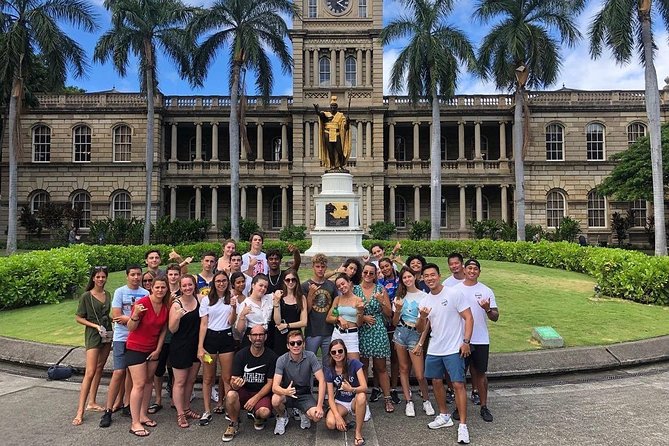
The tour’s first stop is the King Kamehameha Statue. This is a smart opener because it frames the big theme you’ll keep hearing: how Hawai‘i formed and how Hawaiians understood power, kinship, and leadership long before Western influence took center stage.
You’ll get a talk about the history of Polynesians, Austronesians, Hawaiians, and the formation of the first (and only) nation of Hawai‘i. That’s a lot to cover in one start-stop, but the tour’s design is built for “high signal” sightseeing—places that act like anchors for the timeline.
Why it’s useful for you:
- If you’re a first-time visitor, this sets names and eras in place, so later stops like Iolani Palace won’t feel like random buildings.
- If you’re returning or you like history, it gives you a starting point to compare what you already know with a Hawaiian-led interpretation of events.
A minor consideration: this is a place where you’ll likely be standing and listening for a bit. If you’re the type who hates long stationary segments, keep that in mind for the whole tour.
Ali‘iolani Hale and Iolani Palace: monarchy, diplomacy, and outside pressure
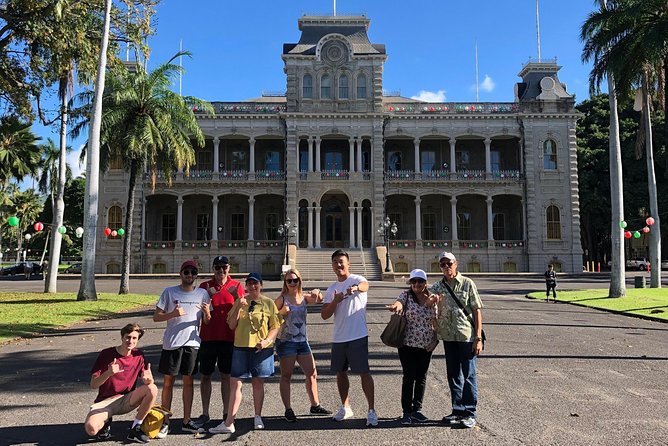
After the opening, the itinerary moves toward key royal and governmental landmarks, starting with Ali‘iolani Hale and then Iolani Palace.
At Ali‘iolani Hale, the focus is on bringing the royal-era context into focus before you step into the most famous residence in the group. Even if you’ve seen photos, this part of the walk helps you understand what the buildings were for and why they mattered.
Then comes Iolani Palace, where the guide connects the dots between Hawaiian monarchs and the roles played by people from the US mainland and Europe in shaping Hawai‘i’s history. This is one of the most meaningful stops because it sits right at the crossroads of sovereignty and outside influence.
What makes this stop work well in a short tour:
- The guide gives you the “who mattered and what changed” version, not a vague overview.
- You’re walking between landmarks, so the story stays anchored in what you can actually see.
I’ve found that this kind of guided framework is the difference between seeing a palace as just architecture and understanding it as a political statement. If you only have a morning to learn downtown Honolulu, this is where the tour earns its value.
Hawaii State Capitol: territory, statehood, and the timeline you can place
Next you’ll visit the Hawaii State Capitol. The focus here is the question many visitors leave Honolulu still fuzzy on: how Hawai‘i became a US territory / US state.
This stop is where your earlier understanding starts to snap into order. If the palace and ali‘i-era conversations felt like “history as story,” the capitol is history as systems—how governance shifted, what that meant for laws, and how the US connection became formal.
A practical benefit: you won’t need to study before you go. The tour is built to hand you just enough context so the timeline makes sense in your head as you move from site to site.
One consideration: because this is a compact tour, the guide may cover broad changes quickly. If you love every detail, you might want to jot down dates or names so you can follow up later on your own time.
Kawaiaha‘o Church and the nearby civic sites: faith and public life
The route also includes Kawaiaha‘o Church (spelled in the itinerary as Kawaiaha’o Church). You’ll get about 10 minutes at this stop. Even in that short window, a church visit can add an important layer, because it connects governance and public history to community life and spiritual tradition.
After that, the itinerary lists additional downtown landmarks you may pass or stop at briefly, including Honolulu City Hall and the Hawaii State Library. The idea isn’t to treat these like a museum schedule. It’s to keep circling around the same core theme: Hawai‘i as a place with deep roots and active civic institutions.
Why this part of the tour can be surprisingly helpful:
- It gives you contrast. Palaces and monuments tell one side of history; city and library spaces remind you that history continues through institutions and daily public life.
- It helps you “read” downtown Honolulu like a living map, not like a string of photo stops.






King Lunalilo Mausoleum: a calmer ending with legacy
The final major stop is the King Lunalilo Mausoleum, including the garden and burial area. You’ll get about 15 minutes here, which gives the tour a nice rhythm change: after the more political stops, this one tends to feel quieter and more reflective.
If you’ve been paying attention to the monarchy timeline, this ending helps you see the human side—how rulers are remembered, how legacy gets placed into space, and how important it is for a culture to maintain continuity.
For many people, this is the “I get it” stop. Not because it’s flashy, but because it gives emotional weight to what you just heard.
Pacing, walking distance, and why you might feel like you’re standing more than walking
Here’s the honest pacing expectation. This tour is short and concentrated. It’s described as around a 1.5 km radius by one attendee experience, and at the same time, there’s feedback that it can feel like less walking than you might assume—more talking, more standing.
So what should you do with that info?
- If you want a guided history primer and you’re fine listening, you’ll probably feel satisfied. This format works.
- If you’re hoping for big city-wandering energy, you might feel under-moved. In that case, you can treat this tour like a smart orientation, then add your own extra strolling before or after.
The good news is that the route stays in the center of Honolulu, so you’re not dealing with long transfers. And since it’s a morning tour that’s only about 70 minutes, it fits well with breakfast plans, museum visits, or beach time later.
Who this Honolulu walking tour suits best (and who should choose differently)
This is an easy “yes” if you’re:
- Visiting Honolulu for the first time and want the downtown highlights fast
- The kind of traveler who likes chronology and clear explanation
- Interested in how Hawaiian leadership and later external forces shaped the islands’ modern story
- Short on time and want a focused walk that doesn’t require a long schedule
It’s a softer “maybe” if you:
- Hate standing and prefer long walking routes
- Want a tour that functions like a street-by-street city walk
- Expect many additional stops beyond the listed landmarks
Also, if you love asking questions, this kind of small-group guided format tends to be the right match. And if you’re traveling with a service animal, that’s explicitly supported here.
Quick tips to make the tour better for you
A few practical moves can help you get more out of the hour:
- Wear comfortable shoes with good grip. Even a short route adds up when you’re on stone and sidewalk edges.
- Bring water. You’re not out for long, but it’s still Honolulu, and hydration is smart.
- If the weather looks questionable, check updates the day of. This tour requires good weather, so plan for a reschedule option if conditions aren’t right.
- Arrive early enough to find the correct guide. Meeting at the King Kamehameha statue is straightforward, but in a busy city, a 5–10 minute buffer helps.
Should you book this walking tour or not?
If your goal is to understand the big story behind downtown Honolulu in a short, friendly guided format, this is one of the best ways to use limited time. For $5, you get an organized route through major sites tied to Hawaiian monarchy, civic change, and modern statehood—plus a guide like Susan who explains in plain language and answers questions.
I’d say book it if you want a strong starting point. Skip it (or pair it with extra independent walking) if your priority is long distance and lots of movement.
FAQ
How long is the Honolulu Downtown Walking Tour?
The tour runs about 1 hour 10 minutes (approx.).
Where do I meet the guide?
Meet in front of the King Kamehameha Statue at 447 S. King St, Honolulu, HI 96813. The tour ends back at the meeting point.
What time does the tour start?
The start time is listed as 9:00 am.
How much does it cost?
The price is $5.00 per person. A mobile ticket is provided.
Are the tour stops free to enter?
The itinerary lists multiple stops with admission ticket free, including King Kamehameha Statue, Iolani Palace, Hawaii State Capitol, Kawaiaha‘o Church, and King Lunalilo Mausoleum.
What happens if the weather is bad or I need to cancel?
This experience requires good weather. If it’s canceled due to poor weather, you’ll be offered a different date or a full refund. You can cancel up to 24 hours in advance for a full refund.