REVIEW · WORKSHOPS
Family, Private & Group Bodyboard Lessons in Waikiki
Book on Viator →Operated by Ohana Surf Project · Bookable on Viator
First waves in Waikiki can change your trip. This 2-hour group session with Ohana Surf Project is built for fast progress: you get checked in, fitted with gear, then shuttled out to the learning zone where coaching stays close and practical for up to four students per instructor.
I also love how everything you need in the water is handled—board/bodyboard gear, rash guard, reef shoes, and fins—so you’re not hunting for equipment while you’re on vacation. One drawback: if someone in your group can’t swim, the info says to book a private lesson instead, since this group format is for most participants who can handle the water.
In This Review
- Key highlights to know before you go
- How the Ohana Surf Project flow keeps your session simple
- Pickup in Waikiki: the logistics that make or break a lesson day
- Entering the learning zone: what happens before you ride
- The gear is included, so spend your money on fun
- What the 2 hours feels like in real time
- The water setup: beginner-friendly, shallow, and controlled
- Meet the instructors: where the difference shows up
- Photos and videos: optional, but they can be worth it
- Who this lesson is best for
- Price check: is $118.84 good value for two hours?
- Tips to make your session go smoother (and safer)
- Should you book this Waikiki surf/bodyboard lesson?
- FAQ
- Where is the meeting point?
- Is pickup available from Waikiki hotels?
- How early is pickup before the lesson?
- How long is the lesson?
- What equipment is included?
- Do I need to bring a wetsuit?
- Are photos and videos included?
- What language is the lesson taught in?
- What if someone in my group cannot swim?
- Is free cancellation available?
Key highlights to know before you go
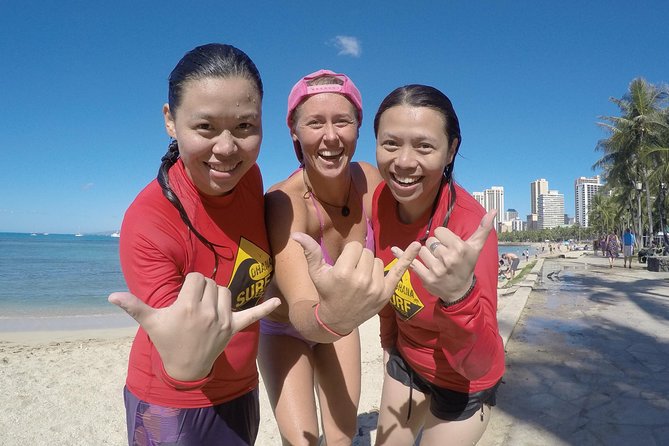
- Small group size (max 4), with one instructor for four students, so you get real feedback, not just a safety talk and a hope-for-the-best shove
- Pickup within Waikiki (from set hotels) plus help for some hotels just outside Waikiki with advance notice
- All gear included: rash guard, reef shoes, and the board setup (bodyboard/fins) they use for your lesson
- Shuttle to the beach: you’ll check in at the Ohana Surf Center, then ride the company bus/van to the water
- Photo and video upsell after the lesson, so you can focus on waves first and worry about shots later
How the Ohana Surf Project flow keeps your session simple
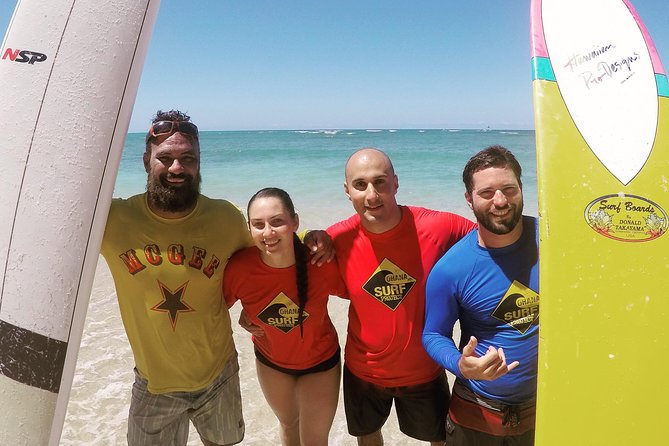
This isn’t a long, complicated tour. It’s a clean, step-by-step lesson that makes it easy to show up and get results.
You start with check-in at the Ohana Surf Center area by the Waikiki Beach Marriott zone. From there, you gear up (they provide what you need) and get a safety briefing before you hit the water. Then you board their yellow bus or a white shuttle van—this is the part that takes the mental load off. You’re not asking where to park, where to walk, or how long the beach transfer takes.
Once your session is done, you return to the Surf Center. That’s when you can watch photos and video and decide if you want to buy anything. Then you’re shuttled back to your Waikiki drop-off point.
Why this flow matters: when you’re learning a sport in ocean water, small delays turn into big fatigue. This plan keeps your attention where it should be—on technique, balance, and timing.
You can also read our reviews of more private tours in Oahu

Pickup in Waikiki: the logistics that make or break a lesson day
Pickup is one of the best value pieces here, especially if you don’t want to wrangle rides while wearing reef shoes that are still drying off sunscreen.
The standard courtesy pickup locations in Waikiki are:
- Ilikai Hotel
- Romer Waikiki at the Ambassador Hotel
- Don Ho Lane Van Depot
- Hyatt Regency
They also say you can arrange special pickup closer to these hotels with advance notice: Ala Moana Hotel, Hale Koa Hotel, Kahala Hotel and Resort, The Ritz Carlton, and The Ka La’i Waikiki Beach.
Timing-wise, pickup is scheduled 10–45 minutes before your lesson time, so build a little buffer into your morning. You’ll get the exact pickup location and time by email after booking.
Practical tip: if you’re staying somewhere not listed for standard pickup, reach out with your hotel name early. The info says they’ll do their best with advance notification.
Entering the learning zone: what happens before you ride
Before anyone gets on a board, you’ll do the boring-but-important stuff: gear, safety, and getting oriented.
A quick safety briefing is part of the process. Then you meet your instructor and go over where you’re at—first-timer, returning surfer, or someone who wants specific help. This matters because coaching changes based on comfort level, and the group size is small enough that you’ll actually feel the difference.
One detail I like: some sessions include beach practice and stretching before you enter the water. That kind of setup helps your body understand what it’s supposed to do before waves start testing your patience.
And you might also get a short demo style presentation. At least some instructors include a video demonstration first, which works well if you learn by seeing.
The gear is included, so spend your money on fun
Surf and bodyboard lessons go from stressful to fun fast when you don’t have to bring equipment.
This one includes:
- Rash guard
- Board setup used for the lesson (it calls out bodyboard, and the activity is still a surf-style lesson)
- Fins (for maneuvering and control)
- Reef shoes (mentioned as part of what’s provided)
A wetsuit rental is optional, not included by default. If you’re sensitive to cooler water or you just prefer extra thermal comfort, you may want to consider it.
The hidden value: reef shoes and rash guard help prevent the small, annoying stuff that can ruin a learning session—scrapes, sunburn, and that first-wave shock. When your kit is sorted, you can focus on the wave instead of your feet.
What the 2 hours feels like in real time
A lesson “about 2 hours” is not just a timer on the ticket. In practice, you’ll spend that time bouncing between:
- check-in and fitting
- coaching and technique practice
- time in the water riding the waves
- return to the center and optional photo/video viewing
Because the group is small (max 4) and the instructor ratio is tight, you typically get multiple attempts and ongoing corrections. Many first-timers do end up standing, even on an early try. That said, surfing is still surfing. You’ll probably fall more than you ride at the start. That’s normal. The win is how quickly you start making sense of what your body needs to do.
Also, be ready for the workout. Even when the waves are learner-friendly, paddling and popping up takes energy. One review notes the session was tiring in a good way—just plan for it.
You can also read our reviews of more tours and experiences in Oahu


The water setup: beginner-friendly, shallow, and controlled
The lesson zone is described as safe and suited to learning: shallow water with relatively gentle wave size. One review mentions shallow conditions around 1.5 meters and wave heights around 1 meter in the learner area.
The takeaway for you: you’re not thrown into heavy surf. You’ll be coached to stay in the zone where technique builds instead of where panic takes over.
Meet the instructors: where the difference shows up
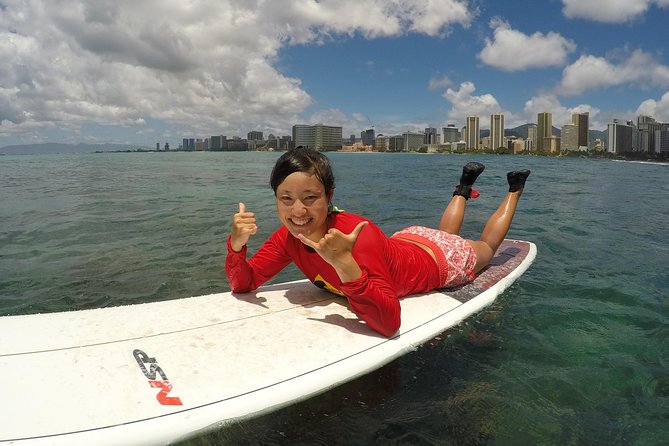
In a small group, the instructor really matters. And there are plenty of signs this team spends time on coaching, patience, and personal feedback.
You may work with instructors like:
- Mark (praised for stretch setup, technique practice, and encouragement in the water)
- Jayden (noted for helping first-time surfers feel safe)
- Matt (praised for being patient and getting people standing quickly)
- Names also mentioned include Chelsea for photos, plus Sean, Troy, and Nick as teachers who kept working with someone until they rode farther
Even if you don’t get the exact coach mentioned in someone else’s story, the pattern is consistent: coaching focuses on technique and reassurance, not just timing and luck.
Photos and videos: optional, but they can be worth it
After your lesson, you return to the Surf Center to view photos and videos. This is where you decide whether to buy.
Why I think this is useful: when you’re learning, your attention is split between balance, wave timing, and avoiding wipeouts. It’s hard to see what you did right in the moment. Photos and clips help you spot the details you’ll want to repeat next time.
One review notes that video/photo packages included action shots you wouldn’t realize were being captured while you were riding. If you enjoy visual proof of progress, don’t skip looking at the options right after the lesson while everything is fresh.
Who this lesson is best for
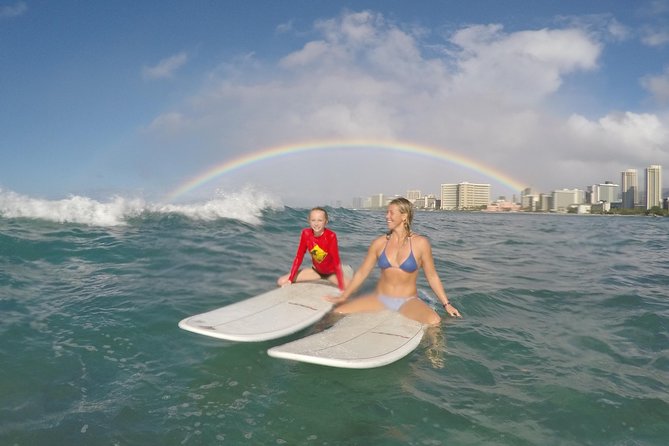
This activity is built for families, couples, and first-timers who want a guided start without the guesswork.
It tends to fit well if:
- you want a structured intro rather than a DIY attempt
- you’re traveling with kids and want a supportive environment
- you want small-group attention instead of a big class
- you’d like to get photos afterward
One note from the info: if someone can’t swim, the instruction is to book a private lesson. That’s the key limiter. Otherwise, it says most travelers can participate.
Price check: is $118.84 good value for two hours?
At $118.84 per person for about 2 hours, this isn’t the cheapest thing on Waikiki. But the price starts looking fair when you add up what you get.
You’re paying for:
- Professional instruction (and a small group cap)
- Transportation to and from pickup points in Waikiki and some nearby hotels
- All necessary equipment, including rash guard and reef shoes
- Taxes and fees included
That means you’re not spending your time (or money) coordinating rentals and logistics. If you’ve ever tried to piece together your own surf day—boards, safety gear, getting to the right beach, figuring out beginner conditions—you know how quickly costs and stress pile up.
Where to be cautious: if you’re expecting a long “just go ride” experience for that price, this is still a lesson, not a surf day with no instruction. The goal is progress and safety, and you’ll get that through coaching time in and out of the water.
Tips to make your session go smoother (and safer)
A few practical things from the provided guidance will save you discomfort later.
- Wear your bathing suit ahead of time and bring a towel. Don’t plan on having lots of time to change.
- Apply sunscreen before you go. Ocean time sneaks up fast.
- If you’re prone to motion sickness, take what you normally use and talk to your doctor if needed. Surf can trigger nausea for some people.
- If you have medical conditions or injuries, tell the staff ahead of time so they can handle the situation appropriately.
- If you’re coming as a non-swimmer or a weak swimmer, follow their advice and consider private lessons instead.
And yes, bring your best attitude. Even with great instruction, you’ll want to treat mistakes as part of learning.
Should you book this Waikiki surf/bodyboard lesson?
Book it if you want:
- small-group coaching (max 4) with close attention
- included gear so you can travel lighter
- a straightforward, low-stress plan with shuttle pickup and return
- a beginner-friendly setting where standing is realistic for many people with the right help
Skip or switch to a private lesson if:
- someone in your group cannot swim
- you strongly dislike a workout-heavy activity (paddling and popping up can be tiring)
- you’re chasing a full-day experience rather than a focused 2-hour lesson format
If you’re on the fence, this is the kind of activity where being in Waikiki gives you an immediate payoff: you’re learning in a controlled environment, with transport handled, and you can finish the day with a few wave clips to remember how it felt.
FAQ
Where is the meeting point?
The start and end meeting point is listed as 2552 Kalākaua Ave, Honolulu, HI 96815, USA.
Is pickup available from Waikiki hotels?
Yes. They offer courtesy pickup from four standard Waikiki locations: Ilikai Hotel, Romer Waikiki at the Ambassador Hotel, Don Ho Lane Van Depot, and Hyatt Regency. They may also arrange closer pickup for select hotels outside Waikiki with advance notice.
How early is pickup before the lesson?
Pickup is typically scheduled 10–45 minutes prior to your lesson time, and the exact time and location are emailed after booking.
How long is the lesson?
The duration is listed as about 2 hours.
What equipment is included?
Included equipment includes a rash guard and the board setup used for the lesson, plus fins and reef shoes.
Do I need to bring a wetsuit?
A wetsuit rental is optional. The basic lesson gear is included.
Are photos and videos included?
Photos and videos are not included. They’re available for purchase after the lesson.
What language is the lesson taught in?
The activity is offered in English. Written materials are also available in Spanish, Japanese, Korean, and Chinese, and with at least 24 hours notice they try to accommodate instructors who speak those languages.
What if someone in my group cannot swim?
The info says most travelers can participate, but if any participant cannot swim, you should book a private lesson.
Is free cancellation available?
Yes. You can cancel up to 24 hours in advance for a full refund. If you cancel less than 24 hours before the start time, the amount paid is not refunded.