REVIEW · NORTH SHORE TOURS
North Shore Stand-Up Paddleboard Lesson
Book on Viator →Operated by North Shore Surf Girls - Surf School · Bookable on Viator
First-time paddleboarding is easier when the water does the work. This North Shore SUP lesson sends you up the Anahulu River near Haleiwa for a mostly effortless glide with brackish water and frequent sea turtle sightings. I like the small-group feel, where you actually get coached instead of just dropped on a board, and I also like that the outing builds from balance practice into real cruising.
My other favorite part is the nature setting: you travel upstream, turn around at a mountain-stream stretch, and come back at a relaxed pace. The possible drawback is timing and weather—this is a good-weather activity, and you’re doing it with no hotel pickup, so you’ll want a plan to get to the meeting point on time.
In This Review
- Key highlights you should care about
- Why the Anahulu River makes this SUP lesson feel easy
- Small-group coaching: practice without the crowd noise
- Price and timing: what $80.13 really buys you
- Where you start at Haleiwa Harbor (and what that means for you)
- The flow of the ride: upstream out, gentle turn, back again
- How Banzai Pipeline and North Shore stops fit into the day
- Stop on the river end: a switch from river glide to mountain-stream calm
- Waialua Bay: the option to try small waves safely
- Wildlife spotting: turtles are the real itinerary bonus
- What’s included (and what’s not) so you can pack right
- Who this lesson is perfect for (and who might want something else)
- The value of a patient guide: why names keep showing up
- Quick practical checklist before you go
- Should you book this North Shore SUP lesson?
- FAQ
- What’s the meeting point for the North Shore SUP lesson?
- How long is the SUP lesson?
- What’s included in the price?
- Is this lesson okay for beginners?
- What should I bring?
- Is food or drinks included?
- Do you pick me up from my hotel?
- How big is the group?
- What’s the minimum age?
- What happens if weather is poor?
- What’s the cancellation policy?
Key highlights you should care about
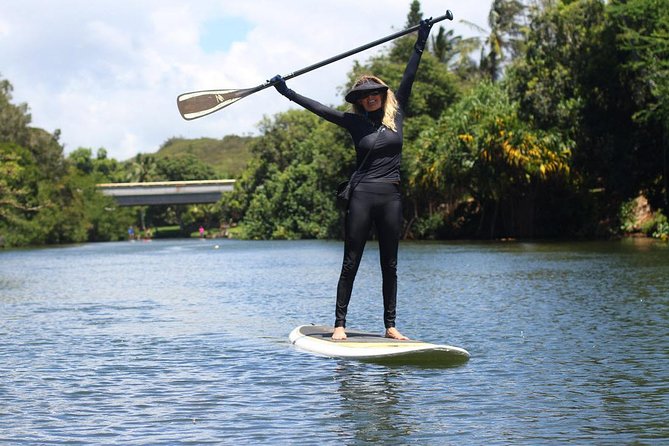
- Small-group instruction: semi-private or private style with only two to four students per instructor
- Beginner-friendly water: slight current makes it feel manageable even if you’ve never stood up on a board
- Wildlife odds are real: you can spot sea turtles, including turtles sleeping along the sides
- Balanced practice time: you start with short technique work, then shift into the paddle experience
- Two to four students per guide: enough attention to fix your stance quickly
- Use of gear is included: board, paddle, and a surf shirt are part of the price
Why the Anahulu River makes this SUP lesson feel easy
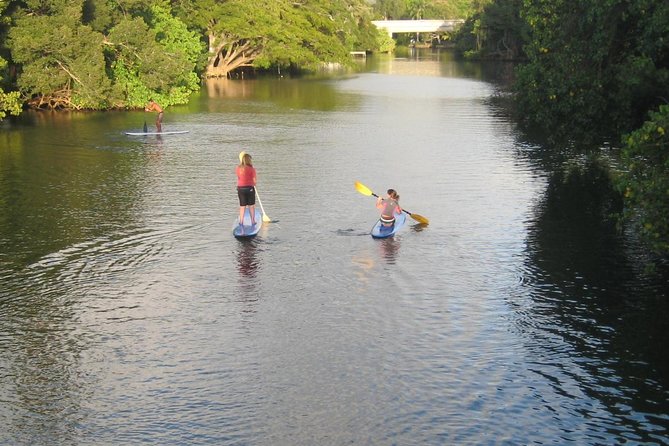
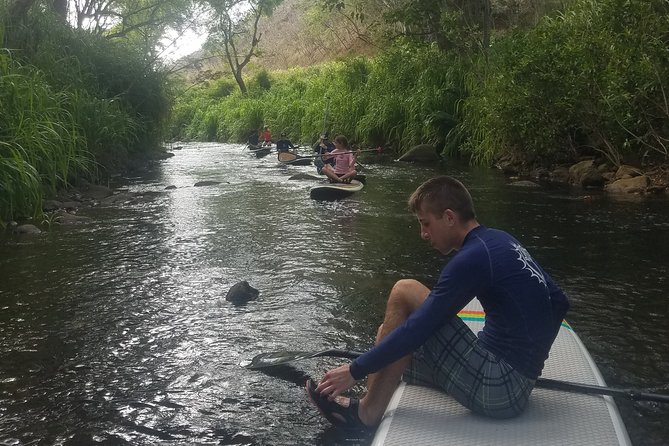
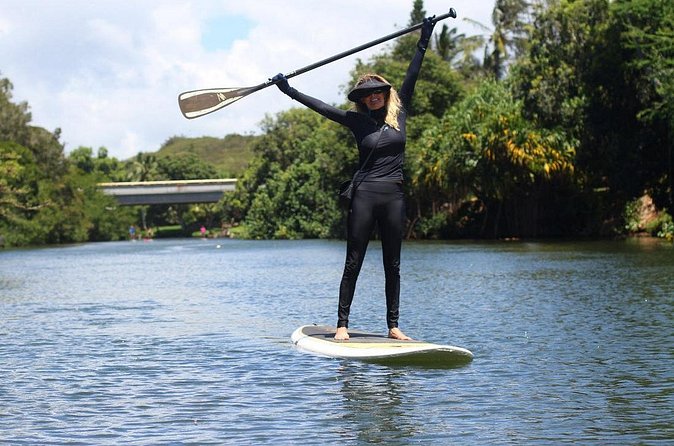
The North Shore has plenty of drama in the ocean. The Anahulu River is not that. It’s calmer, with a gentle current and a mix of fresh and saltwater that gives the river those brackish tones people come for. The whole feel of the lesson is about building confidence fast—no big wave setting, no frantic scrambling to catch your balance.
You’ll start near Haleiwa Harbor and head upstream. The slow flow is the secret sauce. Even when you’re still learning how to place your feet, the water helps you keep moving.
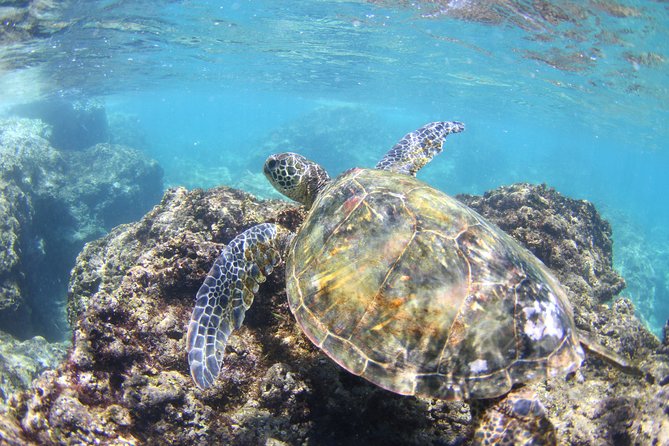
And yes, the wildlife factor is a major reason to go. Turtle sightings are a recurring theme, including the chance to see them resting along the shoreline.
You can also read our reviews of more tours and experiences in Oahu
Small-group coaching: practice without the crowd noise
This is set up for real learning, not just a scenic paddle. The lesson runs in a small-group format, with two to four students per instructor for the semi-private or private family lessons. The overall cap is 10 travelers maximum, so it should stay controlled and calm.
That matters because SUP is mostly balance plus coordination. If you’re in a bigger group, you might wait your turn while your confidence drains. Here, your instructor can correct stance and paddling technique sooner—especially important if you’re starting from zero.
You’ll also see the human touch in the guide approach. In past groups, instructors like Charlotte, Paige, Aimee, and Carol were praised for patience and clarity. If you need more time to get up, you’re not expected to magically do it in one try.
Price and timing: what $80.13 really buys you
At $80.13 per person for about 2 hours, this is priced for a focused, instructor-led outing. You’re not just paying for a board rental. You’re paying for coaching, equipment, and a guided route that’s designed for first-timers.
Two hours is a smart length. Long enough to:
- learn balance fundamentals,
- practice on the water,
- and still enjoy the scenery without feeling rushed.
Short enough that you won’t feel destroyed by the end. Several people described it as a workout for the core and upper body, but in a good way—more controlled effort than “punishment exercise.”
Where you start at Haleiwa Harbor (and what that means for you)
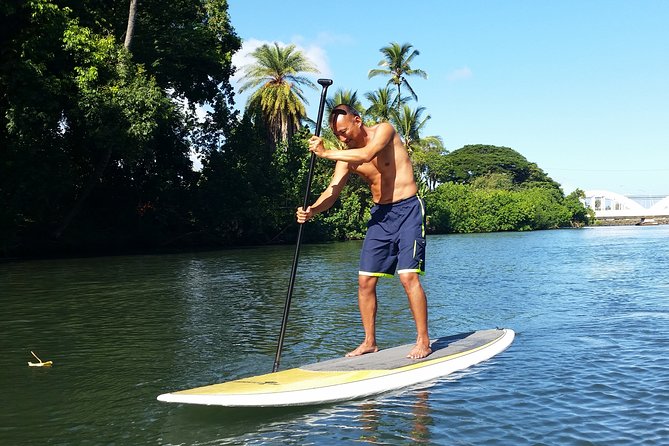
The meeting point is at 62-611 Kamehameha Hwy, Haleiwa, HI 96712. And this is important: the lesson does not include hotel pickup or drop-off. You’re driving (or arranging your own transport) and you’re showing up yourself.
The good news is that Haleiwa is an easy base. The not-so-fun part is parking. One recent tip: arrive early, because parking around the area can be a bit challenging.
If you’re using a rideshare, give yourself extra margin. You’re paddling on water soon after meeting, so being late isn’t an option you want to test.
The flow of the ride: upstream out, gentle turn, back again
Here’s the rhythm you’ll experience. You start at the mouth of the Anahulu River and head upstream. The drive into the lesson is the same whether you’re brand new or just rusty: you get your footing, then you settle into cruising.
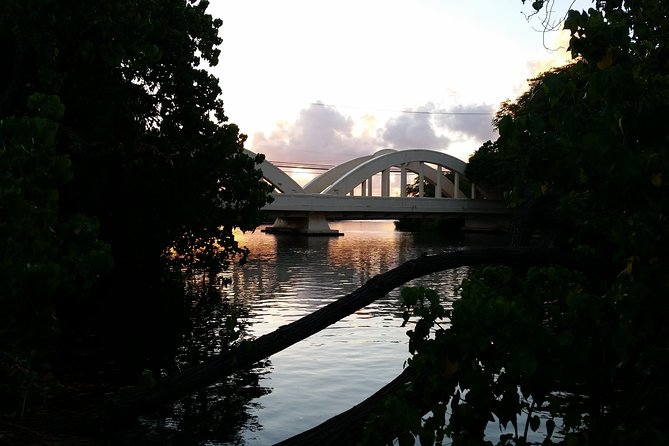
A journey to the river’s end takes about 60 minutes, where it turns into a calmer mountain stream stretch. Then you turn around and follow the gentle current back toward Waialua Bay.
That structure is actually thoughtful. It’s long enough to feel like an outing, but not long enough to turn into a grind. And because the current is slight, the return trip stays relaxed for most beginners.



How Banzai Pipeline and North Shore stops fit into the day
The schedule includes time at Banzai Pipeline and North Shore areas before or around the main river time. Think of these as part of the North Shore context—an in-the-right-place moment that ties your lesson to the famous coastline you came to see.
One key point: don’t expect those stops to replace the river experience. The real action is on the water—this is a SUP lesson, not a drive-by tour where you only glance at scenery.
If you’re the kind of person who likes to know what you’re looking at, this is a nice combo: famous North Shore areas plus the calmer Anahulu route that makes SUP doable for beginners.
Stop on the river end: a switch from river glide to mountain-stream calm
Upstream, the river changes character. At the far end, you’re in a tranquil mountain stream feel. It’s slower, quieter, and that difference helps you notice how SUP technique and balance work in different water conditions.
Even if you’re focused on staying upright, you’ll feel the contrast. That’s a good learning element: you’re not just practicing on one flat, boring stretch.
And then comes the turnaround. The return trip gives your shoulders a breather while still keeping you on the boards long enough to enjoy the views.
Waialua Bay: the option to try small waves safely
When you reach Waialua Bay, you can choose to try riding the small waves that often break over a safe sand bar. This is optional, which is exactly how it should be for a beginner-focused lesson.
If standing waves make you nervous, you can skip the wave riding and keep it steady. If you want a little thrill, this is a low-stakes way to feel the board react when waves start shaping the water around you.
This section is also where your coaching matters most. Your stance and paddle timing—things you practice earlier—help you stay stable when the surface changes.
Wildlife spotting: turtles are the real itinerary bonus
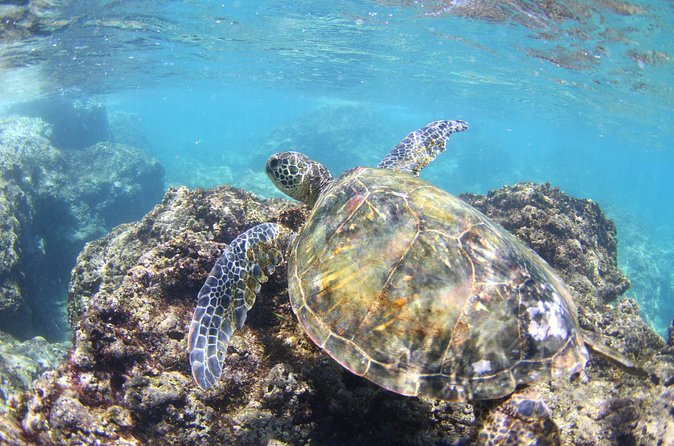
Sea turtles aren’t a guarantee, but the odds here are strong. People have mentioned seeing turtles sleeping along the sides of the river, plus frequent turtle sightings during the paddle.
What to do if you spot one: don’t chase it. Keep your paddling smooth and slow. That keeps you safe and respectful, and it also helps you enjoy the moment longer instead of rushing past.
Beyond turtles, you may see other marine life. The brackish mix and the quieter river water help create a setting where wildlife lingers.
What’s included (and what’s not) so you can pack right
You get the equipment: the stand-up paddleboard, the paddle, and a surf shirt. You also get an experienced SUP instructor.
What you should plan for:
- No food or drinks are included.
- Bring sunglasses with a strap, plus hat or sun protection.
- Wear a swimsuit or clothing you don’t mind getting wet.
If you’re thinking about water safety basics, plan around staying comfortable in sun and wind. In Hawaii, the UV doesn’t care that you’re only doing a two-hour lesson.
Also, keep essentials simple. The less you’re fussing with, the more energy you have for balance drills and enjoying the ride.
Who this lesson is perfect for (and who might want something else)
This is a great match if you:
- are a beginner and want structured help,
- want a calm alternative to ocean surf,
- want a nature outing that still feels active,
- are traveling with family members of mixed abilities.
The minimum age is 8 years for the small-group lesson, which makes it a viable option for families.
If you already have SUP experience and you’re craving big technical challenges, you might find this more about confidence-building than extreme maneuvering. But for most first-timers, that’s the point.
The value of a patient guide: why names keep showing up
In the feedback, certain instructor traits get repeated: clear instructions, patience, and a sense of safety. Names that came up include Charlotte, Paige, Aimee, and Carol.
That’s more than trivia. It tells you what you can expect from the teaching style. When you need to start on your knees, or you need extra time to get your stance right, the lesson is set up to help you succeed without pressure.
Quick practical checklist before you go
- Arrive early enough to handle parking near the meeting point
- Wear a swimsuit or quick-dry clothes you don’t mind soaking
- Bring strap sunglasses and sun protection
- Bring water and a snack if you want one (not provided)
- Plan your transport since there’s no hotel pickup
Should you book this North Shore SUP lesson?
If you want a beginner-friendly SUP experience with real scenery and strong odds for turtle sightings, I’d book it. The format makes it easier to learn quickly, and the two-hour length hits a sweet spot: enough time on the water to improve, not so long that you lose the fun.
If your schedule is tight and you can’t easily reach Haleiwa on your own, that’s the main reason to hesitate. Otherwise, this is one of those Oahu activities that doesn’t feel like a tourist checkbox—it feels like a calm, coached way to see the North Shore from the water.
FAQ
What’s the meeting point for the North Shore SUP lesson?
You’ll meet at 62-611 Kamehameha Hwy, Haleiwa, HI 96712, USA. The activity ends back at the same meeting point.
How long is the SUP lesson?
The lesson lasts about 2 hours.
What’s included in the price?
The price includes equipment (stand-up paddleboard, paddle, and a surf shirt) plus an experienced SUP instructor.
Is this lesson okay for beginners?
It’s designed as a beginner-friendly lesson with instruction on balancing and getting comfortable on the board.
What should I bring?
Bring sunglasses with a strap, sun protection (like a hat), and wear a swimsuit or clothing you don’t mind getting wet.
Is food or drinks included?
No. Food and drinks are not included.
Do you pick me up from my hotel?
No hotel pickup or drop-off is included, so you’ll need your own transport to the meeting point.
How big is the group?
The lesson is offered as small-group, semi-private, or private family options. It’s limited to two to four students per instructor, and the maximum group size is 10 travelers.
What’s the minimum age?
The minimum age is 8 years for the small-group lesson.
What happens if weather is poor?
The activity requires good weather. If it’s canceled due to poor weather, you’ll be offered a different date or a full refund.
What’s the cancellation policy?
Free cancellation is available. You can cancel up to 24 hours in advance for a full refund. If you cancel less than 24 hours before the start time, the amount you paid is not refunded.