REVIEW · SURF LESSONS
Private Surf Lesson
Book on Viator →Operated by 808 Surf School · Bookable on Viator
Private surf lessons cut out the confusion fast. With 808 Surf School, you get a true one-on-one session built around the ocean that day, not a cookie-cutter lesson. I especially like the setup that starts with a short meet and greet plus a 10–15 minute land briefing focused on basics and ocean safety, and then switches quickly into wave time. The one possible drawback is that the exact beach can change based on conditions, so you won’t always pick a specific shoreline in advance.
This is a 2-hour experience priced at $225 per person, and it’s popular enough that many people book around 53 days ahead. Good news: it’s a private format, equipment is included, and the instruction comes from coaches who are lifeguard certified and Red Cross CPR certified.
If you’re hoping for an exact, fixed location, plan for flexibility. But if you want the fastest path from standing up to actually surfing, this kind of coaching structure is hard to beat.
In This Review
- Key Highlights at a Glance
- Why a Private Oahu Lesson Beats a Big Group Class
- Where You Meet in Hauula and How the Day Starts
- The Land Briefing That Makes the Water Session Click
- The 2-Hour Flow: From Briefing to Catching Waves
- How the Coach Chooses the Best Spot That Day
- Coaching Styles You’ll Actually Feel in the Water
- Equipment Included: Less Hassle, More Time Surfing
- Safety Details That Matter (More Than They Sound)
- Price and Value: Is $225 Per Person a Good Deal?
- Who This Surf Lesson Fits Best
- The One Consideration: Some Plans Need Flex
- Should You Book This Private Surf Lesson?
- FAQ
- How long is the private surf lesson?
- What happens on land before you get into the ocean?
- Is surf equipment included?
- Will I know the surf location ahead of time?
- Are the instructors certified?
- Is this a private tour or shared group?
- Is the lesson offered in English?
- Can service animals attend?
- Is there free cancellation?
Key Highlights at a Glance
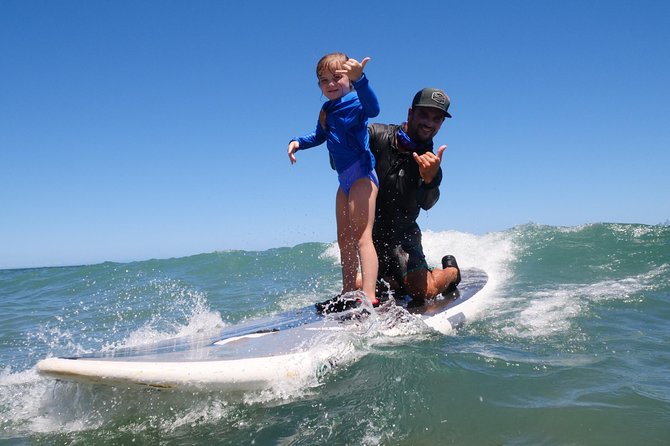
- Private coaching for only your group: You won’t be squeezed into a crowded class.
- A tight land briefing (10–15 minutes): Basics and ocean safety first, then straight into the water.
- 2 hours focused on catching waves: The timing is built for progress, not sightseeing.
- Certified instructors (lifeguard + Red Cross CPR): Safety is taken seriously.
- Ocean-condition location changes: You’ll head to the day’s best setup.
- Hawaiian sea turtles may appear: It’s possible to see them while you’re out.
Why a Private Oahu Lesson Beats a Big Group Class
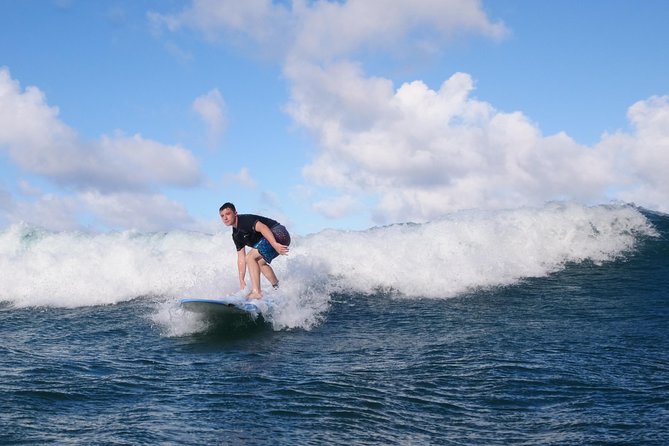
When you surf, your biggest problem usually isn’t the ocean. It’s feedback. In a group setting, you can spend more time waiting for your turn than fixing the one thing that will make your next ride better.
Here, you’re with one instructor and your own pace. That means you can get fast corrections without feeling rushed. And because it’s private, your coach can tailor the lesson to what you actually need: balance for a first-timer, confidence for someone who’s tipping over, or more focused technique guidance if you’ve already stood up before.
This kind of coaching showed up again and again in real-world outcomes: people described lessons that felt patient, practical, and specific—like when a coach worked with a 9-year-old beginner step-by-step, or when an intermediate surfer wanted targeted, actionable feedback without being overwhelmed.
You can also read our reviews of more private tours in Oahu

Where You Meet in Hauula and How the Day Starts
Your lesson begins at 53-360 Kamehameha Hwy, Hauula, HI 96717, and it ends back at that same meeting point. Right after booking, the key point is that you don’t just show up blindly. You’ll be contacted so the lesson location matches the ocean conditions for that day.
On arrival, expect a short meet and greet. Think: quick check-in, not a long waiting game. Then you’ll get the land briefing before you step into the water.
For a private session, this matters. You’ll spend less time figuring out logistics and more time focused on getting comfortable with the board, the waves, and the water flow.
The Land Briefing That Makes the Water Session Click
Before paddling out, you’ll do a 10–15 minute land briefing. This part is easy to underestimate. But in practice, a focused briefing can prevent the most common beginner mistakes: losing balance before the pop-up, choosing the wrong timing, or misunderstanding how waves break and set.
You’ll go over surfing basics and ocean safety. That combination is the real value here. Surfing isn’t only technique; it’s reading conditions and moving safely in and around the lineup.
If you want one practical reason to choose this format: the briefing gives your brain a simple map. Once you can visualize what you’re trying to do, the in-water coaching can be more direct—like a coach pointing out what to adjust while you’re actually on the board.
The 2-Hour Flow: From Briefing to Catching Waves
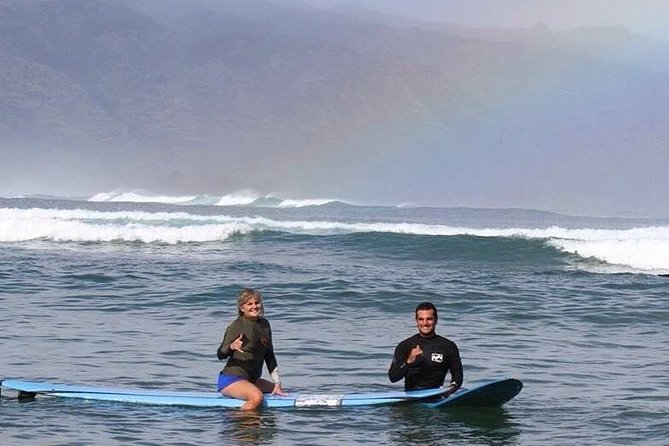
The lesson is about 2 hours total. After meeting and briefing, you’ll get into the water and spend the rest of the session working on surfing skills, catching waves, and improving with each attempt.
A big theme from the experience is that the instructors don’t treat it like a one-and-done try. The sessions are structured to keep you moving. You’re not just doing a single run for the sake of participation—you’re building momentum wave after wave.
You also should expect to see Hawaiian sea turtles. It’s not guaranteed, but it’s likely enough to be part of the experience. For many people, that turns the session into something more memorable than a standard “learn to surf” day.
You’ll also have coaching from instructors who are lifeguard and Red Cross CPR certified, which matters when you’re learning in real surf conditions. It’s reassuring when you’re dealing with currents, bigger-than-expected sets, and the adrenaline that comes with going out for the first time.
How the Coach Chooses the Best Spot That Day
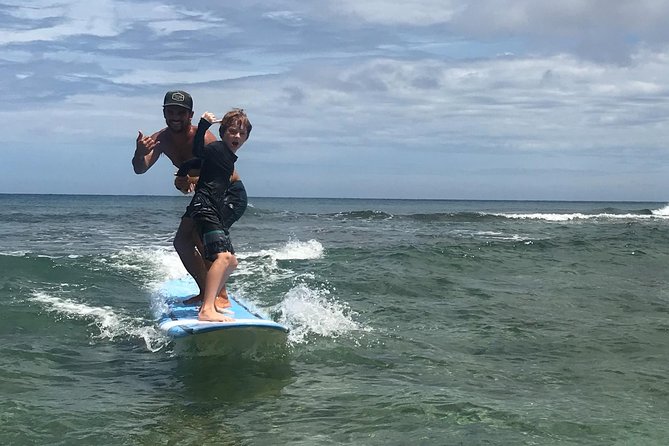
A smart part of this lesson is how the surf location is chosen. You don’t lock in one fixed beach. Instead, you’re told where to meet based on the ocean conditions for that day.
That approach is practical. Surf can look calm from shore and still be tricky in the water. Wave size, wind, and wave direction can shift quickly around Oahu, especially on the North Shore side. Your coach needs flexibility to place you where you can learn safely and still get lots of rides.
So yes, this can feel less predictable if you were hoping for one specific shoreline. But it’s usually a better learning strategy. The goal isn’t checking a box; it’s getting you on the waves at the right time, with the right setup.
You can also read our reviews of more tours and experiences in Oahu


Coaching Styles You’ll Actually Feel in the Water
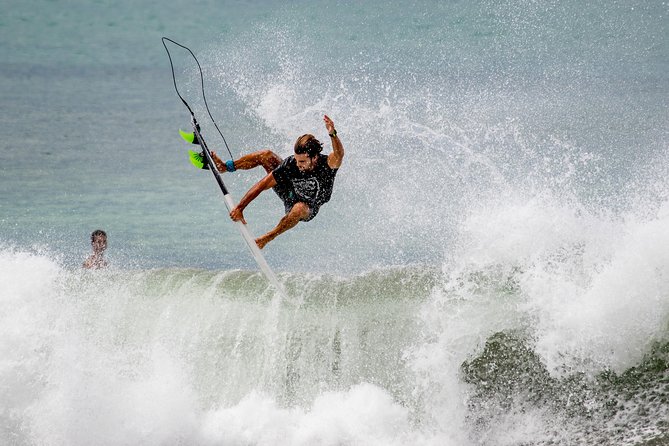
The coaches in these lessons are often described with the same themes: patience, clarity, and feedback you can use right away. Names that came up include Jon, Mike, and Andy, and their approaches were repeatedly framed as calm and supportive.
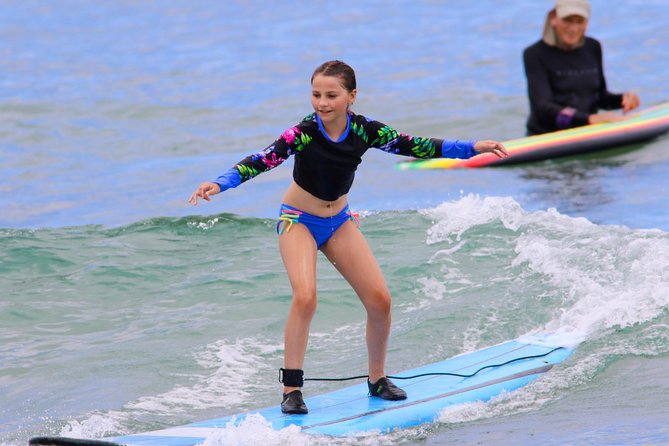
One person described an experience where a beginner (a child) was coached gently and was able to gain confidence wave by wave. Another described how an advanced surf coach took them to an amazing spot, even when the waves initially felt overwhelming. The difference was guidance plus feedback that helped them make progress without panicking.
For intermediate and advanced surfers, you can also expect customization. One account mentioned going out multiple days and getting a plan that matched skill level and goals, with specific focus areas and constructive feedback. Another person who worked with Mike across days said the instruction gave clear corrections without crushing their confidence—plus there was plenty of autonomy to make safe mistakes and learn from them.
In plain terms: you’re not just getting “instructions.” You’re getting teaching that respects how real learning feels—sloppy at first, then suddenly better.
Equipment Included: Less Hassle, More Time Surfing
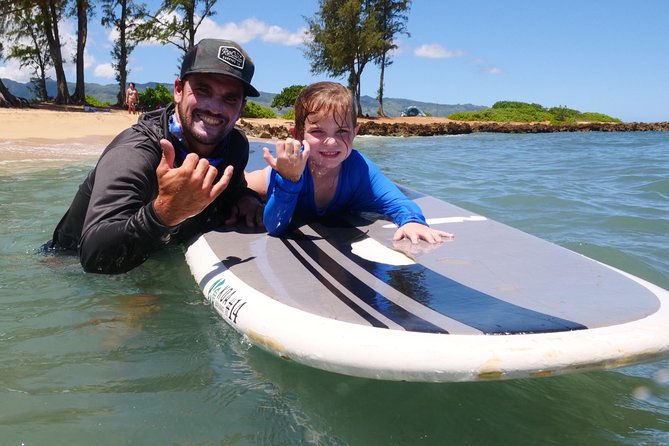
Equipment is included for the full lesson. That’s a quiet win, especially if you’re already juggling a trip schedule, packing, and beach days.
Because you won’t need to source a board and gear on your own, you can focus on arriving, checking in, and getting to the land briefing. Once you’re in the water, the coaching and the wave time do the work.
And because this is a private experience, the gear and setup can better match your needs. That usually means fewer awkward starts and more effective attempts during the 2 hours.
Safety Details That Matter (More Than They Sound)
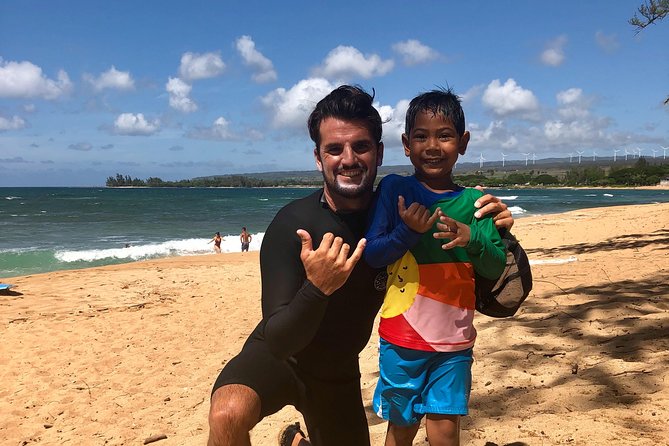
You’re learning in moving ocean conditions. That means safety is not a bonus—it’s part of the product.
The instructors are lifeguard and Red Cross CPR certified, and the lesson begins with ocean safety covered during the land briefing. It’s also structured as a private session, which tends to reduce confusion. When your coach is watching you closely, you’re less likely to get separated from your training plan.
One more safety-related point: the location is chosen based on ocean conditions. That’s not just about wave quality. It’s also about selecting an environment where you can learn without taking unnecessary risks.
Price and Value: Is $225 Per Person a Good Deal?
Let’s be honest: $225 per person isn’t a “casual afternoon” price. But it’s also not paying for a lot of downtime.
You’re paying for:
- Two full hours of instructor attention and wave time
- Private format, so you’re not sharing time with a larger group
- Equipment included
- A land briefing that targets both basics and ocean safety
- Coaches who are lifeguard and Red Cross CPR certified
- A lesson guided by real ocean conditions, which improves your chance of actually standing and riding
If you’re a complete beginner, private instruction often speeds up your progress compared with group lessons, because the coach can correct small problems fast. If you’re intermediate and want to move toward advanced skills, private coaching can also help you avoid repeating the same technique issues for days.
Where the value may feel less perfect is if you only want the lightest first experience and don’t care much about coaching quality. But if your goal is learning seriously—or having a supportive, structured session with your kid or teen—this price can be easier to justify.
Who This Surf Lesson Fits Best
This lesson is built for most people who want to participate, and it’s especially well-suited for:
- First-timers who want clear coaching and safety guidance early
- Families where you want an experience tailored to a child’s pace
- Teens and adults who want confidence-building progress
- Intermediate surfers who want more specific feedback and better wave selection
- People who prefer private attention over crowd pacing
Service animals are allowed. The lesson is also offered in English, and it’s close to public transportation, which can help if you’re not driving.
If your schedule is tight, the good news is that this experience is often booked ahead (many people book about 53 days in advance), so planning early improves your odds. If you’re flexible, you’ll likely do better with the ocean-condition location approach too.
The One Consideration: Some Plans Need Flex
One review theme included feedback about wanting more flexibility in arrangement. The lesson still includes clear communication and a structured flow, but if you have very specific timing constraints you should plan carefully.
Private lessons usually work best when you give your coach a little room to do what the ocean requires. That’s part of the point—so you can get the right conditions, not just the right schedule.
Should You Book This Private Surf Lesson?
I’d book it if you want a real learning session, not just a surf-themed photo stop. The combination of private coaching, a focused land briefing, equipment included, and safety-certified instructors makes this feel like a “get results” experience.
Book it sooner rather than later if your dates are fixed, since it’s a popular activity. And if you’re nervous about the ocean, a private instructor-led approach can be exactly what helps you relax and start making sense of the waves.
If, however, you’re only looking for a minimal taste of surfing and you’re totally fine sharing instruction in a group, you could find cheaper options. But for most people trying to actually improve, this style of coaching is a strong value.
FAQ
How long is the private surf lesson?
It’s about 2 hours long.
What happens on land before you get into the ocean?
You’ll have a short meet and greet, followed by a 10–15 minute land briefing covering surfing basics and ocean safety.
Is surf equipment included?
Yes, all equipment is included.
Will I know the surf location ahead of time?
After booking, you’ll be contacted with the lesson location based on ocean conditions for that day.
Are the instructors certified?
Yes. Instructors are lifeguard certified and Red Cross CPR certified.
Is this a private tour or shared group?
It’s private. Only your group participates.
Is the lesson offered in English?
Yes, it’s offered in English.
Can service animals attend?
Yes, service animals are allowed.
Is there free cancellation?
Yes. Free cancellation is available up to 24 hours in advance for a full refund.