REVIEW · SCUBA DIVING
Oahu: Shallow Reef Scuba Dive for Certified Divers
Book on GetYourGuide →Operated by Dive Oahu Inc · Bookable on GetYourGuide
Sea turtles, shallow and close. This Southern Oahu reef tour pairs PADI-certified instruction with two famous reef areas like Kaiser’s and Turtle Canyons, so you spend your limited time with real marine life instead of just looking out at it. One catch: you must bring proof of certification and you can’t fly within 24 hours after your underwater work.
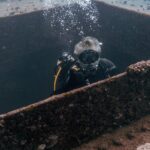
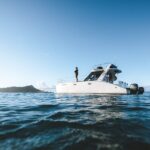
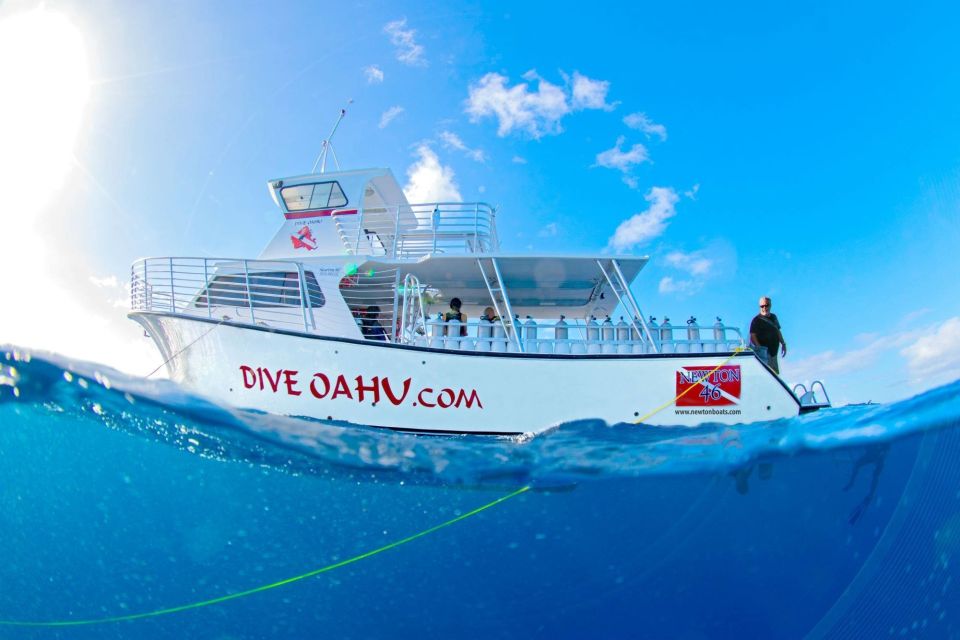
I love how it’s built around a smooth, timed plan: you start with a safety briefing, then you head out on a comfortable 46-foot Newton boat from the Ala Moana area. In the water, the focus stays practical and observant, and in at least one case I’ve seen named staff called out for careful spotting and good care, including instructor Dan and captain Nacho.
This is a solid choice if you’re a certified diver who wants shallow, wildlife-forward conditions in a short window (3 hours total). It’s English-led and equipment is included, but you’ll still need to be able to swim well and understand verbal English to get the most out of every moment.
In This Review
- Key highlights worth planning around
- Meeting at Ala Moana: What your start sets up for
- The 3-hour flow: How the timing works once you’re on board
- Kaiser’s Reef: Shallow, active, and built for wildlife spotting
- Turtle Canyons: Volcanic reef lines, sea turtles, and close-up encounters
- What you could see: Marine life targets on this shallow reef route
- The guides and crew: Why PADI instruction changes the feel
- Gear and add-ons: What’s included, what costs extra
- Price check: Is $248 worth it for 3 hours in Southern Oahu?
- Who this experience is best for (and who should skip it)
- Small rules that matter: Certification, fitness, and flying after
- Should you book this shallow reef scuba outing?
Key highlights worth planning around
- Two guided reef sessions in shallow water, aimed at maximizing wildlife sightings
- PADI-certified instructors and a close eye on safety while you’re in the water
- Named reef favorites: Kaiser’s and Turtle Canyons
- Sea turtles and sharks are real possibilities, not just random wish-list items
- Gear rental plus snacks and refreshments so you travel light
- Optional upgrades like GoPro rental, DPV scooter, and Nitrox tank rental
Meeting at Ala Moana: What your start sets up for
This outing begins at Dive Oahu in Ala Moana. That matters more than you’d think. Ala Moana is one of the easiest parts of Honolulu to reach without building a whole travel day around getting to a harbor.
When you arrive, you’ll want to be early—about 30 minutes before the start—so the team can handle waivers and equipment fitting without rushing you. That early buffer tends to make the rest of your time better. You’re not trying to cobble together gear at the last second, and you’re more likely to feel calm when the water time begins.
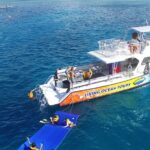
The boats are 46-foot Newton style, built for getting you out efficiently and keeping you comfortable on the way. Even if you’re excited (and you will be), the crew’s job is to keep the day organized: briefings first, then careful transitions into the water.
You can also read our reviews of more scuba diving tours in Oahu
The 3-hour flow: How the timing works once you’re on board
The total experience is 3 hours, and the schedule is structured so you’re not stuck waiting around.
First comes a safety briefing (about 25 minutes). For certified divers, this isn’t about teaching basics; it’s about confirming your group readiness, reviewing expectations, and setting the tone for the day.
Then your time splits into two on-water sessions (each listed at about 75 minutes) that include snorkel and scuba time. Even if you’re here for the scuba part, that snorkel component can help in two ways:
- It gives you an easy warm-up on the surface.
- It helps you start spotting marine life before you commit underwater.
By the time you’re done with the two reef areas, you’ve basically used your limited hours in the best way possible: multiple chances to see wildlife, instead of one short window.
Kaiser’s Reef: Shallow, active, and built for wildlife spotting
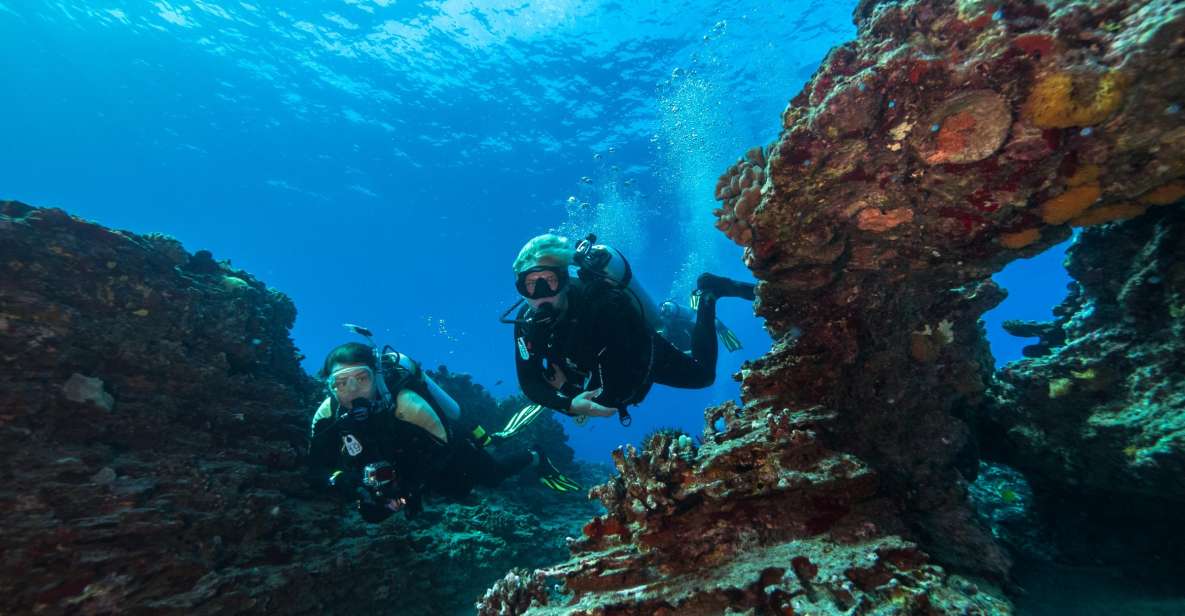
Kaiser’s is one of the reef sites included, and it’s the kind of location that tends to work well for a shallow reef plan. With the water conditions being shallow-focused, you usually get a better chance of staying oriented, watching animal behavior up close, and keeping your attention on what’s around you.
This trip is designed for certified divers, so you’re not learning to manage your gear on the fly. Instead, you’re putting your skills to work where it counts: swimming calmly, staying aware of coral features, and letting the crew’s guidance shape your route.
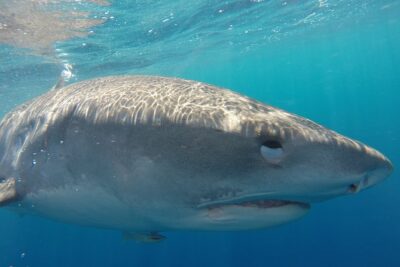
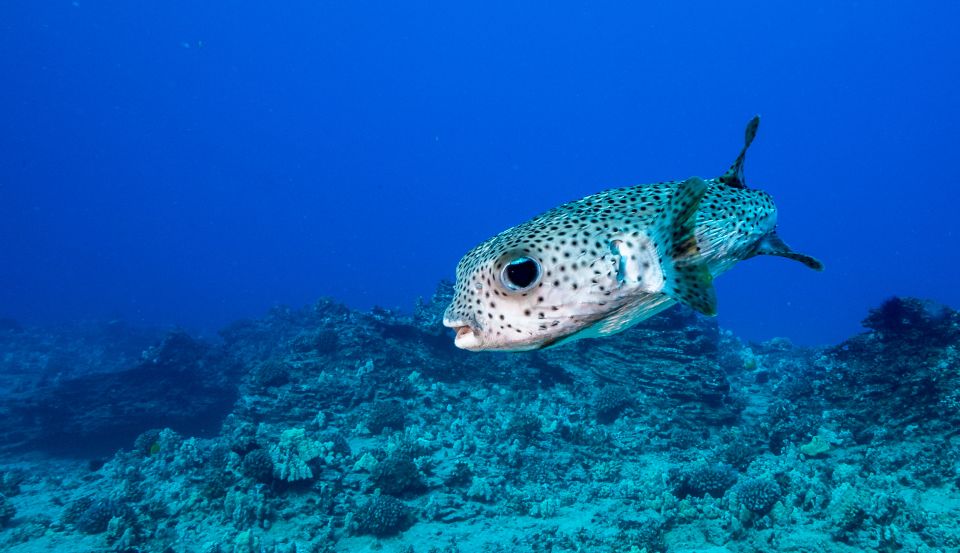
What makes Kaiser’s compelling on this kind of itinerary is the variety of what you could encounter. The underwater world here can include sharks and rays, plus creatures like octopus. And since this operator is set up for reef life rather than deep-water chasing, you’re more likely to spend time around the animals themselves, not just in open blue water.
Turtle Canyons: Volcanic reef lines, sea turtles, and close-up encounters
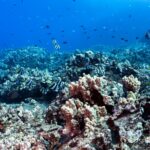
Turtle Canyons is the other named reef site, and it’s the one that sounds the most “Hawaii-specific” on paper. The reef formations here are shaped by volcanic activity, which means the underwater terrain isn’t just a flat garden—it’s a set of reef pathways, nooks, and rock-and-coral patterns.
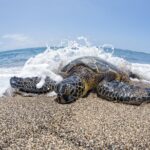
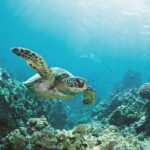
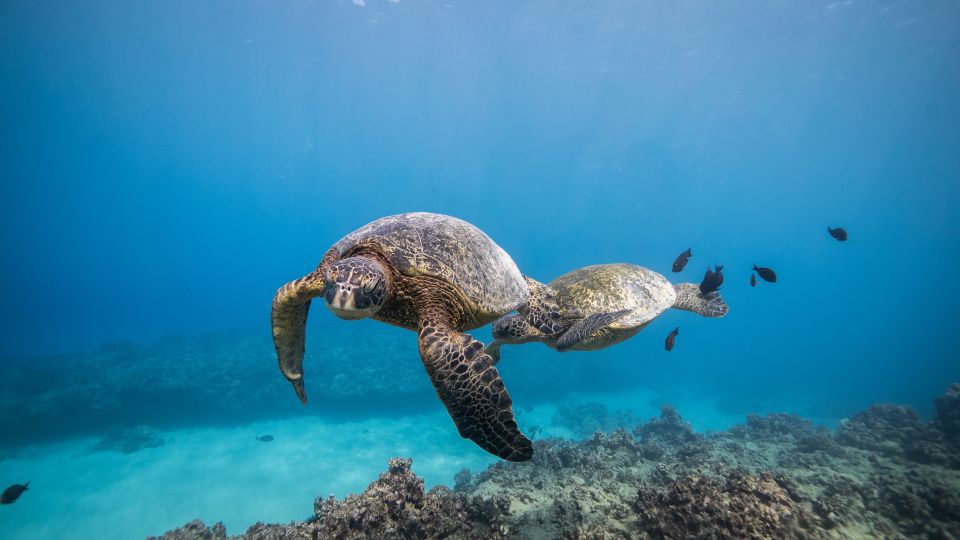
That kind of structure is exactly what makes it a reliable place to look for Hawaiian Green Sea Turtles. It’s not just about luck. When there are natural features that turtles use and frequent coral zones, your chances improve.
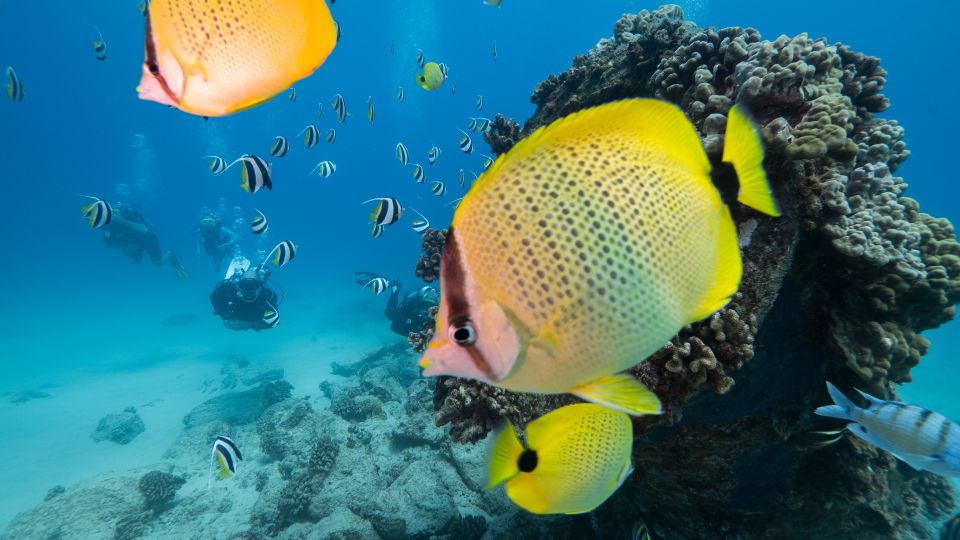
You might also see other reef species that are mentioned as possibilities on this route, including Gold Ring Surgeon Fish. And if you’re paying close attention to smaller fish activity, rare-looking color patterns are part of the deal—species like Saddleback Butterflyfish or Flame Angels are specifically called out as potential sightings.
The big value of a location like Turtle Canyons, for me, is how it helps you connect the dots between geology and wildlife. You can look at the reef structure and understand why certain animals show up where they do.
What you could see: Marine life targets on this shallow reef route
This tour is framed around wildlife, not scenery alone. You’ll be in the water long enough (with two sessions) that you can realistically shift from “Where do I look?” to “Okay, I’m seeing patterns.”
Here are the types of marine life that are specifically mentioned as possible encounters:
- Sea turtles
- Sharks and rays
- Octopus
- Dolphins
- Endemic reef fish such as Gold Ring Surgeon Fish
- Colorful species like Saddleback Butterflyfish and Flame Angels
A practical note: marine animals don’t do schedules. Still, the point of a guided reef plan is that experienced instructors and crew help you read the water, focus your effort, and notice behavior before you miss it. In one named example, Dan (the instructor) and captain Nacho were praised for spotting sea life and caring for the whole group.



The guides and crew: Why PADI instruction changes the feel
Because this is for certified divers, the instruction style should feel different than a beginner course. You’re not being taught from scratch. Instead, you’re being guided in the real-world details that make an underwater outing smoother:
- Group pacing and safety checks
- Route guidance around reef features
- Help staying aware of marine life
- Clear expectations so everyone understands what to do next
This operator’s staffing is centered on PADI-certified instructors. The experience is also listed as English-led, so you’ll need to be able to understand spoken English well enough to follow directions underwater and on the boat.
I also like that the day includes snacks and refreshments. After a few hours in sun and salt air, that small comfort makes the outing feel less like a workout and more like a proper experience.
Gear and add-ons: What’s included, what costs extra
Gear rental is included, described as premier gear rental. For you, that translates into one big practical benefit: you don’t have to transport and maintain your own setup if you’re visiting from elsewhere.
Bring swimwear, a towel, and sunscreen. You’ll also need your diving certification proof to board. Make sure you have it ready before you show up, because the requirement is strict.
If you want to upgrade the experience, add-ons are available when booking, including:
- GoPro rental
- DPV underwater scooter
- Nitrox tank rental
- A private guide
- A private photographer
These are worth considering if you’re the type who wants more control over your recording, more range of movement, or extra attention from a guide.
Price check: Is $248 worth it for 3 hours in Southern Oahu?
At $248 per person for 3 hours, you’re paying for a short, guided, equipment-included wildlife-focused outing. That price can feel high at first glance until you break down what’s bundled.
You’re getting:
- A PADI-certified instructor for the guided program
- Two guided reef sessions at established reef sites
- Premier gear rental
- Snacks and refreshments
- A guided experience led in English on a 46-foot Newton boat
For divers, the value often comes down to avoiding hassle. If you rent tanks, plan a route, coordinate a charter, and figure out conditions by yourself, costs add up quickly. Here, you’re paying for structure and expertise so you can spend your time underwater, not sorting logistics.
In other words: if your main goal is shallow reef wildlife in a tight time window near Honolulu, this price can make sense.
Who this experience is best for (and who should skip it)
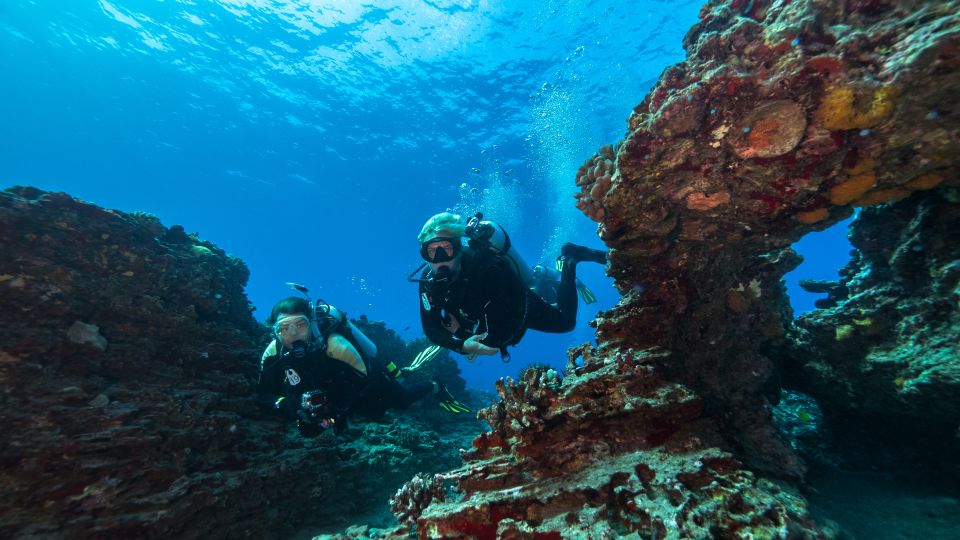
This is designed for certified divers, not brand-new divers. You must show proof of certification through PADI or another approved course before boarding.
It’s also best for people who:
- Want shallow reefs and wildlife-forward searching
- Can swim and are in good health
- Want a short, focused reef plan instead of a full-day expedition
- Prefer guided structure and clear communication
It is not suitable for:
- Children under 10
- Pregnant women
Wheelchair accessibility is listed as available. If you have mobility needs, you’ll still want to evaluate how you personally handle boarding and being on a boat, but the experience is at least marked as accessible.
Small rules that matter: Certification, fitness, and flying after
There are a few “know before you go” points that affect planning:
- You must be able to swim and be in good health.
- You must understand verbal English.
- Divers must show proof of certification through PADI or another approved course.
- You must not fly within 24 hours after diving.
The 24-hour rule matters because it can mess with flight plans if you’re tight on schedule. If you’re staying only a night or two, build in that breathing room.
Should you book this shallow reef scuba outing?
Yes, if your top priority is shallow reef wildlife near Honolulu with guided PADI instruction, two named reef sites, and included gear and snacks. This is the kind of experience that fits well into a realistic Oahu schedule: you get out on the water, you get guided structure, and you focus on the animals.
Skip it if you don’t have your certification proof ready, you need a trip that works for kids under 10, or you’re not able to meet the flying-after-24-hours requirement. Also think twice if you’re not comfortable swimming or understanding English instructions.
If you’re a certified diver and you want your limited time to go toward seeing sea turtles, reef fish, and the other critters that live in these shallow formations, this is a strong, practical pick.