REVIEW · CYCLING TOURS
“Tour de Honolulu” Foodie Bike Tour
Book on Viator →Operated by Bike Tour Hawaii · Bookable on Viator
Honolulu is best on two wheels. This Tour de Honolulu Foodie Bike Tour mixes fast sightseeing with real food stops, so you cover more ground than you ever would on foot while still learning why the neighborhoods look the way they do. I love the balance of history + local bites, and I also like that you get a live host/escort to keep things moving and make the route make sense. A heads-up: it’s a ride with moderate physical demands, so you’ll want to feel comfortable biking for the full 4.5 hours, not just “snacking and snapping photos.”
The route also leans quick at each stop (minutes, not hours). That’s great for getting an overview, but if you’re the type who wants to linger, you might feel a little rushed—especially in the bright afternoon sun.
In This Review
- Key things to know before you pedal
- Why a Honolulu foodie bike tour makes sense
- Getting rolling: private comfort, real gear, and a simple plan
- The route: from the Waikiki canal to Ala Moana’s people’s park
- Stop-by-stop: what you’ll see, why it matters, and what to expect
- Historic Canal (1929): the hidden structure behind Waikiki
- Ala Wai Driving Range: passing the famous golf backdrop
- Neal S. Blaisdell Center: Elvis at the end of a legendary era
- Hawaiian Mission Houses Historic Site and Archives: early western-style home in Hawaii
- Iolani Palace: the only royal palace in the United States
- Hawaii State Capitol: open-air, architectural oddball, and easy to miss
- Kaka’ako: murals, new development, and Honolulu’s next chapter
- Ala Moana Beach Park: Hawaii’s park for the people
- The foodie part: what you’re likely to taste (and how to plan your appetite)
- How the tour uses history without making it boring
- Pace, safety, and photo chances you can actually use
- Price and value: is $189 a smart use of vacation time?
- Who should book this Tour de Honolulu Foodie Bike Tour
- Should you book it?
- FAQ
- What is the duration of the Tour de Honolulu Foodie Bike Tour?
- How much does the tour cost?
- Where is the meeting point and what time does it start?
- Is a helmet and bike included?
- Are food tastings included?
- What language is the tour offered in?
- Is this a private tour?
- What is the weather or cancellation approach?
Key things to know before you pedal
- Private tour feel: only your group rides, so the commentary and food pace can be more tailored.
- Stops that explain the city: you don’t just pass landmarks; you learn what they mean in Honolulu’s story.
- Bike + helmet handled: you show up and roll, with essential gear already sorted.
- Food tastings are the point: the ride is designed around local flavors like fish taco and shave ice.
- Short photo windows: expect quick glimpses at major sites, not long museum time.
Why a Honolulu foodie bike tour makes sense
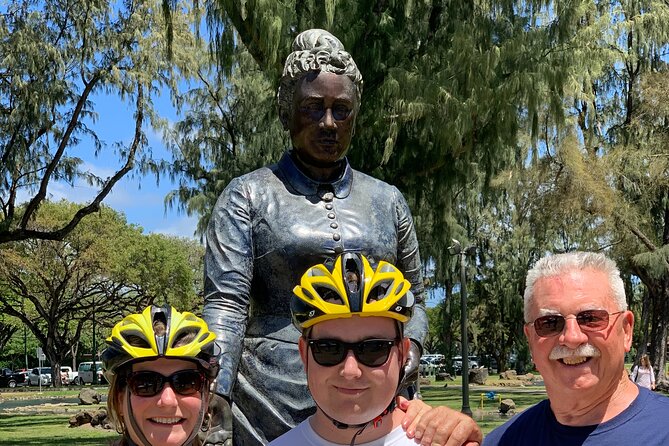
Honolulu can be tricky as a DIY day. You want to see Waikiki, then get out toward Kaka’ako and Ala Moana—but buses are slow where you need speed, and rideshares can get pricey. A bike tour is a smart middle ground: you’re moving often, stopping strategically, and still getting local context along the way.
This tour is also a good “first or second day” activity. It gives you your bearings fast: where the neighborhoods are, how the coastline parks fit into daily life, and which landmarks people talk about. And because it’s a food-focused route, you learn the city through what you eat, not just what you see.
You can also read our reviews of more tours and experiences in Oahu
Getting rolling: private comfort, real gear, and a simple plan
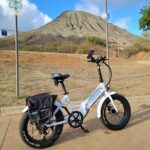
The basics are handled for you. You get a bicycle and a helmet, plus a tour escort/host and live commentary. Your bottled water, and coffee and/or tea are included too—handy in Hawaii heat when you’d rather not hunt for a café mid-ride.
You’ll meet at Kuhio Beach, 2453 Kalākaua Ave, Honolulu, HI 96815, and the tour starts at 1:00 pm, looping back to the meeting point at the end. Total time is about 4 hours 30 minutes, which is long enough to feel like a real outing, but short enough that you’re not forced into an all-day travel marathon.
One more practical win: it’s described as private, meaning only your group participates. That usually matters for comfort—less waiting, fewer interruptions, and it’s easier to ask questions as you roll.
The route: from the Waikiki canal to Ala Moana’s people’s park
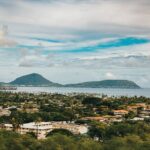
Even before you hit the food stops, the ride itself is part of the value. Your path takes you through the Waikiki area and beyond, then heads toward places that feel less like a postcard and more like how locals actually move through the day.
The itinerary includes passes and quick visits that help you understand Honolulu’s layout:
- a historic feature in the Waikiki area (the canal built in 1929),
- major city landmarks and viewpoints,
- the evolving urban district of Kaka’ako,
- and finally Ala Moana Beach Park, a giant public space where people come for everyday recreation.
You’re not just circling the same few blocks. You’ll get that “wait, Honolulu is bigger than I thought” feeling—in a good way.
Stop-by-stop: what you’ll see, why it matters, and what to expect
Below is how the stops work as a tour day. Times are generally short (often 3–5 minutes), so think of each one as a quick window into the neighborhood’s meaning—plus a photo op if you want it.
Historic Canal (1929): the hidden structure behind Waikiki
You start with a look at a historic canal built in 1929, a major feature of the Waikiki neighborhood. Even if you’ve visited Waikiki before, you might not have noticed how infrastructure shaped the neighborhood’s look and flow.
Why I like this stop: it sets the “how the city works” theme early. You start to see Honolulu as planned, not random.
Potential drawback: if you’re expecting big scenic overlooks here, you’ll mainly get context and a quick look.
You can also read our reviews of more cycling tours in Oahu
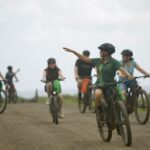
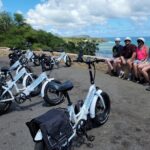
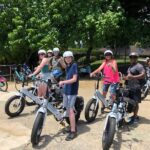
Ala Wai Driving Range: passing the famous golf backdrop
Next up, you roll past Ala Wai Driving Range. The tour notes it as the most popular golf course in North America. Even if you’re not a golfer, the point is the same: this is one of the city’s most visible recreation hubs.
What to watch for: it’s a pass-by moment, so keep an eye out for a quick chance to snap a photo from the ride.
Neal S. Blaisdell Center: Elvis at the end of a legendary era
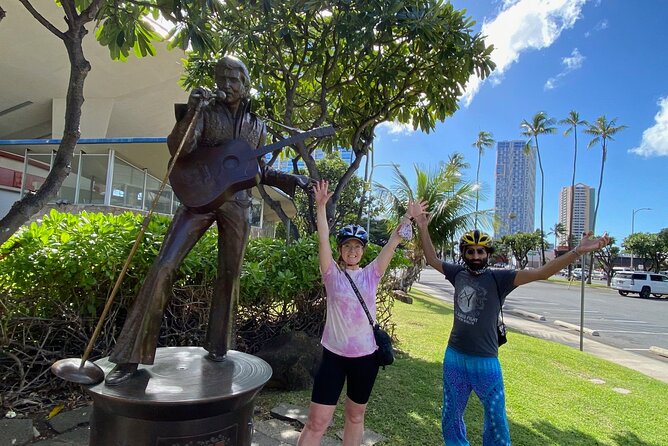
You stop briefly at the Neal S. Blaisdell Center and visit an Elvis Presley statue connected to his last concert in 1973. This is the kind of stop that feels like pop culture trivia until the guide connects it to how Honolulu hosted entertainment and celebrity over the years.
Why it works on a bike tour: quick, memorable, and easy to place in your mental map.
Hawaiian Mission Houses Historic Site and Archives: early western-style home in Hawaii
At the Hawaiian Mission Houses Historic Site and Archives, you see the first western-style home built in Hawaii, described as brought from Massachusetts in 1820–1821. That detail gives you a real “time jump” in the middle of a neighborhood ride.
Good to know: this is short and focused. If you love reading plaques and going deep, you’ll probably want to return later on your own.
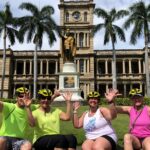
Iolani Palace: the only royal palace in the United States
Then comes Iolani Palace, highlighted as the only Royal Palace in the United States. This stop is a strong anchor. Honolulu isn’t just beaches and hotels—there’s a political and cultural center to the story, and this palace is one of the clearest reminders.
Watch for: since the time is about 5 minutes, your best move is to pick one or two exterior angles for photos, then use the guide’s explanation to absorb what you can.
Hawaii State Capitol: open-air, architectural oddball, and easy to miss
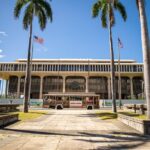
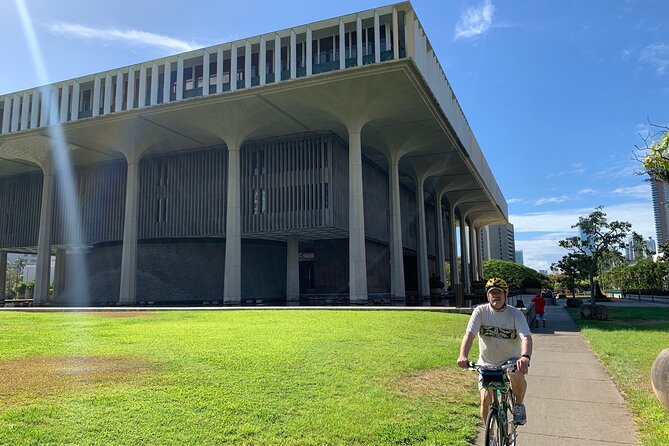
The tour rolls by the Hawaii State Capitol, described as the only open-air state capitol in America with out-of-the-box architecture. It’s a great pairing after Iolani Palace because it shows another layer: governance after monarchy.
Why it’s worth the stop: open-air design isn’t just a feature—it changes how people experience the space and how the building fits into daily city life.
Kaka’ako: murals, new development, and Honolulu’s next chapter
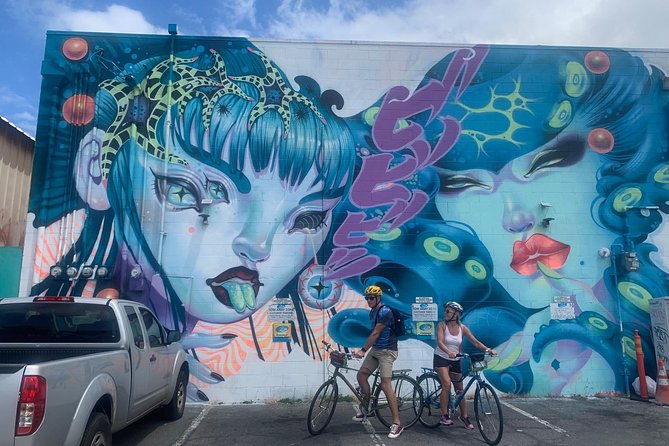
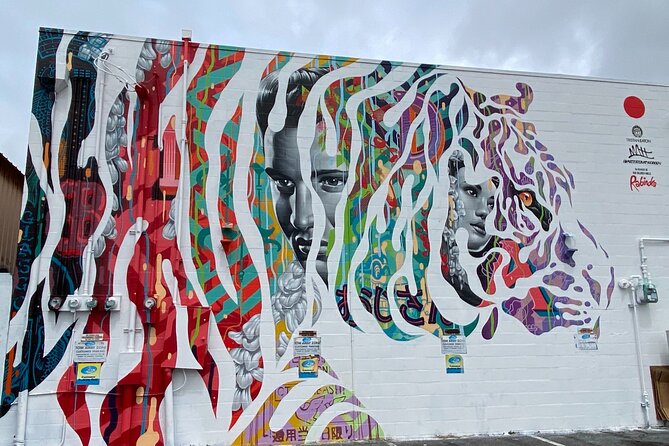
Now you move into Kaka’ako, described as the future of Oahu–Honolulu and a neighborhood shaped by major build-out. The tour calls out murals and development—less “historic site” and more “what’s next.”
How to enjoy this segment: take it slower with your eyes. The murals and street art often reward attention more than distance, and you’re traveling in motion, so you’ll want to balance biking safety with looking.
Possible drawback: if you dislike change or construction-heavy areas, this is exactly that kind of district.
Ala Moana Beach Park: Hawaii’s park for the people
You end with Ala Moana Beach Park, noted as a 100-acre park built in 1948. The tour frames it as Hawaii’s park for the people, with many activities happening. This is the best place on the route to feel how locals use public space—families, walkers, and beachgoers all share it.
Why I’d pick this finale: it’s a satisfying “release” after quick landmark stops. Even if you don’t stay long at each spot, the park vibe lingers.
The foodie part: what you’re likely to taste (and how to plan your appetite)
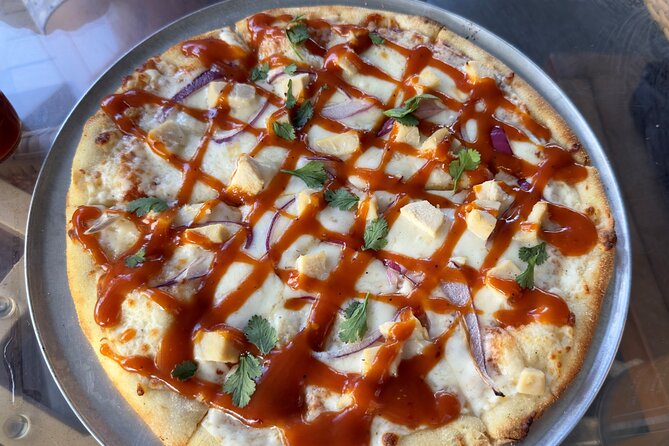
This is called a foodie bike tour for a reason. Food tastings are built into the day, and the sample menu includes:
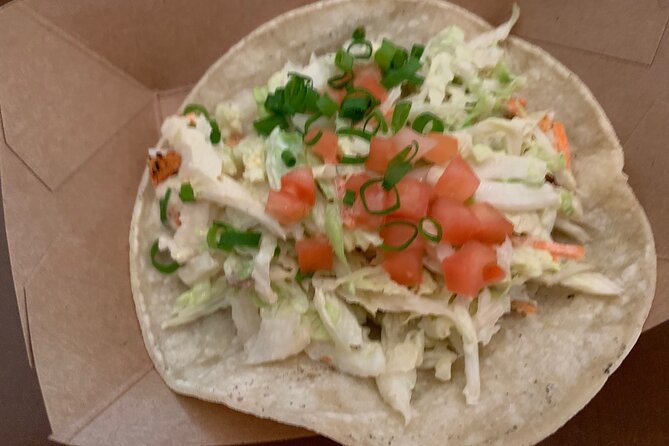
- Fish taco (corn tortilla)
- Hawaiian pizza
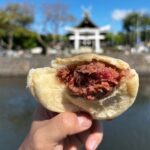
- Kalua pork sliders
- Shave ice with favorite flavors
A key detail: coffee and/or tea are included, and bottled water too. That matters because the tastings are only part of the hydration equation in Honolulu, especially around midday.
Based on the food descriptions from past rides, you might also run into other local favorites such as:
- poke (salmon and tuna),
- shaved ice described as Obama’s favorite,
- local-style dessert ideas like coconut cream,
- and even additional snacks like local doughnut buns or a beer afterward (typically something you’d buy, not something listed as included).
Practical tip for you: don’t eat a huge lunch right before. Even when tastings are “samples,” they add up once you factor in carbs (tacos, pizza, sliders) and the cold sweetness of shave ice.
How the tour uses history without making it boring
What makes this bike-and-food format work is how the guide connects landmarks to everyday life. For example, the canal stop is an infrastructure story. Iolani Palace is a political story. Kaka’ako is an urban planning story. Then your tastings turn it into a taste-and-identity story.
A big theme in the praise: the guide’s local perspective. Kelly (named in one review) is called out for a local point of view and excellent food choices. Another account highlights the same kind of strengths—strong guiding, safety on the bikes, and lots of context on what it’s like to live in Honolulu.
You also get a host who keeps things moving. On a bike tour, the best guides manage two things at once: safety and pace. Here, the “minutes at each stop” structure suggests the tour aims for efficient learning rather than long museum hours.
Pace, safety, and photo chances you can actually use
This isn’t a leisurely pedal with no schedule. It’s built around moving between several city highlights and multiple food tastings across about 4.5 hours. The upside is momentum—you’ll feel like you did a full activity. The downside is you won’t have time to treat every stop like your personal walking tour.
The tour is also for guests with moderate physical fitness. If you’re comfortable biking and handling short stops, you’re likely fine. If you’ve been off a bike for a while, plan to start gently and let the guide set your pace.
Photo-wise, you’re probably going to take some yourself—especially at Iolani Palace, the state capitol architecture, and Kaka’ako murals. One review also mentions the guide taking loads of photos and creating a short video for the group. Since that’s not stated in the inclusions list, assume it as a possibility rather than a promise.
Price and value: is $189 a smart use of vacation time?
At $189 per person for around 4 hours 30 minutes, you’re paying for four things bundled together:
1) guided bike experience (escort/host + live commentary),
2) bike and helmet included,
3) multiple food tastings,
4) water and coffee/tea.
If you tried to recreate this yourself, you’d likely spend money on at least: a rental bike, helmet, and your own planning time to line up food stops. Add in the guided learning and the structured route, and the price starts to make more sense—especially if you’re visiting for only a short time and want fewer decisions.
This is also the kind of tour where the private nature can boost value. If your group includes kids, older adults, or anyone who wants a steadier pace and clearer guidance, a private format can reduce friction compared to larger public groups.
Who should book this Tour de Honolulu Foodie Bike Tour
I think it fits best if you:
- want a first-day or middle-day activity to get bearings around Honolulu,
- like food stops and prefer guided choices over guessing what’s worth your time,
- are comfortable with a moderate biking effort,
- and want a route that goes beyond just Waikiki hotels.
It might not be your best match if you:
- want long museum-style visits or long stops,
- hate biking in the sun,
- or prefer a self-paced walking tour where you can linger for 30–60 minutes at each landmark.
Should you book it?
If you’re the kind of visitor who likes structure—safe bikes, a host telling the story, food tastings that reduce decision fatigue—this is a strong yes. For $189, you’re buying convenience and context, not just snacks.
My only caution is the “quick stops” format. If you crave deep time at a single site, you’ll probably still enjoy the day, but you may want a separate return visit later (especially for places like Iolani Palace or the historic home site).
FAQ
What is the duration of the Tour de Honolulu Foodie Bike Tour?
It runs for about 4 hours 30 minutes (approx.).
How much does the tour cost?
The price is $189.00 per person.
Where is the meeting point and what time does it start?
You meet at Kuhio Beach, 2453 Kalākaua Ave, Honolulu, HI 96815, and the tour starts at 1:00 pm.
Is a helmet and bike included?
Yes. The tour includes use of a bicycle and a helmet.
Are food tastings included?
Yes. Food tasting is included, and water plus coffee and/or tea are included as well.
What language is the tour offered in?
The tour is offered in English.
Is this a private tour?
Yes. It’s private, and only your group will participate.
What is the weather or cancellation approach?
The tour requires good weather. If it’s canceled due to poor weather, you’ll be offered a different date or a full refund. Free cancellation is available up to 24 hours in advance for a full refund.