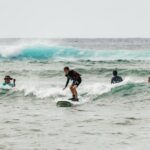
Waikiki turns fear into forward motion. In this Royal Hawaiian area lesson, you’ll learn the fundamentals of surfing right where the sport became famous, with coaching designed to get you paddling, standing, and balancing in about an hour, plus surfboard included.
What I like is how practical it stays: you get small-group personal attention for the mechanics (and even some theory, history, and how the ocean affects your moves), not just a quick free-for-all in the waves. One possible drawback to consider is that beginner-friendliness can vary; some past sessions were described as too short on land instruction and a bit stern once you were in the water.
In This Review
- Key Takeaways Before You Go
- Waikiki at the Royal Hawaiian: Your Starting Point
- The 1-Hour Surf Lesson: Paddling, Standing, and Balance
- Small-Group Coaching for 4–5: How It Feels In the Water
- Beginner Expectations: When Patience Helps (and When It Doesn’t)
- What You Get (and What You Must Bring)
- Meeting the Ocean: Safety Rules and Your “Before You Go” Checklist
- Price and Value: What About $100.76 Buys You
- Booking Rhythm and What to Expect After You Reserve
- Tips to Get More Out of Your Hour
- Should You Book This Private Waikiki Surf Lesson?
- FAQ
- How long is the private surf lesson?
- Do I need to know how to swim?
- What age is required?
- Is the surfboard included?
- What should I bring with me?
- Is transportation to and from the lesson included?
Key Takeaways Before You Go
- Small group size (4–5) means you’re not stuck watching from the sidelines.
- 1 hour, focused basics: paddling, standing up, and balance on the board.
- Theory + mechanics + history helps you understand what you’re doing, not just copy moves.
- You must be able to swim and be comfortable enough to spend time in the ocean.
- Board is provided, but you’ll need to bring a towel and rash guard.
- Photos/video cost extra, so plan for that if you want keepsakes.
Waikiki at the Royal Hawaiian: Your Starting Point
Your lesson begins at Waikiki Beach Services at the Royal Hawaiian (2259 Kalākaua Ave, Honolulu, HI 96815). This location matters because Waikiki is compact, busy, and very “real” for surfing. You’re not escaping into a remote beach where conditions feel unfamiliar; you’re learning in a place that’s been shaping surfers for generations.
The session also runs as a true loop: it starts at that meeting spot and ends back there. That’s helpful if you’re trying to build the rest of your day around it, whether you’re doing beach time, a scenic drive, or grabbing food after.
Before you hit the water, you should expect to handle the basics like signing the waiver. These details aren’t glamorous, but they keep the lesson moving smoothly once everyone is gathered and ready.
You can also read our reviews of more private tours in Oahu



The 1-Hour Surf Lesson: Paddling, Standing, and Balance
This is a compact lesson—about 1 hour—so it’s designed to teach the “must-have” skills in the shortest possible time. The goal isn’t to perfect big turns or ride forever. The goal is to build the foundation so you can actually catch waves and stand up safely.
Here’s what the lesson focuses on:
- Paddling: learning how to get into position and move with control.
- Standing up: getting from lying/squatting to an upright stance with the right timing.
- Balance: staying stable once you’re up, rather than wobbling off immediately.
Alongside the physical practice, you’ll also get surfing theory, mechanics, and history. That combination is more useful than it sounds. When you understand the mechanics behind what you’re trying (and the basic logic of how surfers read the water), you can correct your own mistakes faster once you’re out there.
One practical note: you’ll be in the water during the session, and your ability matters. You must be able to swim, and the lesson expects a moderate physical fitness level. If your swimming is shaky, you’ll spend more energy worrying than learning.
Small-Group Coaching for 4–5: How It Feels In the Water
Unlike a big group class, this is positioned as private group time. In practice, that means you’ll be with your group only, with the instructor focused on you and others in the same small lesson block.
For this specific format, the minimum is 4 people and the maximum is 5. That range is a big deal: it’s small enough for hands-on feedback, but large enough that you’ll still see different learning speeds and get a sense of what to aim for.
The lesson is also age-structured. You need to be over 13 years old for this group format. If you’re 12 or younger, the setup changes and you’d need a one-on-one private individual lesson instead.
The value of small-group coaching is simple: you don’t wait your turn forever. You also don’t get stuck with only generic advice. When instructors are on their game, you’ll feel like the coaching is tailored to the way you’re moving, not just delivered on a schedule.
Beginner Expectations: When Patience Helps (and When It Doesn’t)
If you’re a beginner, read this part carefully. This lesson does cover basics, and many people love it for exactly that reason—learning the fundamentals in Waikiki with a guide who can help you make sense of the ocean.
But the quality of instruction can vary, and a couple of past experiences point to a real risk: some lessons reportedly had very limited time on land and more “in the water, figure it out” energy than you’d want when you’re truly new.
You’ll see a range in reported teaching styles:
- Some instructors were praised as very patient, taking time to help people get the hang of paddling and standing.
- Other accounts described an instructor who was less engaged, offering minimal advice beyond general instructions, or being stern once the lesson moved offshore.
So what should you do with this information? Aim for a realistic plan:
- If you’re comfortable in the ocean and can swim confidently, you’ll likely handle the learning curve better.
- If you need lots of warm-up time and gentle coaching, go into it knowing that the land briefing might be brief in some sessions.
The good news is that the lesson is built around fundamentals, and that’s the right starting point. The not-so-good news is you can’t fully control how patient a given instructor will be. Your best move is showing up ready—calm, focused, and able to swim—so you’re more likely to get the kind of coaching that clicks for beginners.
What You Get (and What You Must Bring)
You’ll be provided with a surfboard and a professional guide. All the usual taxes, fees, and handling charges are included in the stated price, and the lesson is offered in English.
What’s not included is where many people get caught:
- Souvenir photos and video (available to purchase)
- Towels
- Sunscreen
- A rash guard (you should bring one)
There’s also a small ocean-related fee: a $1 Ocean Stewardship fee effective 01/01/2024.
If you want keepsakes, keep your budget flexible. Photos/video aren’t bundled, so you’ll be making a decision at the end about whether the footage is worth it to you.
And yes, bring your own towel and rash guard. In Waikiki sun, that’s not a preference—it’s comfort and safety. A rash guard can also reduce friction when you’re paddling and getting up and down repeatedly.
You can also read our reviews of more tours and experiences in Oahu





Meeting the Ocean: Safety Rules and Your “Before You Go” Checklist
Even when conditions are ideal, surfing is a mix of sport and ocean reality. This lesson comes with a few clear requirements:
- You must be able to swim.
- You should have moderate physical fitness.
- You’ll need to sign a waiver.
- The lesson requires good weather, so it’s not guaranteed in every forecast.
That weather requirement is important. If Waikiki winds or surf conditions don’t cooperate, the provider may cancel and offer another date or a full refund. You’ll also want to know that the experience has a minimum number of travelers; if it doesn’t meet that minimum, you may be offered a different date or refund.
My practical advice: don’t schedule anything critical right before and right after your lesson. Even a smooth lesson can run slightly differently depending on water and timing. Give yourself a buffer so you don’t feel rushed.
Price and Value: What About $100.76 Buys You
At $100.76 per person, this isn’t the cheapest way to learn to surf. But for Waikiki, you’re paying for more than just “time on a board.”
Here’s the value equation:
- You get a guide, the board, and covered taxes/fees/handling.
- You get a private group experience limited to your group only.
- You get a structured hour focused on core skills instead of random practice.
The key is that small-group coaching can shorten your learning curve. When instruction is patient and clear, you can leave with more than just a few wobbly seconds—you leave with an idea of how to paddle better, when to pop up, and what balance actually feels like.
If you’re going with three other people (so your group reaches the minimum), the cost can make a lot of sense. If you’re booking solo or as a duo, the format changes. The company notes that for a group of 2, you’d choose a Private Surf Duo setup, and for a group of 3, a Private Surf Trio setup.
So the question isn’t only price. It’s whether you’ll get a group that keeps instruction close and useful.
Booking Rhythm and What to Expect After You Reserve
On average, this kind of lesson is booked about 46 days in advance, which tells you something: it’s popular, and Waikiki surfing schedules fill up during prime times.
After you book, you should expect confirmation within 48 hours, subject to availability. You’ll also use a mobile ticket, which is handy when you’re bouncing around Waikiki.
If you’re planning around other activities, remember the lesson ends back at the meeting point. That makes it easier to stack with nearby dining or a beach walk afterward.
Tips to Get More Out of Your Hour
You’ll get the best learning jump if you treat this like a skills class, not a sightseeing stop. A few practical moves help a lot:
- Show up with a rash guard so you’re comfortable and can focus on technique.
- Bring a towel and plan for quick dry-up time afterward.
- Be honest about swimming confidence. This requirement isn’t busywork; it affects how much energy you can put into learning.
- When the instructor gives instructions, repeat them to yourself in simple terms: paddle to position, then commit to the stand, then ride out your balance.
Also, set expectations. In an hour, you’re not aiming for perfect surfing. You’re aiming for the first repeatable success. Many people come in afraid or doubting they can do it, and those same people tend to light up once they realize they can get to their feet.
Finally, if you want photos/video, decide early. If you wait until the end with no plan, it’s easy to feel pressured. Having a budget number in your head keeps it fun.
Should You Book This Private Waikiki Surf Lesson?
Book this lesson if you want:
- A focused hour on the essentials: paddling, standing, and balance.
- A small-group setup where coaching can actually matter.
- A mix of hands-on practice plus surf theory/mechanics/history so you understand what you’re doing.
Think twice if:
- You’re a beginner who needs extended patience and very slow steps. Some past sessions reported limited land instruction and a stern tone once in the water.
- You’re not comfortable swimming or you can’t meet the moderate fitness expectation.
If you go in prepared, it’s the kind of activity that can turn Waikiki from a place you watch into a place you try. And even when progress is slow, the goal is still real: you get coached, you get on the board, and you walk away knowing how to practice the next step.
FAQ
How long is the private surf lesson?
It’s about 1 hour long.
Do I need to know how to swim?
Yes. You must be able to swim to participate.
What age is required?
You must be over 13 years old for this group lesson format.
Is the surfboard included?
Yes. Surfboard use is included.
What should I bring with me?
Bring your own towel, sunscreen, and rash guard. You’ll also need to sign a waiver.
Is transportation to and from the lesson included?
No. Transportation isn’t included. The activity starts and ends back at the meeting point.